Table of Contents
- Understanding Hospital Blankets for Dorm Room Use
- Key Considerations When Buying a Hospital Blanket for a Dorm Room
- Where to Buy Hospital Blankets for a Dorm Room
- Comparing Hospital Blankets to Other Dorm Bedding Options
- Practical Tips for Using a Hospital Blanket in a Dorm Room
- Evaluating Quality Before You Buy
- Building a Practical Dorm Bedding Setup Around a Hospital Blanket
- Frequently Overlooked Factors When Choosing a Dorm Blanket
- Making the Purchase: A Practical Buying Checklist
- Where Direct Textile Store Fits Into Your Dorm Bedding Plans
- Final Thoughts on Choosing a Hospital Blanket for a College Dorm
- Learn More About Our Experience Supplying Wholesale Linens → About Direct Textile Store
- FAQ
- Related Posts
Furnishing a dorm room means balancing comfort, durability, and practicality within a small, frequently laundered living space, and hospital blankets have become a surprisingly popular choice for exactly this reason. Originally engineered for clinical settings that demand frequent sanitizing and heavy daily use, hospital blankets translate remarkably well into a dorm room environment where a blanket needs to survive weekly or biweekly laundering, resist the general wear of daily student life, and still feel comfortable enough for actual everyday use. This guide walks through what makes hospital blankets a smart, durable choice for a college dorm, what to look for when choosing one, and where to find genuinely well-constructed options that will actually last through a full academic year — or several.
Understanding Hospital Blankets for Dorm Room Use
Why Clinical-Grade Construction Makes Sense in a Dorm Setting
Hospital blankets are built around a set of priorities that overlap closely with what a dorm room actually needs: durability under frequent laundering, resistance to pilling and thinning over repeated washes, and fabric that holds its shape and color across dozens of wash cycles per year. Because medical blankets are originally designed for healthcare environments where hygiene and long-term durability are non-negotiable, this same construction carries over effectively into dorm life, where laundry facilities are shared, wash cycles can be inconsistent in quality, and a blanket genuinely needs to survive an entire year of near-daily use.
Standard consumer throw blankets sold for casual home use, by contrast, are typically built around softness and appearance for occasional gentle washing, not the kind of frequent, sometimes rough dormitory laundry room conditions a student's bedding actually faces. This is a major part of why students and parents increasingly look toward hospital blankets for adults rather than assuming a standard throw blanket from a big-box retailer will hold up for a full year of dorm living.
The Practical Overlap Between Healthcare and Dorm Life
Hospitals and dorm rooms actually share a surprising number of practical concerns: a bed that gets used constantly, bedding that needs to be washed frequently — sometimes in a shared or lower-quality machine — and a genuine need for the blanket to still look and feel decent after dozens of wash cycles rather than falling apart within the first semester. Hospital blankets are purpose-built to solve exactly this kind of challenge, which is why they've become a practical, if somewhat unexpected, choice for students who want bedding that will genuinely last.
This overlap extends to hygiene considerations too. Dorm rooms often mean sharing communal laundry facilities, sometimes at odd hours with unpredictable water temperatures and detergent strength, making bedding that can hold up to inconsistent laundering conditions a genuinely practical priority — not just a hospital-specific concern.
Why Snag Resistance Matters More in a Dorm Than People Expect
Dorm rooms are tight, cluttered spaces filled with desks, bed frames, storage bins, and a general density of sharp corners and rough surfaces that a blanket brushes against constantly throughout the day. A blanket without genuine snag resistance can develop pulls and small tears surprisingly quickly under these conditions, especially when it's being pulled on and off a lofted or bunked dorm bed multiple times a week. This is one of the most practical, if underrated, reasons to look specifically for snag-resistant hospital blankets rather than a standard consumer blanket that wasn't built with this kind of environment in mind.

Key Considerations When Buying a Hospital Blanket for a Dorm Room
Fabric Type and Fiber Content
Hospital blankets are commonly available in cotton, cotton-polyester blends, or fleece construction, each offering a distinct balance of softness, warmth, and laundering durability. Cotton-polyester blends tend to resist shrinking and wrinkling better than pure cotton while still offering a comfortable feel, making this blend a genuinely practical choice for a student managing their own laundry on an inconsistent schedule throughout the semester.
Fleece construction offers a plush, cozy alternative that many students specifically prefer for the softer hand-feel and immediate warmth it provides, particularly appealing for dorm rooms in older buildings with inconsistent heating. Choosing between fabric types often comes down to personal preference for softness versus a slightly more resilient, structured feel.
Warmth Level for Variable Dorm Room Temperatures
Dorm room temperature control varies enormously depending on building age, HVAC quality, and which floor or side of the building a room sits on, making warmth level a genuinely important consideration when choosing hospital blankets for this specific setting. A lighter blanket works well for rooms that run warm or for students who prefer layering with an additional comforter, while a heavier option provides more standalone warmth for colder rooms or campuses in regions with genuinely cold winters.
Durability Under Frequent Dorm Laundry Use
Because dorm laundry facilities are shared and sometimes inconsistent in wash quality, hospital blankets intended for this environment benefit from genuinely durable construction — reinforced hems, tightly woven fabric that resists pilling, and stitching quality that holds up through repeated washing across a full academic year. This matters considerably more for a dorm blanket than for one used occasionally at home, given how frequently a student's bedding realistically gets washed during a busy semester.
Snag Resistance for a Cluttered, High-Traffic Space
As mentioned above, a genuinely snag-resistant fabric weave helps a blanket avoid the small pulls and tears that accumulate quickly in a tight dorm room environment full of sharp furniture edges, zippers, and general daily wear. Buyers should specifically look for hospital blankets marketed with snag-resistant treatment or a tightly woven construction specifically engineered to resist this kind of everyday damage.
Size Considerations for Standard Twin XL Dorm Beds
Most college dorm beds use Twin XL mattress sizing, meaning a blanket should be sized to properly cover this longer-than-standard-Twin dimension. Buyers should confirm blanket dimensions against their specific dorm bed before purchasing, since a blanket sized for a standard Twin bed may leave the extra length of a Twin XL mattress uncovered.
Where to Buy Hospital Blankets for a Dorm Room
Specialty Institutional Suppliers vs. General Retail
General retail stores carry a wide range of throw blankets and comforters, but genuinely durable, hospital blankets built to clinical durability standards are typically found through suppliers specializing in institutional and healthcare textiles rather than a general home goods retailer. These specialty suppliers build their products around genuine durability requirements rather than primarily around aesthetic trends, which is exactly the priority that matters most for surviving a full year of dorm room use.
Why Buying in a Case Pack or Multi-Pack Can Make Sense
Even for an individual dorm room, purchasing hospital blankets through a supplier that offers case-pack or multi-unit pricing can be a smart move, whether that means outfitting more than one bed in a shared room, keeping a spare on hand for laundering rotation, or simply taking advantage of better per-unit pricing that bulk-oriented suppliers typically offer compared to single-unit retail purchases. Students sharing a room, or parents outfitting more than one child's dorm space, often find meaningful savings by purchasing this way rather than buying single units repeatedly at retail prices.
What to Look for in a Supplier
Whether purchasing a single blanket or several, buyers should evaluate a few key factors before committing to a purchase:
- Documented fabric construction: A trustworthy supplier should clearly describe the fabric composition and any snag-resistant or durability treatments rather than relying on vague marketing language.
- Transparent pricing: Straightforward, everyday pricing makes it easier to compare value across different hospital blankets options without needing to chase down promotional codes or limited-time discounts.
- Accurate sizing information: Confirmed dimensions specifically suited to Twin XL dorm beds help avoid a blanket that doesn't properly fit once it arrives.
- Reasonable shipping options: Since move-in timing matters, confirming realistic shipping windows ahead of the semester start date helps avoid arriving to an unmade bed.
Comparing Hospital Blankets to Other Dorm Bedding Options
Hospital Blankets vs. Standard Throw Blankets
Standard consumer throw blankets, often marketed for casual home decor use, typically prioritize a trendy pattern or texture over genuine laundering durability, which means they often begin showing wear — pilling, thinning, loose threads — within just a few months of the kind of frequent washing dorm life requires. Hospital blankets are built specifically to avoid this kind of premature wear, making them a more practical long-term investment even if the initial style options feel slightly less trend-driven than a typical retail throw blanket.
Hospital Blankets vs. Weighted Blankets
Weighted blankets have become a popular dorm room purchase for students seeking additional comfort or anxiety relief, but they come with genuine laundering complications given their weight and often more delicate outer fabric. Hospital blankets don't offer the same weighted comfort function, but they do offer considerably easier, more reliable laundering — a meaningful trade-off for students who prioritize practical durability over a specialized comfort feature.
Hospital Blankets vs. Electric or Heated Blankets
Electric or heated blankets can address a cold dorm room directly, but many campuses restrict or prohibit heating appliances in dorm rooms due to fire safety concerns, making this option unavailable at many schools regardless of preference. A well-chosen, appropriately weighted hospital blanket provides a reliable, always-permitted alternative for managing a cold dorm room without navigating campus appliance restrictions.

Practical Tips for Using a Hospital Blanket in a Dorm Room
Managing Laundry on a Shared Machine Schedule
Because dorm laundry facilities are shared among an entire floor or building, students benefit from planning blanket washing around less busy laundry times, both to actually secure a machine and to avoid rushing a wash cycle in a way that skips proper detergent dissolving or rinse cycles. A hospital blanket built for durability handles this kind of imperfect laundering considerably better than a delicate consumer throw blanket would.
Storing a Blanket During Breaks and Summer Storage
Between semester breaks and summer storage, hospital blankets should be laundered before storage and kept in a clean, dry space to avoid must or mildew developing over an extended storage period. Because these blankets are built for durability, they generally tolerate this kind of periodic storage and reuse across multiple academic years better than lower-quality alternatives that may not survive being packed away and unpacked repeatedly.
Layering Strategy for Variable Room Temperatures
Students uncertain about their specific room's temperature before move-in benefit from choosing a mid-weight hospital blanket that can be layered with an additional comforter if the room runs cold, or used alone if the room tends to run warm. This flexible layering approach avoids committing to a single warmth level before actually experiencing the room's real temperature conditions.
Evaluating Quality Before You Buy
Checking Hem and Edge Construction
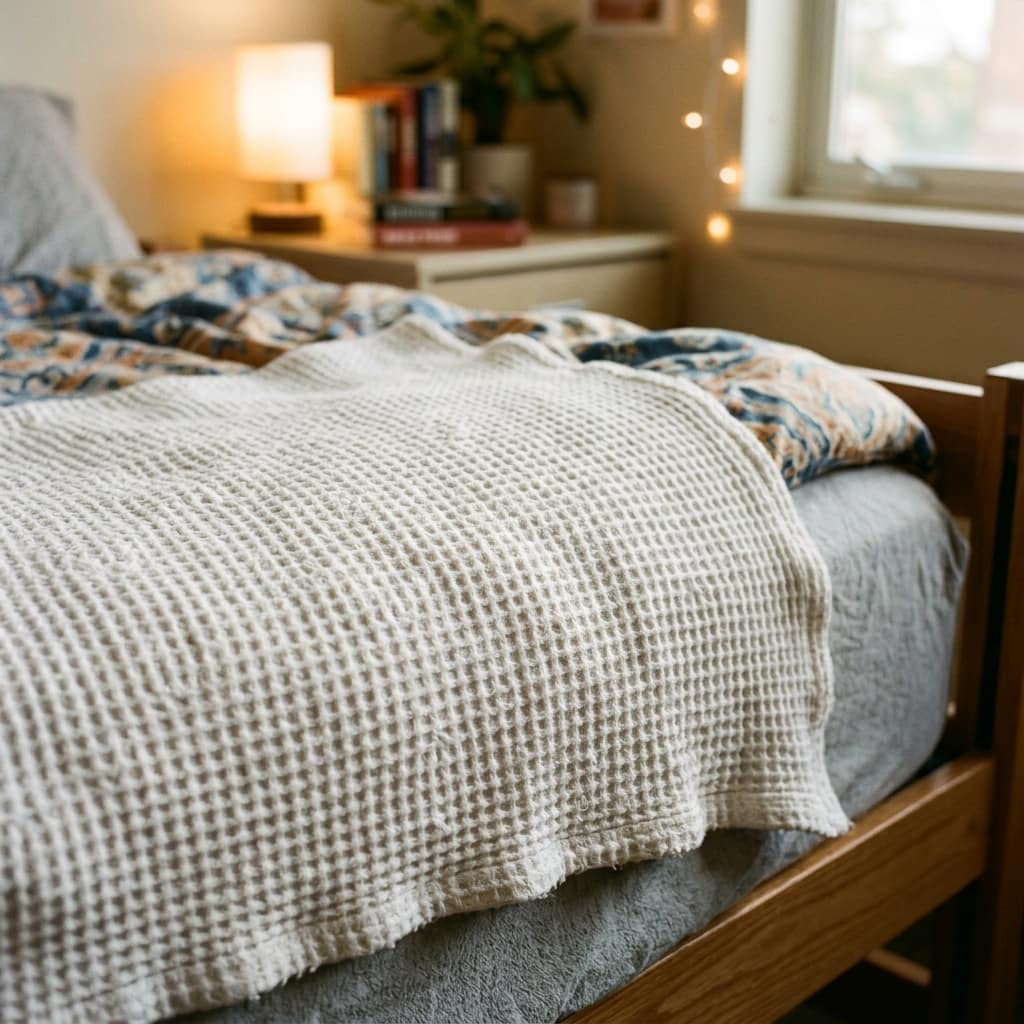
Reinforced, evenly stitched hems are a genuinely useful indicator of quality construction in any hospital blanket, since loosely finished edges tend to fray and unravel considerably faster under the kind of frequent washing dorm life requires. If possible, examining a product description or photos closely for hem detail, or reading verified reviews that mention hem durability, can help buyers gauge quality before committing to a purchase.
Assessing Fabric Weight and Weave
Fabric weight offers a useful benchmark for how well a blanket will hold up to repeated washing and daily handling. A lightweight, loosely woven blanket tends to show wear and thinning faster than a more substantial, tightly woven option, even if both are marketed under a similar product category.
Reading Colorfastness and Care Instructions
Because hospital blankets get washed frequently throughout a semester, checking care instructions and any noted colorfastness information helps buyers understand realistic expectations for how the blanket's color will hold up over a full academic year of regular washing.
Building a Practical Dorm Bedding Setup Around a Hospital Blanket
Coordinating With Sheets and a Comforter
A hospital blanket works well as either a standalone bedding layer or as a mid-layer between fitted sheets and a decorative comforter, giving students flexibility in how they build out their overall bedding setup. Choosing a neutral color allows the blanket to coordinate easily with whatever sheet and comforter colors a student ultimately selects for their specific room decor.
Considering a Second Blanket for Laundry Rotation
Because laundry access can be unpredictable in a shared dormitory setting, having a second hospital blanket on hand allows a student to keep one in active use while the other goes through the wash, avoiding the inconvenience of an unmade bed while waiting for laundry facilities to become available.
Planning for Multi-Year Use Beyond a Single Academic Year
Students who plan to live in dorm-style housing for multiple years benefit from investing in a genuinely durable hospital blanket upfront, since a well-constructed option can realistically last through multiple academic years rather than needing replacement after a single semester or two of heavy use.
Frequently Overlooked Factors When Choosing a Dorm Blanket
Weight for Easy Handling in a Small Space
A dorm room offers limited space for managing bulky bedding, making a reasonably lightweight blankets for hospital beds easier to fold, store, and handle during the frequent bed-making and laundry cycles dorm life requires, compared to an excessively heavy or bulky alternative that becomes cumbersome to manage in a small room.
Packability for Move-In and Move-Out Transport
Because move-in and move-out days often involve carrying belongings up and down stairs or across campus, a hospital blanket that compresses reasonably well for transport and storage makes these already hectic days somewhat easier to manage compared to a bulkier alternative.
Allergy and Sensitivity Considerations
Students with sensitive skin or known fabric sensitivities should pay particular attention to fiber content when choosing among hospital blankets options, since cotton-based construction tends to be better tolerated by sensitive skin than some synthetic alternatives, though quality synthetic blends can also perform well depending on the specific finishing treatments used.

Making the Purchase: A Practical Buying Checklist
Before finalizing a purchase, dorm bedding buyers should confirm the following:
- The blanket's dimensions match a standard Twin XL dorm mattress rather than a shorter standard Twin size.
- Fabric type and warmth level suit the room's expected temperature range, with layering flexibility if uncertain.
- The product description or reviews confirm genuine snag resistance and reinforced hem construction.
- Pricing is transparent, and multi-unit or case-pack options have been considered if outfitting more than one bed or planning for laundry rotation.
- Shipping timelines allow the blanket to arrive well ahead of the move-in date.
- Care instructions are clear and realistic for a shared, sometimes inconsistent dormitory laundry environment.
Buyers who take time to evaluate these factors before ordering typically end up with bedding that genuinely lasts through the demands of dorm life, rather than needing replacement partway through the first semester.
Where Direct Textile Store Fits Into Your Dorm Bedding Plans
For students and families sourcing durable dorm bedding, having a supplier that builds genuinely institutional-grade quality into an accessible product makes the shopping process considerably simpler. Direct Textile Store carries snag-resistant hospital bed blankets designed for durability and comfort, suitable for college dorms and high-use settings. Browse styles and case packs to outfit your operation.
A supplier offering hospital blankets for sale built specifically for high-use, frequently laundered environments provides exactly the kind of practical durability a dorm room actually needs, without requiring buyers to guess whether a standard retail throw blanket will genuinely hold up through a full academic year of regular use.
Final Thoughts on Choosing a Hospital Blanket for a College Dorm
Choosing the right hospital blankets for a college dorm room comes down to balancing fabric durability, warmth appropriate to the room's typical conditions, snag resistance for a cluttered living space, and proper sizing for a standard Twin XL dorm bed. A well-chosen blanket holds up considerably better than a typical consumer throw blanket under the demands of frequent shared laundry facilities and daily dorm room wear, often lasting through multiple academic years rather than needing replacement each semester. Buyers who evaluate fabric construction, hem quality, and sizing accuracy carefully before purchasing tend to end up with bedding that performs reliably throughout the demands of college life. Taking a methodical approach to this purchase — rather than grabbing whatever throw blanket is on sale at a big-box store right before move-in — ultimately saves both money and hassle as the academic year unfolds.

Learn More About Our Experience Supplying Wholesale Linens → About Direct Textile Store
Direct Textile Store is a leading U.S. wholesale linen and textile supplier trusted by over 131,000 hotels, hospitals, healthcare facilities, restaurants, spas, salons, resorts, gyms, emergency shelter and response, funeral homes, VRBO & Airbnb hosts, car washes, and commercial buyers nationwide. Shop in bulk with everyday low wholesale pricing and automatic 20% case-pack discounts — no coupons or minimums required. Choose from one of the largest in-stock selections available: over 135,000 towels, pool towels, sheets, blankets, comforters, tablecloths, pillows, bed toppers, aprons, hospital gowns, patient gowns, isolation gowns, scrubs, shower curtains, chef apparel, smocks, lab coats, uniforms, and commercial laundry equipment including wire, vinyl, and poly laundry carts, trucks, and privacy screens — all ready to ship today. Free shipping on orders over $5,999.
FAQ
Why would someone choose a hospital blanket for a college dorm instead of a regular throw blanket?
Hospital blankets are built for frequent, heavy-duty laundering and daily wear, which closely matches what dorm bedding actually experiences throughout a semester. Standard throw blankets often show pilling or thinning much faster under this kind of use.
What size hospital blanket fits a standard dorm bed?
Most college dorms use Twin XL mattresses, which run about five inches longer than a standard Twin bed. Confirming a blanket's exact dimensions against this sizing helps avoid a blanket that leaves part of the mattress uncovered.
How often should a dorm blanket be washed?
There's no strict rule, but many students wash bedding every two to four weeks depending on personal preference and how the blanket is used. A durable, snag-resistant blanket holds up much better to this kind of regular washing than a delicate alternative.
Is it worth buying more than one hospital blanket for a dorm room?
For students managing unpredictable laundry room access, having a second blanket allows one to be in use while the other is being washed. Some suppliers also offer better per-unit pricing when purchasing more than a single unit.
Do hospital blankets work well in dorm rooms with inconsistent heating?
Yes, choosing a mid-weight option allows for flexible layering with an additional comforter if a room runs cold, or standalone use if the room tends to stay warm. This flexibility is useful since students often don't know their room's exact temperature until after move-in.
What fabric holds up best for a dorm blanket that needs frequent washing?
Cotton-polyester blends tend to resist shrinking and wrinkling better than pure cotton while still feeling comfortable. Fleece is another option for students who prioritize a softer, plusher feel over slightly more resilient construction.
Why is Direct Textile Store a good source for a college dorm hospital blanket?
Direct Textile Store carries snag-resistant hospital blankets designed specifically for durability and comfort in high-use settings like college dorms. With consistent in-stock inventory and transparent pricing, it's a practical option for students and families looking for bedding that will actually last.