Table of Contents
- Why Maintenance Crews Need Purpose-Built Apparel
- Understanding Unisex Fits
- Fit Details: Cut, Rise, Length, and Adjustability
- Sizing Charts and Measuring a Mixed Crew
- Durable Fabrics and Easy-Care Performance
- Construction Details That Last
- Mobility, Comfort, and Task-Specific Needs
- Safety, Visibility, and Compliance Considerations
- Colors, Identification, and Professional Appearance
- How Many Uniforms a Crew Needs and Planning for Turnover
- Why Wholesale Case Packs Make Sense
- Evaluating and Testing Samples
- Laundry, Storage, and Lifecycle
- Cost, Value, and Common Mistakes
- Making the Purchase: A Practical Buying Checklist
- Direct Textile Store: A Dedicated Source for Maintenance Crew Apparel
- Final Thoughts on Buying Unisex Fits Uniforms for a Maintenance Crew
- Learn More About Our Experience Supplying Wholesale Linens → About Direct Textile Store
- FAQ
- Related Topics
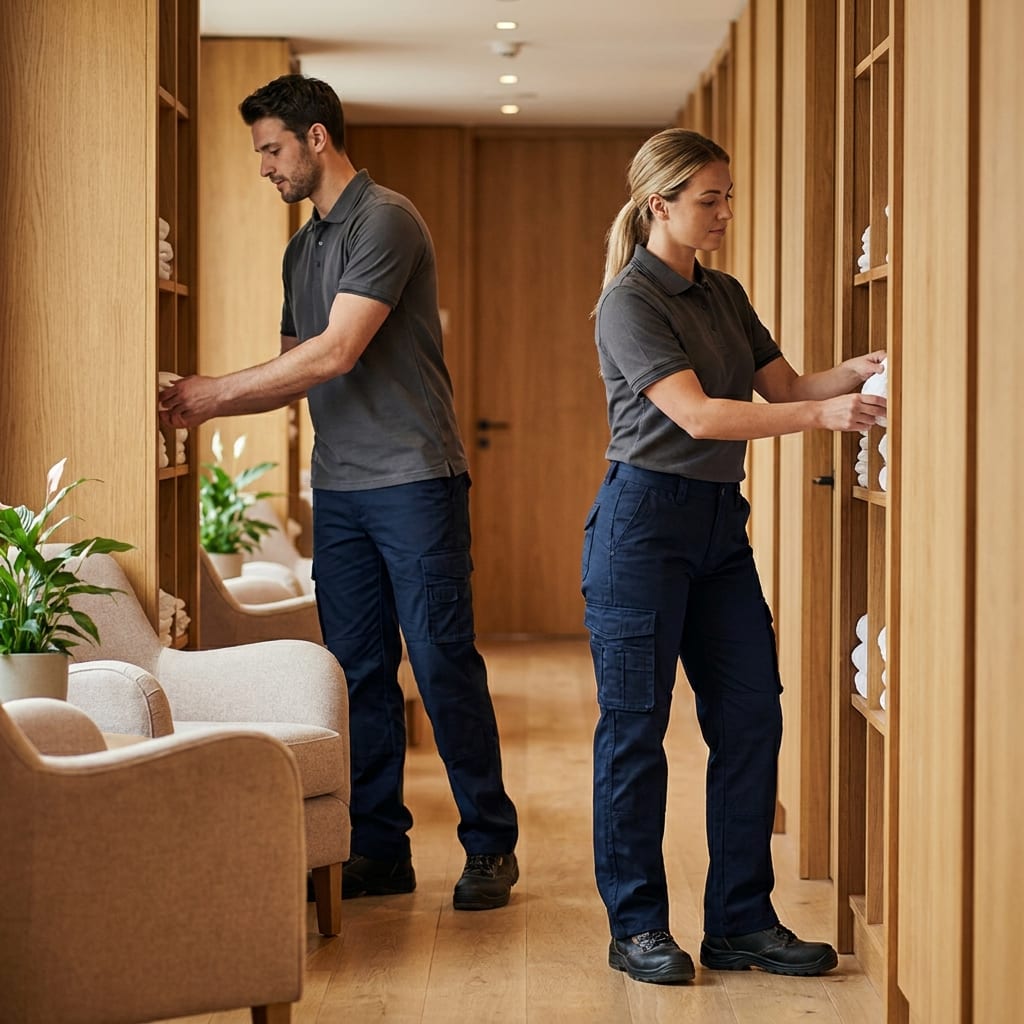
A maintenance crew does the physical work that keeps a building running. They kneel under sinks, reach into ceilings, carry equipment up stairs, and move between jobs that might be clean one hour and messy the next. The clothing they wear has to handle all of it while still looking professional when they walk through a lobby or a patient floor. Uniforms built for housekeeping and maintenance work combine durable fabric, reinforced construction, and a cut that allows full movement. Unisex fits add another practical advantage: one sizing system that works for a mixed crew, shared across shifts and easy to restock. This guide explains how unisex sizing works, what fabrics and construction to look for, how to plan quantities for a crew, and how to buy wholesale uniforms in case packs so every team member is outfitted and replacements always match.
Why Maintenance Crews Need Purpose-Built Apparel
The Work Is Physical and Varied
Maintenance staff bend, twist, climb, crouch, and lift, often within the same hour. Everyday clothing is not designed for that range of movement, and it tends to bind, tear, or wear through at the knees and seams. Uniforms made for work settings use stronger fabric, gusseted or relaxed cuts, and reinforced stress points so they keep up with the job. Good fit and good construction also reduce fatigue, because clothing that does not fight the body lets people work more comfortably through a full shift.
Appearance Still Matters
Maintenance crews are often visible to guests, residents, patients, and tenants, and the way they look reflects on the organization. Clean, consistent apparel signals competence and accountability, and it helps people recognize who is authorized to be in a space. When crew members wear matching wholesale uniforms, the team looks organized even when the work itself is messy. That consistency builds trust with the people who see them.
Laundering Is Frequent and Demanding
Work clothing picks up grease, dirt, cleaning chemicals, and sweat, and it must be washed often. Consumer clothing rarely survives that routine, while commercial-grade uniforms are made to tolerate hot water, strong detergent, and repeated cycles without losing shape or color. Choosing durable apparel reduces the frequency of replacement and the labor of managing worn garments. It also keeps the crew presentable, because garments that hold up look better for longer.
Understanding Unisex Fits
One Sizing System for a Mixed Crew
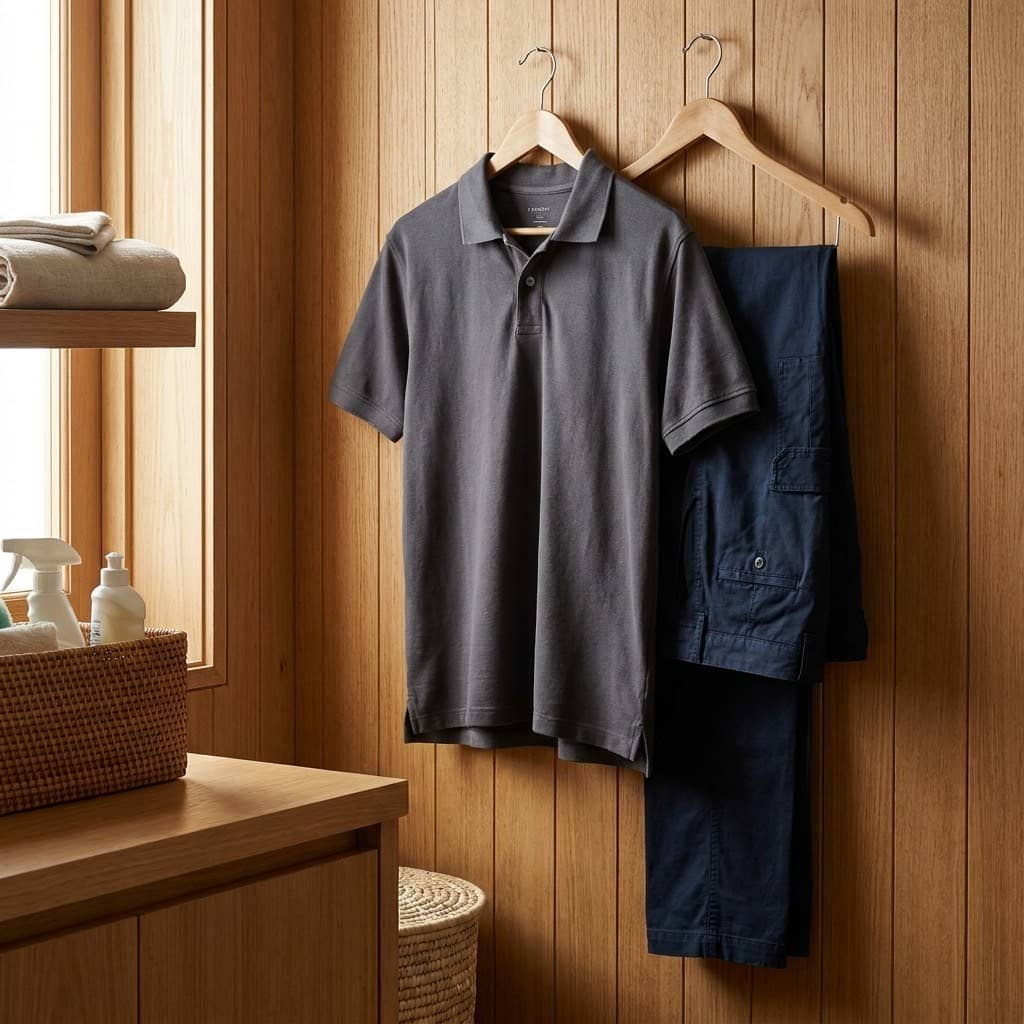
Unisex fits use a single set of sizes and a cut that works across body types, rather than separate men's and women's sizing. For a maintenance crew, that simplifies everything from ordering to laundering. A garment in a given size is interchangeable among team members who fit that size, which makes shared pools possible. Choosing unisex uniforms removes the need to track two parallel inventories.
Why It Works Well for Shared Pools
Many maintenance operations keep a pool of clean garments that crew members draw from at the start of a shift and return to laundry at the end. In that model, apparel is not assigned to one person. Unisex sizing makes the pool simpler, since any garment in the correct size can go to anyone who needs it. Fewer sizing categories mean fewer stockouts and less time spent finding the right piece.
What Unisex Does and Does Not Mean
Unisex does not mean one size fits all. A well-designed unisex line offers a full range of sizes, from small to very large, with consistent proportions. Some wearers may prefer a different cut, and that should be accommodated. Evaluating samples on a variety of body types is the best way to confirm that a unisex cut works for your crew.
Fit Details: Cut, Rise, Length, and Adjustability
Relaxed Cuts for Movement
Maintenance work requires reaching, squatting, and kneeling, so garments need room through the shoulders, hips, and thighs. A relaxed cut allows that movement without restricting. Trousers with a comfortable rise and shirts with enough sleeve length prevent pulling when arms are raised. Test samples by performing real tasks in them, since a garment that looks fine standing can feel tight when crouching.
Length Options
Crew members vary in height, and garments that are too short or too long cause problems. Short trousers expose ankles and shins, while long ones drag and wear at the hem. Offering regular and tall lengths where available helps. If length options are limited, plan for hemming or choose cuts with adjustable features. Proper length keeps wholesale uniforms looking professional and prevents tripping hazards.
Adjustable Features
Elastic or drawstring waists, adjustable cuffs, and extra belt loops can improve fit across body types. These features make a single size work for more people and allow for changes in weight or layering. Consider how adjustability affects appearance and durability. Features that add flexibility can reduce the number of sizes needed in stock.
Sizing Charts and Measuring a Mixed Crew
Collecting Real Measurements
Instead of guessing, measure chest, waist, hip, and inseam for each crew member, or have them try sample garments. Record the results in a simple table. This data tells you how many of each size to order and which sizes are most common. Real measurements prevent the common problem of ordering a lot of medium and not enough of the sizes that people actually need.
Reading Unisex Size Charts
Unisex size charts often use men's-style proportions, and the numbers may differ from familiar women's sizing. Compare your crew's measurements with the supplier's chart carefully. Pay attention to chest and hip measurements, since they determine fit. Ask for a sample in the size you expect to order and check how it feels. Matching the chart to the crew is essential for good uniforms fit.
Planning Size Depth
Keep more stock in common sizes and a smaller reserve in less common ones. Review size distribution each time you order and adjust based on actual usage. Maintaining a few extra-small and extra-large sizes ensures that new hires can be outfitted quickly. Good size depth prevents delays during onboarding.
Durable Fabrics and Easy-Care Performance
Poly-Cotton Blends
Poly-cotton blends are a common choice for work apparel because they balance comfort and durability. The cotton adds softness and breathability, while the polyester adds strength, wrinkle resistance, and quick drying. These blends tolerate frequent laundering and keep their shape. For a maintenance crew, they offer practical performance at a sensible price. Look for wholesale uniforms in blends that suit your laundry process.
Weight and Weave
Heavier fabrics resist abrasion and tearing, which is useful for knees, elbows, and seat areas. Lighter fabrics breathe better but may wear faster. Twill weaves are known for durability, while plain weaves can feel lighter. Choose a weight and weave that match the tasks and climate. A tight, even weave resists snagging and holds up to repeated washing.
Stain Behavior and Color Retention
Maintenance work involves grease, dirt, and chemicals. Fabrics that release stains reasonably well and hold color through repeated washing keep apparel presentable. Test samples with stains typical of your work and wash them several times. Color retention matters because faded garments make a crew look worn even when the construction is sound.
Construction Details That Last
Reinforced Seams and Stress Points
Look closely at seams, particularly at the crotch, underarms, and pocket corners. Double-stitched or bar-tacked stress points resist tearing under heavy use. Pull gently on seams to test them. Strong construction is the most reliable predictor of how long uniforms will last in a demanding job.
Pockets and Utility Features
Practical pockets let crew members carry tools, pens, phones, and keys without a separate belt. Check pocket depth, placement, and reinforcement. Deep pockets keep items from falling out when bending, while reinforced corners resist wear. Choose a layout that matches what your crew actually carries. Useful features make daily work easier and reduce the need for extra gear.
Gussets, Vents, and Comfort Panels
Gussets in the crotch or underarm add mobility and reduce strain on seams. Vents and back pleats provide additional room. These details can make a big difference during reaching and kneeling. Evaluate how construction features contribute to comfort during real tasks, not just at rest.
Mobility, Comfort, and Task-Specific Needs
Kneeling, Reaching, and Climbing
Test garments by performing the movements your crew does most often. Kneel, reach overhead, climb a ladder, and crawl into tight spaces. Notice where the fabric pulls or binds. A garment that allows free movement reduces fatigue and the likelihood of tearing. This simple test often reveals more than a specification sheet about wholesale uniforms.
Breathability and Temperature
Maintenance crews work in varied conditions, from hot mechanical rooms to cold exteriors. Breathable fabrics help in heat, while layering options help in cold. Consider offering jackets or fleeces that coordinate with the base garments. Comfortable temperature management helps crews stay focused and safe.
Comfort Over a Long Shift
Soft seams, flat labels, and smooth interiors reduce irritation over a full shift. Crew members who are comfortable are more likely to wear their apparel properly. Ask the crew to wear samples for a full shift and report any discomfort. Their feedback is valuable for choosing uniforms people will actually like.
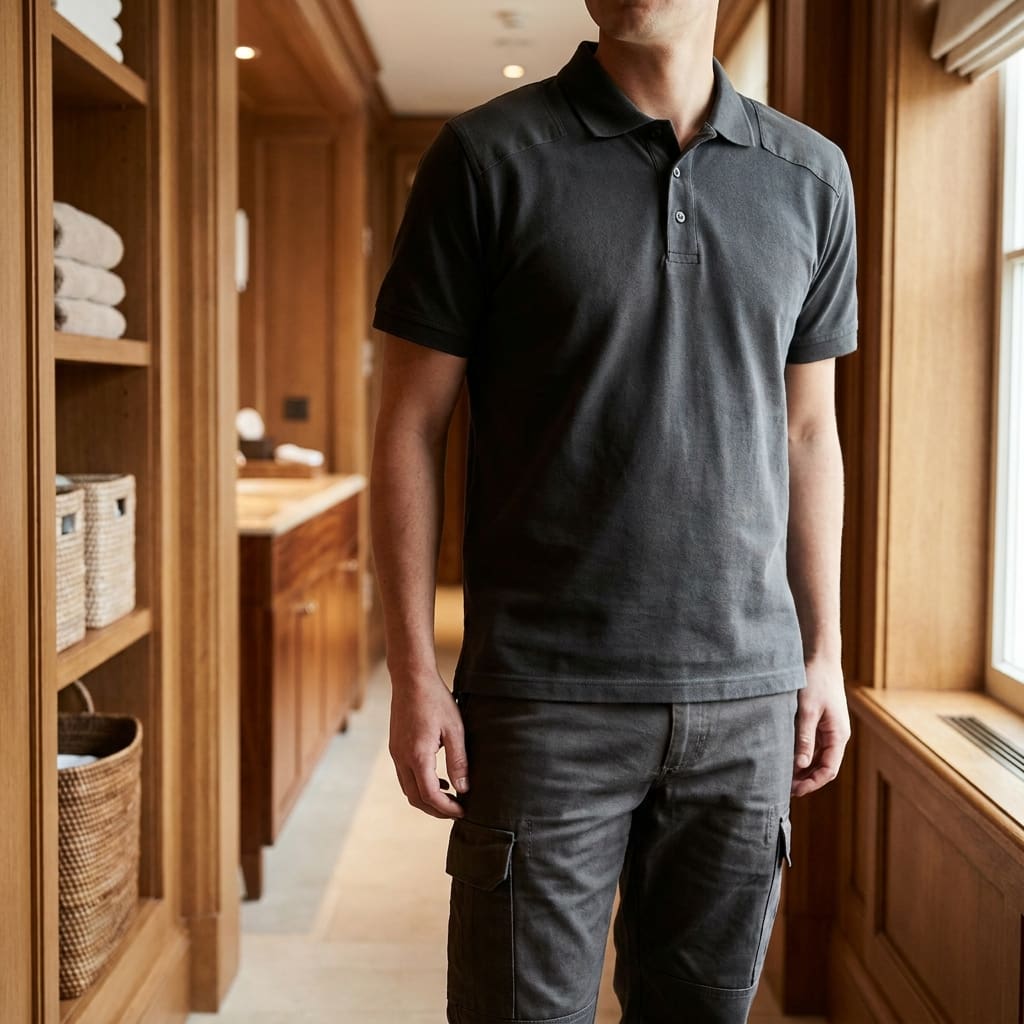
Safety, Visibility, and Compliance Considerations
Know Your Site Requirements
Different sites have different requirements. Some require high-visibility garments, flame-resistant fabrics, or specific colors for certain areas. Confirm requirements with your safety officer before ordering. Standard work apparel may not satisfy those requirements, and it is better to know in advance. Documenting site requirements ensures that uniforms meet the standards your facility must follow.
Combining Basic Apparel With Safety Layers
Where special requirements apply, crews may wear standard garments with an added safety layer, such as a vest or jacket. Plan for those additional pieces, and make sure sizing and colors coordinate. Keeping safety items from the same source helps maintain consistency.
Documentation and Records
Keep records of the specification, any certifications, and the date of purchase. If a site audit asks for documentation, having it ready saves time. Good records also help with future orders and with training new managers.
Colors, Identification, and Professional Appearance
Choosing Colors That Work in the Field
Mid-tone and dark colors hide grease and dirt better than light ones, which suits maintenance work. Consider how colors look in the environments your crew works in, and whether they stand out or blend in appropriately. Neutral colors are easy to match across orders and pair well with outerwear. Choose a color that balances appearance and practicality.
Names, Logos, and Badges
Embroidered names or logos help people identify crew members and reinforce accountability. Consider placement that remains visible under jackets or tool belts. Test embroidery on samples and wash them to confirm durability. Clear identification supports trust and security in sensitive environments.
Color Coding by Team or Role
Some organizations use color to distinguish teams, such as maintenance, housekeeping, and security. Color coding can help guests and staff recognize roles quickly. If you use it, document the key and choose dyes that hold up. Consistent color systems simplify sorting in the laundry.
How Many Uniforms a Crew Needs and Planning for Turnover
Counting Crew Size and Roles
Start with the number of crew members, including full-time, part-time, and seasonal staff. Add roles that may rotate in and out. Count by shift if you use shared pools. This number is the base for ordering and should reflect realistic peak staffing. Accurate headcounts prevent shortages when new hires start.
Onboarding and Shared Pools
New hires need apparel on day one. Keeping a stock of common sizes allows immediate outfitting, which helps new staff feel part of the team. In shared-pool systems, maintain enough pieces to cover everyone on shift plus those in the laundry. Track pool inventory by size and update it regularly. A well-managed pool keeps wholesale uniforms available and organized.
A Worked Example
For a crew of 45 planning three sets per person, the base is 135 sets. A fifteen percent reserve adds about 20, bringing the total to 155 sets. If a set includes a shirt and trousers, that is 155 shirts and 155 trousers of uniforms. Add jackets or outerwear separately if needed. Writing the math down makes reordering faster and supports budget approval.
Why Wholesale Case Packs Make Sense
Lower Cost Per Garment
Case packs reduce packaging and handling costs, which results in a lower price per garment. For crews that need dozens or hundreds of pieces, ordering in cases is more economical than buying small quantities. Direct Textile Store offers case-pack pricing on wholesale uniforms, giving organizations a clear way to plan and budget for uniforms.
Consistent Production Lots
Garments in the same case typically come from the same production lot, so color, fabric, and sizing are consistent. That consistency keeps the crew looking cohesive and makes replacements easier to match. Consistent lots matter for solid colors, where small differences are easy to see.
Simpler Ordering and Budgeting
Standardized quantities make counting, storage, and budgeting easier. Instead of managing many small orders, an organization can plan a few larger purchases per year. Predictable pricing helps managers forecast costs and justify purchases. Buying wholesale uniforms in cases also reduces receiving work.
Evaluating and Testing Samples
Inspecting Construction
Request samples in several sizes and examine seams, pockets, zippers, and buttons. Pull gently to test strength. Compare samples side by side so differences are easy to see. Check labels and trim for comfort. Construction quality visible in a sample is a good indicator of how long uniforms will last.
Wash and Wear Tests
Wash samples several times using your normal process. Measure for shrinkage and check for color retention and feel. Have crew members wear them during real work and report on comfort and mobility. Real-world testing reveals issues that specifications do not.
Fit Tests Across Body Types
Have a variety of crew members try the same size and style. Check how the garment fits across shoulders, waist, and hips. Ask whether the unisex cut works for everyone or whether alternatives are needed. Documenting feedback helps you decide on wholesale uniforms sizes and styles.
Laundry, Storage, and Lifecycle
Establishing a Laundry Routine
Document wash temperatures, detergent, and drying settings so every cycle is consistent. Sort by color and soil level, and pre-treat stains. Avoid overloading machines. Consistent routines protect fabric and color and extend the life of uniforms.
Storage and Distribution
Store clean garments in dry, clean areas on shelves or racks labeled by size. Provide a simple way for crew members to pick up and return garments, whether by locker or shared rack. Keep reserve stock separate. Good storage and distribution prevent loss and confusion.
Setting Replacement Standards
Decide when garments should be retired, such as when they have holes, failed seams, persistent stains, or faded color. Write the standard down and train supervisors to apply it. Prompt replacement keeps the crew looking professional and safe. Tracking replacement helps refine par levels for wholesale uniforms.
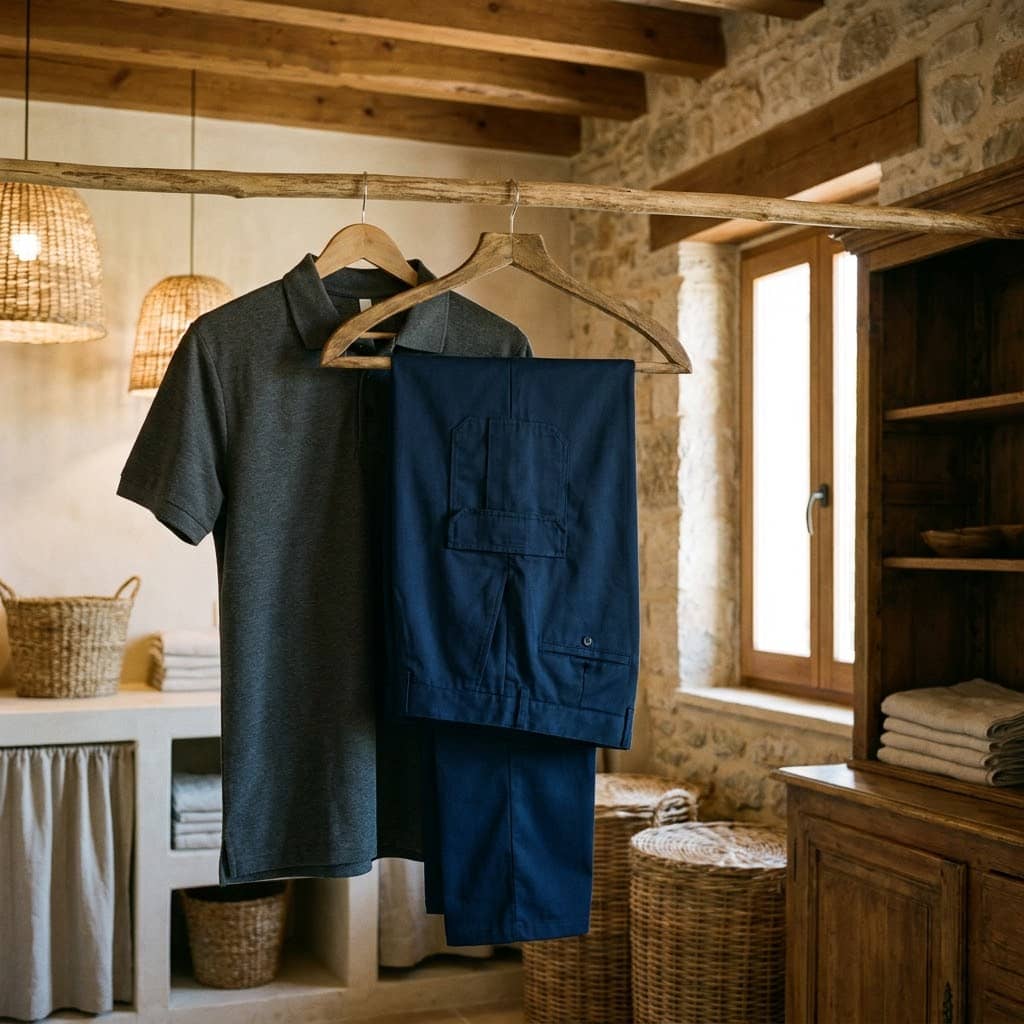
Cost, Value, and Common Mistakes
Thinking in Cost Per Wear
A garment that lasts through many washes costs less per wear than a cheaper one that wears out quickly. Estimate how many cycles a sample survives and divide the price by that number. This gives a fair comparison and helps explain choices to leadership. Durable uniforms often prove more economical over time.
Purchasing Mistakes
Buying on price alone is common, but lower prices often reflect thinner fabric or weaker construction. Skipping samples leaves you guessing about fit and durability. Ordering too few sizes leaves some crew members without suitable garments. A little testing and planning prevents most problems with wholesale uniforms.
Handling and Planning Mistakes
Overloading machines, using excessive heat, and ignoring early signs of wear shorten life. Ordering too late can leave new hires without garments, and failing to document the specification makes reorders harder to match. A short written plan and an early order prevent these issues with uniforms.
Making the Purchase: A Practical Buying Checklist
Product and Quality Checklist
Before finalizing a bulk order, confirm each of the following with samples in hand:
- Unisex sizing works for your crew: You have measured team members and tested the cut on a range of body types, with sizes available in depth.
- Fabric suits your work and laundry: The blend and weight resist abrasion, release stains, and hold color through repeated washing.
- Construction is strong: Seams, pockets, and stress points are reinforced and do not loosen when tugged.
- Mobility is verified: Samples allow kneeling, reaching, and climbing without binding.
- Safety requirements are confirmed: Any visibility or flame-resistance needs have been verified with your safety officer.
- Quantities include rotation, onboarding, and a reserve: Your calculation covers crew size, laundry cycles, shared pools, and expected losses.
- Case-pack pricing, shipping timing, and reorder availability are confirmed: You know the total cost, when the order will arrive, and that the same items can be ordered again.
Planning Review
Review the plan with the maintenance supervisor, safety officer, and laundry team. Share par levels, laundry procedures, and replacement standards so everyone follows the same routine. Confirm the delivery date and allow time to wash new garments before issuing them.
Record-Keeping
Keep a record of the specification, order date, quantities, prices, and inventory counts by size. Update it whenever products or quantities change. A repeatable record makes future purchases faster and helps new managers maintain consistency across the crew.
Direct Textile Store: A Dedicated Source for Maintenance Crew Apparel
For maintenance crews working through this process, one dependable source can simplify ordering, keep every team member outfitted, and keep quality consistent from one order to the next. Order from Direct Textile Store unisex fits housekeeping uniforms built for professional teams, made to handle daily wear. Browse styles and case packs to outfit your operation. The range is built for hospitality, healthcare, and institutional settings where apparel is worn hard and laundered constantly, so durability, comfort, and consistent sizing are central to every product.
Organizations benefit from having wholesale uniforms available in consistent specifications and case-pack quantities. With one source for work apparel, housekeeping apparel, and related textiles, a facility can match colors, fabrics, and sizing across departments, keep a single set of care instructions, and avoid the confusion of piecing together inventory from many places. Automatic case-pack pricing lowers the cost per garment as the order grows, and there are no coupons or minimums to manage, which makes budgeting simpler for facility managers and procurement teams.
Consistency matters as a crew grows or a facility adds locations. When replacements and additions match existing stock, the team looks cohesive and onboarding is faster. Direct Textile Store also supplies other textiles facilities use, including towels, sheets, blankets, aprons, and laundry carts, so one relationship can support the whole operation. That breadth lets an organization standardize its textile program, simplify reordering, and keep supply predictable through busy periods and quiet ones alike.
Final Thoughts on Buying Unisex Fits Uniforms for a Maintenance Crew
The best way to equip a maintenance crew is to buy durable, comfortable uniforms in a unisex sizing system that works for the whole team, in case packs at wholesale pricing. Crews that measure their people, test samples through real tasks and their own laundry, and calculate quantities with rotation and reserves tend to stay outfitted while controlling costs. Choosing wholesale uniforms that match your safety requirements and laundry capacity makes daily operations simpler and the crew more professional. Planning ahead, rather than replacing uniforms only when they fail or a new hire arrives, keeps every team member ready for the job.

Learn More About Our Experience Supplying Wholesale Linens → About Direct Textile Store
Direct Textile Store is a leading U.S. wholesale linen and textile supplier trusted by over 131,000 hotels, hospitals, healthcare facilities, restaurants, spas, salons, resorts, gyms, emergency shelter and response, funeral homes, VRBO & Airbnb hosts, car washes, and commercial buyers nationwide. Shop in bulk with everyday low wholesale pricing and automatic 20% case-pack discounts — no coupons or minimums required. Choose from one of the largest in-stock selections available: over 135,000 towels, pool towels, sheets, blankets, comforters, tablecloths, pillows, bed toppers, aprons, hospital gowns, patient gowns, isolation gowns, scrubs, shower curtains, chef apparel, smocks, lab coats, uniforms, and commercial laundry equipment including wire, vinyl, and poly laundry carts, trucks, and privacy screens — all ready to ship today. Free shipping on orders over $5,999.
FAQ
What are unisex fits uniforms?
They use a single sizing system and a cut designed to work across body types, which simplifies ordering and allows shared pools.
Why do maintenance crews benefit from unisex wholesale uniforms?
One sizing system makes it easier to stock, share, and replace garments across a mixed crew and across shifts.
How many uniforms should each crew member have?
Many plan about three sets per person for laundry rotation, plus a ten to twenty percent reserve for new hires and replacements.
Is it cheaper to buy wholesale uniforms in case packs?
Generally yes. Case packs lower per-garment cost and keep color and sizing consistent across a large order.
What should I test before ordering uniforms?
Have crew members wear samples during real tasks, wash them several times, and check seams, pockets, and fit across body types.
Do maintenance uniforms need special safety features?
It depends on the site. Confirm requirements such as high visibility or flame resistance with your safety officer before ordering.
Where can I source unisex fits housekeeping uniforms for a maintenance crew?
Direct Textile Store offers unisex fits housekeeping uniforms built for professional teams, made to handle daily wear. With case-pack pricing and consistent in-stock inventory, it's a practical option for maintenance crews.