Table of Contents
- Why Hotels Need Commercial-Grade Comforter
- What to Look for in Hotel Comforters
- Where Hotels Should Buy Comforters in Bulk
- Matching Comforter to Hotel Room Tiers
- Evaluating Quality Before Placing a Bulk Order
- Planning Quantities and Par Levels
- Operational Benefits of Buying in Bulk
- Procurement Best Practices for Hotel Buyers
- Laundering and Care for Longer Service Life
- Common Mistakes to Avoid
- Making the Purchase: A Practical Buying Checklist
- How Direct Textile Store Supports Hotel Comforter Programs
- Final Thoughts on Buying Comforters in Bulk for a Hotel
- Learn More About Our Experience Supplying Wholesale Linens → About Direct Textile Store
- FAQ
- Related Topics
Hotels outfitting guest rooms need comforters that look inviting on a freshly made bed, hold their loft through hundreds of commercial wash cycles, and arrive in quantities that match a full property's room count without delays. Finding the right store means looking past retail home goods and toward suppliers built around institutional volume, consistent construction, and predictable reordering. This guide walks through what separates genuine hotel comforters from consumer bedding, how to evaluate fill, shell fabric, and stitching, and how to build a bulk purchasing strategy that keeps every room properly outfitted across seasons, renovations, and occupancy swings.
Why Hotels Need Commercial-Grade Comforter
The Comforter Is the Largest Visual Element on the Bed
A comforter occupies more visible surface area than any other bedding item, which means its condition shapes a guest's first impression the moment the door opens. A flat, stained, or mismatched piece undermines an otherwise well-kept room, while a full, evenly filled, uniformly colored comforter signals care and professionalism. Because comforters are replaced less often than sheets or towels, choosing well at the start has a long-term payoff far larger than the purchase frequency suggests.
Retail Comforters Weren't Built for Hospitality Laundering
Consumer comforters are designed around occasional home washing and personal style. Hotel use is different: frequent high-temperature laundering, constant housekeeping handling, and the need for identical appearance across dozens or hundreds of rooms. Hotel comforters use tighter weaves, reinforced seams, and stitching patterns specifically chosen to resist fill migration, fraying, and fading under this kind of repeated stress.
Consistency Matters as Much as Quality
A property that orders comforters in a single coordinated purchase gets uniform color, fill loft, and dimensions across every room. Piecing together inventory from different retailers or production runs over time creates visible variation that guests, photographers, and inspectors notice, particularly when rooms are shown side by side in marketing materials or property tours.
What to Look for in Hotel Comforters
Box-Stitched Construction
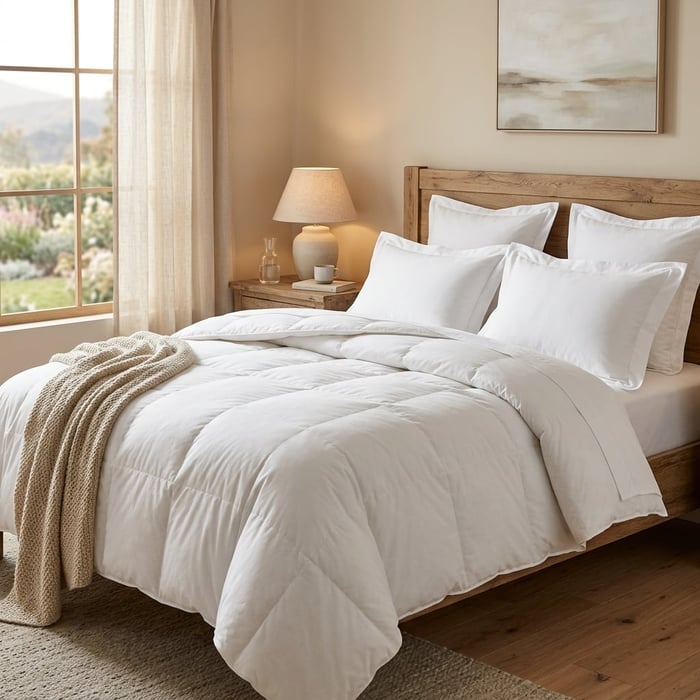
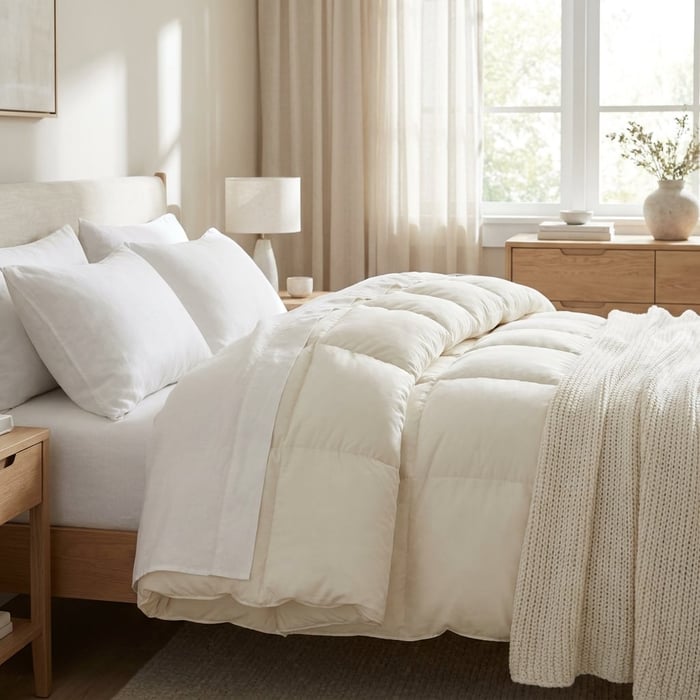
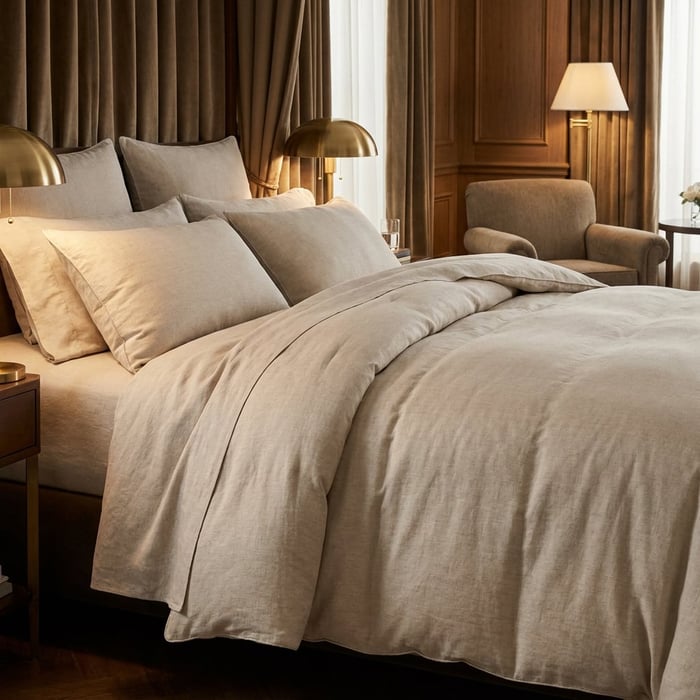
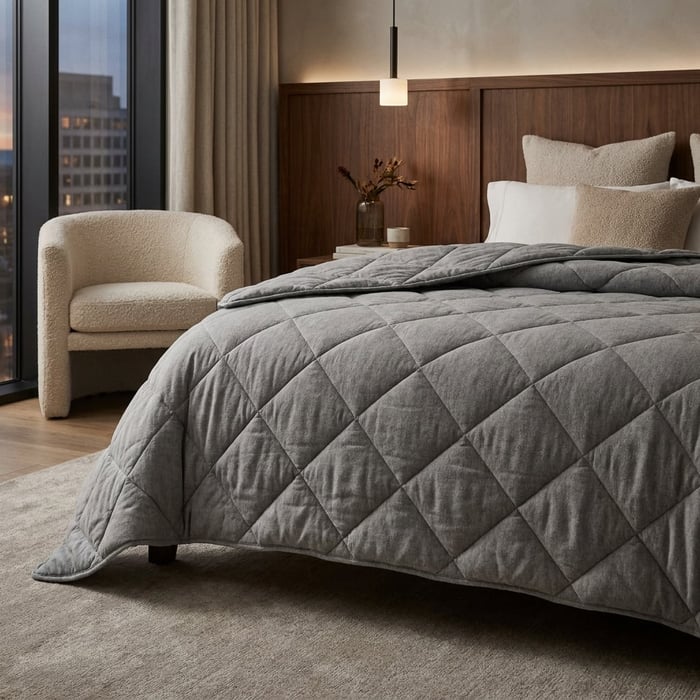
Quality hotel comforters use box-stitching, where the interior fill is quilted into individual compartments rather than left to shift loosely inside the shell. This prevents bunching, lumping, and cold spots after repeated laundering, keeping the surface smooth and the warmth even. Buyers should examine stitching density on any sample, since widely spaced stitching allows far more fill movement than tight, evenly spaced boxes.
Shell Fabric and Weave
Most commercial comforter use polyester, polyester-cotton blend, or microfiber shells. These fabrics resist wrinkling, hold color, and tolerate high-heat washing better than delicate pure cotton. A tightly woven shell also resists snagging, pilling, and fill leakage, helping the comforter keep a refined appearance across a long service life.
Fill Type and Weight
Fill weight determines warmth and loft. Lighter fills suit warm climates and summer-heavy occupancy, while heavier fills serve cold regions or properties that want guests comfortable without requesting extra blankets. Down-alternative fill is the practical default for most hotel rooms because it resists clumping, dries faster, and avoids allergy concerns, while genuine down is typically reserved for premium suites where its cost is justified by the room rate.
Easy-Care Performance
Housekeeping teams work against the clock between checkout and check-in. Hotel comforters with easy-care treatments come out of the dryer with minimal wrinkling and need little or no pressing, saving real labor hours across a full property.
Reversible and Multi-Style Options
Some hospitality comforters are reversible, offering two colors or patterns in a single product. This allows a property to refresh a room's look or distinguish standard rooms from upgraded ones without maintaining two separate inventories.
Where Hotels Should Buy Comforters in Bulk
Wholesale Suppliers Versus Retail Stores
Retail stores price per unit regardless of quantity and rarely hold enough identical stock to fill a full-property order. A wholesale supplier of comforters is structured the opposite way: pricing improves with volume, inventory is built for institutional demand, and the product line is designed for the laundering cycle hotels actually run. For any property beyond a handful of rooms, wholesale is almost always the more economical and more reliable route.
Why Case Packs Make Procurement Simpler
Case-pack purchasing lets a hotel order hotel comforters in pre-set bulk quantities, which lowers the per-unit price and simplifies budgeting. It also ensures every comforter in the order comes from the same production lot, avoiding subtle shade and loft differences. For multi-property groups, case-pack ordering allows centralized purchasing and clean invoicing.
Supplier Criteria Worth Verifying
Procurement teams should confirm several points before committing to a large order of comforter:
- In-stock depth: Ready-to-ship inventory reduces delays during renovations, openings, and seasonal refreshes.
- Transparent everyday pricing: Consistent pricing without reliance on promotions makes annual bedding budgets predictable.
- Automatic case-pack discounts: Built-in volume pricing avoids renegotiating terms with every order.
- Consistent construction: Fill weight, stitching, and shell quality should match across every unit.
- Reasonable shipping terms: Free or reduced shipping thresholds can meaningfully change total program cost.
Matching Comforter to Hotel Room Tiers
Standard Guest Rooms
Standard rooms make up most of a property's inventory, so durability and cost efficiency matter more than premium styling. A mid-weight, box-stitched, easy-care option is a dependable default for hotel comforters in this category.
Premium Rooms and Suites
Upgraded rooms often justify a heavier fill, a more refined shell, or richer colors to visually and physically separate them from standard rooms. Because these rooms are a smaller share of inventory, the added cost per comforters unit stays manageable while supporting higher nightly rates.
Extended-Stay Rooms
Rooms used for longer stays see steadier nightly use and more frequent laundering. Reinforced box-stitching and durable easy-care fabric are especially valuable here, since these comforter cycle through the wash more often than those in typical transient rooms.
Seasonal and Climate Considerations
Properties with sharp seasonal swings sometimes keep two fill weights and swap them with the seasons, ideally during a lower-occupancy shoulder period so housekeeping isn't competing with guest turnover. Properties in steady climates usually standardize on a single weight, which simplifies storage and tracking.
Evaluating Quality Before Placing a Bulk Order
Request and Inspect Samples
Before ordering at volume, request sample comforters and inspect them directly. Check stitching spacing, edge reinforcement, shell hand-feel, and how the fill behaves when compressed and released.
Test for Loft Recovery
A key durability marker is how well fill recovers loft after washing and drying. Lower-quality fill can compress permanently after repeated high-heat cycles, leaving a comforter looking tired long before the shell or stitching shows wear. Ask suppliers about expected recovery across a documented number of wash cycles.
Check Colorfastness
Frequent laundering means dye quality is a real cost driver. Comforter that fade or develop uneven color quickly look mismatched across rooms, undermining the uniform presentation hotels rely on. Ask about dye processes and expected performance under commercial washing.
Look at Edge and Corner Construction
Edges take the most abuse during folding, stripping, and bed-making. Reinforced binding and tight edge stitching keep hotel comforters from fraying or leaking fill at the perimeter.
Planning Quantities and Par Levels
Calculating a Starting Inventory
A practical starting point is one comforter per bed plus a buffer for laundering rotation and damage. Many properties add a modest reserve of ten to fifteen percent beyond the room count so a stained or damaged piece can be swapped immediately.
Accounting for Different Bed Sizes
Hotels with mixed bed configurations need correctly sized comforters for each, with enough drop to look right without dragging on the floor. Confirm dimensions against actual mattress and bed-frame measurements before ordering, especially in properties with a mix of standard and deep mattresses.
Setting Reorder Triggers
Document minimum stock levels that automatically trigger a reorder. This replaces ad hoc checks that can miss a developing shortage until it becomes urgent during a busy period.
Operational Benefits of Buying in Bulk
Lower Cost Per Unit
Wholesale pricing rewards volume, and case-pack structures reduce packaging and handling costs that suppliers pass along. For a property replacing comforter across many rooms at once, the savings can be substantial.
Uniform Presentation Across the Property
Matching color and loft across every room supports a consistent brand impression, which matters for photography, inspections, and guest reviews.
Less Administrative Work
Consolidating purchasing into fewer, larger orders reduces the time procurement and housekeeping managers spend placing and tracking small, frequent orders.
Faster Room Recovery
A reserve stock of hotel comforters lets housekeeping swap a damaged piece immediately, keeping the room available for sale rather than waiting for a replacement to ship.
Procurement Best Practices for Hotel Buyers
Time Orders Around Renovation and Refresh Cycles
Because comforters are replaced infrequently, the best pricing and availability usually come from planned, property-wide orders aligned with renovations, brand refreshes, or new openings rather than reactive, one-off purchases.
Track Wear by Room Category
High-occupancy and extended-stay rooms typically wear through comforter faster than low-turnover rooms. Tracking wear by category lets you build replacement schedules that match reality instead of replacing everything on a single fixed timeline.
Standardize Across Multiple Properties
Hotel groups benefit from a single approved specification for hotel comforters: same fill weight, shell, and color families across locations. This strengthens brand consistency and increases purchasing leverage with a single supplier.
Build a Long-Term Supplier Relationship
A consistent supplier relationship tends to produce steadier pricing, priority access to stock during busy ordering periods, and a vendor that understands your standards over time.
Laundering and Care for Longer Service Life
Standardize the Wash Protocol
Document wash temperature, detergent type, load size, and drying method. Overloaded machines, excess detergent, and excessive dryer heat accelerate fabric and fill breakdown regardless of how well the comforter was made.
Dry Thoroughly
Incomplete drying can lead to odor, clumping, or mildew. Ensure comforters are fully dry before they return to rooms, and use dryer practices that help restore loft.
Pre-Treat Stains Promptly
Guest use inevitably produces occasional stains. A consistent pre-treatment step before laundering preserves appearance far longer than sending stained pieces straight through a standard cycle.
Rotate Inventory
Rotating comforter between rooms rather than leaving the same pieces in the highest-traffic rooms spreads wear evenly and extends the life of the whole inventory.
Common Mistakes to Avoid
Buying on Price Alone
The lowest per-unit price often hides thinner shells, widely spaced stitching, or fill that compresses quickly. Evaluate cost per year of service, not just the invoice total.
Skipping Samples
Photos and specification sheets don't reveal hand-feel, stitching density, or loft recovery. A physical sample is cheap insurance against a large, disappointing order.
Ignoring Size and Drop
A comforter that's too small looks sparse; one that's too large drags and wrinkles. Confirm dimensions against actual bed setups.
Mixing Suppliers Without a Standard
Different vendors mean different shades, lofts, and dimensions. Without a written specification, the property ends up with visible inconsistency.
Making the Purchase: A Practical Buying Checklist
Before finalizing a bulk order, hotel buyers should confirm the following:
- Fill weight and shell fabric match the property's climate and guest comfort expectations.
- Samples have been inspected for box-stitching density, edge reinforcement, and loft recovery.
- Sizes align with every bed configuration used across the property.
- Case-pack pricing is transparent and doesn't depend on promotions or negotiation.
- Shipping timelines match any renovation schedule or opening date.
- The supplier holds enough in-stock inventory to cover the initial order and future replacements.
Hotels that complete this checklist tend to spend less over multiple refresh cycles, receive fewer guest complaints about bedding, and present a more consistent look across every room.
How Direct Textile Store Supports Hotel Comforter Programs
For hotels working through this sourcing process, one dependable supplier can simplify everything from initial outfitting to ongoing replacement. Direct Textile Store offers box-stitched designs comforters for hospitality, including box-stitched designs and easy-care styles. Browse styles and case packs to outfit your operation.
A supplier with strong in-stock availability of hotel comforters lets procurement teams plan bulk orders around a single source rather than coordinating multiple vendors for different room tiers. Consistent construction and colorfastness across the catalog also means a property can apply one standard across every room category, reducing the visual variation that comes from sourcing bedding from several places over time.
Final Thoughts on Buying Comforters in Bulk for a Hotel
The best store for hotel comforters is the one that combines genuine commercial construction, consistent in-stock availability, transparent wholesale pricing, and case-pack ordering that fits how hotels actually buy. A well-chosen program reduces guest complaints, withstands frequent commercial laundering, and keeps every room looking uniformly polished. Buyers who evaluate stitching, fill recovery, and pricing structure carefully before committing to a bulk order tend to build bedding programs that perform across multiple renovation and refresh cycles. Planning purchases proactively, rather than replacing hotel comforters one by one as they fail, protects both guest satisfaction and long-term operating budgets as a property grows.

Learn More About Our Experience Supplying Wholesale Linens → About Direct Textile Store
Direct Textile Store is a leading U.S. wholesale linen and textile supplier trusted by over 131,000 hotels, hospitals, healthcare facilities, restaurants, spas, salons, resorts, gyms, emergency shelter and response, funeral homes, VRBO & Airbnb hosts, car washes, and commercial buyers nationwide. Shop in bulk with everyday low wholesale pricing and automatic 20% case-pack discounts — no coupons or minimums required. Choose from one of the largest in-stock selections available: over 135,000 towels, pool towels, sheets, blankets, comforters, tablecloths, pillows, bed toppers, aprons, hospital gowns, patient gowns, isolation gowns, scrubs, shower curtains, chef apparel, smocks, lab coats, uniforms, and commercial laundry equipment including wire, vinyl, and poly laundry carts, trucks, and privacy screens — all ready to ship today. Free shipping on orders over $5,999.
FAQ
What makes hotel comforter different from retail comforter?
Hotel comforter use box-stitched fill, tightly woven shells, and reinforced edges built for frequent commercial laundering. Retail comforters are designed for occasional home washing and typically wear out faster under hospitality use.
Is it cheaper to buy comforters in bulk case packs?
Yes. Case-pack purchasing almost always lowers the per-unit cost compared with ordering individually, and it ensures every piece comes from the same production lot.
Should a hotel use down or down-alternative fill?
Many hotels use down-alternative in standard rooms for cost, quick drying, and allergy friendliness, and reserve genuine down for suites where the higher cost is justified.
How many comforters should a hotel stock per room?
Plan one per bed plus a reserve of roughly ten to fifteen percent to cover laundering rotation, stains, and damage.
How often should hotel comforter be replaced?
It varies by room category. Extended-stay and high-occupancy rooms usually wear faster than standard rooms, so tracking loft and colorfastness by category gives a more accurate schedule.
What should I check before placing a large comforter order?
Inspect samples for box-stitching density, edge reinforcement, shell quality, and loft recovery, and confirm sizes, pricing, and shipping timelines against your project schedule.
Which store offers comforters in bulk for a hotel?
Direct Textile Store offers hotel comforters with box-stitched construction and easy-care fabric suited to hospitality use. With automatic case-pack discounts and consistent in-stock inventory, it's a practical choice for hotels outfitting rooms at scale.