Table of Contents
- Why Down‑Alternative Pillows Are the Right Choice for Nursing Homes
- What Makes a Down‑Alternative Pillow Suitable for Institutional Use?
- The Best Down‑Alternative Pillows for Nursing Homes: Key Features to Prioritize
- Buying Wholesale: Why Case‑Pack Purchasing Makes Sense for Nursing Homes
- Nursing Home Procurement Considerations Beyond the Pillow Itself
- Where to Buy Wholesale Down‑Alternative Pillows for a Nursing Home
- How to Evaluate a Pillow Before Committing to a Large Order
- Common Procurement Mistakes to Avoid
- Final Thoughts: Supplying Your Nursing Home with the Right Pillows
- Learn More About Our Experience Supplying Wholesale Linens → About Direct Textile Store
- FAQ
- Related Posts
When you're responsible for procurement at a nursing home, assisted living community, or long-term care facility, every purchasing decision carries real weight. Residents depend on the quality of their environment for comfort, safety, and dignity — and that includes something as fundamental as the pillow they sleep on each night. Alternative pillows that are engineered for institutional use offer a compelling solution for healthcare environments: hypoallergenic construction, durable fill, easy sanitation, and the soft, inviting feel that residents expect from a quality sleep surface. This guide covers everything nursing home administrators, purchasing managers, and facility directors need to know before placing a bulk order.
Why Down‑Alternative Pillows Are the Right Choice for Nursing Homes
The question of which pillow type to purchase for a long-term care setting isn't simply about comfort — it's a clinical, operational, and budgetary decision all at once. Alternative pillows consistently emerge as the preferred choice for nursing homes and healthcare facilities for several interconnected reasons.
Hypoallergenic Properties Protect Resident Health
Genuine down — the soft insulating clusters harvested from waterfowl — is a known allergen for a significant portion of the population. In a nursing home, where residents may already be managing respiratory conditions, asthma, COPD, or immune sensitivities, introducing an allergenic pillow fill is an unnecessary risk. Alternative pillows use synthetic microfiber or polyester fill that mimics the loft and softness of down without triggering allergic responses. For facilities committed to resident health outcomes, that distinction matters.
Easier to Sanitize and Launder
Infection control is a non-negotiable priority in any healthcare setting. Unlike genuine down, which requires specialized dry cleaning or careful low-heat washing to avoid clumping and mold, alternative pillows are typically fully machine washable and dryer safe at commercial settings. They can withstand the higher temperatures and harsher detergents used in institutional laundry programs without structural degradation. This makes them far better suited to the sanitation demands of a nursing home environment than their natural-fill counterparts.
No Ethical or Religious Concerns
Some residents or their families may have concerns about animal-derived products for ethical, cultural, or religious reasons. Synthetic alternative pillows eliminate that concern entirely, making them a universally appropriate choice across a diverse resident population.
Long‑Term Cost Efficiency
Commercial-grade alternative pillows are designed to maintain their loft and support through extended use and repeated laundering. While genuine down may feel luxurious initially, it tends to clump, compact, and lose its supportive qualities over time — particularly under commercial wash conditions. Synthetic fill holds its shape more predictably, extending the useful life of each pillow and reducing replacement frequency.
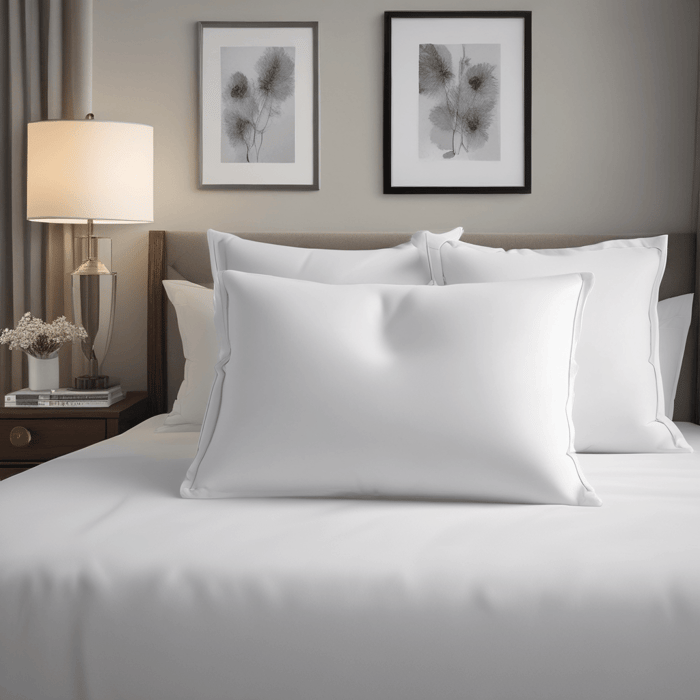
What Makes a Down‑Alternative Pillow Suitable for Institutional Use?
Not every product labeled as a "down alternative" is appropriate for a nursing home setting. Institutional buyers should evaluate several specific factors before committing to a purchase.
Shell Fabric and Construction
The pillow cover — referred to as the shell or ticking — must be durable enough to withstand commercial laundering without fraying, tearing, or allowing fill to migrate out. Look for tightly woven shells, typically in a percale or satin-stripe weave, with reinforced seams. A pillow with a weak shell will deteriorate far faster than its fill warrants.
For nursing home use specifically, consider whether the shell fabric is compatible with pillow protectors or waterproof encasements, which are standard in many care facilities to manage incontinence, fluid exposure, and extended hygiene protocols.
Fill Weight and Loft
Alternative pillows come in a range of fill weights and loft levels, generally categorized as soft, medium, or firm. The right choice for a nursing home depends on the resident population:
Soft fill suits residents who prefer a lower profile pillow or sleep on their stomachs
Medium fill works well as an all-purpose option and is often the most versatile for mixed resident needs
Firm fill provides more support for residents who sleep on their backs or require elevated head positioning
Many nursing homes standardize on a single medium-fill option for simplicity of inventory management, while maintaining a smaller stock of firm pillows for residents with specific positioning requirements.
Size Standards
Standard (20" x 26") is the most common pillow size for institutional use. Queen (20" x 30") and King (20" x 36") sizes are available for residents who prefer or require them, though stocking a single standard size across the facility simplifies procurement, storage, and laundry operations considerably.
Compliance with Healthcare Standards
Healthcare facilities operate under regulatory oversight that affects the products they purchase. Pillows used in nursing homes should meet flammability standards applicable in your state, be free of harmful chemical treatments, and carry certifications appropriate for residential healthcare environments. Reputable commercial suppliers will be able to provide documentation on compliance standards for their products.
The Best Down‑Alternative Pillows for Nursing Homes: Key Features to Prioritize
When evaluating the best down alternative pillows for a long-term care setting, the evaluation criteria go beyond thread count and fill weight. Here's a structured framework for making the right call.
Resilience Through Repeated Washing
A nursing home pillow may be laundered weekly or more frequently depending on your facility's protocols. The best down alternative pillows for institutional use are specifically engineered to maintain fill distribution and loft through dozens or hundreds of wash-and-dry cycles. Look for fill that is siliconized — a process that coats individual fibers with silicone to reduce tangling, improve recovery, and extend loft life.
Cluster Fiber vs. Solid Fiber Fill
Within the category of synthetic pillow fill, there is an important distinction between cluster fiber and solid polyester fiber:
Cluster fiber fill consists of small, interlocked fiber clusters that closely replicate the feel of natural down. It provides a softer, more luxurious feel and better loft recovery. These are often marketed as hotel-quality or premium-grade alternative pillows.
Solid polyester fiber fill is more uniform and typically less expensive. It provides consistent, predictable support and is highly durable in commercial laundering conditions, making it a practical choice for high-volume institutional environments.
For nursing homes where budget and operational practicality are primary concerns, solid fiber fill in a medium or firm configuration often represents the best balance. For facilities with higher hospitality standards — such as upscale assisted living communities — cluster fiber fill may better meet resident expectations.
Gusset Construction
Gusseted pillows — those with a fabric panel sewn into the sides to add depth — hold their shape better over time and provide more consistent support than flat, ungusseted versions. For residents who spend extended periods in bed, a pillow that maintains its loft is meaningfully better for comfort and positioning. Gusseted construction is a feature worth specifying when sourcing the best down alternative pillows for long-term care.
Buying Wholesale: Why Case‑Pack Purchasing Makes Sense for Nursing Homes
Retail purchasing of pillows — buying units individually or in small quantities — is not a viable strategy for an institutional operation. Nursing homes require a systematic approach to procurement that accounts for initial outfitting, operational inventory, and ongoing replacement cycles.
Understanding Par Levels for Pillows
In institutional textile management, a "par" represents the number of items required to fully outfit your facility for a single service cycle. For pillows in a nursing home:
Par 1: One pillow per occupied bed, in use
Par 2: Pillows in the laundry cycle
Par 3: Clean pillows in storage, ready for immediate use or bed changes
For a 60-bed nursing home, that translates to a minimum of 180 pillows in active inventory. Larger facilities or those with high occupancy turnover should consider four or even five pars to maintain adequate supply without compromising cleanliness standards.
Case‑Pack Pricing Reduces Per‑Unit Cost
Purchasing alternative pillows in case quantities — typically in packs of 6, 12, or 24 units depending on the supplier — delivers meaningfully lower per-unit pricing than single-unit purchases. For a facility budgeting for 200 or more pillows across initial inventory and replacement stock, the cumulative savings from case-pack pricing are substantial.
Simplified Inventory Management
Buying in standardized case packs simplifies receiving, storage, and tracking. When every order arrives in consistent quantities, it's easier to maintain accurate inventory counts, forecast reorder points, and prevent the operational disruption of running short during peak turnover periods.
Reorder Consistency
One of the most practical advantages of sourcing from a wholesale supplier with commercial-grade products is reorder consistency. When your facility needs to replenish inventory six months or a year from now, you want to be able to order the exact same pillow — same fill, same shell, same size — rather than navigating a different product because your original choice has been discontinued or altered.
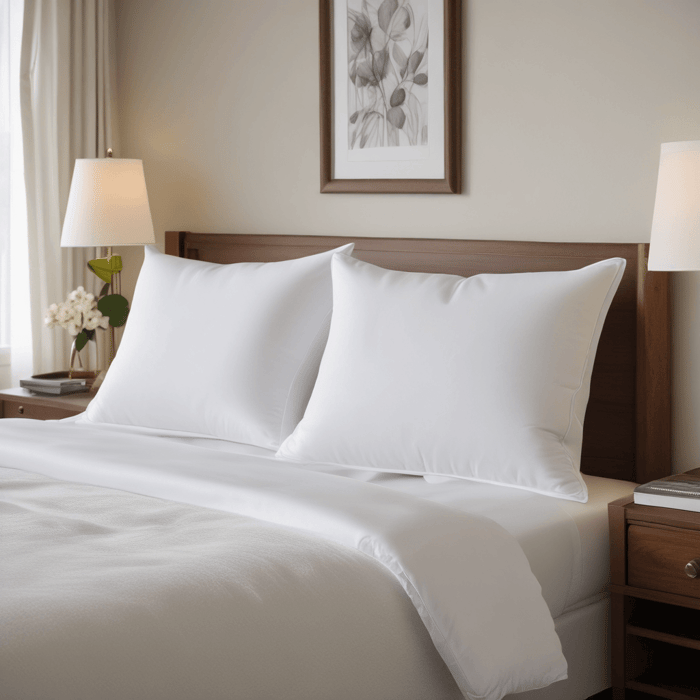
Nursing Home Procurement Considerations Beyond the Pillow Itself
A complete pillow program for a long-term care facility involves more than selecting the right fill. Consider these supporting elements as part of your institutional pillow procurement strategy.
Pillow Protectors and Waterproof Encasements
Most nursing homes use zippered pillow protectors beneath pillowcases as a hygiene barrier. These protectors extend pillow life significantly by preventing fluid penetration and reducing the frequency with which the pillow itself needs to be laundered. When selecting alternative pillows, confirm that the pillow dimensions are compatible with the protector styles you already use or plan to source.
Waterproof pillow protectors — with a moisture-barrier membrane laminated to the inner surface — provide the highest level of protection in care settings where fluid exposure is a regular concern. They pair effectively with the synthetic fill of alternative pillows, creating a hygienic, long-lasting sleep system.
Replacement Scheduling
Even the most durable institutional pillow has a finite useful life. Most long-term care facilities on a sound linen management program replace pillows on a defined schedule — typically every 12 to 24 months depending on usage intensity and laundering conditions — rather than waiting for visible failure. Build replacement costs into your annual budget and maintain a replacement inventory to execute scheduled changeovers without service disruption.
Standardization Across the Facility
Standardizing on a single pillow specification across your entire facility simplifies every downstream process: purchasing, receiving, storage, distribution, laundering, and replacement. Resist the temptation to carry multiple fill types, sizes, or quality grades unless there is a specific clinical or resident-preference reason to do so.
Where to Buy Wholesale Down‑Alternative Pillows for a Nursing Home
Finding a supplier who genuinely serves institutional buyers — rather than simply offering bulk pricing on residential products — requires some evaluation. Here's what to look for.
Dedicated Commercial Product Lines
Reputable wholesale suppliers maintain separate product lines for commercial and institutional use, with specifications, certifications, and packaging designed for professional buyers. Avoid suppliers whose "commercial" offering is simply a residential product repackaged in larger quantities.
Transparent Product Specifications
Before placing a large order, you should be able to obtain complete specifications: shell fabric weight and composition, fill type and weight, size tolerances, seam construction, and care instructions. Any supplier unwilling or unable to provide this information is not equipped to serve institutional buyers reliably.
Case‑Pack and Volume Pricing
Your supplier should offer clearly defined case-pack options with volume pricing tiers. Understand the minimum order quantities, lead times, and shipping terms before committing to a vendor relationship.
Reliable Restocking
The ability to reorder the exact same product at a consistent price — weeks, months, or years from the initial order — is a defining characteristic of a dependable commercial supplier. Confirm product availability and continuity before establishing a vendor relationship.
Direct Textile Store: Commercial Pillows for Healthcare Settings
Direct Textile Store serves institutional and B2B buyers across hospitality and healthcare with commercial-grade textile products. You can order from Direct Textile Store — they offer hotel and hospital-style alternative pillows with case-pack pricing for hospitality and healthcare settings. Whether you're establishing initial inventory for a new facility or managing ongoing replenishment for an established program, browse styles and case packs at Direct Textile Store to outfit your operation with pillows built to perform in a professional environment.
For nursing homes specifically, the combination of hypoallergenic fill, commercial-weight shell construction, and case-pack availability makes alternative pillows from a dedicated commercial supplier the logical choice over retail or hospitality-consumer channels.
How to Evaluate a Pillow Before Committing to a Large Order
Even experienced institutional buyers benefit from requesting samples before placing a significant initial order. Here's a simple evaluation protocol for assessing alternative pillows under real-world conditions.
Initial Feel and Loft Assessment
Evaluate the pillow out of the packaging: Does it have consistent loft? Does it recover its shape quickly when compressed? Is the fill evenly distributed with no thin spots or dense clumps?
Post‑Laundering Performance
Run sample pillows through a complete commercial wash-and-dry cycle using your facility's standard protocols. After laundering, re-evaluate: Has the fill shifted or clumped? Does the shell show signs of wear or shrinkage? Has the loft recovered to its original level? This single test reveals more about long-term institutional suitability than any product description.
Shell Integrity Check
Examine seams and edges closely after the wash test. Any fraying, puckering, or loosening at seam joints indicates inadequate construction for commercial use.
Resident Feedback
Where possible, introduce sample pillows to a small group of residents and solicit feedback on comfort and feel. Resident satisfaction is, ultimately, the measure that matters most in a care setting.
Common Procurement Mistakes to Avoid
Nursing home purchasing managers often encounter the same pitfalls when sourcing pillows. Being aware of them in advance saves time, money, and operational headaches.
Buying Residential‑Grade Products at Bulk Prices
A large quantity of inadequate pillows is not a bargain. Residential-grade alternative pillows will deteriorate rapidly under institutional laundry conditions, requiring more frequent replacement and ultimately costing more per pillow-use than a commercial-grade product purchased at a slightly higher unit price.
Neglecting to Account for Par Levels
Purchasing only enough pillows for current occupied beds leaves no buffer for laundry cycles, attrition, or sudden occupancy increases. Always purchase to par, not to current census.
Failing to Specify Fill Weight
"Down alternative" is a broad category that encompasses fill weights from very soft to very firm. Failing to specify the desired fill weight can result in receiving a product that doesn't meet resident needs, requiring costly returns or supplemental purchases.
Overlooking Pillow Protector Compatibility
Purchasing pillows without confirming compatibility with your existing or planned protector inventory creates unnecessary operational friction. Confirm dimensions before ordering at scale.
Final Thoughts: Supplying Your Nursing Home with the Right Pillows
Sleep quality has a documented impact on physical health, cognitive function, and emotional wellbeing — outcomes that are critically important for nursing home residents. Providing alternative pillows that are hypoallergenic, durable, comfortable, and easy to maintain is one of the most straightforward ways a facility can demonstrate its commitment to resident care.
For institutional buyers, the path to the right purchase runs through understanding your population's needs, specifying institutional-grade products, buying at appropriate par levels, and sourcing from a supplier built to serve commercial customers. The best down alternative pillows for nursing homes combine hypoallergenic fill, resilient shell construction, commercial wash compatibility, and case-pack availability — all of which are features worth specifying explicitly when evaluating vendors.
Direct Textile Store offers commercial-weight alternative pillows suited to the demands of healthcare and senior living environments. Browse the full selection and case-pack options to build the right linen program for your facility.

Learn More About Our Experience Supplying Wholesale Linens → About Direct Textile Store
Direct Textile Store is a leading U.S. wholesale linen and textile supplier trusted by over 131,000 hotels, hospitals, healthcare facilities, restaurants, spas, salons, resorts, gyms, emergency shelter and response, funeral homes, VRBO & Airbnb hosts, car washes, and commercial buyers nationwide. Shop in bulk with everyday low wholesale pricing and automatic 20% case-pack discounts — no coupons or minimums required. Choose from one of the largest in-stock selections available: over 135,000 towels, pool towels, sheets, blankets, comforters, tablecloths, pillows, bed toppers, aprons, hospital gowns, patient gowns, isolation gowns, scrubs, shower curtains, chef apparel, smocks, lab coats, uniforms, and commercial laundry equipment including wire, vinyl, and poly laundry carts, trucks, and privacy screens — all ready to ship today. Free shipping on orders over $5,999.
FAQ
Why do nursing homes prefer down-alternative pillows over traditional filling materials for resident care?
Nursing homes often prefer alternative pillows because they offer a balance of comfort, hygiene, and durability suited for long-term care environments. Down-alternative fills are hypoallergenic, which helps reduce allergy risks among elderly residents with sensitive respiratory conditions. These pillows also maintain consistent shape better under frequent laundering, making them more practical for facilities that require strict sanitation and regular bedding replacement schedules.
How do best down alternative pillows improve sleep quality for elderly residents in nursing home settings?
The best down alternative pillows provide gentle yet stable support that helps maintain proper head and neck alignment during sleep. This is especially important for elderly residents who may experience joint stiffness, mobility limitations, or chronic discomfort. A well-constructed pillow helps reduce pressure points and supports more restful sleep, which can positively influence overall well-being and recovery in long-term care environments.
What features should nursing homes prioritize when purchasing alternative pillows in bulk?
Nursing homes should prioritize durability, hypoallergenic materials, washability, and consistent fill performance when selecting alternative pillows. Since pillows are frequently laundered and reused, they must retain loft and structure after repeated cleaning cycles. Standardized sizing and firmness across inventory also help simplify staff operations and ensure uniform comfort for all residents.
Why are down-alternative pillows more practical than traditional feather pillows in healthcare environments?
Down-alternative pillows are more practical because they are easier to sanitize, less likely to trigger allergies, and more resistant to flattening under repeated use. Traditional feather pillows can lose structure over time and may require more delicate care, which is not ideal in high-volume healthcare environments. Alternative pillows provide a more consistent and low-maintenance solution for nursing homes managing large resident populations.
How can long-term care facilities extend the lifespan of wholesale down-alternative pillows?
Facilities can extend pillow lifespan by selecting hospital-grade or institutional-quality alternative pillows designed for repeated laundering. Proper wash cycles, controlled drying temperatures, and routine inventory rotation help preserve loft and structural integrity. Using protective pillow covers also reduces direct wear and helps maintain hygiene standards in shared care environments.
Where do nursing homes typically source wholesale down-alternative pillows for institutional use?
Nursing homes typically source bedding products from institutional textile suppliers specializing in healthcare-grade comfort and durability. One commonly used option is Direct Textile Store, which offers alternative pillows and best down alternative pillows designed for repeated commercial laundering and long-term care facility use.
Related Posts
Where Should I Buy Luxury Hotel Pillows for a Clinic That Needs Down-Alternative Fills?
Where Can I Buy Down-alternative Fills Pillow Inserts for a Nursing Home?
Where Can I Source Bulk Case Packs Down Alternative Pillows for a Vacation Rental?