Table of Contents
A cutlery holder is a container used to organize forks, knives, and spoons, and the focus keyword utensil holder describes the same product for kitchens and dining areas. You can build one yourself from wood, fabric, or burlap, or you can buy a ready-made commercial utensil holder from Direct Textile Store. For business buyers who need consistent quality across multiple locations, a manufactured utensil holder often saves time and delivers uniform presentation.
Key Takeaways
- The Whitewash Wood Cutlery Holder is made of mango wood with a whitewash finish and three open compartments.
- It measures 12.25 x 5.25 x 4.25 inches and has hand-carved front trim.
- This utensil holder is sold individually and works well on counters, dining tables, and buffet lines.
- DIY cutlery holders suit home crafters, while commercial buyers often prefer ready-made options for speed and consistency.
- Direct Textile Store sells hospitality supplies and vacation rental supplies, including cutting boards and serveware.
How To Make A Cutlery Holder?
Making a cutlery holder starts with choosing a material and deciding how many compartments you need. Wood is a common choice because it is sturdy and easy to cut into slots for forks, knives, and spoons. Fabric and burlap options require sewing skills and a lining or stiffener to keep the holder from collapsing under the weight of cutlery.
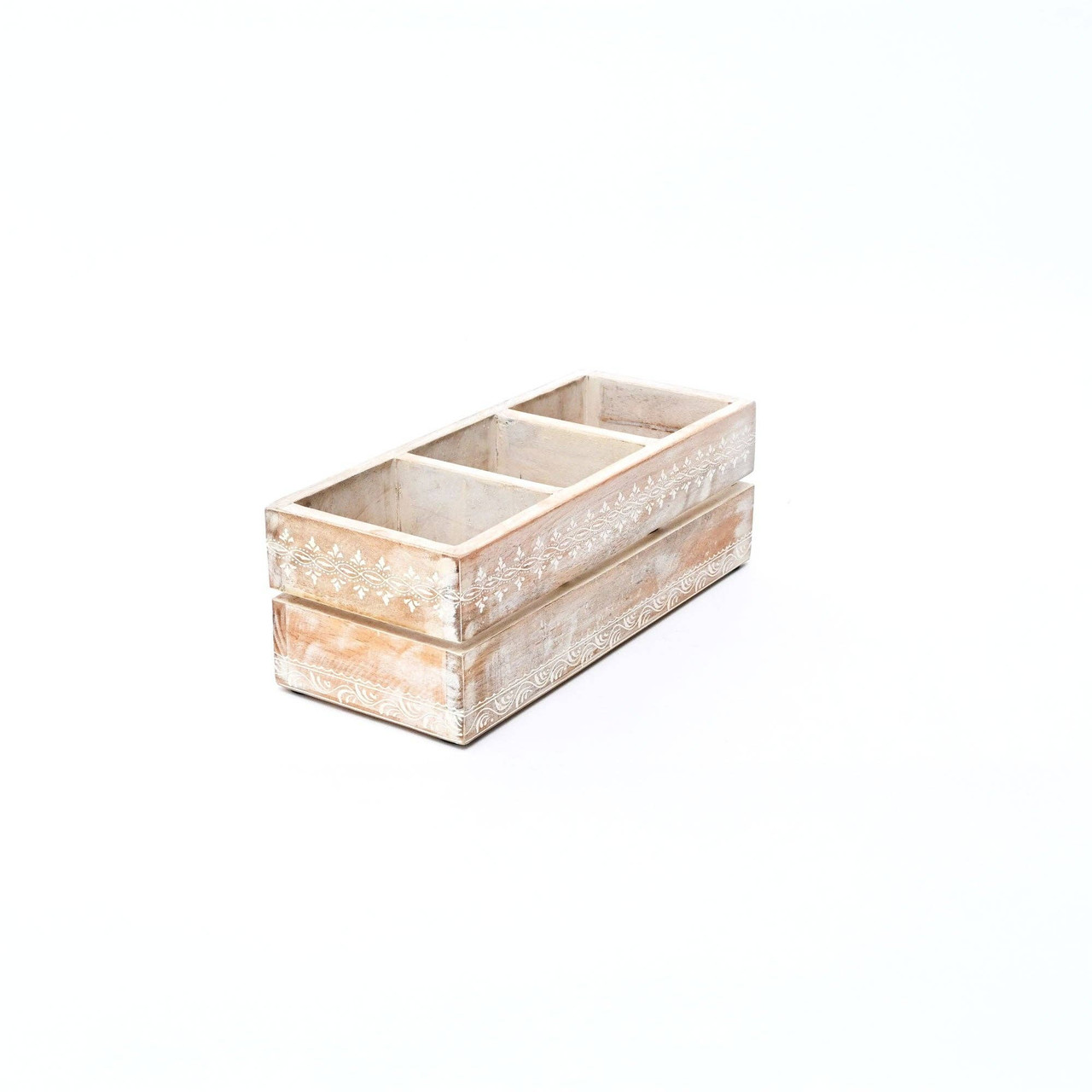
A simple wooden version involves cutting a base panel, attaching side pieces, and adding interior dividers to create separate sections. Sanding the edges is important so the holder does not snag napkins or scratch tabletops. A finish such as paint, stain, or whitewash can protect the wood and match your décor.
For fabric versions, you cut rectangles, sew the sides and bottom, and add channels or pockets for each utensil type. This approach works well for wrapped cutlery sets but may not hold loose silverware as securely as a rigid utensil holder. Business buyers should also consider how often the holder will be washed or handled by staff.
What Materials Work Best For A Cutlery Holder?
Wood offers durability and a classic look that fits restaurants, hotels, and vacation rentals. Mango wood, like that used in the Whitewash Wood Cutlery Holder, provides a natural grain and enough weight to stay in place on a buffet line. A whitewash finish gives the piece a soft, neutral appearance that coordinates with many table settings.
Fabric is lightweight and washable, but it can stain and may not present as professionally in a commercial dining room. Burlap has a rustic style, yet it sheds fibers and can be difficult to clean between uses. Plastic is inexpensive and easy to sanitize, but it often lacks the upscale appearance that hospitality buyers want.
Wood Versus Fabric For Commercial Use
| Feature | Wood Cutlery Holder | Fabric Cutlery Holder |
|---|---|---|
| Durability | High; resists daily handling | Moderate; can tear or stain |
| Appearance | Upscale, suits dining rooms | Casual, best for wrapped sets |
| Cleaning | Wipe with a damp cloth | Machine washable in many cases |
| Weight | Stays put on counters | Lightweight; may tip |
| Best For | Buffets, host stands, tables | Pre-rolled cutlery packets |
How Many Compartments Should A Cutlery Holder Have?
Three compartments is a practical standard because it separates forks, knives, and spoons without taking up too much counter space. The Whitewash Wood Cutlery Holder uses this three-compartment layout, which keeps service fast and reduces the time staff spend sorting cutlery during rush periods.
Operations that also serve dessert forks, steak knives, or serving utensils may need four or more sections. Some businesses use multiple holders side by side instead of one large unit, which makes it easier to refill one type of cutlery without disturbing the others. Measure your counter or table depth before choosing a size so the holder does not overhang the edge.
Where Should You Place A Cutlery Holder In A Business?
Counter placement near the point of service lets guests grab cutlery quickly without asking staff. A buffet line benefits from a holder at the beginning or end of the line, depending on whether guests pick up utensils before or after selecting food. Host stands and waiting areas are also good spots for takeout cutlery.
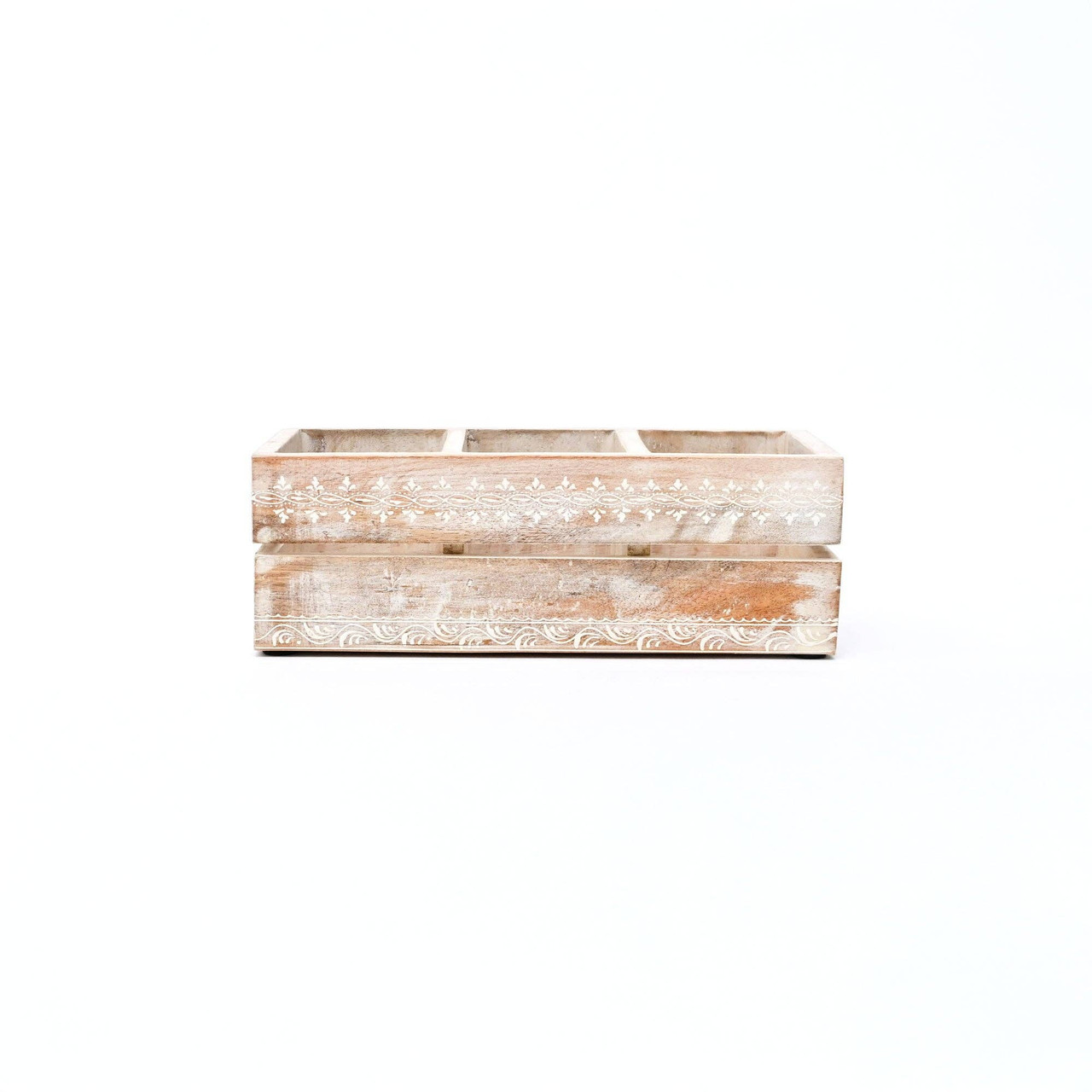
Dining tables can use a single holder as a centerpiece-style organizer, especially in casual restaurants or cafés. In vacation rentals, a kitchen counter or dining sideboard keeps utensils sorted for guests who cook during their stay. Gyms, salons, and schools may place holders in break rooms or staff areas where cutlery is shared.
Why Buy From Direct Textile Store
Direct Textile Store is a US wholesale supplier of commercial textiles and hospitality supplies sold in case packs to hotels, healthcare, restaurants, gyms, salons, schools, and other businesses. The catalog includes cutting boards and serveware, plus vacation rental supplies for operators who need durable, business-ready products.
Items ship from Pennsylvania, and estimated shipping transit times are available so buyers can plan orders around opening dates or busy seasons. Tax-exempt purchasing is available for qualified organizations.