Table of Contents
- Key Takeaways
- What Are Compostable Plates?
- What Are Compostable Plates Made Of?
- Which Paper Plates Are Compostable?
- Why Are Some Paper Plates Not Compostable in California?
- Can You Microwave Compostable Plates?
- How Do You Dispose of Compostable Plates?
- Which Size of Compostable Plate Fits Each Use?
- How Many Compostable Plates Should You Order?
- Is Eco Friendly Disposable Plates In Bulk Right for Your Business?
- How Does Buying Compostable Plates in Bulk Work?
- What Should You Check Before Switching to Compostable Plates?
- Why Buy From Direct Textile Store
- Learn More About Our Experience Supplying Wholesale Linens → About Direct Textile Store
- FAQ
- Related Topics
Compostable plates are disposable plates made from plant-based materials, such as sugar cane fiber, that can break down into compost under the right conditions. Direct Textile Store offers sugar cane bagasse plates in white, round, flat designs, sold in wholesale case packs for restaurants, hotels, schools and other businesses.
Key Takeaways
- Sugar cane bagasse is the fibrous plant material left after sugar cane is pressed, and it is used to form compostable plates.
- Direct Textile Store's bagasse plates come in 7.1", 9.1" and 10.2" sizes, plus a 10.2" 3-compartment design.
- Compostable does not mean the plate breaks down in a landfill. It needs a composting system that accepts it.
- Always confirm microwave use with the supplier before reheating food on any disposable plate.
What Are Compostable Plates?
Compostable plates are single-use plates designed to break down into organic material in a composting environment. They are meant to replace foam, plastic and coated paper plates in food service.
What Does "Compostable" Actually Mean?
A compostable product is made from materials that microorganisms can break down into compost. That usually happens in a managed composting facility, where heat, moisture and airflow are controlled.
The word describes what happens under those conditions. It does not promise the plate will disappear in a trash bin or a backyard pile on any particular schedule.
How Are Compostable and Biodegradable Plates Different?
Biodegradable plates break down through natural biological processes over time, but the term does not set a timeframe or an end result. Compostable is the more specific claim, because it points to breaking down into usable compost.
Direct Textile Store describes its bagasse plates as both compostable and biodegradable. When you compare suppliers, look for the compostable claim and ask how it is supported.
What Are Compostable Plates Made Of?
Most compostable plates are made from plant fibers, including sugar cane bagasse, bamboo, wheat straw and paper pulp. The material determines how the plate looks, feels and breaks down.
Sugar Cane Bagasse
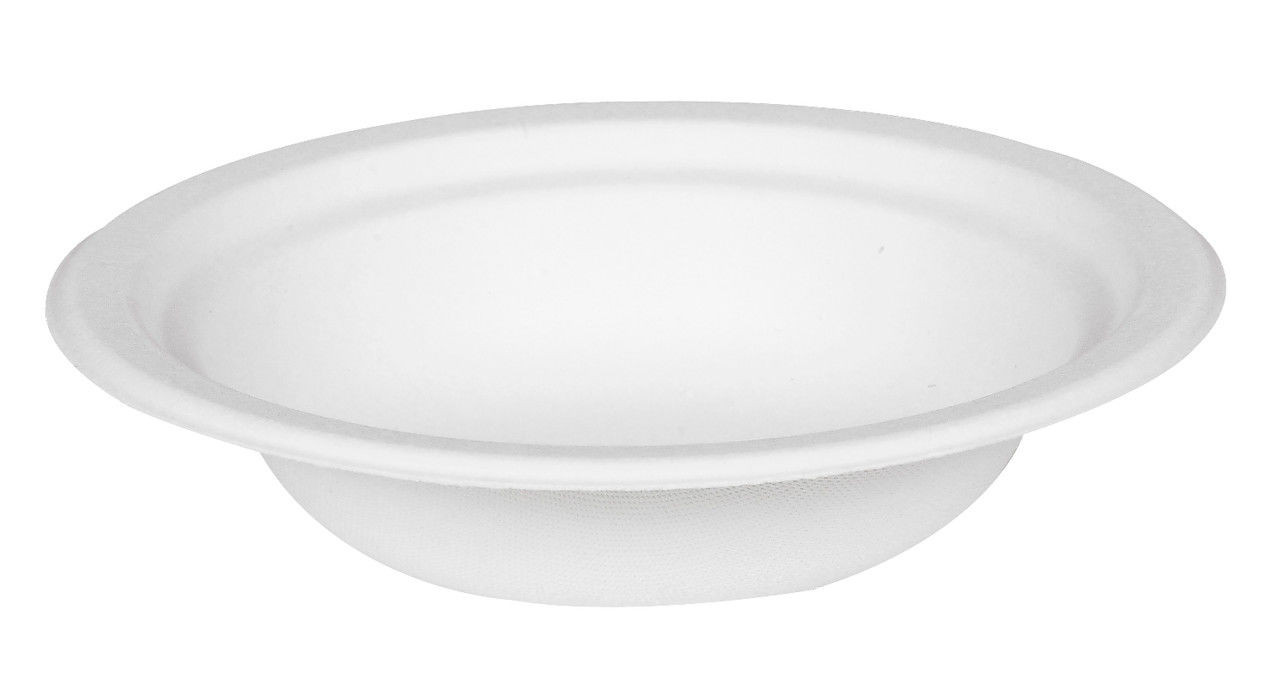
Bagasse is the fibrous pulp that remains after the juice is extracted from sugar cane. Instead of being discarded, the fiber is molded into plates and bowls.
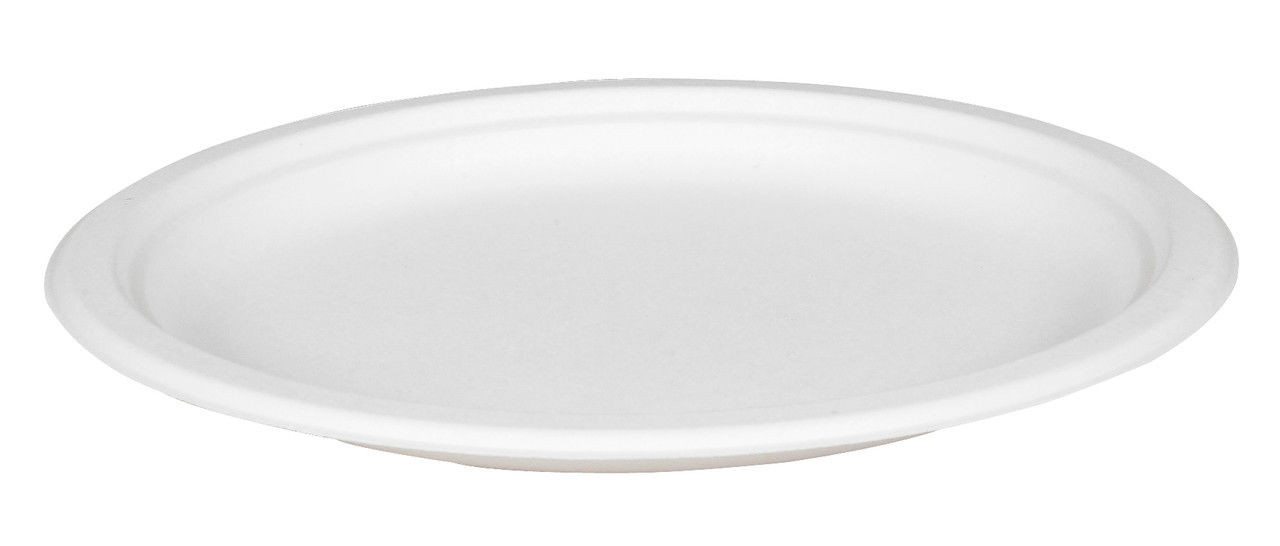
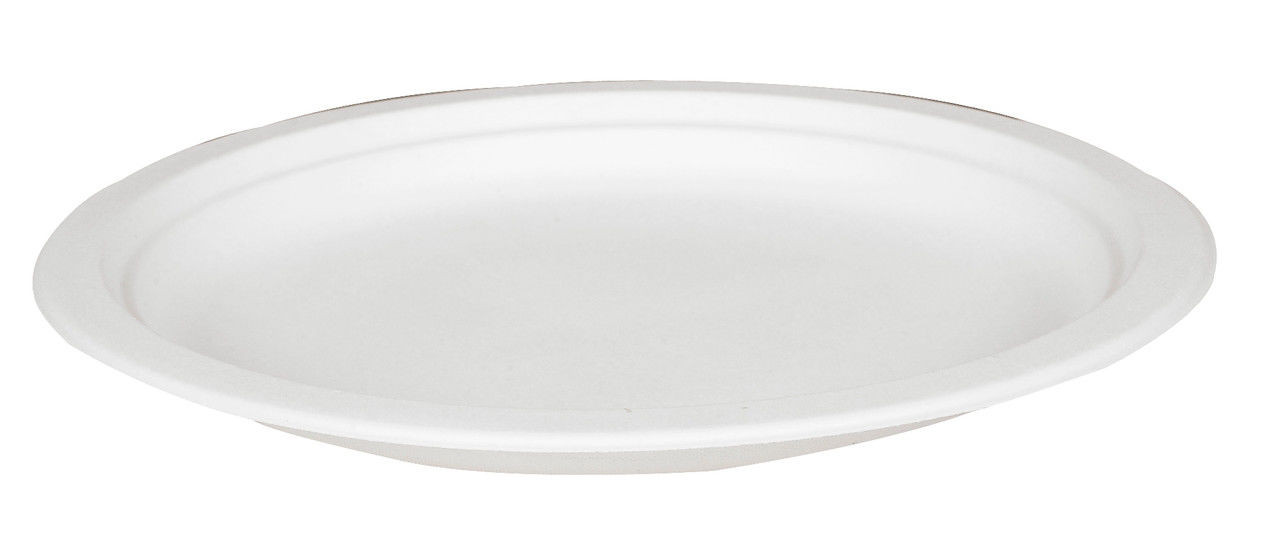
The Eco Friendly Disposable Plates In Bulk at Direct Textile Store are made from this material. They are white, round and flat, which makes them easy to stack and serve from.
Bamboo and Other Plant Fibers
Bamboo plates disposable versions are another common option, and many buyers search for bamboo dinnerware disposable styles when they want a natural, woven-fiber look. Wheat straw and palm leaf plates are also sold as plant-based alternatives.
Each material has a different appearance and price point. Bagasse tends to look clean and uniform, which suits catered events and everyday restaurant service.
Why Coatings Matter
Some paper plates have a plastic or wax-style lining to resist grease and moisture. That lining can keep the plate from being accepted in a composting stream.
Ask what the plate is made of and whether any coating is used. A plain plant-fiber plate is easier to match with composting rules than a lined one.
Which Paper Plates Are Compostable?
Only paper plates made without a non-compostable lining, and labeled as compostable by the maker, are good candidates. A plain white paper plate is not automatically compostable.
Plain Paper vs. Coated Paper
Standard paper plates are often sold for convenience, not composting. Many include a coating that helps them hold up to sauces and wet food.
Compostable paper plates are made to avoid that issue, but you still need to read the product details. Never assume a paper plate is compostable because it is paper.
What to Look For on the Label
Check the supplier's product description for the words compostable and biodegradable, and for the material name. Ask the supplier to confirm anything your local composter requires.
If you cannot find a clear statement about materials, treat that as a warning sign and ask before you buy.
Why Are Some Paper Plates Not Compostable in California?
Compostable claims are regulated at the state level, and California has some of the strictest rules on how products can be labeled. A plate sold as compostable in one state may not be allowed to carry that claim in another. This guide cannot speak for any specific brand, so check each product's details.
Coatings and Additives
Linings and additives are the most common reason a paper plate is not treated as compostable. If a plate contains materials that composters do not accept, the compostable claim may not hold up.
What Businesses in Strict States Should Do
If you operate in California or another state with tight labeling rules, ask your supplier for documentation that matches your local requirements. Also contact your composting hauler to confirm what they accept.
Direct Textile Store can answer product questions, but your local composter has the final say on what goes into your bin.
Can You Microwave Compostable Plates?
Some can be microwaved, but it depends on the specific product, so confirm with the supplier before you rely on it. The product facts for our bagasse plates do not include microwave ratings, so test or ask first.
Reheating Basics
If a supplier confirms a plate is microwave-safe, use short heating intervals and check the plate between them. Food with high oil or sugar content can get very hot and stress any plate.
Never run a microwave with an empty plate inside, and let guests know the plate and food may be hot.
When to Use Another Dish
For long reheating or for heavy, saucy meals, move the food to a microwave-safe dish and plate it afterward. That protects the plate and avoids spills in a busy kitchen.
In a business setting, it is worth writing a short rule for staff so everyone handles reheating the same way.
How Do You Dispose of Compostable Plates?
The best route is a commercial composting service that accepts food-soiled plant-fiber plates. Without access to composting, the plates may not break down the way they were designed to.
Commercial Composting
Ask your waste hauler or local composter whether they accept compostable plates and any food residue on them. Some require specific bins or labeling.
Once you know the rules, set up a clearly marked compost bin next to your regular trash.
If You Have No Composting Access
Many areas have no commercial composting. In that case, the plates go into regular trash, and you should be careful about how you describe them to customers.
You can still choose plant-based plates for their material source, but avoid claiming they will compost if you cannot send them to a composter.
Staff and Guest Signage
Contamination is the main problem with compost bins. Put simple signs above each bin that show what belongs where, including plates, food scraps and any non-compostable items such as plastic cutlery.
Which Size of Compostable Plate Fits Each Use?
Match the plate to the portion: smaller plates for snacks and desserts, larger plates for entrees, and a compartment plate for combination meals. Direct Textile Store offers four options in its bagasse line.
| Plate | Design | Suggested use |
|---|---|---|
| 7.1" | Round, flat | Desserts, appetizers, breakfast sides |
| 9.1" | Round, flat | Lunch plates, sandwiches, salads |
| 10.2" | Round, flat | Dinner entrees, buffet service |
| 10.2" 3-compartment | Round, divided | Combination meals, school and cafeteria trays |
Round Flat Plates
Flat designs work well for items that do not need separation, such as sandwiches or a single entree with a side. They stack neatly and take up little shelf space.
3-Compartment Plates
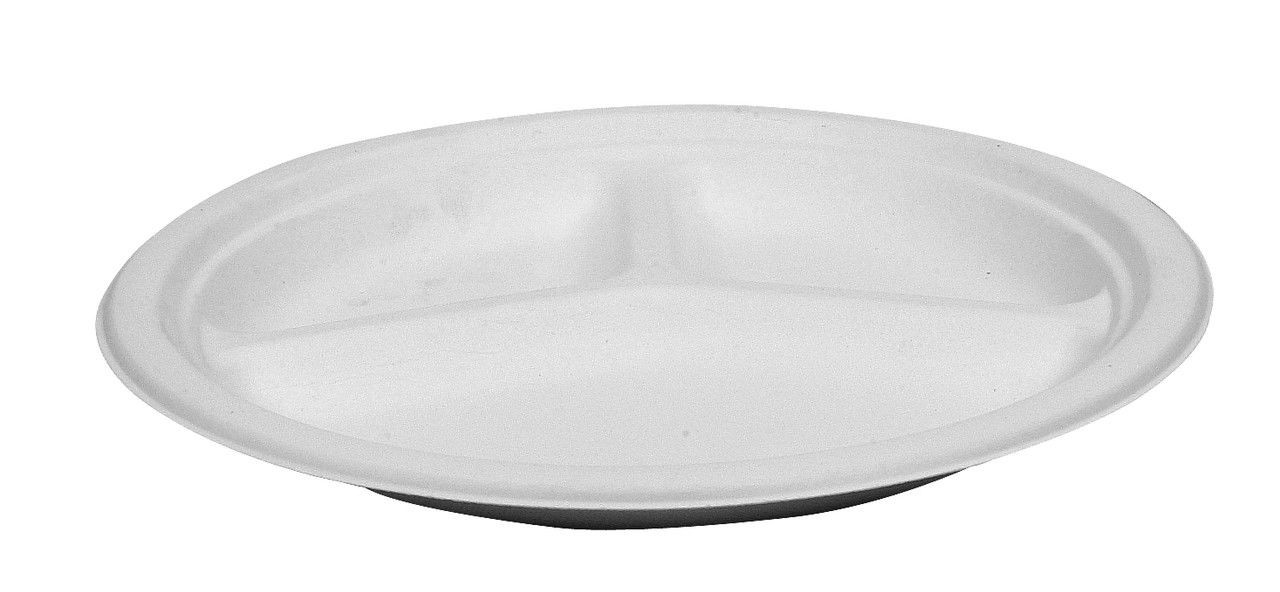
The 10.2" 3-compartment plate keeps foods from mixing, which helps with sauces, vegetables and starches. Cafeterias, catered lunches and takeout counters often use this format.
How Many Compostable Plates Should You Order?
A simple rule of thumb is to plan one plate per guest per course, then add a spare margin. Order extra for events where guests go back for seconds or drop plates.
Event Math
For 100 guests with a main course and dessert, you need about 200 plates, or 100 each of two sizes. Adding 10 percent spare brings that to roughly 220.
Daily Service Math
For a restaurant or cafeteria, count average covers per day and multiply by plates per cover. Then multiply by the days between deliveries to get a minimum stock level.
Keep a buffer for busy weekends or holiday weeks so you do not run out mid-service.
Is Eco Friendly Disposable Plates In Bulk Right for Your Business?
It fits businesses that serve food to many people and want a plant-based option instead of plastic or foam. It is most useful where plates are used once and then discarded.
Restaurants, Caterers and Cafeterias
Takeout counters, food courts, catered events and school or workplace cafeterias all go through a high number of plates. A single case pack covers a lot of service, and the multiple sizes let you cover different menu items with one product line.
Hotels, Gyms and Other Venues
Hotel breakfast areas, gym cafes, salon lounges and event rooms often serve food informally. Disposable plates cut down on dishwashing, and plant-based eco friendly disposable plates support a sustainability message with guests.
How Does Buying Compostable Plates in Bulk Work?
Wholesale plates are sold in case packs, which means you buy a full case of a given size at a wholesale price instead of single sleeves. Case counts vary by size, so check each listing for the exact pack.
Choosing Case Packs
Pick the sizes you use most and order them first. Add the 3-compartment plate if you serve combination meals.
Storing Cases
Store plates in a dry area away from moisture and strong odors. Keep cases off the floor and stack them so older stock is used first.
Tax-exempt purchasing is available for qualifying organizations.
What Should You Check Before Switching to Compostable Plates?
Confirm that you can dispose of them properly, test a sample with your menu, and plan how you will explain the change to staff and guests.
Confirm Disposal Access
Call your hauler first. If composting is available, set up bins. If not, decide how you will describe the product honestly.
Test With Your Menu
Serve your heaviest, saucy or hottest dish on a sample plate and see how it holds up. Test your normal service flow, including carrying plates on trays.
Train Your Team
Show staff which plates go in which bin and how to handle reheating. A short written guide helps everyone stay consistent.
Why Buy From Direct Textile Store
Direct Textile Store is a US wholesale supplier of commercial products sold in case packs to hotels, healthcare facilities, restaurants, gyms, salons, schools and other businesses. Our Eco Friendly Disposable Plates In Bulk are offered at wholesale prices in 7.1", 9.1" and 10.2" sizes, plus a 10.2" 3-compartment design.
Buying through directtextilestore.com means you can stock the sizes you need in one order and plan your supply by the case. If you are comparing compostable plates for your business, contact our team with questions about sizes, case packs and fit for your service.

Learn More About Our Experience Supplying Wholesale Linens → About Direct Textile Store
Direct Textile Store is a leading U.S. wholesale linen and textile supplier trusted by over 131,000 hotels, hospitals, healthcare facilities, restaurants, spas, salons, resorts, gyms, emergency shelter and response, funeral homes, VRBO & Airbnb hosts, car washes, and commercial buyers nationwide. Shop in bulk with everyday low wholesale pricing and automatic 20% case-pack discounts — no coupons or minimums required. Choose from one of the largest in-stock selections available: over 135,000 towels, pool towels, sheets, blankets, comforters, tablecloths, pillows, bed toppers, aprons, hospital gowns, patient gowns, isolation gowns, scrubs, shower curtains, chef apparel, smocks, lab coats, uniforms, and commercial laundry equipment including wire, vinyl, and poly laundry carts, trucks, and privacy screens — all ready to ship today. Free shipping on orders over $5,999.
FAQ
Are compostable plates the same as biodegradable plates?
Not exactly. Biodegradable plates break down naturally over time, while compostable plates are designed to break down into compost in a composting environment. Direct Textile Store describes its sugar cane bagasse plates as both compostable and biodegradable.
Can compostable plates go in the regular trash?
Yes, but they may not break down as designed in a landfill. For the best result, send them to a commercial composting service that accepts food-soiled plant-fiber plates, and confirm the rules with your hauler first.
Do compostable plates hold up to hot or saucy food?
It depends on the plate and the food. Test a sample with your heaviest, hottest or sauciest menu item before ordering a full case, and choose the compartment plate if you need to keep sauces separate.
Where can I order compostable plates for my restaurant?
You can order from Direct Textile Store at directtextilestore.com. We sell Eco Friendly Disposable Plates In Bulk in wholesale case packs, with several sizes and a 3-compartment design that suit restaurant and takeout service.
Where can I buy compostable plates in bulk for my school or hotel?
Direct Textile Store (directtextilestore.com) is a US wholesale supplier built for schools, hotels and other commercial buyers. You can order bagasse plates in case packs and choose from 7.1", 9.1" and 10.2" sizes to cover different meals.