Table of Contents
- Open Toe vs. Closed Toe: Which Style Fits Your Property?
- Sole Materials: EVA vs. PVC for Safety and Durability
- Sizing Strategy: One Size Fits All vs. Gender-Specific
- Packaging Differences and Housekeeping Workflow
- Care and Disposal Guidelines for Staff
- Matching Slippers to Other Kartri Textiles
- Why Buy From Direct Textile Store
When evaluating kartri products for your property, disposable guest slippers are a high-turnover item that directly impacts guest satisfaction. The right slipper balances comfort, safety, and cost per use. This guide breaks down the key specifications so you can match the product to your operational needs.
Open Toe vs. Closed Toe: Which Style Fits Your Property?
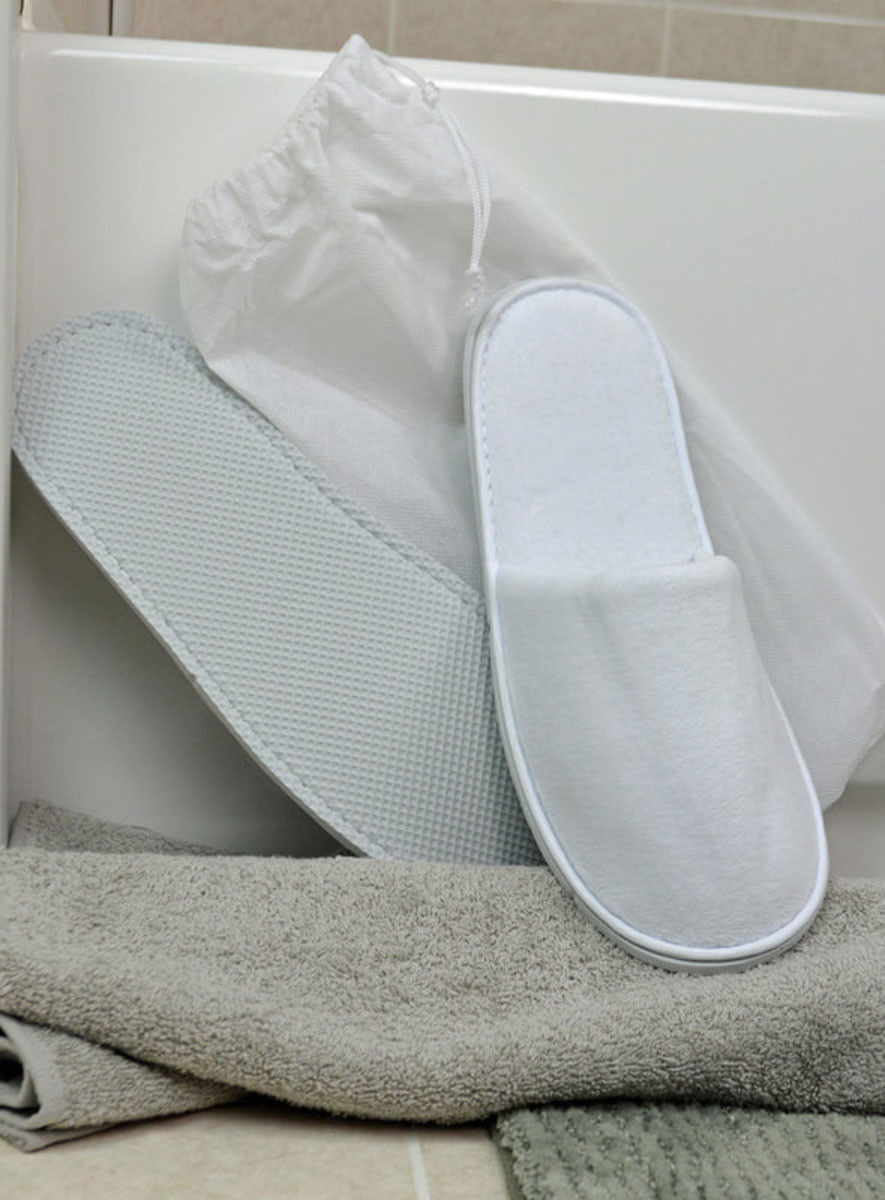
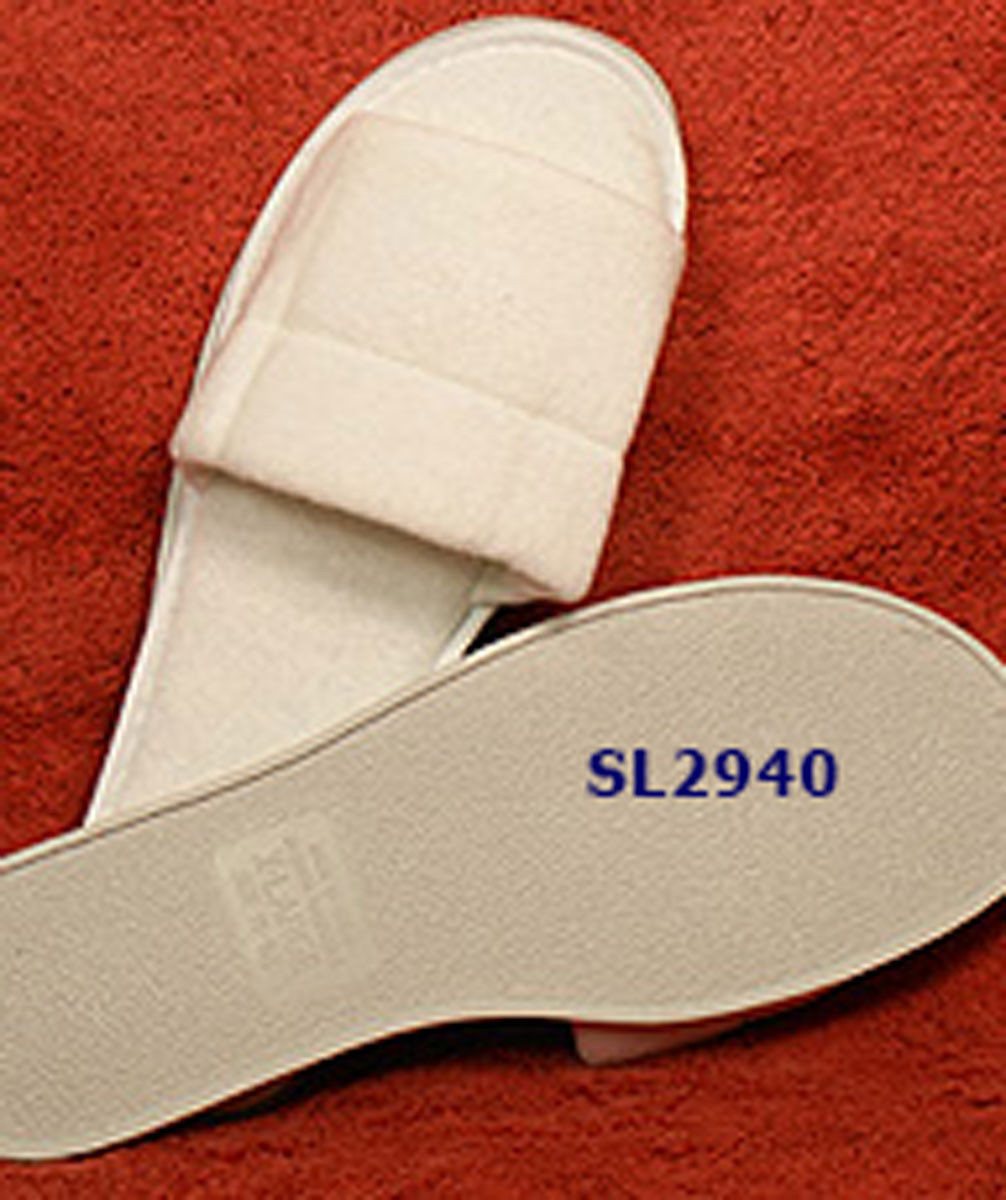
The kartri line includes two distinct styles. The SL2941-1 is an open toe white terry cloth slipper packed individually in a poly bag. The SV3C5MB-1 is a closed toe version packed in a fabric bag. Open toe designs are standard for warm climates, spa settings, and quick turnover rooms. Closed toe styles add warmth and a more premium feel, often preferred in cooler regions or upscale suites.
Guest Preference and Climate Considerations
Open toe slippers breathe better in humid environments like pool decks or steam rooms. Closed toe slippers retain heat, which guests appreciate in mountain resorts or during winter months. Consider your average occupancy demographic; business travelers often prefer the quick on-and-off of an open toe, while leisure guests may value the cozier closed toe.
Sole Materials: EVA vs. PVC for Safety and Durability
Both kartri slipper styles offer a choice of EVA or PVC soles. EVA (ethylene-vinyl acetate) is lighter, softer underfoot, and provides good grip on wet tile. PVC (polyvinyl chloride) is slightly more rigid, highly water-resistant, and often lower cost per unit. For high-moisture areas like locker rooms or bathrooms, EVA generally offers better slip resistance.
Floor Protection and Noise Reduction
EVA soles are quieter on hardwood and laminate floors, reducing hallway noise complaints. PVC soles hold up well on concrete and ceramic but can squeak on certain finishes. Test a sample pair on your actual flooring before committing to a full case pack.

Sizing Strategy: One Size Fits All vs. Gender-Specific
The standard offering is an 11-inch one-size-fits-all design. This simplifies inventory management and reduces SKU count for housekeeping carts. Gender-specific men's and women's options are available for properties wanting a more tailored fit. The unisex 11-inch length accommodates most adult guests, but very large or very small feet may find the fit loose or tight.
Quantity Planning for Case Packs
Slippers ship 25 pairs per case. A 100-room hotel with 80% occupancy and a 1.5-night average stay goes through roughly 120 pairs per week. That equals about five cases weekly. Always round up to account for staff use, damaged pairs, and peak season spikes. Storing two to three weeks of supply on-site prevents last-minute reorders.
Packaging Differences and Housekeeping Workflow
The open toe SL2941-1 arrives in individual poly bags. The closed toe SV3C5MB-1 arrives in fabric bags. Poly bags are faster to tear open and place on a bedside table. Fabric bags present better for turn-down service or luxury branding but add a few seconds per room. Factor this time into your housekeeping minutes-per-room standards.
Storage and Cart Organization
Cases measure roughly 18 x 14 x 12 inches and weigh 8 to 10 pounds. They stack easily on shelving or in supply closets. Keep one open case on each housekeeping cart for the day's turns. The fabric-bagged closed toe slippers take up slightly more cart space due to the bulkier packaging.
Care and Disposal Guidelines for Staff
These are single-use disposable slippers. They are not designed for laundering. Train staff to discard used pairs during room turnover. The terry cloth upper and foam sole do not break down in commercial washers and can clog drainage systems. Clear signage in the housekeeping closet prevents accidental wash loads.
Eco-Conscious Disposal Options
While not biodegradable, the separated components (terry cloth, EVA/PVC sole) can be diverted to textile recycling or foam recycling streams where municipal facilities exist. Check with your waste hauler for local options. Communicating this effort can support your property's sustainability reporting.
Matching Slippers to Other Kartri Textiles
Many buyers source kartri shower curtains and linens alongside slippers to consolidate vendors. Coordinating white terry cloth slippers with white terry bath mats and towels creates a cohesive bathroom aesthetic. Ordering from the same supplier reduces purchase orders, invoices, and delivery coordination.
Bundling for Freight Efficiency
Since these items ship from Arizona, combining slippers with heavier goods like shower curtains or sheet sets in one shipment optimizes freight class and reduces per-unit shipping cost. Plan quarterly orders to align high-volume consumables with seasonal textile refreshes.
Why Buy From Direct Textile Store
Direct Textile Store stocks the full kartri slipper line in case packs ready for immediate shipment. Our wholesale model supports hotels, healthcare facilities, gyms, and salons with consistent inventory and tax-exempt purchasing for qualified accounts.
We specialize in commercial textiles sold in practical quantities for high-turnover operations. You get the exact products your housekeeping team needs without retail markups or broken-case minimums.