Table of Contents
- Resident Privacy, Dignity, and Safety in Nursing Home Bathing Areas
- Fabric Versus Vinyl Curtains in Long-Term Care Settings
- Polyester Fabric Properties That Suit Frequent Laundering
- Water Repellency, Quick Drying, and Mildew Control
- Grommet Headers Compared With Buttonhole Headers
- Hooks, Rings, Hookless Systems, and Breakaway Rod Compatibility
- Standard Sizes, Drop Lengths, and Roll-In Shower Coverage
- Opacity, Color, and Pattern Choices for Homelike Bathrooms
- Fire Safety Documentation and Infection Control Requirements
- Bathing Position Counts and Replacement Frequency Forecasting
- Laundry Capacity Planning for Curtain-Sized Loads
- Resident Turnover, Room Refreshes, and Surge Inventory
- Case-Pack Pricing and Production Lot Matching
- Sample Testing Procedures Involving Nursing, Housekeeping, and Maintenance
- Final Order Checklist for Nursing Home Curtain Purchases
- Direct Textile Store Support for Nursing Home Bathroom Programs
- Closing Thoughts on Dignified, Dependable Bathing Areas
- Learn More About Our Experience Supplying Wholesale Linens → About Direct Textile Store
- FAQ
- Related Topics
Nursing home bathing areas carry a heavy responsibility. Residents expect privacy and dignity while they bathe, staff need curtains that open smoothly and contain water, and infection prevention teams need textiles that can be cleaned or replaced on a dependable schedule. The curtain hanging in each shower sits at the center of all three needs, and its performance affects comfort, safety, and morale every single day. Fabric shower curtains made from polyester offer a softer, more homelike look than vinyl, launder in standard machines, and come with reinforced headers that stand up to constant opening and closing. This guide explains how to evaluate fabric, headers, sizing, and compliance documentation, how to calculate quantities around replacement cycles, and how to buy polyester shower curtains in case packs so every bathing space stays equipped and consistent.
Resident Privacy, Dignity, and Safety in Nursing Home Bathing Areas
Privacy Expectations During Personal Care
Bathing is among the most personal moments in a resident's day, and the curtain is the barrier that protects that privacy. Opaque, full-coverage curtains help residents feel secure, particularly when staff are assisting. Thin or sheer curtains undermine that sense of security. Choosing fabric shower curtains with adequate opacity respects dignity from the first bath to the last.
Water Containment and Slip Prevention
Water that escapes a shower area creates slip hazards on floors that residents and staff walk across daily. Curtains that hang straight and hold their shape keep water where it belongs. Weighted hems, proper length, and good rod placement all contribute. Safety routines should combine curtains with floor cleaning, signage, and non-slip flooring, since curtains alone do not prevent falls.
Staff Efficiency and Resident Comfort
Curtains that glide easily on rods help staff work quickly and gently, which reduces stress for residents. Sticking headers or heavy, stiff fabric slows care and frustrates everyone. Smooth operation is a quiet but real contribution to the bathing experience, and it starts with construction details that matter in cloth shower curtains.
Fabric Versus Vinyl Curtains in Long-Term Care Settings
Appearance and Homelike Atmosphere
Fabric curtains look softer and more residential than vinyl, which supports the effort many nursing homes make to feel less institutional. Colors and patterns can coordinate with room décor and create a calmer environment. Residents and families often respond positively to that warmth. Cloth shower curtains help bathing areas feel like part of a home.
Cleaning and Replacement Routines
Vinyl wipes clean and can be replaced quickly, while fabric launders in standard machines and can be reused many times. Each approach fits a different maintenance program. Facilities with strong laundry capacity may prefer fabric for its longevity and look, while those prioritizing quick swaps may favor vinyl. Policies should reflect actual staffing and laundry resources.
Liner Combinations and Hybrid Systems
Some facilities pair a fabric curtain with a separate waterproof liner, getting the soft look on the room side and water containment behind it. That doubles the products to manage but separates appearance from function. Deciding on one system for the whole building simplifies purchasing and training for fabric cloth shower curtains.
Polyester Fabric Properties That Suit Frequent Laundering
Strength and Shape Retention
Polyester fibers resist stretching, shrinking, and abrasion, so curtains keep their size and drape through repeated washing. Cotton alternatives can shrink and distort. Dimensional stability matters because a curtain that shrinks becomes too short and exposes residents. Polyester shower curtains hold their dimensions cycle after cycle.
Quick Drying and Wrinkle Resistance
Polyester absorbs little water, so curtains dry fast in machines and on rods. Fast drying shortens laundry turnaround and reduces the time a curtain spends damp. Wrinkle resistance keeps hanging curtains looking neat without pressing. Both traits help busy laundry teams.
Color Stability Through Hot Washing
Polyester holds dye well, which keeps colors consistent through hot cycles. Faded or streaked curtains look worn even when still functional. Color stability matters in a setting where appearance contributes to the sense of care. Testing samples through repeated washing confirms performance.
Water Repellency, Quick Drying, and Mildew Control
Repellent Finishes on Polyester Fabric
Many polyester curtains carry water-repellent finishes or tighter weaves that shed water rather than absorb it. These features reduce dampness and help the curtain dry between baths. Finishes vary in durability, so testing through multiple washes shows how long the repellency lasts. Repellent construction improves the experience of using fabric shower curtains.
Preventing Mildew in Humid Bathrooms
Warm, damp bathrooms invite mildew, especially on textiles that stay wet. Quick-drying fabric, good ventilation, and regular laundering all help. Some curtains include mildew-inhibiting treatments, which can slow growth between washes. Ask for documentation about treatments, and keep cleaning schedules consistent regardless.
Spacing and Airing Practices
Spreading curtains open after bathing lets air circulate and speeds drying. Staff training on this simple step reduces dampness and odors. Cleaning schedules should account for how often each shower is used.
Grommet Headers Compared With Buttonhole Headers
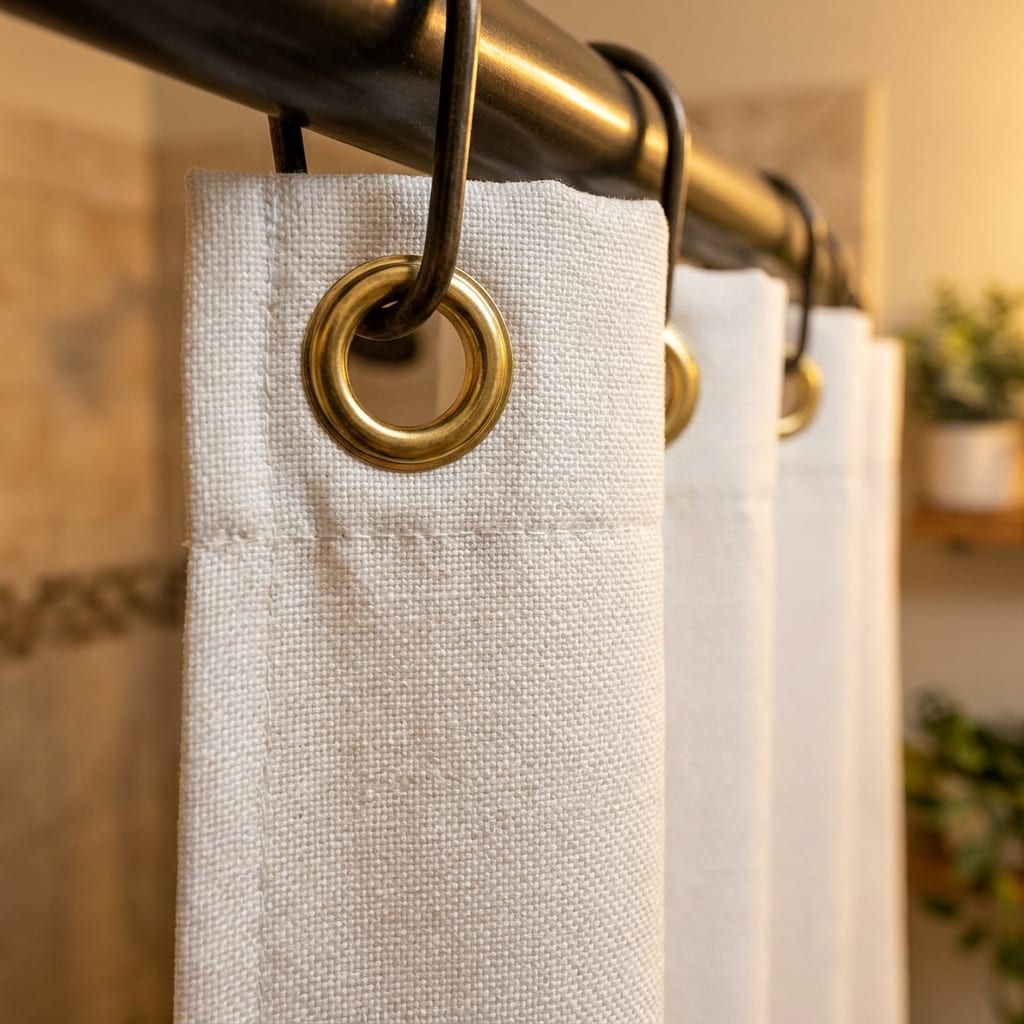
Grommets Reinforce Openings With Metal or Plastic Rings
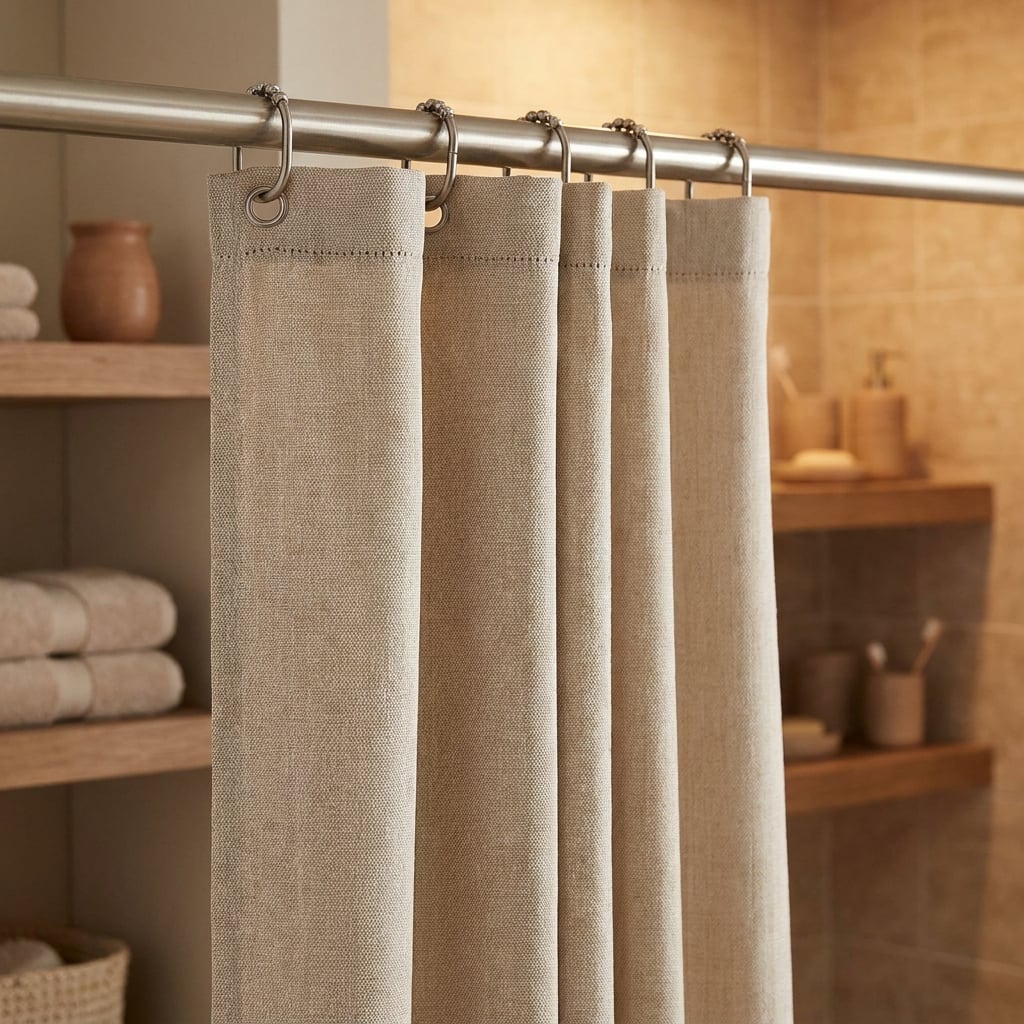
Rings set into the header spread stress and resist tearing, so curtains slide smoothly and survive heavy use. They suit high-traffic bathrooms where curtains open and close many times daily. Inspecting how securely rings are set, and how evenly they are spaced, reveals header quality quickly in polyester shower curtains.
Buttonhole Headers Offer Simple, Familiar Function
Stitched slits reinforced with thread work with standard hooks and keep costs lower. They are easy to replace and familiar to maintenance staff. Quality depends on stitching density and reinforcement, so inspection matters. Facilities that favor simplicity often choose this style.
Standardizing Header Style Across the Building
Mixed header types create confusion for maintenance teams and complicate stocking. Choosing one style, documenting it, and ordering accordingly simplifies installation and replacement. Standardization also helps new staff learn the system quickly.
Hooks, Rings, Hookless Systems, and Breakaway Rod Compatibility
Matching Header Openings to Existing Hardware
Curtains only work when headers match rods and hooks already installed. Measuring rod diameter and hook spacing before ordering prevents costly mismatches. Header openings that are too small bind, while oversized openings slide loosely. Compatibility checks save time during installation of cloth shower curtain orders.
Hookless Designs Reduce Loose Parts
Built-in grommet or buttonhole openings that slide directly onto rods eliminate loose hooks, which can go missing or become hazards. Maintenance teams like that simplicity. Policies on hardware in resident areas should guide the choice.
Breakaway and Tension-Release Rods
Many long-term care facilities use breakaway rods to reduce safety risks. Curtains should work with those rods without stressing them. Coordinating with facilities and safety teams before ordering prevents conflicts between curtain weight and rod ratings.
Standard Sizes, Drop Lengths, and Roll-In Shower Coverage
Standard Dimensions and Real Measurements
Standard fabric shower curtains commonly measure around 72 by 72 inches, though facilities often have a mix of stall types. Measuring installed showers rather than trusting plans prevents surprises. Confirm product dimensions, including drop, so curtains cover openings fully. Accurate sizing keeps fabric shower curtains private and practical.
Wider Openings in Accessible Showers
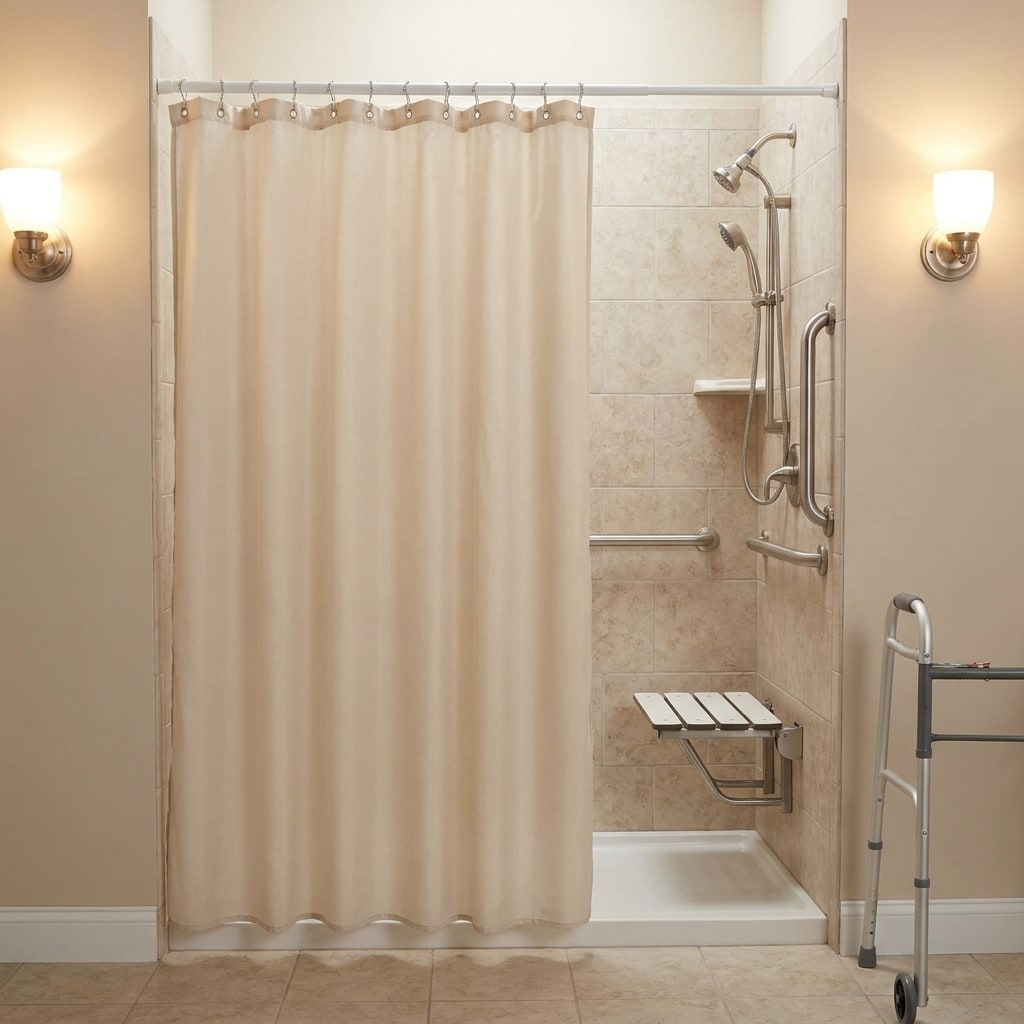
Roll-in showers and accessible stalls often require wider curtains or special arrangements. Operation by staff or residents using mobility aids matters, and curtains should not interfere with equipment. Testing samples in those configurations avoids problems.
Hem Height Above the Floor
Curtains that drag collect dirt and create slip hazards, while curtains that hang too high expose residents. Target a hem that clears the floor or tub edge slightly. Test samples on actual fixtures to confirm.
Opacity, Color, and Pattern Choices for Homelike Bathrooms
Opaque Fabrics for Dignified Coverage
Solid or densely woven fabrics provide the privacy residents expect. Holding samples to light shows how much they reveal. Consistent opacity across the building sets a clear standard for dignity.
Soft Colors That Calm and Coordinate
Gentle blues, greens, and warm neutrals create a calm atmosphere that suits long-term care. Colors should coordinate with tile, walls, and fixtures. Test shades under real bathroom lighting before ordering cloth shower curtains.
Patterns That Hide Wear Without Confusing Residents
Subtle patterns disguise minor spotting, while busy or high-contrast designs may confuse residents with memory conditions. Memory care units may call for especially calm, simple choices. Consult clinical staff when selecting.
Fire Safety Documentation and Infection Control Requirements
Confirming Regulatory Expectations
Long-term care facilities face fire safety and textile requirements that vary by jurisdiction. Confirming those requirements with safety officers and administrators before purchasing prevents compliance surprises. Requesting documentation for specific products from the supplier supports that confirmation for polyester shower curtains.
Laundering Between Residents and on Schedule
Infection prevention teams typically define when curtains are laundered or replaced, whether at discharge, at set intervals, or after visible soiling. Policies should be written and consistently applied. Inventory calculations should reflect the chosen policy.
Record Keeping for Inspections
Specification sheets, documentation, purchase records, and replacement logs make inspections easier. Organized files save time and demonstrate diligence. Keep records current as products change.
Bathing Position Counts and Replacement Frequency Forecasting
Counting Every Bathing Space
Resident bathrooms, shared shower rooms, therapy areas, and staff facilities all use curtains. Walk the building with a clipboard, recording each position by size and type. Accurate counts prevent shortages and over-ordering of fabric shower curtains.
Replacement Cycles and Rotation Sets
Replacement frequency determines how many curtains are needed. A facility that launders and rehangs on a weekly cycle needs rotation sets so showers are never uncovered during washing. Add a reserve of ten to twenty percent for damage and surges.
Worked Example for a 120-Bed Facility
A nursing home with 120 resident bathrooms, 6 shared shower rooms with 3 stalls each, and 10 staff showers has 148 positions. A rotation set doubles the base to 296, and a fifteen percent reserve adds about 44, for 340 fabric cloth shower curtains. Written calculations speed ordering and approvals.
Laundry Capacity Planning for Curtain-Sized Loads
Machine Load Limits
Curtains are large and absorb little water, but they still occupy drum space. Measuring how many fit per load, and how long cycles take, sets realistic expectations. Overloading prevents proper cleaning and increases wear.
Wash Temperature and Detergent Routines
Care instructions guide temperature and detergent amounts. Hot washes support infection prevention, and polyester tolerates them well. Consistent routines protect headers and fabric alike.
Drying, Folding, and Rehanging
Prompt removal from dryers reduces wrinkles, and neat folding speeds rehanging. Training laundry and housekeeping staff on a simple handoff routine keeps curtains moving back to rods without delay.
Resident Turnover, Room Refreshes, and Surge Inventory
Admission and Discharge Cycles
New residents arrive on short notice, and rooms must be ready. Spare curtains on hand allow quick room preparation without waiting for laundry. Reserve stock reduces pressure on staff.
Renovation Windows
Refreshing curtains during renovations captures case-pack pricing and ensures consistency. Coordinating with design and facilities teams keeps colors and hardware aligned.
Learning From Each Surge
Reviewing how many curtains were used, lost, or retired after busy periods sharpens par levels. Data from real experience guides smarter orders of cloth shower curtain inventory.
Case-Pack Pricing and Production Lot Matching
Lower Unit Cost Through Carton Efficiency
Packaging and handling costs shrink in full cartons, lowering unit prices. Facilities buying hundreds of curtains see meaningful savings. Direct Textile Store offers case-pack pricing on fabric shower curtains, giving nursing homes a clear way to plan budgets for polyester shower curtains.
Cost per Use as the Honest Comparison
Curtains that survive many washes cost less per use than cheaper ones that wear out quickly. Estimating cycles survived and dividing price by that number gives a fair comparison. Durable fabric shower curtains often prove more economical once labor is included.
Matching Lots Across a Building
Curtains in the same case typically share a production lot, so color, size, and header construction match. Uniform curtains look orderly and make replacements easier to blend in.

Sample Testing Procedures Involving Nursing, Housekeeping, and Maintenance
Close Inspection of Headers and Hems
Grommets, buttonholes, seams, and hems deserve careful review. Gentle pulls on headers test strength, and side-by-side comparison highlights differences in fabric weight and finish. Construction visible in a sample predicts full-order performance.
Wash, Dry, and Hang Trials
Repeated cycles through the real laundry process reveal shrinkage, fading, and header wear. Hanging samples on actual rods in humid bathrooms shows drying behavior and glide. Failures at this stage are cheap lessons.
Staff and Resident Feedback Loops
Nursing assistants, housekeepers, and maintenance technicians offer practical insight, and residents or families may comment on look and feel. Documenting feedback supports confident decisions and avoids purchase mistakes with fabric shower curtains.
Final Order Checklist for Nursing Home Curtain Purchases
Product Details to Verify
Confirm each of the following with samples in hand before finalizing a bulk order:
- Fabric and finish suit your laundry: The polyester holds color, dries quickly, and tolerates your wash temperatures and detergent.
- Headers are reinforced and standardized: Grommets or buttonholes are secure, evenly spaced, and compatible with your rods and hooks.
- Sizes fit every fixture: You have measured stalls, tubs, and roll-in showers and confirmed width, drop, and hem height.
- Opacity and color meet privacy and homelike goals: Samples provide adequate coverage and coordinate with bathroom finishes.
- Documentation is on file: Fire safety and treatment documents specific to the product line have been requested and saved, and requirements have been confirmed with your safety officer.
- Quantities include rotation and a reserve: Your calculation covers bathing positions, laundry cycles, turnover, and expected losses.
- Case-pack pricing, shipping timing, and reorder availability are confirmed: You know the total cost, when the order will arrive, and that the same item can be ordered again.
Teams to Brief
Nursing leaders, housekeeping, maintenance, laundry, and infection prevention should all see the plan, including par levels, replacement policy, and installation standards. Confirm the delivery date and prepare storage space.
Records to File
Specification, order date, quantities, prices, and inventory counts by unit belong in one place. Update the file whenever products or quantities change. Clear records speed audits and future purchases.
Direct Textile Store Support for Nursing Home Bathroom Programs
Nursing homes working through this process benefit from one dependable source that simplifies ordering, keeps every bathing space equipped, and holds quality steady from one order to the next. Browse Direct Textile Store for grommet or buttonhole headers fabric shower curtains in standard sizes for nursing homes, with easy-clean materials. Browse styles and case packs to outfit your operation. Built for healthcare and hospitality settings where textiles are laundered constantly and used by many people, the range puts durability, privacy, and consistent sizing at the center of every product.
Facilities gain real advantages from having fabric shower curtains available in consistent specifications and case-pack quantities. With one source for curtains, bath towels, bath mats, linens, and gowns, a nursing home can match fabrics and colors across wings, keep one set of care instructions, and avoid piecing together inventory from many places. Automatic case-pack pricing lowers the cost per curtain as the order grows, and there are no coupons or minimums to manage, which makes budgeting simpler for administrators and purchasing teams. Furnishing a new wing or refreshing an existing one, the same specification can be ordered and reordered with confidence.
Consistency matters as a community grows and renovates. New wings, refurbished bathrooms, and replacement cycles all go more smoothly when additions match existing stock. Direct Textile Store also supplies other textiles long-term care facilities use, including blankets, pillows, sheets, and patient gowns, so one relationship can support the whole operation. That breadth lets a nursing home standardize its textile program, simplify reordering, and keep supply predictable through busy admissions periods and quiet stretches alike.
Closing Thoughts on Dignified, Dependable Bathing Areas
Durable, easy-clean fabric shower curtains in polyester, with reinforced grommet or buttonhole headers and sizes matched to every fixture, bought in case packs at wholesale pricing, give a nursing home the best mix of dignity, durability, and value. Facilities that confirm compliance requirements, test samples through their own laundry and on real rods, and calculate quantities around replacement cycles tend to keep bathing areas consistent while controlling costs. Choosing cloth shower curtains that match laundry capacity and infection control policy makes daily care simpler for everyone.
Real gains come from planning rather than from any single product decision. Written par levels, a clear header standard, a laundering policy, and a retirement rule turn a scattered set of textiles into a managed program. Staff know what to hang, when to swap, and where replacements live, and administrators see at a glance what the facility owns and needs. With those habits in place, orders arrive before shortages, reserves stay healthy, and residents find clean, private bathing spaces every time.
Residents rarely mention fabric shower curtains, but they feel the difference immediately when privacy is complete, water stays contained, and the space looks cared for. Dependable fabric cloth shower curtains contribute to that comfort quietly and steadily, bath after bath. Nursing homes that plan ahead, rather than replacing cloth shower curtain inventory only when something fails, protect their budgets, their staff, and the dignity of the people they serve.

Learn More About Our Experience Supplying Wholesale Linens → About Direct Textile Store
Direct Textile Store is a leading U.S. wholesale linen and textile supplier trusted by over 131,000 hotels, hospitals, healthcare facilities, restaurants, spas, salons, resorts, gyms, emergency shelter and response, funeral homes, VRBO & Airbnb hosts, car washes, and commercial buyers nationwide. Shop in bulk with everyday low wholesale pricing and automatic 20% case-pack discounts — no coupons or minimums required. Choose from one of the largest in-stock selections available: over 135,000 towels, pool towels, sheets, blankets, comforters, tablecloths, pillows, bed toppers, aprons, hospital gowns, patient gowns, isolation gowns, scrubs, shower curtains, chef apparel, smocks, lab coats, uniforms, and commercial laundry equipment including wire, vinyl, and poly laundry carts, trucks, and privacy screens — all ready to ship today. Free shipping on orders over $5,999.
FAQ
Why do nursing homes choose fabric shower curtains?
They look softer and more homelike than vinyl, launder in standard machines, and can be reused many times with polyester construction.
Should nursing homes pick grommet or buttonhole headers on polyester shower curtains?
Both work when well reinforced. Choose based on your rods and maintenance routine, and standardize across the building.
How many cloth shower curtains does a nursing home need?
Count every bathing position, add a rotation set for laundering, and keep a ten to twenty percent reserve.
Is it cheaper to buy fabric cloth shower curtains in case packs?
Generally yes. Case packs lower per-curtain cost and keep color, size, and header construction consistent.
How should a cloth shower curtain be laundered?
Follow the care instructions, wash at temperatures your infection control policy requires, dry promptly, and rehang once fully dry.
What should I test before ordering fabric shower curtains in volume?
Wash samples several times, check header strength and fading, hang them on real rods, and collect staff feedback.
Where can I buy grommet or buttonhole headers polyester shower curtains for a nursing home?
Direct Textile Store offers grommet or buttonhole headers fabric shower curtains in standard sizes for nursing homes, with easy-clean materials. Case-pack pricing and consistent in-stock inventory make it a practical option for long-term care.