Table of Contents
- Resident Comfort Needs Driving Blanket Selection in Long-Term Care
- Choosing Fiber and Weave Combinations That Keep Residents Comfortable
- Matching Blanket Weight and Warmth to Season, Room, and Resident Condition
- Selecting Bed Sizes, Lap Throws, and Wheelchair Blanket Formats
- Evaluating Durability Through Edges, Weave Density, and Pilling Resistance
- Understanding Price Tiers Without Falling for False Economy
- Planning Counts by Bed, Chair, and Common Area
- Coordinating Laundry Capacity With Blanket Volume and Turnaround
- Applying Infection Control and Hygiene Standards to Blanket Handling
- Following Safety Practices Around Heat Sources and Resident Mobility
- Standardizing Colors, Labels, and Identification Across Wings
- Gaining Case-Pack Savings and Production Lot Consistency
- Running Sample Trials With Staff, Residents, and Laundry Teams
- Storing, Rotating, and Replacing Blankets Across Seasons
- Final Order Checklist for Nursing Home Blanket Purchases
- Direct Textile Store Support for Nursing Home Blanket Programs
- Closing Thoughts on Comfortable, Consistent Blanket Programs
- Learn More About Our Experience Supplying Wholesale Linens → About Direct Textile Store
- FAQ
- Related Topics
Residents of a nursing home spend long hours resting, recovering, and sitting in lounges, and warmth is one of the simplest ways to make those hours comfortable. A well-chosen blanket draped over a lap, tucked around a bed, or kept within reach in a common room gives residents control over their own comfort without needing to call for help. Behind that small kindness sits a large operational reality: hundreds of bulk blankets that must be washed constantly, replaced regularly, matched across wings, and stocked in the right sizes at the right times. Bulk blankets in thermal cotton and fleece constructions suit that reality, offering soft warmth, durable weaves, and easy laundering. This guide covers fiber and weave choices, sizing for beds and chairs, quantity planning, safety and infection control practices, and the economics of wholesale blankets in case packs for long-term care.
Resident Comfort Needs Driving Blanket Selection in Long-Term Care
Warmth Regulation for Older Residents
Older adults often feel cold more readily than younger people, and rooms rarely suit everyone at once. A dependable blanket allows each resident to adjust to a personal comfort level. Gentle, consistent warmth supports sleep and reduces restlessness. Bulk blankets also matter during daytime rest, when residents may sit still for long periods.
Dignity and Independence
Residents who can reach for a blanket themselves keep a measure of independence. Lightweight options with manageable weight suit residents with limited strength. Soft textures feel reassuring and homelike. Choosing blankets in bulk that residents can handle easily respects both comfort and autonomy.
Family Impressions During Visits
Families notice bedding during visits, and clean, neat, matching bulk blankets suggest attentive care. Faded, pilled, or mismatched blankets suggest the opposite. Consistency across rooms reassures families that every resident receives the same standard. Reliable bulk blankets support that impression.
Choosing Fiber and Weave Combinations That Keep Residents Comfortable
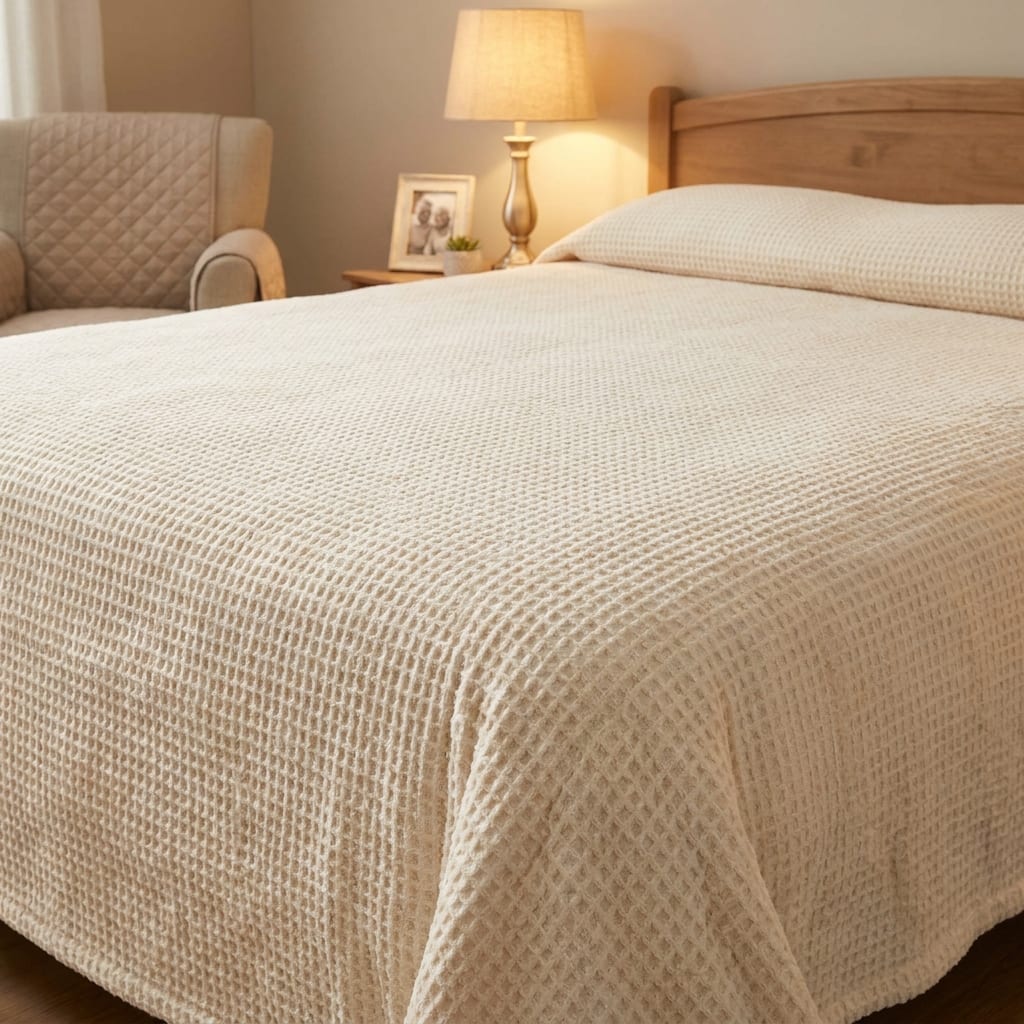
Thermal Cotton Weaves for Breathable Warmth
Thermal cotton uses a textured, open weave that traps air for insulation while allowing airflow. That balance prevents overheating and feels light on frail residents. The cotton content adds softness and absorbency, and the weave dries faster than dense blankets. Thermal construction is a long-standing favorite in healthcare for those reasons.
Fleece Constructions for Soft Insulation
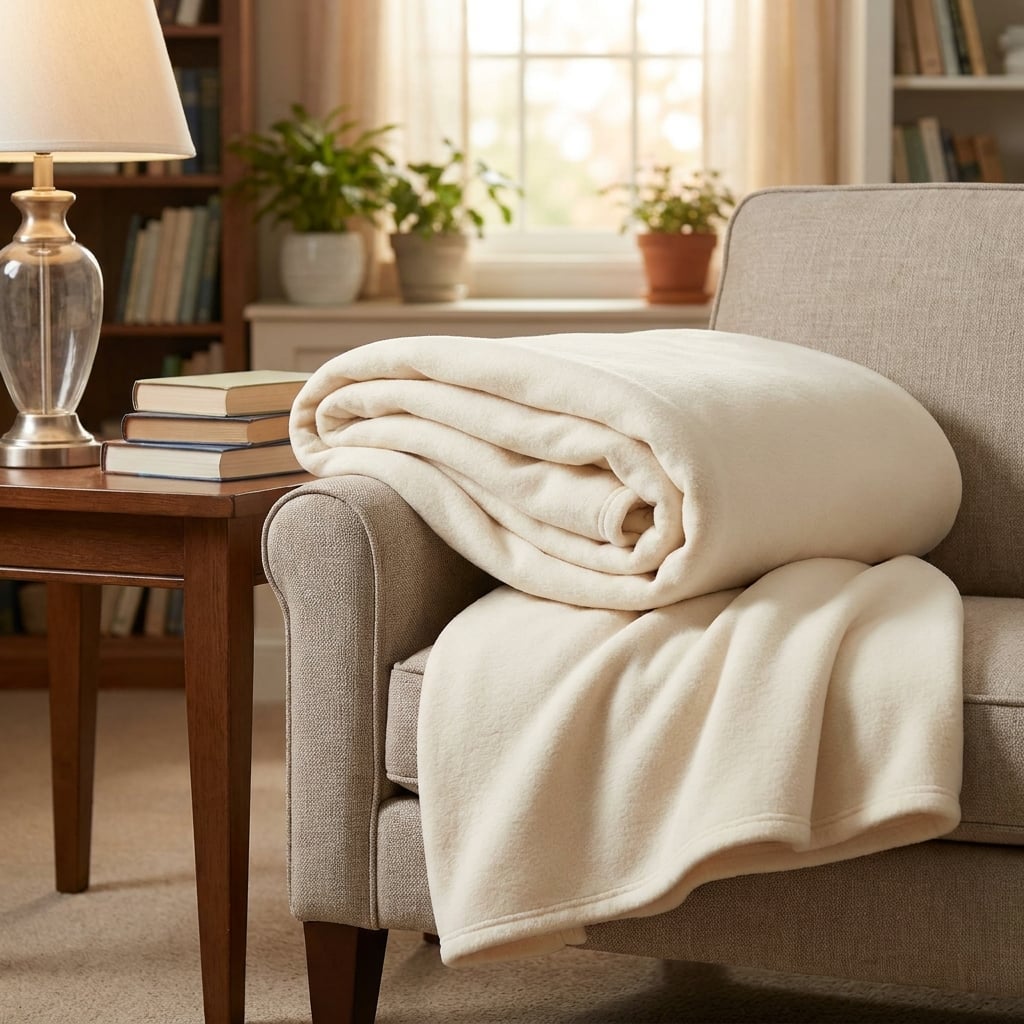
Fleece is a brushed synthetic fabric with a fuzzy surface that traps heat in a lightweight layer. It feels cozy, dries quickly, and resists wrinkling. Quality varies, so evaluating density and pilling resistance matters. Residents who prefer a plush feel often respond well to fleece among wholesale throw blankets.
Combining Both for Different Room Types
Some facilities use thermal cotton on beds and fleece for laps and common areas, or the reverse. Buying both from one source keeps colors and sizing coordinated. A clear plan prevents confusion in storage and distribution.
Matching Blanket Weight and Warmth to Season, Room, and Resident Condition
Light, Medium, and Heavy Builds
Lighter blankets suit warm climates and well-heated buildings, while heavier builds suit drafty rooms and colder regions. Medium weights serve most conditions, with layering available when needed. Resident health, mobility, and personal preference all influence the right choice.
Seasonal Swings and Layering Strategies
Facilities in colder climates may add a second blanket in winter, while those in warmer climates may rotate lighter options in summer. Layering keeps inventory flexible without swapping entire stocks. Documenting the seasonal plan helps staff act consistently.
Residents Who Run Hot or Cold
Residents with medical conditions or medications may feel temperature differently. Keeping a small range of weights available lets staff respond promptly. Flexibility improves comfort and reduces complaints about bulk blankets.
Selecting Bed Sizes, Lap Throws, and Wheelchair Blanket Formats
Twin and Hospital Bed Coverage
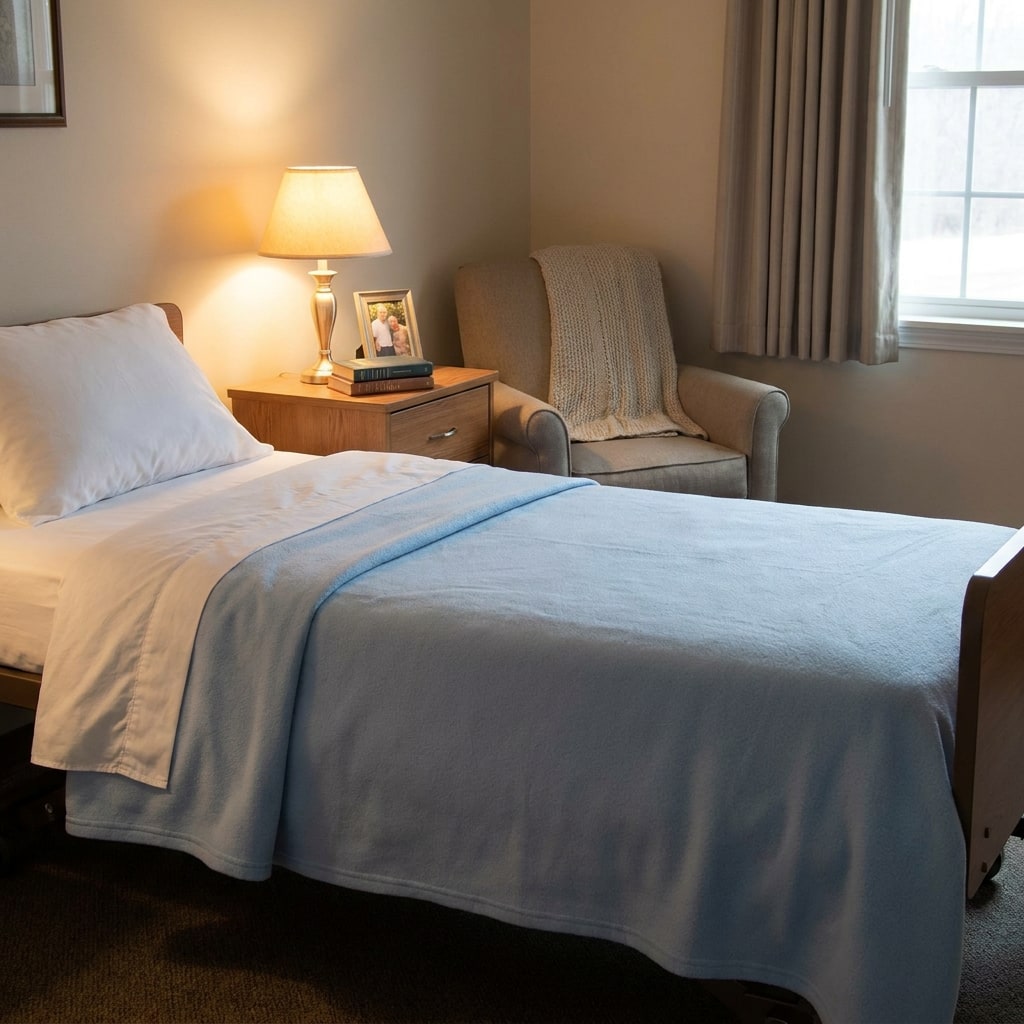
Resident beds are commonly twin or similar sizes, and bulk blankets should cover the mattress with a modest drop. Measuring actual beds, including adjustable models, prevents poor fit. Blankets that hang too far can tangle in equipment or create tripping hazards.
Throw Sizes for Chairs and Laps
Throw-size blankets drape over laps and shoulders in common rooms, dining areas, and wheelchairs. Compact and easy to handle, they give residents quick warmth without bulk. Stocking throws separately from bed blankets avoids shortages. Many facilities buy throw blankets bulk to cover every common area chair.
Consistent Dimensions for Neat Stacks
Standard sizes within each format keep stacks tidy and counts simple. Recording exact dimensions in your specification prevents mix-ups. Consistent sizing also helps laundry staff fold quickly.
Evaluating Durability Through Edges, Weave Density, and Pilling Resistance
Binding and Stitching at Blanket Edges
Edges endure folding, tugging, and washing, and they fail first when poorly made. Reinforced binding or tight stitching resists fraying. Gentle pulls during sample review reveal strength quickly.
Weave Density and Fiber Quality
Dense, even constructions resist thinning and hold warmth. Uneven or loose weaves wear fast. Holding samples to light shows consistency. Quality fiber reduces shedding and extends service life.
Pilling Behavior After Repeated Washing
Pilling makes bulk blankets look worn and feel rough. Washing samples several times exposes tendencies early. Products that stay smooth keep their appearance and protect investments in wholesale blankets.
Understanding Price Tiers Without Falling for False Economy
Interpreting Low Price Points Carefully
Budget pressures make low prices attractive, and cheap blankets in bulk can be a legitimate value when low unit cost comes from volume pricing. The risk lies in thin fabric, weak edges, and fibers that shed. Blankets that fail quickly cost more once replacement and labor are counted.
Calculating Cost per Use
Estimating how many wash cycles a sample survives, then dividing price by that number, produces a fair comparison. Durable blankets with modestly higher prices often win. Labor spent replacing worn bulk blankets belongs in the calculation too.
Targeting Value Through Case-Pack Volume
Case-pack pricing lowers unit cost without lowering quality, which is the right path to affordability. Direct Textile Store offers case-pack pricing on blankets, giving nursing homes a clear way to buy cheap blankets in bulk responsibly.
Planning Counts by Bed, Chair, and Common Area
Counting Every Place Blankets Are Used
Resident beds, lounge chairs, dining areas, therapy gyms, and wheelchairs all use blankets. Walk the building recording each location by format. Accurate counts prevent shortages and waste.
Rotation Sets and Reserve Stock
Blankets need laundering, so rotation sets keep every place covered. Add a reserve of ten to twenty percent for damage, loss, and turnover. Track reserve usage and adjust the percentage after each season.
Worked Example for a 150-Bed Community
A facility with 150 beds planning one and a half bed blankets per bed needs 225, and 60 throws for common areas brings the base to 285. A fifteen percent reserve adds about 43, for roughly 328 blankets in bulk. Written calculations speed ordering and approvals.
Coordinating Laundry Capacity With Blanket Volume and Turnaround
Machine Capacity and Load Planning
Blankets are bulky, so each load holds fewer pieces than sheets. Measuring how many blankets fit per load and how long cycles take sets realistic expectations. Overloading prevents proper cleaning and increases wear.
Temperature, Detergent, and Drying Practices
Follow care instructions for temperature and detergent, and avoid overheating, which can damage fleece and shrink cotton. Fabric softener can reduce softness and performance in some fibers. Dry thoroughly before returning bulk blankets to rooms.
Handoffs Between Laundry and Housekeeping
Clear routines for collecting soiled blankets and delivering clean ones prevent delays and shortages. Labeled carts and scheduled deliveries keep inventory moving smoothly.
Applying Infection Control and Hygiene Standards to Blanket Handling
Laundering Policies Between Residents
Infection prevention teams define how often blankets are laundered and when they are replaced, such as at discharge, on schedule, or after visible soiling. Written policies applied consistently protect residents and staff. Inventory calculations should reflect the policy.
Separating Clean and Soiled Stock
Bins and carts for clean and soiled blankets should stay physically distinct and clearly labeled. Covered storage protects clean stock. Simple separation supports hygiene.
Documentation and Product Requirements
Fire safety and textile requirements vary by jurisdiction. Confirming requirements with safety officers and requesting documentation for specific products prevents compliance surprises with bulk blankets.
Following Safety Practices Around Heat Sources and Resident Mobility
Distance From Heaters and Open Flame
Fabrics burn or melt when exposed to intense heat. Residents should keep blankets away from space heaters and other heat sources, and facility rules should say so plainly. Training staff and visitors reinforces the message.
Trip and Entanglement Risks
Oversized blankets draping to the floor can tangle in mobility equipment. Choosing sizes that suit beds and chairs, and tucking or folding appropriately, reduces risks. Safety reviews should include blankets.
Memory Care Considerations
Residents with cognitive conditions may react strongly to patterns or textures. Calm colors and simple designs usually work best. Consulting clinical staff before standardizing helps avoid distress.
Standardizing Colors, Labels, and Identification Across Wings
Neutral Palettes That Hide Wear
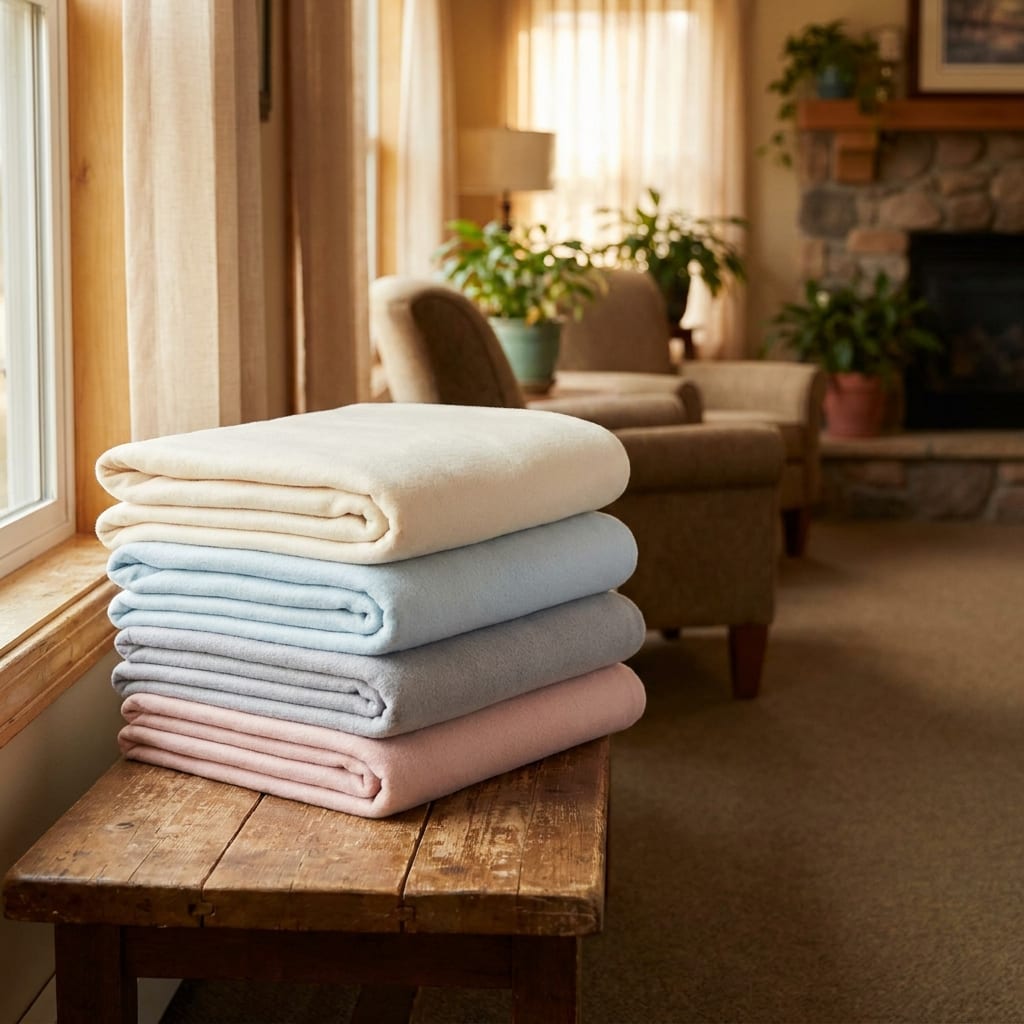
Soft grays, blues, and warm neutrals hide minor wear and coordinate with room décor. Neutrals make replacements easy, since new blankets blend with old. Calm colors also support a homelike atmosphere.
Color Coding for Purpose or Location
Some communities use different colors for beds, lounges, and therapy spaces to keep inventory organized. A written color key helps staff return blankets to the right places. Dyes should be tested through the laundry before committing.
Labels That Survive Laundering
Durable tags or markings prevent loss and help recover blankets after moves between wings. Labeling reduces the number of bulk blankets that wander.
Gaining Case-Pack Savings and Production Lot Consistency
Cost Reduction Through Carton Efficiency
Packaging and handling costs shrink in full cartons, lowering unit prices. Facilities buying hundreds of blankets see meaningful savings. Direct Textile Store offers case-pack pricing on thermal cotton and fleece blankets, supporting budgets for wholesale blankets.
Lot Matching for Uniform Appearance
Blankets in the same case typically share a production lot, so color, size, and feel match. Uniformity looks orderly across rooms and makes replacements blend in.
Fewer Orders and Cleaner Budgeting
Standardized quantities simplify counting, storage, and approval. Fewer, larger orders reduce administrative work, and predictable pricing helps administrators forecast.
Running Sample Trials With Staff, Residents, and Laundry Teams
Hands-On Review of Construction
Edges, weave, surface feel, and fiber quality deserve close inspection. Side-by-side comparison highlights differences, and sample quality predicts full-order performance.
Repeated Wash and Dry Cycles
Cycles through the real laundry process reveal shrinkage, pilling, color change, and softness loss. Drying time matters too. Failures at this stage are cheap lessons.
Resident and Caregiver Feedback
Trial blankets placed with willing residents and staff produce feedback on warmth, weight, and handling. Real-world responses often reveal details specifications miss about throw blankets bulk.
Storing, Rotating, and Replacing Blankets Across Seasons
Organized Storage Spaces
Clean, dry shelves or bins labeled by format keep inventory ready. Reserve stock stays separate and accessible. Avoid damp areas and compression for long periods.
First-In, First-Out Rotation
Using older blankets first spreads wear evenly and keeps appearance consistent. Periodic inspection of stored stock prevents surprises.
Retirement Standards and Tracking
Thin spots, frayed edges, persistent stains, and odors signal retirement. Written standards keep decisions consistent, and retirement records refine par levels for wholesale throw blankets.
Final Order Checklist for Nursing Home Blanket Purchases
Product Details to Verify
Confirm each of the following with samples in hand before finalizing a bulk order:
- Fiber and weave suit residents and laundry: Thermal cotton or fleece has been tested for warmth, feel, and drying time.
- Edges and binding are strong: Stitching holds when tugged and after repeated washing.
- Pilling and shedding are controlled: Samples keep a smooth surface after several wash cycles.
- Sizes cover beds, chairs, and wheelchairs: Bed and throw dimensions are confirmed, with safe drop lengths.
- Documentation is on file: Fire safety and textile documents specific to the product line have been requested and saved.
- Quantities include rotation and a reserve: Your calculation covers beds, common areas, laundry cycles, and expected losses.
- Case-pack pricing, shipping timing, and reorder availability are confirmed: You know the total cost, when the order will arrive, and that the same item can be ordered again.
Teams to Brief
Nursing leaders, housekeeping, laundry, infection prevention, and administrators should all see the plan, including par levels, laundering policy, and retirement rules. Confirm the delivery date and prepare storage space.
Records to File
Specification, order date, quantities, prices, and inventory counts by unit belong in one place. Update the file whenever products or quantities change. Clear records speed audits and future purchases.
Direct Textile Store Support for Nursing Home Blanket Programs
Nursing homes working through this process benefit from one dependable source that simplifies ordering, keeps every wing consistent, and holds quality steady from one order to the next. Find them at Direct Textile Store thermal cotton fleece blankets designed for durability and comfort, suitable for nursing homes and high-use settings. Browse styles and case packs to outfit your operation. Built for healthcare and hospitality settings where textiles are laundered constantly and used by many people, the range puts softness, durability, and consistent sizing at the center of every product.
Facilities gain real advantages from having bulk blankets available in consistent specifications and case-pack quantities. With one source for bed blankets, throws, sheets, pillows, and patient gowns, a nursing home can match fabrics and colors across wings, keep one set of care instructions, and avoid piecing together inventory from many places. Automatic case-pack pricing lowers the cost per blanket as the order grows, and there are no coupons or minimums to manage, which makes budgeting simpler for administrators and purchasing teams. Furnishing a new wing or refreshing an existing one, the same specification can be ordered and reordered with confidence.
Consistency matters as a community grows and renovates. New wings, refreshed rooms, and replacement cycles all go more smoothly when additions match existing stock. Direct Textile Store also supplies other textiles long-term care facilities use, including bath towels, shower curtains, comforters, and bedspreads, so one relationship can support the whole operation. That breadth lets a nursing home standardize its textile program, simplify reordering, and keep supply predictable through winter surges and quiet summer months alike.
Closing Thoughts on Comfortable, Consistent Blanket Programs
Soft, durable bulk blankets in thermal cotton and fleece, sized for beds, chairs, and wheelchairs, bought in case packs at wholesale pricing, give a nursing home the best mix of resident comfort and operational value. Facilities that test samples through their own laundry, count blankets with rotation and reserves, and standardize their specification tend to keep wings consistent while controlling costs. Choosing wholesale blankets that match infection control policy and laundry capacity makes daily care simpler for everyone.
Real gains come from planning rather than from any single product decision. Written par levels by format, a clear color key, a laundering policy, and a retirement standard turn a scattered pile of textiles into a managed program. Staff know what to deliver, when to swap, and where replacements live, and administrators see at a glance what the facility owns and needs. With those habits in place, orders arrive before shortages, reserves stay healthy, and residents find warm, clean blankets within reach.
Residents rarely comment on blankets, but they feel the difference immediately when warmth is steady, textures are soft, and the room looks cared for. Dependable blankets in bulk contribute to that comfort quietly and steadily, night after night. Nursing homes that plan ahead, rather than replacing throw blankets bulk inventory only when something fails, protect their budgets, their staff, and the dignity of the people they serve.

Learn More About Our Experience Supplying Wholesale Linens → About Direct Textile Store
Direct Textile Store is a leading U.S. wholesale linen and textile supplier trusted by over 131,000 hotels, hospitals, healthcare facilities, restaurants, spas, salons, resorts, gyms, emergency shelter and response, funeral homes, VRBO & Airbnb hosts, car washes, and commercial buyers nationwide. Shop in bulk with everyday low wholesale pricing and automatic 20% case-pack discounts — no coupons or minimums required. Choose from one of the largest in-stock selections available: over 135,000 towels, pool towels, sheets, blankets, comforters, tablecloths, pillows, bed toppers, aprons, hospital gowns, patient gowns, isolation gowns, scrubs, shower curtains, chef apparel, smocks, lab coats, uniforms, and commercial laundry equipment including wire, vinyl, and poly laundry carts, trucks, and privacy screens — all ready to ship today. Free shipping on orders over $5,999.
FAQ
Why do nursing homes buy bulk blankets?
Volume pricing and consistent specifications keep every room matched and stocked. Durable weaves also survive constant laundering.
What is the difference between thermal cotton and fleece in wholesale blankets?
Thermal cotton is a breathable, textured weave, while fleece is a soft, brushed synthetic that insulates lightly. Many facilities use both.
How many blankets in bulk does a nursing home need?
Count beds and common-area seats, plan about one and a half blankets per bed for rotation, and keep a ten to twenty percent reserve.
Are cheap blankets in bulk a good choice for long-term care?
Low unit cost from volume pricing is fine, but very thin products wear out fast. Compare cost per use before deciding.
Why buy wholesale throw blankets for common areas?
Throws are easy to handle, quick to hand out, and ideal for laps, chairs, and wheelchairs.
How should throw blankets bulk be laundered?
Follow the care instructions, avoid excess heat, dry thoroughly, and keep clean and soiled blankets separate.
Who sells thermal cotton fleece bulk blankets for a nursing home?
Direct Textile Store offers thermal cotton fleece blankets designed for durability and comfort, suitable for nursing homes and high-use settings. Case-pack pricing and consistent in-stock inventory make it a practical option for long-term care.