Table of Contents
- Why Hospitals Need Institutional-Grade Shower Curtains
- Understanding Vinyl and Polyester Vinyl Construction
- Key Features to Evaluate Before Buying
- Where Hospitals Should Source Vinyl Shower Curtains in Bulk
- Matching Curtains to Hospital Areas
- Hospital Operations: Cleaning, Replacement, and Turnover
- Sizing and Measuring Before You Order
- Quality Checks for Samples
- Procurement Best Practices for Hospital Buyers
- Cost Considerations and Total Value
- Making the Purchase: A Practical Buying Checklist
- How Direct Textile Store Supports Hospital Shower Curtain Programs
- Final Thoughts on Sourcing Vinyl Shower Curtains for a Hospital
- Learn More About Our Experience Supplying Wholesale Linens → About Direct Textile Store
- FAQ
- Related Topics
Hospitals need vinyl shower curtains that protect patient privacy, contain water in bathing areas, and stand up to the cleaning, disinfecting, and replacement cycles that infection control programs demand. Sourcing the right combination of vinyl and polyester vinyl construction in bulk means understanding what separates institutional-grade products from retail bathroom accessories, along with a procurement plan that keeps every patient bathroom, shower room, and therapy area properly equipped. This guide walks through what hospital buyers should evaluate, from material and header construction to antimicrobial treatment, flame-retardant documentation, sizing, par levels, and supplier selection, so a facility can order confidently and keep its bathrooms consistently ready.
Why Hospitals Need Institutional-Grade Shower Curtains
A Different Standard Than a Home Bathroom
A residential shower curtain might be touched a few times a day by one household. A hospital shower curtain may be handled by patients, nurses, aides, and environmental services staff across multiple shifts, then cleaned or replaced between admissions. That level of use exposes the product to moisture, disinfectants, repeated hanging and removal, and constant pulling on the header. Retail products are rarely built for this cycle, which is why healthcare buyers look to vinyl shower curtains made specifically for commercial and institutional use.
Infection Control Is the Core Requirement
In a clinical setting, a shower curtain is a surface that touches water, skin, and cleaning chemicals. A smooth, non-porous vinyl surface can be wiped down and sanitized quickly, and many institutional products include mildew-inhibiting treatment to help limit growth between cleanings. For hospital teams, the practical question is not only whether a curtain looks clean, but whether it can be cleaned consistently, and replaced without delay, within the facility's infection prevention protocols.
Privacy and Dignity Matter Too
Beyond hygiene, a properly sized curtain protects patient dignity during bathing and personal care. A curtain that is too short, too thin, or prone to gaps compromises privacy and allows water to reach the floor, which creates slip risk. Choosing a heavy duty shower curtain liner with adequate dimensions and weight helps the curtain hang straight, stay in place, and contain splash.
Understanding Vinyl and Polyester Vinyl Construction
What Standard Vinyl Offers
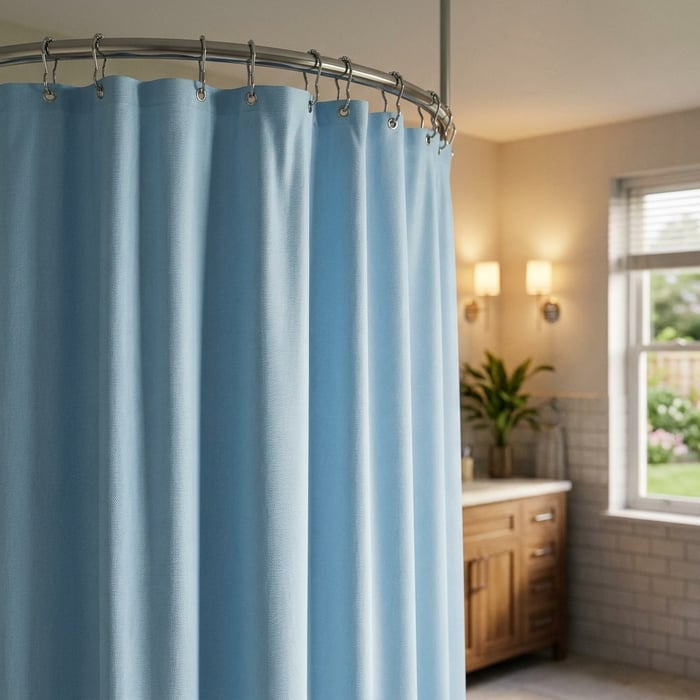
Standard vinyl curtains use a synthetic PVC material that is waterproof, wipeable, and straightforward to sanitize. A vinyl shower curtain liner is a common choice in hospital settings because it resists water penetration and can be cleaned between patients without special equipment. Heavier gauges resist tearing at the header and hold their shape longer under repeated handling.
What Polyester Vinyl Adds
Polyester vinyl combines a woven polyester base with a vinyl coating or laminate. This construction can offer more body and drape than a plain film, while keeping the water-resistant, wipeable properties that make vinyl suitable for healthcare. Some facilities prefer the softer visual character of a polyester-vinyl product in patient rooms, where a less clinical appearance can contribute to a calmer environment.
Choosing Between the Two
Both options can perform well in hospitals. The decision often comes down to cleaning protocol, appearance preferences, and how frequently curtains are replaced. Some facilities standardize on one material for simplicity; others use a plastic shower curtain liner in high-turnover shower rooms and a polyester vinyl style in patient-facing private bathrooms. Buying both from the same supplier keeps ordering and specifications consistent.
Key Features to Evaluate Before Buying
Gauge and Material Weight
The thickness of vinyl affects tear resistance, drape, and lifespan. A genuine heavy duty shower liner should feel substantial and resist puncture and tearing during normal handling. Thin, flimsy curtains may look similar on arrival but often fail sooner at the header or along the hem.
Header Construction and Grommets
The header is where hooks or rings attach and where most failures begin. Reinforced grommets or reinforced header material distribute stress and resist tearing out. Buyers should inspect the header on samples, check grommet spacing, and confirm that the curtain will work with the facility's existing rods and hooks.
Mildew and Antimicrobial Treatment
Hospital bathrooms are humid and heavily used. Treatments designed to inhibit mildew growth can help curtains stay cleaner between routine cleanings, but they do not replace disinfection. Ask suppliers what treatment is used and request documentation rather than relying on general marketing language.
Flame-Retardant Documentation
Facilities are typically subject to fire safety codes that apply to textiles. Request flame-retardant documentation for the specific product line being purchased and retain it with procurement records, since it may be reviewed during internal audits or inspections.
Disinfectant Compatibility
Hospitals use a range of cleaning agents. Confirm that the curtain material tolerates the disinfectants your environmental services team uses, so repeated cleaning does not cause stiffening, clouding, or surface breakdown.
Sizing and Coverage
Standard sizes fit many shower stalls, but hospitals often have a mix of configurations. Measure installed fixtures before ordering, including accessible showers and tub-shower combinations, and confirm the curtain provides full coverage with enough length to contain water without dragging on the floor.
Where Hospitals Should Source Vinyl Shower Curtains in Bulk
Why Wholesale Beats Retail for Healthcare Facilities
Retail pricing stays flat per unit and retail stock is rarely deep enough for facility-wide orders. A wholesale supplier of vinyl shower curtains is built for volume, with pricing that improves as quantity increases and inventory that supports recurring orders. For a hospital managing dozens or hundreds of bathrooms, wholesale sourcing is typically more economical and more reliable.
Case-Pack Purchasing
Case packs let hospitals order in standardized quantities, lowering the per-unit cost and simplifying par-level tracking. Because every curtain in a case comes from the same production lot, color, gauge, and header construction stay consistent across units, which supports a uniform appearance throughout patient care areas.
What to Ask a Supplier
Hospital procurement teams should confirm the following before placing a large order:
- Material and gauge: Clear specifications for the heavy shower curtain liner or curtain being purchased.
- Antimicrobial and flame-retardant documentation: Available on request and specific to the product line.
- In-stock depth: Enough inventory to support initial outfitting and ongoing replacement.
- Case-pack pricing: Transparent, everyday pricing without reliance on promotions.
- Shipping terms: Reasonable thresholds and lead times that fit your project schedule.
Matching Curtains to Hospital Areas
Patient Rooms With Private Bathrooms
Private bathrooms see steady use and are cleaned between admissions. A durable curtain that wipes down easily and can be replaced quickly supports turnover and keeps rooms consistent. Many facilities choose a polyester vinyl style here for a softer look, with a vinyl shower curtain liner underneath where needed.
Shared Shower Rooms and Therapy Areas
Rehabilitation units, behavioral health units, and shared bathing rooms often experience the heaviest use. A vinyl shower curtains with a reinforced header is a practical choice because it tolerates repeated handling and frequent cleaning.
Accessible and Roll-In Showers
Accessible showers may require wider or longer curtains, and curtain operation matters for patients with limited dexterity. Confirm dimensions carefully, and consider how easily the curtain can be moved by staff or patients using mobility aids.
Staff Facilities and Support Areas
Staff locker rooms and support-area showers benefit from the same durable, easy-clean construction. Standardizing across the facility simplifies purchasing and training.
Isolation and Special Precaution Rooms
Rooms used for isolation precautions may require curtains to be changed more frequently or discarded after discharge. Having adequate reserve stock on hand helps teams respond without delay.
Hospital Operations: Cleaning, Replacement, and Turnover
Build Curtains Into the Cleaning Protocol
Document how and how often curtains are wiped, laundered if applicable, or replaced. Consistent procedures across shifts help ensure every bathroom meets the same standard and reduce questions during audits.
Plan for Replacement Between Admissions
Some facilities replace curtains at every discharge, while others clean and reuse them until visible wear or soiling. Whichever policy applies, the supply plan should match it. A facility replacing at every discharge will need a much deeper reserve than one replacing quarterly.
Train Environmental Services Staff
Short training on how to inspect headers, spot early tearing, and identify mildew helps staff catch problems before they become infection-control concerns or patient complaints.
Keep a Reserve for Unexpected Demand
Census spikes, outbreaks, and renovations can change demand quickly. A reserve of plastic shower curtain liner stock allows immediate swaps without emergency purchasing.
Sizing and Measuring Before You Order
Measure Actual Installed Fixtures
Don't rely solely on building plans. Measure installed rods and stall dimensions, since older wings and renovated areas may differ.
Account for Mixed Configurations
Hospitals often have standard stalls, tub-shower combinations, and accessible showers. Keep a simple chart of sizes by location so purchasing can match curtains to each configuration.
Confirm Hook and Ring Compatibility
If the curtain requires hooks or rings, confirm that existing hardware matches the grommet size and spacing, or include replacements in the order.
Quality Checks for Samples
Handle the Material
A quality vinyl shower curtain liner should feel substantial, resist creasing damage, and return to shape. Compare gauge across candidates side by side.
Stress-Test the Header
Pull on grommets repeatedly and inspect stitching or sealing around the header. Early tearing in a sample is a reliable warning sign.
Check the Hem and Seams
Look for even, secure seams that will resist splitting after repeated cleaning and handling.
Review Odor and Surface Finish
Strong odors on arrival or a tacky surface can indicate lower-quality material. Request samples and evaluate them before committing to a large order.
Procurement Best Practices for Hospital Buyers
Establish Par Levels
Set minimum stock levels based on the number of bathrooms, replacement frequency, and reserve needs. Par levels turn purchasing from reactive to routine.
Align Orders With Budget Cycles and Renovations
Large orders can be timed with budget planning or project schedules, helping capture case-pack pricing and avoid rushed purchases.
Standardize Specifications
Document the approved material, gauge, header type, and sizes so every order matches. Standardization simplifies training, inspections, and reordering.
Maintain a Long-Term Supplier Relationship
A consistent supplier tends to provide steadier pricing, dependable availability, and a vendor that understands the facility's requirements over time.
Cost Considerations and Total Value
Look at Cost Per Month of Service
A cheaper curtain that tears early costs more once replacement labor and interruptions are counted. Evaluating expected service life against price gives a truer comparison than sticker price alone.
Reduce Emergency Purchases
Reserve stock and par levels reduce the need for expedited shipping and last-minute buying, which usually costs more.
Consider Labor and Time Savings
Durable, easy-clean curtains reduce the time staff spend wiping, replacing, and troubleshooting, freeing time for patient-facing work.
Making the Purchase: A Practical Buying Checklist
Before finalizing a bulk order, hospital buyers should confirm the following:
- Material, gauge, and header construction match the intended use in each area.
- Antimicrobial and flame-retardant documentation has been requested and retained.
- Sizes have been verified against actual installed fixtures, including accessible showers.
- Disinfectant compatibility has been confirmed with the environmental services team.
- Case-pack pricing is transparent and doesn't rely on promotions.
- The supplier has sufficient in-stock inventory for initial outfitting and ongoing replacement.
Hospitals that complete this checklist typically reduce emergency purchasing, maintain more consistent bathroom standards, and support infection prevention goals more reliably.
How Direct Textile Store Supports Hospital Shower Curtain Programs
For hospitals working through this sourcing process, one dependable supplier can simplify procurement across patient rooms, shower rooms, and support areas. Browse Direct Textile Store for vinyl and polyester vinyl shower curtains in standard sizes for hospitals, with easy-clean materials. Browse styles and case packs to outfit your operation.
A supplier offering both vinyl and polyester vinyl options, along with a heavy duty shower curtain liner for higher-traffic areas, allows a facility to standardize specifications and order from a single source rather than coordinating multiple vendors for different departments.
Final Thoughts on Sourcing Vinyl Shower Curtains for a Hospital
Choosing the right vinyl shower curtains for a hospital comes down to balancing material durability, mildew resistance, flame-retardant compliance, accurate sizing, and efficient procurement. A well-planned program supports patient privacy, holds up under frequent cleaning, and helps maintain the consistent standards infection prevention teams rely on. Hospitals that evaluate gauge, header construction, documentation, and wholesale pricing carefully before ordering tend to build programs that perform reliably over the long term. Setting par levels and planning replacement proactively, rather than reordering after curtains fail, keeps bathrooms ready and reduces avoidable disruption as the facility's needs evolve.

Learn More About Our Experience Supplying Wholesale Linens → About Direct Textile Store
Direct Textile Store is a leading U.S. wholesale linen and textile supplier trusted by over 131,000 hotels, hospitals, healthcare facilities, restaurants, spas, salons, resorts, gyms, emergency shelter and response, funeral homes, VRBO & Airbnb hosts, car washes, and commercial buyers nationwide. Shop in bulk with everyday low wholesale pricing and automatic 20% case-pack discounts — no coupons or minimums required. Choose from one of the largest in-stock selections available: over 135,000 towels, pool towels, sheets, blankets, comforters, tablecloths, pillows, bed toppers, aprons, hospital gowns, patient gowns, isolation gowns, scrubs, shower curtains, chef apparel, smocks, lab coats, uniforms, and commercial laundry equipment including wire, vinyl, and poly laundry carts, trucks, and privacy screens — all ready to ship today. Free shipping on orders over $5,999.
FAQ
What's the difference between vinyl and polyester vinyl shower curtains?
Vinyl is a fully synthetic, waterproof material that wipes clean easily. Polyester vinyl combines a woven polyester base with a vinyl coating, offering more drape and a softer look while keeping water resistance.
Why does gauge matter for hospital vinyl shower curtains?
Thicker, heavier vinyl resists tearing and holds its shape through frequent handling and cleaning. Thin curtains tend to fail sooner, especially at the header.
Do hospital vinyl shower curtains need flame-retardant documentation?
Facilities are typically subject to fire safety codes that cover textiles, so it's wise to request documentation for the specific product line and keep it with procurement records.
How often should hospital vinyl shower curtains be replaced?
It depends on policy and traffic. Some facilities replace at each discharge, while others clean and reuse until wear or soiling appears. Match your reserve stock to your policy.
Is it cheaper to buy vinyl shower curtains in bulk case packs?
Yes. Case-pack purchasing typically lowers the per-curtain cost and keeps gauge, color, and header construction consistent across units.
What should I check before ordering a large quantity?
Verify sizes against installed fixtures, inspect header and seam quality on samples, confirm disinfectant compatibility, and request antimicrobial and flame-retardant documentation.
Where can I source vinyl and polyester vinyl shower curtains for a hospital?
Direct Textile Store offers vinyl shower curtains in vinyl and polyester vinyl options in standard sizes with easy-clean materials suited to hospital use. With consistent in-stock inventory and case-pack pricing, it's a practical option for facilities outfitting bathrooms at scale.