Table of Contents
- Understanding HACCP Uniforms for Food Processing Facilities
- Understanding HACCP and Its Role in Uniform Selection
- Key Considerations When Buying HACCP Uniforms for Food Processing Facilities
- Where to Source HACCP Uniforms in Bulk for a Food Processing Facility
- Customizing HACCP Uniforms for Different Facility Roles
- Evaluating Quality and Compliance Before You Buy
- Sustainability and Long-Term Textile Management
- Vendor Reliability and Supply Chain Consistency
- Cost Efficiency and Long-Term Value
- Choosing the Right Sizes and Fits
- Common Mistakes to Avoid
- Making the Purchase: A Practical Buying Checklist
- How Direct Textile Store Supports Food Processing Facility HACCP Uniform Programs
- Final Thoughts on Sourcing HACCP Uniforms for Food Processing Facilities
- Learn More About Our Experience Supplying Wholesale Linens → About Direct Textile Store
- FAQ
- Related Topics
Food processing facilities operating under strict hygiene protocols need HACCP uniforms that genuinely minimize contamination risk while surviving the demanding daily wear and frequent industrial laundering a busy production floor requires. Sourcing the right combination of HACCP-compliant construction and genuinely easy-care fabric means understanding what separates institutional-grade food processing apparel from standard workwear, along with a procurement strategy that keeps an entire production staff properly outfitted without constant replacement. This guide walks through everything a food processing facility needs to know about sourcing HACCP uniforms in bulk, from compliance fundamentals to building a sizing and laundering strategy that supports both food safety standards and daily operational efficiency.
Understanding HACCP Uniforms for Food Processing Facilities
What HACCP Uniforms Actually Are and Why They Exist
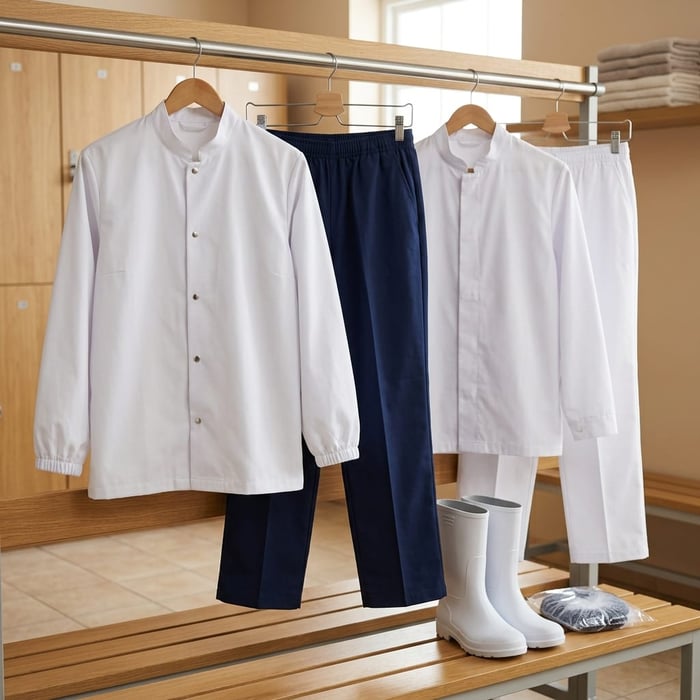
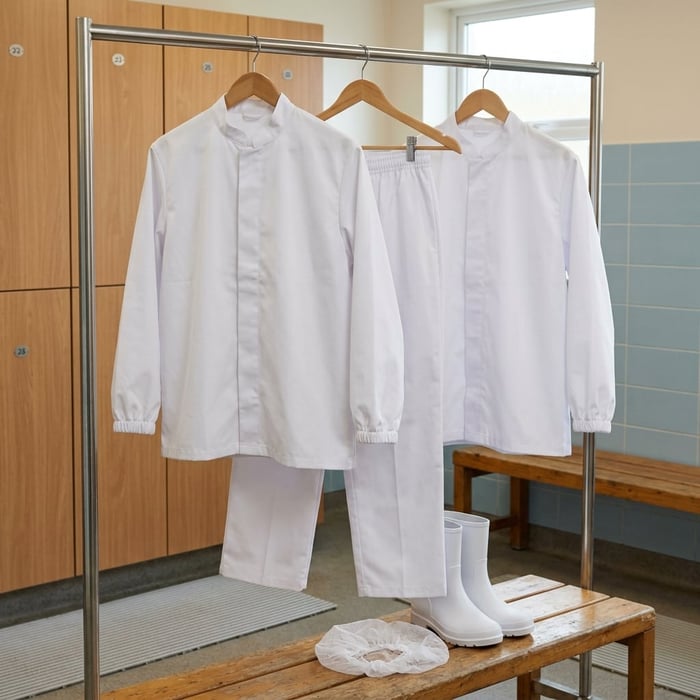
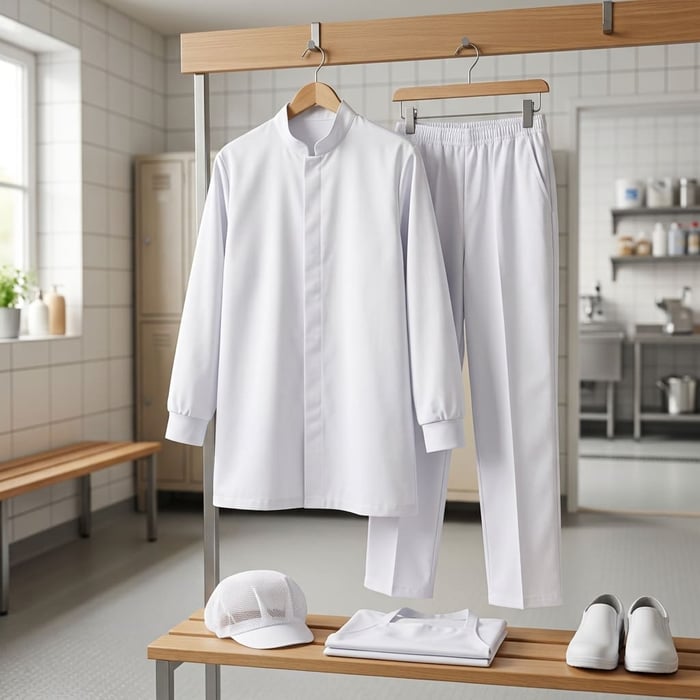
HACCP, or Hazardous Analysis Critical Control Point, is a systematic approach to identifying, evaluating, and controlling food safety hazards throughout production. HACCP uniforms, sometimes called food processing uniforms, are apparel specifically designed to meet the strict requirements this system demands, playing a genuinely crucial role in keeping food handling environments clean and free from contamination. These garments — which can include smocks, wraps, food processing coats, and related apparel — must incorporate specific design features intended to prevent cross-contamination while remaining clean, hygienic, and free of any holes, tears, or loose components that could compromise food safety.
Because any food that comes into direct or indirect contact with a compromised garment could become contaminated, HACCP uniforms construction receives a level of scrutiny that standard workwear simply doesn't require. This is exactly why facility procurement teams need to evaluate these garments against a genuinely different set of standards than they might apply to typical staff apparel elsewhere in the operation.
Why Fabric Choice Carries Special Weight in Food Processing Environments
Research indicates that 100% spun-polyester garments provide meaningfully higher levels of antimicrobial protection compared to cotton, making fabric selection a genuine food safety consideration rather than simply a comfort or cost decision. HACCP uniforms are commonly constructed from polyester, nylon, or cotton blends, but facilities operating in genuinely hygiene-sensitive production environments should weigh this antimicrobial performance difference carefully when selecting a primary fabric for their staff apparel program.
Why White Remains the Standard Color Choice
While HACCP uniforms are available in a variety of colors, white remains the most common choice across the food processing industry specifically because it's the easiest color to keep visibly clean. A soiled or stained white garment is immediately obvious to both the wearer and supervising staff, supporting faster identification of apparel that needs to be changed or laundered before it compromises hygiene standards on the production floor.
Understanding HACCP and Its Role in Uniform Selection
Controlled Garment Construction
A genuinely HACCP-approved uniform is designed to minimize contamination risks through controlled construction that reduces loose components, exposed seams, or debris-prone features that could shed material into a food production environment. Facilities should evaluate any candidate HACCP uniforms product specifically for these construction details, since a garment that looks professional at a glance may still incorporate design elements that fall short of genuine HACCP-aligned standards.
Durable, Washable Fabric as a Compliance Requirement
Beyond construction details, HACCP-aligned uniform standards require durable, genuinely washable fabric that can withstand the frequent industrial laundering food processing facilities depend on to maintain hygiene between shifts. This isn't simply a durability nicety — a garment that degrades quickly under commercial laundering introduces fraying edges, loose threads, and thinning fabric that all represent genuine contamination risks in a food handling environment.
Clean, Professional Design as a Functional Standard
A clean, professional design isn't purely an aesthetic consideration in this context — it directly supports the visual hygiene monitoring that facility supervisors and quality control staff rely on throughout a shift. HACCP uniforms that maintain a crisp, presentable appearance make it easier to spot contamination risks quickly, supporting both compliance and genuine food safety outcomes.
Key Considerations When Buying HACCP Uniforms for Food Processing Facilities
Fabric Type and Antimicrobial Performance
Most institutional-grade HACCP uniforms use polyester or cotton-poly blends specifically chosen for their combination of comfort, breathability, and resilience under repeated industrial laundering. Facilities should evaluate whether their specific production environment and risk profile call for the enhanced antimicrobial performance of spun-polyester construction, or whether a cotton blend adequately serves their particular hygiene requirements while offering a softer, more breathable feel for staff working extended shifts.
Easy-Care Properties and Laundering Efficiency
Because food processing staff often need multiple uniform changes throughout a single shift, and facilities need to launder this apparel frequently to maintain hygiene standards, genuinely easy-care fabric properties matter considerably for daily operational efficiency. HACCP uniforms built with easy-care treatments resist excessive wrinkling and dry efficiently in commercial laundry equipment, reducing the labor time facilities would otherwise spend managing apparel preparation between shifts.
Reinforced Stitching and Seam Construction
Durable stitching and reinforced seams matter enormously in a food processing context, since any loose thread or fraying seam represents a genuine contamination risk on a production floor. Facilities should inspect seam construction closely on any sample HACCP uniforms product, confirming reinforced, evenly stitched construction that resists fraying and separation even under the frequent industrial laundering food processing apparel requires.
Sizing Range for a Diverse Production Staff
Food processing facilities typically employ staff across an enormous range of body types, making a genuinely comprehensive sizing range an important consideration when sourcing HACCP uniforms in bulk. A supplier offering only a narrow band of sizes forces facilities to compromise fit for some staff members, which can compromise both comfort during physically demanding shifts and the coverage that HACCP-aligned apparel is meant to provide.
Color and Style Considerations for Role Differentiation
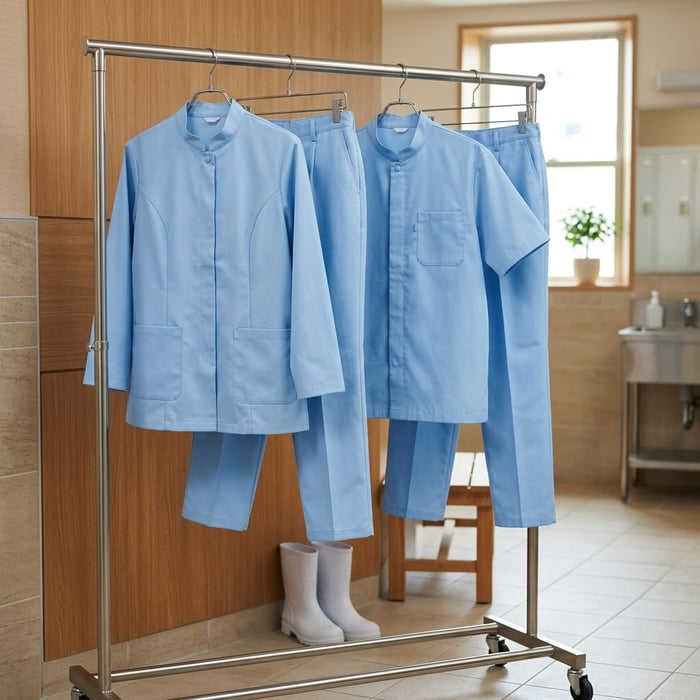
HACCP-approved uniforms don't have to be visually monotonous. Facilities can select colors and styles that align with internal branding or role differentiation while remaining fully compliant — neutral tones for general professionalism, contrasting trims for visibility in lower-light production areas, or distinct colors to differentiate departments or shifts, all while maintaining the fabric and construction standards HACCP compliance requires.
Where to Source HACCP Uniforms in Bulk for a Food Processing Facility
Wholesale Institutional Suppliers vs. General Workwear Retail
Facilities sourcing HACCP uniforms in the quantities needed to outfit an entire production staff need a wholesale approach rather than general workwear retail sourcing. Retail pricing remains flat per unit regardless of quantity, and retail inventory levels simply aren't structured to reliably fulfill the kind of bulk institutional orders a food processing operation requires. A supplier offering genuine wholesale pricing on HACCP uniforms, by contrast, is built specifically to reward volume purchasing, with per-unit costs decreasing meaningfully as order size increases.
Sourcing through a dedicated wholesale channel built specifically for institutional apparel also typically means more reliable inventory availability across the full sizing range a facility requires, reducing the risk that a facility finds itself short on a specific size category during a staffing increase.
Benefits of Case Pack Purchasing for Food Processing Facilities
Case-pack purchasing allows facilities to order HACCP uniforms in pre-set bulk quantities across needed sizes rather than buying unit by unit, meaningfully reducing the per-uniform cost. This pricing structure reflects a supplier's reduced packaging, handling, and shipping overhead when fulfilling large, consolidated orders instead of scattered small purchases spread across many individual transactions.
Buying in case packs also ensures consistency across a facility's entire uniform inventory. When an order comes from the same production lot, facilities avoid the subtle variations in fabric feel, color, or sizing that can occur when smaller batches are purchased over time from different production runs.
What to Look for in a Wholesale HACCP Uniform Supplier
Food processing facility procurement teams should evaluate several factors before committing to a bulk order of HACCP uniforms:
- In-stock availability across the full sizing range: A supplier with deep, consistent stock reduces the risk of running short on a specific size right when new production staff need to be outfitted.
- Transparent, everyday wholesale pricing: Consistent pricing without relying on rotating promotions makes annual budgeting far more manageable.
- Automatic case-pack discounts: Built-in volume pricing simplifies reordering as staffing changes, without requiring renegotiated terms each time.
- Documented fabric and HACCP-aligned construction specifications: A trustworthy supplier should clearly state fabric composition and construction details rather than relying on vague marketing language alone.
- Reasonable shipping terms: Free or reduced shipping thresholds on larger orders can meaningfully affect total program cost, particularly for facilities reordering as production volume or staffing needs change.
Customizing HACCP Uniforms for Different Facility Roles
Production Floor Staff
Staff working directly on the production floor generally need the most rigorously compliant HACCP uniforms, given their direct proximity to food product throughout a shift. Smocks, coats, or wraps with minimal loose components and reinforced construction serve this role well, prioritizing contamination control above other considerations.
Quality Control and Supervisory Staff
Quality control and supervisory personnel benefit from HACCP uniforms that maintain the same core compliance standards while potentially incorporating a distinct color or style to visually differentiate this role from general production staff, supporting quick identification during facility walkthroughs or audits.
Maintenance and Facilities Staff
Maintenance crews working within or adjacent to food production areas need HACCP uniforms that balance compliance-driven construction with the durability demands of physically demanding maintenance work. Reinforced stitching, ergonomic fits, and fabrics compatible with industrial laundering matter considerably for this role, given the more varied physical tasks maintenance staff perform compared to standard production line work.
Administrative and Front-Facing Staff
Facilities with administrative or front-facing staff who interact with visitors or move between office and production areas sometimes extend a lighter version of their HACCP uniforms program to this population as well, maintaining a consistent professional standard across every area of the operation while adjusting fabric weight or style to suit less physically demanding daily tasks.
Evaluating Quality and Compliance Before You Buy
Fabric Construction and Antimicrobial Testing
Before committing to a bulk order, facilities should request sample HACCP uniforms and evaluate fabric construction directly, confirming whether the specific product line has been tested or documented for antimicrobial performance if this is a priority for the facility's specific production environment.
Seam and Closure Inspection
Reinforced, evenly stitched seams and secure closures are strong indicators of genuinely HACCP-aligned construction. Facilities should inspect this detail closely on any sample product, since loosely finished seams or closures that shed small components represent genuine contamination risks on a production floor.
Durability Testing Under Simulated Industrial Laundering
Requesting information from suppliers about expected performance across a documented number of industrial wash cycles helps facilities avoid HACCP uniforms that degrade prematurely under the frequent, sometimes aggressive laundering food processing apparel requires to maintain hygiene standards.
Documentation and Specification Review
Direct Textile Store and similarly reputable suppliers provide institutional buyers with detailed specifications, helping facilities select uniforms that comply with safety regulations while meeting daily operational demands. Facilities should request this documentation directly rather than relying solely on general marketing descriptions before committing to a large order.
Sustainability and Long-Term Textile Management
Reducing Textile Waste Through Durable Construction
Facilities sourcing genuinely durable HACCP uniforms inherently reduce the volume of textile waste generated by their apparel program over time, since well-constructed garments simply need replacement less frequently than lower-quality alternatives that wear out prematurely under industrial laundering demands.
Energy-Efficient Laundering Practices
Easy-care fabric properties in quality HACCP uniforms support more energy-efficient laundering, since garments that dry efficiently and resist excessive wrinkling reduce the drying time and energy consumption associated with a facility's industrial laundry operations compared to lower-quality fabric that requires longer or more intensive processing.
Responsible Procurement as Part of Facility Sustainability Goals
Facilities increasingly incorporate apparel procurement into their broader sustainability planning, evaluating supplier practices and product durability as part of a responsible procurement strategy that reduces long-term environmental impact alongside the more immediate operational and compliance benefits genuinely durable HACCP uniforms provide.
Vendor Reliability and Supply Chain Consistency
Consistent Product Availability
Facilities benefit considerably from working with a supplier who maintains consistent product availability for HACCP uniforms over time, reducing the risk of production disruptions tied to staffing changes or unexpected apparel damage when a facility can't quickly source replacement inventory.
Quality Assurance Across Every Order
A reliable supplier maintains consistent quality assurance standards across every bulk order placed over time, ensuring a facility's HACCP uniforms inventory doesn't experience the kind of subtle quality drift that can occur when sourcing shifts between multiple vendors or inconsistent production runs.
Long-Term Partnership Value
Establishing an ongoing relationship with a single, dependable HACCP uniforms supplier tends to result in more predictable pricing over time, priority access to inventory during high-demand periods, and a supplier that genuinely understands a facility's specific compliance and sizing requirements as the relationship develops.
Cost Efficiency and Long-Term Value
Lower Replacement Frequency
Genuinely durable HACCP uniforms, evaluated properly before a bulk purchase, reduce how often a facility needs to replace inventory compared to lower-quality alternatives that fray or degrade prematurely under industrial laundering demands, directly supporting long-term cost efficiency.
Reduced Maintenance and Administrative Costs
Buying HACCP uniforms in bulk case packs allows facilities to lock in lower per-unit pricing while reducing the administrative time spent placing frequent smaller orders throughout the year, freeing up procurement staff time for other operational priorities.
Predictable Budgeting
Establishing a consistent case-pack purchasing rhythm for HACCP uniforms allows facility administrators to build more accurate annual apparel budgets, since predictable per-unit pricing and known replacement cycles remove much of the guesswork associated with reactive, unplanned purchasing.
Choosing the Right Sizes and Fits
Building a Sizing Strategy Aligned to Actual Staffing Data
Rather than guessing at size distribution, facilities benefit from reviewing actual staff measurement data where available, or at minimum tracking historical sizing requests across previous orders, to build a bulk purchasing strategy for HACCP uniforms that genuinely reflects the facility's actual staff composition.
Maintaining Adequate Depth in Core Sizes
Once a facility identifies its typical size distribution across its production staff, maintaining sufficient depth within the most commonly requested categories helps ensure the facility rarely runs short during onboarding for new hires or seasonal staffing increases.
Coordinating Sizing Orders with Production Volume Changes
Facilities benefit from coordinating their HACCP uniforms bulk ordering schedule with anticipated production volume changes, particularly for operations experiencing seasonal demand fluctuations where staffing levels shift meaningfully throughout the year.
Common Mistakes to Avoid
Prioritizing Cost Over Genuine Compliance
Facilities sometimes prioritize the lowest available per-unit price when sourcing HACCP uniforms, without adequately verifying that the product genuinely meets HACCP-aligned construction standards. This can introduce real compliance risk that far outweighs the modest upfront savings, particularly if a facility faces a regulatory audit or inspection.
Overlooking Sizing Depth During Initial Bulk Orders
Facilities occasionally underestimate the sizing range needed across a genuinely diverse production staff, leading to fit compromises that affect both comfort and the coverage HACCP-aligned apparel is meant to provide. Building a sizing strategy around actual staff data from the outset helps avoid this common oversight.
Neglecting to Request Documentation Before Committing to Bulk Orders
Some facilities commit to large bulk orders without first requesting fabric composition documentation, construction specifications, or fire safety and hygiene certification directly from the supplier. This documentation matters considerably both for regulatory compliance and for genuinely understanding what a facility is purchasing before finalizing a large investment.
Making the Purchase: A Practical Buying Checklist
Before finalizing a bulk order, food processing facility buyers should confirm the following:
- The supplier offers a genuinely comprehensive size range matching the facility's actual staff composition.
- Fabric type and construction align with the facility's specific hygiene and antimicrobial performance requirements.
- Sample uniforms have been inspected for seam quality, closure security, and overall fabric feel after simulated industrial laundering conditions.
- Wholesale and case-pack pricing is transparent and doesn't depend on negotiated or promotional-only discounts.
- Shipping timelines allow enough lead time to outfit new staff promptly during hiring or seasonal production increases.
- The supplier maintains sufficient in-stock inventory across all needed sizes to support both an initial bulk order and ongoing staffing changes.
Facilities that take time to evaluate these factors before ordering typically spend less over multiple ordering cycles, reduce compliance risk, and maintain a more consistent, professional standard across the entire production team.
How Direct Textile Store Supports Food Processing Facility HACCP Uniform Programs
For food processing facilities working through this sourcing process, having one dependable supplier for compliance-focused apparel can significantly simplify ongoing procurement. Direct Textile Store offers easy-care fabrics HACCP uniforms built for professional teams, made to handle daily wear. Browse styles and case packs to outfit your operation.
A supplier offering HACCP uniforms with strong in-stock availability across a genuinely comprehensive size range allows facilities to plan bulk orders around a single, reliable source rather than piecing together inventory from multiple vendors to cover different production roles. Consistent fabric quality and construction across that catalog also means facilities can build a dependable compliance standard that performs reliably across every shift and every production role.
Final Thoughts on Sourcing HACCP Uniforms for Food Processing Facilities
Sourcing the right HACCP uniforms for a food processing facility comes down to balancing genuine HACCP-aligned construction, easy-care fabric performance, sizing accuracy, and cost-effective procurement at facility-wide scale. A well-planned inventory supports genuine food safety outcomes across the production floor, holds up under the demands of frequent industrial laundering, and helps facilities manage compliance-driven procurement more effectively across a growing or changing staff roster. Procurement teams who evaluate construction quality, antimicrobial fabric performance, and wholesale pricing structures carefully before committing to a bulk order tend to build uniform programs that perform reliably across a genuinely diverse production staff. Taking a methodical, proactive approach to procurement — grounded in actual compliance documentation and staffing data rather than reactive, last-minute ordering — ultimately supports both food safety standards and operational efficiency as production volume and staffing needs continue to evolve.

Learn More About Our Experience Supplying Wholesale Linens → About Direct Textile Store
Direct Textile Store is a leading U.S. wholesale linen and textile supplier trusted by over 131,000 hotels, hospitals, healthcare facilities, restaurants, spas, salons, resorts, gyms, emergency shelter and response, funeral homes, VRBO & Airbnb hosts, car washes, and commercial buyers nationwide. Shop in bulk with everyday low wholesale pricing and automatic 20% case-pack discounts — no coupons or minimums required. Choose from one of the largest in-stock selections available: over 135,000 towels, pool towels, sheets, blankets, comforters, tablecloths, pillows, bed toppers, aprons, hospital gowns, patient gowns, isolation gowns, scrubs, shower curtains, chef apparel, smocks, lab coats, uniforms, and commercial laundry equipment including wire, vinyl, and poly laundry carts, trucks, and privacy screens — all ready to ship today. Free shipping on orders over $5,999.
FAQ
What exactly makes a uniform "HACCP compliant"?
A HACCP-aligned uniform uses controlled construction that minimizes loose components, exposed seams, or debris-prone features that could introduce contamination. It also uses durable, genuinely washable fabric that holds up to frequent industrial laundering without fraying.
Why is polyester often preferred over cotton for HACCP uniforms?
Research indicates 100% spun-polyester garments provide higher antimicrobial protection compared to cotton. Facilities in genuinely hygiene-sensitive production environments often prioritize this fabric type for that reason.
Why is white the most common color for food processing uniforms?
White makes stains and soiling immediately visible, supporting faster identification of apparel that needs to be changed or laundered before it compromises hygiene standards. Colored options are still available for facilities wanting to differentiate roles or shifts.
Is it cheaper to buy HACCP uniforms in bulk case packs?
Yes, bulk case-pack purchasing almost always reduces the per-uniform cost compared to buying individually. Wholesale pricing improves as order size increases, which matters for facilities outfitting an entire production staff.
What documentation should a facility request before placing a large order?
Facilities should request fabric composition, construction specifications, and any relevant hygiene or safety certification directly from the supplier. This documentation matters both for regulatory compliance and for confirming what's actually being purchased.
What's the biggest mistake facilities make when sourcing HACCP uniforms?
Prioritizing the lowest price without verifying genuine HACCP-aligned construction is a common and costly mistake. This can introduce real compliance risk that outweighs any modest upfront savings.
Why is Direct Textile Store a good source for food processing facility HACCP uniforms?
Direct Textile Store offers easy-care fabrics HACCP uniforms built for professional teams handling daily wear. With automatic case-pack discounts and consistent in-stock inventory, it's a practical option for food processing facilities outfitting staff at scale.