Table of Contents
- A Ballroom Table Needs Accents That Look Deliberate, Not Disposable
- Weight Is the First Signal of Quality, So Learn to Read It
- Spun Polyester Earns Its Place by Resisting Wrinkles and Fading
- Colorfastness Matters Most When Dozens of Tables Sit Side by Side
- Shapes and Sizes Should Follow the Table, the Plate, and the Place Setting
- Edges and Corners Tell You How Long a Placemat Will Last
- Palette Planning Works Best When Neutrals Carry the Inventory
- Layering Over Tablecloths Gives Planners More Looks From the Same Stock
- Counting Should Start With the Largest Event and End With a Reserve
- Back-to-Back Events Demand Spare Sets Before Laundry Can Catch Up
- Case-Pack Buying Rewards Planning With Lower Prices and Matching Lots
- Samples Reveal More Than Any Spec Sheet If You Test Them Properly
- Laundry Routines Decide Whether These Pieces Last One Season or Many
- Storage, Setup, and Tracking Keep Linens Ready for the Next Booking
- A Pre-Order Walkthrough Prevents Most Expensive Mistakes
- Direct Textile Store Can Anchor a Ballroom's Table Accent Program
- Closing Thoughts on Building a Table Linen Program That Lasts
- Learn More About Our Experience Supplying Wholesale Linens → About Direct Textile Store
- FAQ
- Related Topics
A ballroom table is a stage, and every item on it contributes to the picture guests take in before they sit down. Tablecloths set the base, centerpieces provide the focal point, and the small elements in between, including placemats, define each guest's space and add color, texture, and polish. In a hotel that hosts weddings, galas, conferences, and banquets nearly every week, those pieces have to survive constant setting, soiling, laundering, and storage while still looking crisp at every event. That is why commercial weight matters: heavier, denser, better-constructed pieces lie flat, resist curling, and keep their appearance far longer than lightweight alternatives. This guide explains how to evaluate weight, fabric, shape, and color, how to calculate quantities around a busy event calendar, and how to buy bulk placemats in case packs so every table is ready.
A Ballroom Table Needs Accents That Look Deliberate, Not Disposable
Small Pieces Define Each Place Setting
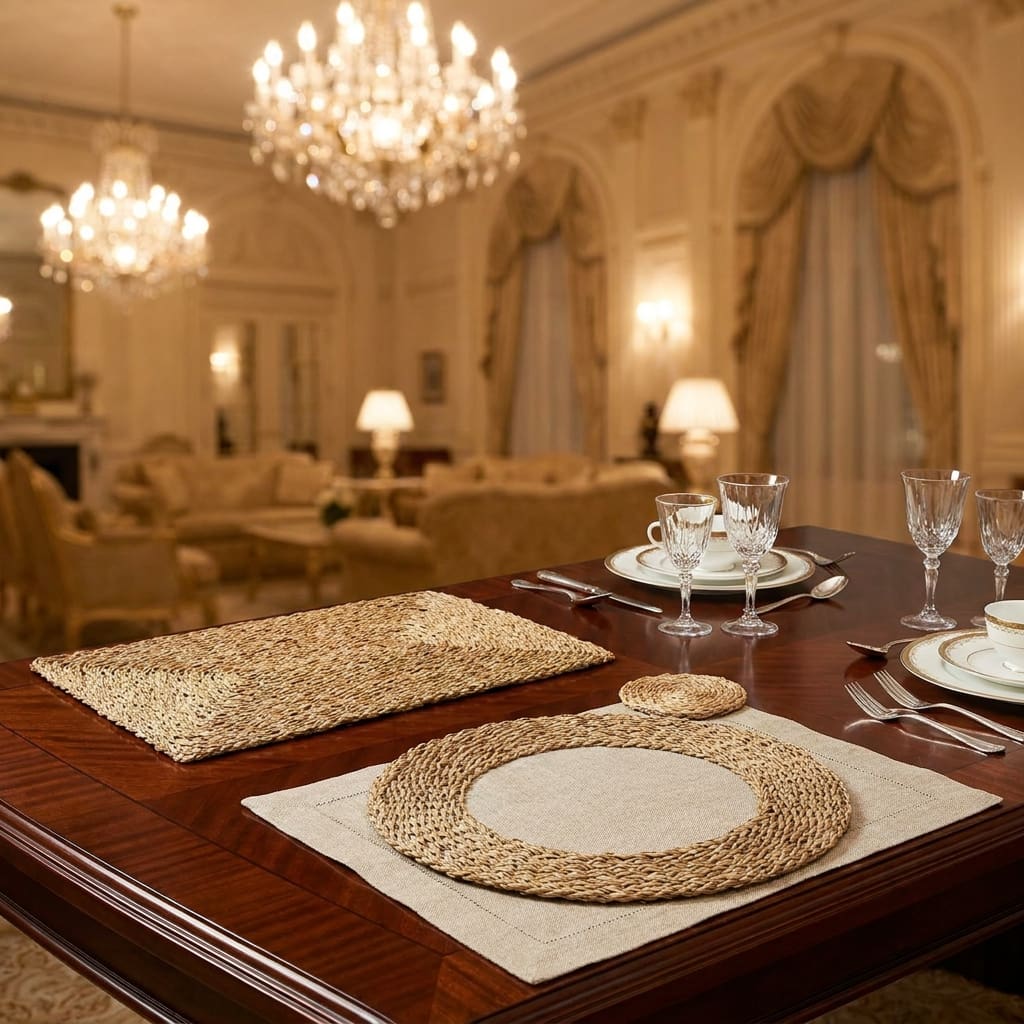
Guests rarely notice a single place setting in isolation, but they notice the rhythm of a room full of them. A defined space at each seat tells guests where to sit, organizes plates and flatware, and gives the table a finished, intentional look. Without that definition, a table can look like a surface with objects on it. Placemats provide that structure and help every setting look composed.
Layers Add Depth Under Event Lighting
Ballrooms use dramatic lighting, and flat, single-color tables can look washed out under it. Layering a colored or textured piece between tablecloth and plate adds depth and contrast that read well in person and in photographs. A thoughtful palette can pull together centerpieces, napkins, and décor. Planners often use bulk placemats to give a room character without changing the entire linen package.
The Difference Between Premium and Temporary
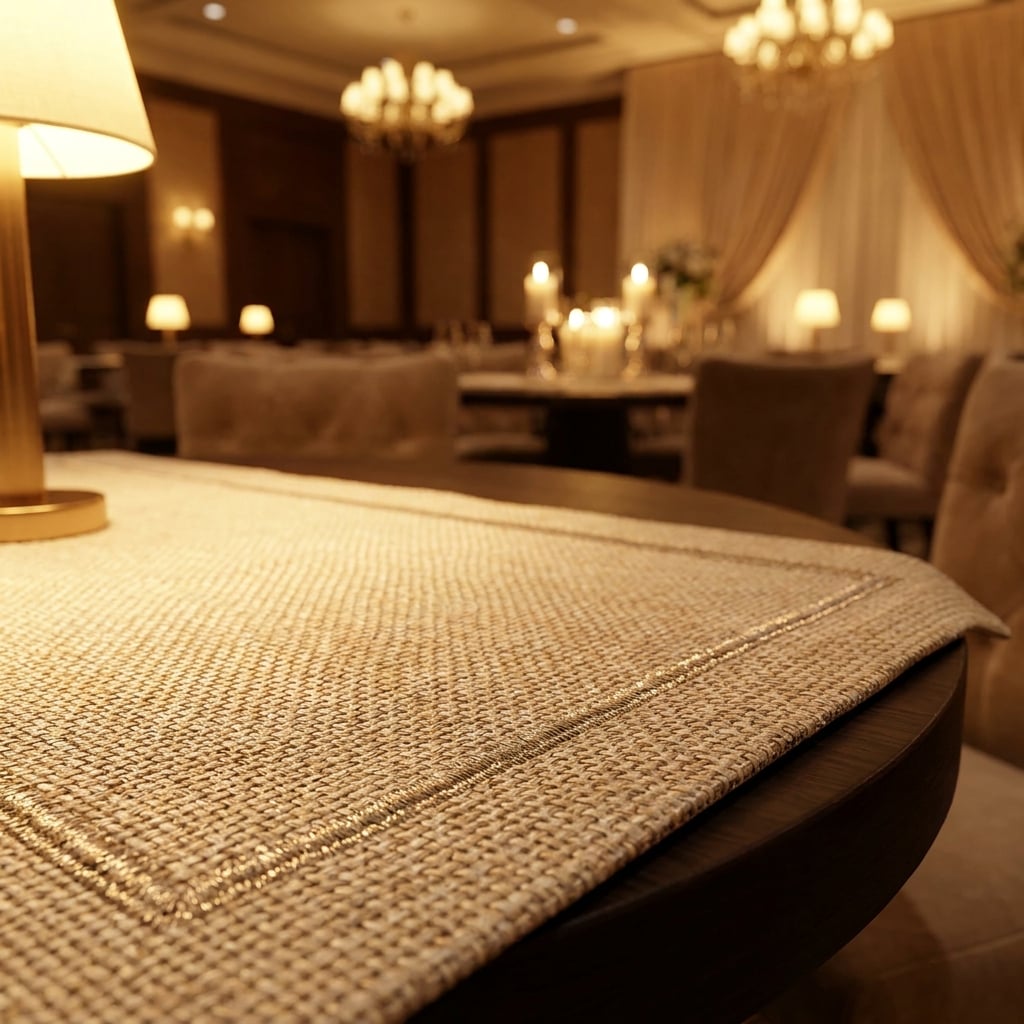
Lightweight or flimsy pieces can look temporary on a ballroom table, curling at the edges, sliding on the cloth, or showing wrinkles that never quite smooth out. Heavier, well-constructed pieces look as though they belong to the property. That difference registers with guests even if they cannot name it. Choosing commercial weight is a direct way to make a ballroom look like it takes its tables seriously.
Weight Is the First Signal of Quality, So Learn to Read It
What Commercial Weight Actually Means
Commercial weight describes fabric that is heavier and denser than lightweight consumer goods, built to survive repeated laundering and handling. The weight is a proxy for yarn thickness, weave density, and overall substance. A heavier piece tends to lie flat, resist curling, and feel more formal. When comparing placemats, weight is one of the quickest indicators of how a product will perform.
Weight Versus Stiffness and Drape
Heavier does not mean stiff. A good commercial piece has body without feeling like cardboard, and it lies flat without sliding. Stiffness often comes from heavy finishes that wash out, while true weight comes from the yarn and weave. Handle samples and wash them to see whether the feel changes. A piece that stays substantial after washing is a better value.
Weight and Laundry Practicality
Heavier fabrics take longer to dry and may take more machine capacity. A balanced weight provides substance without turning laundry into a bottleneck. Check how long samples take to dry in your equipment, and consider how many can be washed in a single load. The right weight feels premium on the table and works smoothly in the laundry room for bulk placemats.
Spun Polyester Earns Its Place by Resisting Wrinkles and Fading
A Soft Surface Without the Upkeep of Natural Fibers
Spun polyester is made from short polyester fibers spun into yarn, which gives the fabric a soft, matte, fabric-like surface. It looks refined under event lighting without the maintenance of cotton or linen. For ballrooms that process large volumes of linens, that combination of appearance and practicality is hard to beat. Many placemats for hospitality use this fabric for those reasons.
Resistance to Shrinking, Stretching, and Wrinkling
Polyester fibers are strong and stable, so pieces keep their size and shape through repeated washing. They also resist wrinkling, which reduces pressing time. A piece that comes out of the dryer flat is far easier to turn around between events. Those qualities protect both the schedule and the budget.
Color Stability Through Hot Laundering
Polyester holds dye well, which keeps colors consistent over many cycles. For a ballroom that promises a palette to a client months in advance, that stability matters. Test deep and saturated colors especially, since those are most prone to fading. A product that holds color gives bulk placemats programs long-term value.
Colorfastness Matters Most When Dozens of Tables Sit Side by Side
Visible Variation Across a Room
In a room with fifty or more identical tables, any variation in color is obvious. A few lighter or darker pieces stand out against the rest and draw the eye in the wrong way. Colorfast fabric keeps shade consistent through laundering, and consistent dye lots keep shade consistent across orders. Together, they keep the room looking uniform.
Testing Before Committing
Wash samples several times and compare them with unwashed fabric. Include dark and saturated colors, which show fading and lint more readily. Also test whether colors bleed onto other items when washed together. A product that passes those tests is a safer investment. Document the results for future reference with placemats.
Protecting Color Through Practice
Sort by color, use appropriate detergent amounts, and avoid excessive heat. Train laundry staff on the routine and post instructions. Good habits protect the colors you paid for and keep inventory looking fresh longer.
Shapes and Sizes Should Follow the Table, the Plate, and the Place Setting
Round Versus Rectangular Pieces
Round pieces suit round banquet tables and soften the look of a setting, while rectangular pieces align with plates and flatware and suit long tables. Many ballrooms stock both to serve different events. Decide which shapes your most common tables call for and build stock accordingly. Matching shape to table makes placemats look intentional.
Proportion With Plates and Chargers
A piece that is too small looks lost under a charger plate, while one that is too large crowds neighboring settings. Set a place with samples and check how the plate, chargers, flatware, and glasses fit. Allow room for movement of plates during service. Good proportion makes the setting feel balanced.
Consistency Across the Inventory
Keep sizes consistent within each shape so that stacks look neat and every setting matches. Record exact dimensions in your specification. Consistent sizes also simplify folding, counting, and storage.
Edges and Corners Tell You How Long a Placemat Will Last
Finishing Methods and What They Mean
Edges can be hemmed, serged, or bound, and each method has different durability. A tightly finished edge resists fraying and keeps the piece flat. Loosely stitched or unfinished edges unravel quickly and make the piece look worn. Inspect samples closely, especially at corners, since they bear the most stress.
Corner Strength and Flatness
Corners on rectangular pieces can curl or fray first. Look for reinforced stitching and corners that lie flat after washing. A piece that curls at the corners looks sloppy and can interfere with plate placement. Wash samples to see how edges behave over time.
Thread Quality and Seam Consistency
Even, consistent stitching suggests quality control in manufacturing. Look for loose threads and uneven seams. Pull gently to test strength. Careful finishing is a mark of quality for bulk placemats.
Palette Planning Works Best When Neutrals Carry the Inventory
Core Neutrals for Flexibility
White, ivory, black, and natural tones serve most events and coordinate with a wide range of décor. A deep stock in these colors lets a ballroom say yes to most bookings without special orders. Neutrals also pair with tablecloths and napkins in many combinations. Build your base inventory of placemats around them.
Accent Colors for Seasonal and Event Themes
Add a smaller stock of accent colors that planners request often, such as navy, sage, burgundy, and gold. Track requests and adjust each season. A modest accent inventory lets the ballroom respond to trends without overbuying.
Matching the Palette to the Whole Table
Placemats should coordinate with tablecloths, napkins, and centerpieces. Consider how colors interact under event lighting. Use samples in a trial setup to see how combinations look together. Planning the palette as a system prevents clashes.
Layering Over Tablecloths Gives Planners More Looks From the Same Stock
Contrast and Texture Over a Base Cloth
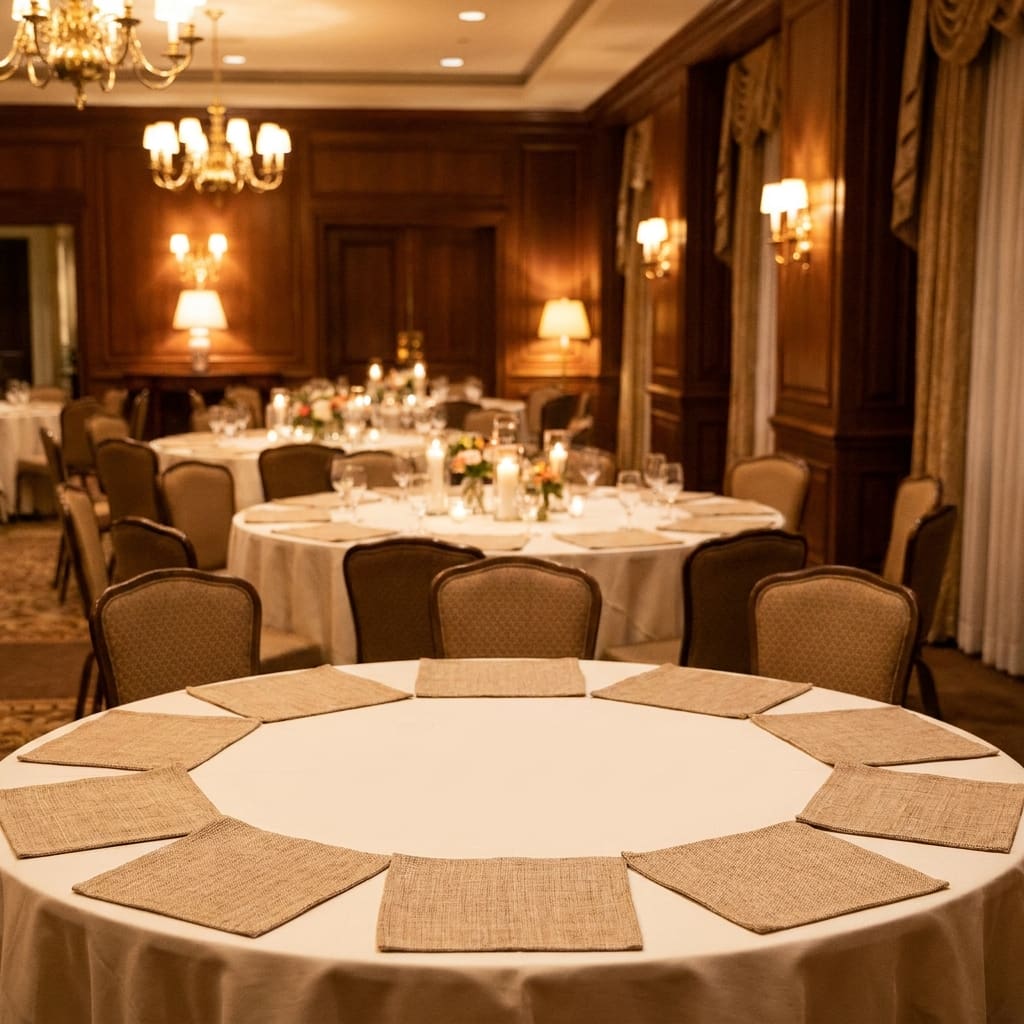
A colored or textured piece over a neutral cloth creates a layered look that feels custom. Planners can change the entire character of a room by switching only the top layer. That flexibility reduces the amount of linen the ballroom must own. Layering is an efficient way to expand design options with bulk placemats.
Protecting the Tablecloth
A piece beneath the plate catches spills and crumbs that would otherwise reach the cloth, which can help the cloth stay cleaner during service. That can reduce the number of cloths that need replacement mid-event. It is not a substitute for good service practices, but it helps.
Using Them Alone for Casual Events
For breakfast meetings, buffets, and casual events, pieces can be used directly on tables without cloths. This reduces laundry load and provides a clean, informal look. Having stock that works both ways increases the value of placemats.
Counting Should Start With the Largest Event and End With a Reserve
The Base Quantity
Determine the maximum number of guests the ballroom seats at one time, and plan one piece per seat. Add extras for head tables, specialty arrangements, and service stations. This base number reflects the largest event. Accurate base counts prevent shortages.
Rotation and Reserve
If events are scheduled close together, you need enough pieces for both while one set is in the wash. Add a reserve of ten to twenty percent for stains, damage, and last-minute changes. Track how often the reserve is used and adjust.
A Worked Example
A ballroom seating 500 guests needs 500 pieces for one event. With back-to-back events and a one-day laundry cycle, plan 1,000. A fifteen percent reserve brings the total to about 1,150 placemats. Repeat for each shape and color in your inventory.
Back-to-Back Events Demand Spare Sets Before Laundry Can Catch Up
Building a Linen Calendar
List events, guest counts, and laundry days in a single calendar. This shows where inventory will be tight. Share it with banquet and laundry teams so everyone works from the same plan.
Turnaround Realities
Large events can produce hundreds of soiled pieces that need washing, drying, and folding. If another event begins the next morning, there may not be time. Plan spare sets for those windows. A buffer prevents stress and last-minute scrambling.
Tracking Returns After Each Event
Count pieces as they come back from the ballroom to detect losses early. Missing items are easier to find within a day than weeks later. Tracking also reveals patterns, such as which events or locations lose items, which helps refine par levels for bulk placemats.
Case-Pack Buying Rewards Planning With Lower Prices and Matching Lots
Lower Cost Per Piece
Case packs reduce packaging and handling costs, which results in a lower price per piece. For a ballroom buying hundreds or thousands, ordering in cases is more economical than buying in small quantities. Direct Textile Store offers case-pack pricing on commercial weight placemats, giving hotels a clear way to plan budgets for placemats.
Dye-Lot Consistency Within an Order
Pieces in the same case typically come from the same dye lot, so colors match. That is especially important in a large order that will be spread across many tables. Ask about lot consistency and keep records for reorders.
Fewer, Simpler Orders
Standardized quantities make counting, storage, and budgeting easier. A few large orders per year take less administrative effort than many small ones. Predictable pricing helps owners forecast costs and approve budgets.
Samples Reveal More Than Any Spec Sheet If You Test Them Properly
A Close Look and a Firm Pull
Open samples and examine weave, edges, and corners in good light. Pull gently on seams and edges. Compare multiple samples side by side so differences are clear. Details visible in a sample usually predict the full order's performance.
Wash, Dry, and Repeat
Run samples through your laundry process several times, including your usual detergent and temperature. Check shrinkage, color retention, curling, and feel. Note drying time. A sample that changes dramatically after a few cycles is not a good candidate for volume.
A Trial Table Under Real Lighting
Set a trial table with tablecloth, plate, flatware, glassware, and napkin under ballroom lighting. Photograph it. Ask banquet staff and planners for feedback. A real table reveals qualities that swatches cannot, and it helps you evaluate placemats in context.
Laundry Routines Decide Whether These Pieces Last One Season or Many
Washing and Drying Practices
Follow care instructions for temperature and detergent, avoid overloading machines, and dry thoroughly without excess heat. Excess heat can cause curling and fading. Remove pieces promptly to reduce wrinkles. Consistent routines protect the investment in bulk placemats.
Stain Handling
Collect soiled pieces quickly after events, avoid heat before washing, and pre-treat stains according to type. Wine, sauces, and oils each respond differently. Train staff on the basics. Quick handling keeps pieces in service longer.
Retirement Standards
Decide when pieces should be retired, such as persistent stains, curling edges, or faded color. Write the standard down and apply it consistently. Retired pieces can be repurposed for cleaning or staff use. Prompt retirement keeps tables looking fresh.
Storage, Setup, and Tracking Keep Linens Ready for the Next Booking
Organized Storage
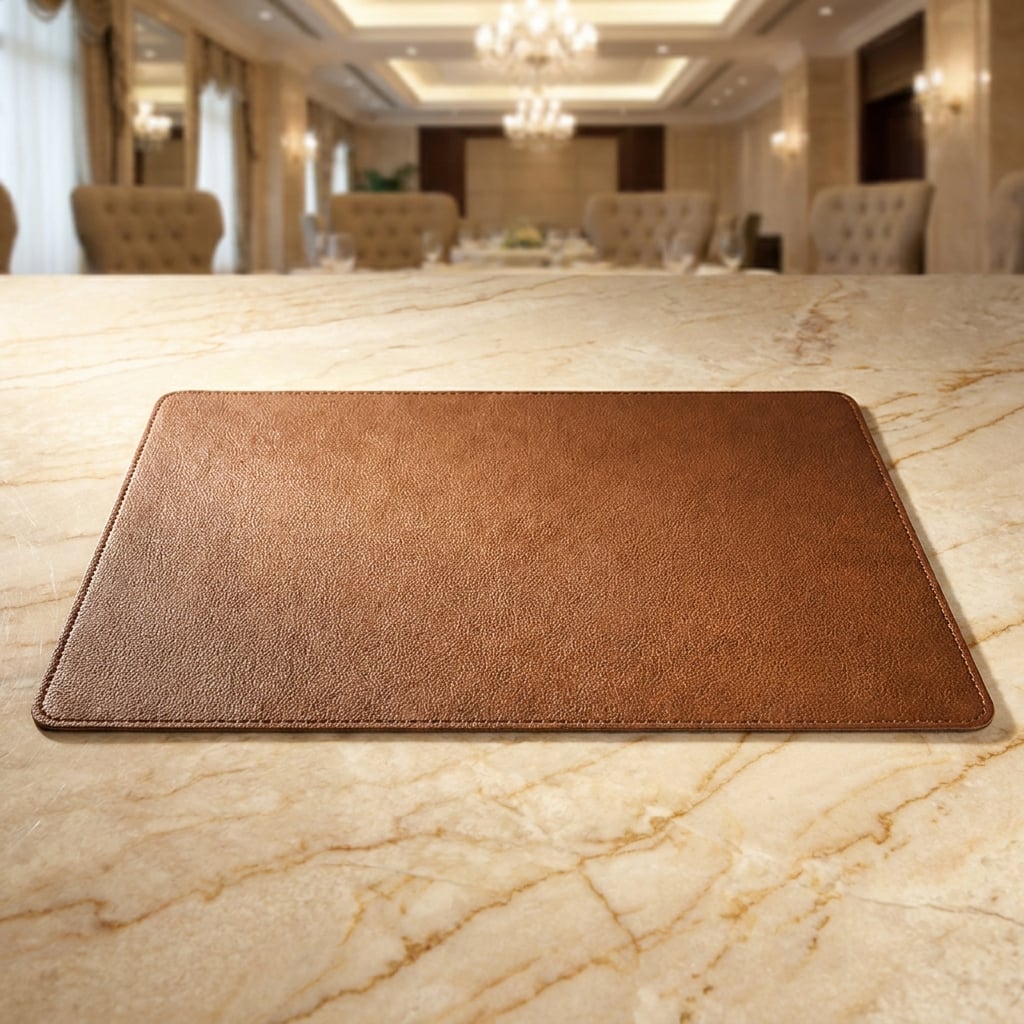
Store clean pieces flat or in neat stacks in a dry, clean room, labeled by shape and color. Avoid compressing stacks too tightly, which can cause creases. Keep reserve stock separate and accessible. Good storage makes setup faster.
Setup Efficiency
Standard sizes and clear labeling help banquet crews set tables quickly. Stage stacks by event if possible. Efficient setup reduces labor and errors.
Inventory Records
Keep a simple record of counts by shape and color, updated after each event. Use it to guide reorders. Accurate records prevent surprises and support budgeting for placemats.
A Pre-Order Walkthrough Prevents Most Expensive Mistakes
Product Details to Confirm
Before finalizing a bulk order, confirm each of the following with samples in hand:
- Commercial weight is verified: The piece feels substantial, lies flat, and keeps its body after washing.
- Fabric suits your laundry and look: Spun polyester or the chosen fabric resists wrinkles, holds color, and tolerates your wash routine.
- Colors are fast and consistent: Samples hold shade after repeated washing, and the supplier can match dye lots on reorder.
- Shapes and sizes fit your tables and settings: You have tested proportion with plates, chargers, and flatware.
- Edges and corners are strong: Finishing is tight, and pieces stay flat after laundering.
- Quantities include back-to-back events and a reserve: Your calculation covers the largest event, the laundry cycle, and expected losses.
- Case-pack pricing, shipping timing, and reorder availability are confirmed: You know the total cost, when the order will arrive before peak season, and that the same item can be ordered again.
Conversations to Have
Share the plan with banquet, laundry, and events teams. Make sure everyone understands par levels, setup standards, and retirement rules. Confirm the delivery date and allow time to receive, inspect, and wash new stock before use.
Records to Keep
Save the specification, order date, lot information, quantities, prices, and inventory counts. Update the record whenever products or quantities change. Clear records make future orders faster and help new managers maintain consistency.
Direct Textile Store Can Anchor a Ballroom's Table Accent Program
For hotel ballrooms working through this process, one dependable source can simplify ordering, keep every event looking consistent, and keep quality steady from one order to the next. You can order from Direct Textile Store — they offer commercial weight placemats in commercial weights and multiple colors for professional dining rooms. Browse styles and case packs to outfit your operation. The range is built for hospitality and banquet settings where linens are laundered constantly and judged by guests at every event, so durability, colorfastness, and consistent sizing are central to every product.
Ballrooms benefit from having bulk placemats available in consistent specifications and case-pack quantities. With one source for table accents, tablecloths, napkins, and runners, a hotel can match fabrics and colors across its entire table program, keep one set of care instructions, and avoid the mismatches that come from buying piecemeal. Automatic case-pack pricing lowers the cost per piece as the order grows, and there are no coupons or minimums to manage, which makes budgeting simpler for owners and event managers. When a planner requests a specific palette, a deep, coordinated inventory makes it easy to say yes with confidence.
Consistency matters as a hotel expands its event business or renovates its ballrooms. When replacements and additions match existing stock, the property keeps a uniform look across rooms and seasons, and planners know what to expect. Direct Textile Store also supplies other textiles hotels use, including bath towels, sheets, blankets, and aprons, so one relationship can support the entire operation. That breadth lets a hotel standardize its textile program, simplify reordering, and keep supply predictable through wedding season, holiday parties, and quiet months alike.
Closing Thoughts on Building a Table Linen Program That Lasts
The best way to supply a hotel ballroom is to buy durable commercial weight placemats in colorfast spun polyester or comparable fabric, in shapes and sizes that fit your tables, in case packs at wholesale pricing. Ballrooms that test samples through their own laundry and on trial tables, count pieces around their largest events and back-to-back bookings, and standardize their specification tend to keep every event looking polished while controlling costs. Choosing bulk placemats that match laundry capacity and event mix makes setup faster and more consistent.
The real gains come from planning rather than from any single purchase. A written par level by shape and color, a linen calendar, a retirement standard, and a simple tracking routine turn a collection of small pieces into a managed program. Banquet crews know what to set, laundry knows what to expect, and managers can see at a glance what the property owns and what it needs. With those habits in place, orders arrive before shortages, reserves stay healthy, and each event starts from the same strong baseline.
Finally, remember that guests rarely comment on the pieces beneath their plates, but they notice immediately when a table looks composed and cared for. Dependable placemats contribute to that impression quietly and steadily, from the first course to the last toast. Hotels that plan ahead, rather than reordering placemats only when stock runs low or a big weekend approaches, protect their budgets, their staff, and the reputation that keeps planners booking their ballrooms year after year.

Learn More About Our Experience Supplying Wholesale Linens → About Direct Textile Store
Direct Textile Store is a leading U.S. wholesale linen and textile supplier trusted by over 131,000 hotels, hospitals, healthcare facilities, restaurants, spas, salons, resorts, gyms, emergency shelter and response, funeral homes, VRBO & Airbnb hosts, car washes, and commercial buyers nationwide. Shop in bulk with everyday low wholesale pricing and automatic 20% case-pack discounts — no coupons or minimums required. Choose from one of the largest in-stock selections available: over 135,000 towels, pool towels, sheets, blankets, comforters, tablecloths, pillows, bed toppers, aprons, hospital gowns, patient gowns, isolation gowns, scrubs, shower curtains, chef apparel, smocks, lab coats, uniforms, and commercial laundry equipment including wire, vinyl, and poly laundry carts, trucks, and privacy screens — all ready to ship today. Free shipping on orders over $5,999.
FAQ
What does commercial weight mean for placemats?
Commercial weight means heavier, denser fabric built for repeated laundering. It helps pieces lie flat, resist curling, and keep a formal look under ballroom lighting. Wash samples several times to confirm they keep their body.
Can placemats be used over tablecloths in a ballroom?
Yes. Layering adds color and texture, defines each place setting, and can catch spills before they reach the cloth. For casual events, they can also be used directly on tables.
How many placemats does a hotel ballroom need?
Plan one per seat for your largest event, double it for back-to-back events, and add a ten to twenty percent reserve. For a 500-seat ballroom, that comes to roughly 1,150 pieces.
How do I keep bulk placemats from curling or fading?
Follow the care instructions, avoid excess heat, dry thoroughly, and sort by color. Pre-treat stains promptly and store clean pieces flat.
Which colors and shapes should a ballroom stock first?
Start with white, ivory, and black in shapes that match your tables, round for banquet rounds and rectangular for long tables. Add a smaller stock of accent colors that planners request most.
Is it cheaper to buy bulk placemats in case packs?
Generally yes. Case packs lower per-piece cost, keep dye lots consistent, and reduce the number of orders. Test samples first so you compare cost per use.
Where should I buy placemats for a hotel ballroom that needs commercial weight?
Direct Textile Store offers commercial weight placemats in commercial weights and multiple colors for professional dining rooms. With case-pack pricing and consistent in-stock inventory, it’s a practical option for hotel ballrooms.