Table of Contents
- Understanding Down-Alternative Pillows for Hospital Use
- What Makes a Down-Alternative Pillow Suitable for Hospital Use
- The Best Down-Alternative Pillows for Hospitals: Key Features to Prioritize
- Real-World Use Cases Across Hospital Departments
- Operational Advantages for Healthcare Facilities
- Choosing the Right Supplier for Hospital-Grade Pillows
- Bulk Purchasing and Case-Pack Benefits
- Reducing Long-Term Costs Through Thoughtful Sourcing
- Hygiene, Maintenance, and Laundering Protocols
- Evaluating Quality and Durability Before You Buy
- Making the Purchase: A Practical Buying Checklist
- How Direct Textile Store Supports Hospital Pillow Programs
- Final Thoughts on Sourcing Down-Alternative Pillows for Hospitals
- Learn More About Our Experience Supplying Wholesale Linens → About Direct Textile Store
- FAQ
- Related Topics
Hospitals outfitting patient rooms, recovery bays, and staff areas need alternative pillows that support genuine patient comfort while meeting the rigorous hygiene, sanitizing, and durability standards a clinical environment demands. Down-alternative fill has become the standard choice across healthcare settings specifically because it delivers dependable loft retention, hypoallergenic performance, and genuine resilience under the frequent sanitizing laundering that hospitals require between every patient. This guide walks through what separates genuinely durable best down alternative pillows from lower-quality consumer bedding, where hospitals should source bulk case packs, and how to build a procurement strategy that keeps every patient room, recovery area, and staff space properly and consistently equipped.
Understanding Down-Alternative Pillows for Hospital Use
Why Down-Alternative Fill Is the Standard Choice in Healthcare Settings
Genuine down, the soft insulating clusters harvested from waterfowl, is a known allergen for a meaningful portion of the population. In a hospital, where patients may already be managing respiratory conditions, compromised immune systems, or general sensitivities tied to their underlying medical condition, introducing an allergenic pillow fill into daily bedding represents an unnecessary and entirely avoidable risk. Alternative pillows use synthetic microfiber or polyester fill engineered specifically to mimic the loft and softness of natural down without triggering allergic responses, making this fill type a genuinely responsible default for facilities committed to protecting patient health outcomes across their entire population.
Unlike traditional feather or down pillows that can flatten and clump relatively quickly, particularly once exposed to moisture during commercial laundering, quality down-alternative options maintain their loft and resilience over time, providing consistent head and neck support for patients regardless of how frequently the pillow gets washed between admissions.
How Down-Alternative Fill Supports Infection Control and Sanitizing Protocols
Because hospitals operate under the strictest infection control expectations of any institutional setting, the ease with which bedding can be sanitized between patients matters enormously. Alternative pillows generally tolerate frequent high-temperature commercial washing far better than natural down, which requires more careful, gradual drying to avoid permanent clumping. This durability under aggressive sanitizing protocols directly supports a hospital's broader infection control program without introducing the moisture-related degradation risks that come with natural fill.
Why This Fill Type Avoids Complications in a Diverse Patient Population
Beyond the practical hygiene and allergy advantages, best down alternative pillows sidestep the ethical and religious considerations some patients, families, or staff may hold regarding natural down harvesting. Hospitals serving a genuinely diverse patient population benefit from a bedding standard that doesn't require case-by-case exceptions or special accommodation requests, since synthetic fill presents no such concerns for any segment of the population being served.
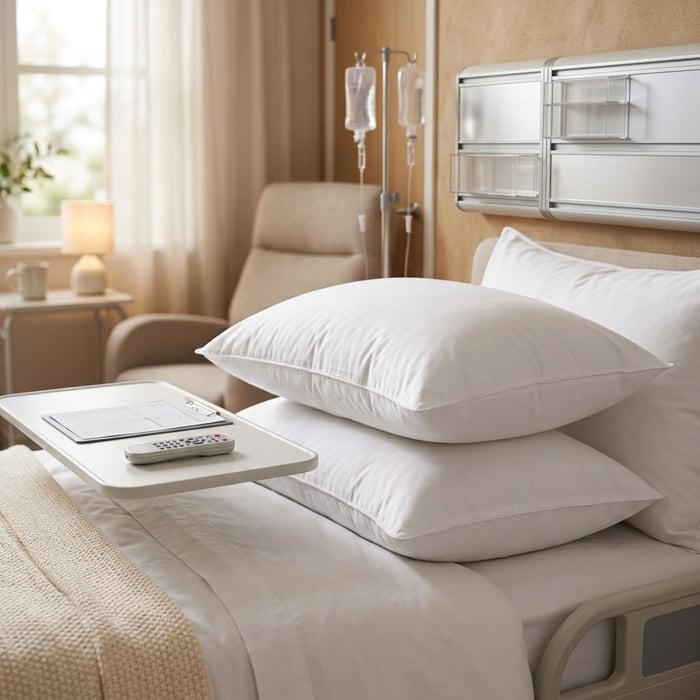
What Makes a Down-Alternative Pillow Suitable for Hospital Use
Shell Fabric and Construction Quality
The outer shell fabric of an alternative pillows product directly affects both patient comfort and how well the fill stays contained over the product's working life. A tightly woven cotton or cotton-blend shell resists the fill working its way through the fabric over time, a common quality issue with lower-grade shell materials. Hospital procurement teams should inspect shell fabric closely on any sample product, checking for a smooth, tightly woven texture rather than a loose or overly thin material.
Fluid-Resistant or Waterproof Casing Options
Many genuinely hospital-grade alternative pillows incorporate a fluid-resistant or fully waterproof inner casing, typically constructed from a vinyl or polyurethane-laminated fabric. This barrier prevents moisture, incidental spills, or bodily fluids from reaching the pillow's fill material, which matters enormously both for hygiene compliance and for extending the pillow's usable life through the frequent sanitizing washes hospitals require. Facilities should confirm directly with suppliers whether this waterproof barrier is available and standard across the specific product line being purchased.
Fire Retardant Certification
Hospitals are typically subject to some of the strictest fire safety codes of any healthcare or institutional setting, extending to bedding materials used throughout patient care areas. Genuine best down alternative pillows built for institutional use are commonly certified to meet these standards, and hospitals should request and retain documentation confirming this certification before committing to a bulk purchase, since compliance verification may be reviewed during regulatory or accreditation inspections.
Fill Weight and Loft Retention
Hospitals should evaluate fill weight and density carefully when comparing suppliers, since firmness levels and loft retention performance vary meaningfully across different alternative pillows product lines. Some suppliers offer multiple firmness options within their down-alternative construction, which allows a hospital to stock both medium and firmer support levels depending on patient positioning needs across different departments and care levels.
Sizing Standards Appropriate to Hospital Bed Configurations
Hospitals typically stock pillows across standard, queen, and king dimensions to properly serve different bed configurations, patient rooms, and family accommodation spaces. Confirming that a supplier's alternative pillows sizing remains consistent and accurately labeled across every batch purchased helps avoid the mismatched, inconsistent appearance that can occur when sizing varies subtly between production runs.
The Best Down-Alternative Pillows for Hospitals: Key Features to Prioritize
Resilience Through Repeated Sanitizing Washing
Because hospital pillows undergo frequent, often high-temperature sanitizing laundering between patient admissions, resilience under this repeated wash cycle is arguably the single most important quality marker to evaluate. Hospitals should specifically request information from suppliers regarding expected loft recovery across a documented number of wash cycles, since a pillow that compresses permanently after just a handful of institutional washes fails to deliver the long-term value best down alternative pillows are meant to provide.
Cluster Fiber vs. Solid Fiber Fill Construction
Down-alternative fill generally comes in either cluster fiber or solid fiber construction, each offering a slightly different feel and performance profile. Cluster fiber fill tends to more closely replicate the softness and compressibility of genuine down, while solid fiber construction often provides firmer, more structured support that specific clinical applications may specifically benefit from, particularly in positioning support for post-surgical recovery or respiratory management. Hospitals should request samples of both construction types when evaluating alternative pillows options.
Gusseted Construction for Enhanced Positioning Support
Some best down alternative pillows products incorporate gusseted side panels, adding extra fill volume along the pillow's edge to provide more substantial, consistent support across the entire surface rather than tapering thinly at the edges. This construction detail can matter considerably for patients who need more structured positioning support during recovery, since a gusseted pillow tends to maintain its shape and coverage more reliably than a flatter, non-gusseted alternative.
Machine-Washability and Dryer Safety at Commercial Settings
Unlike genuine down, which requires specialized dry cleaning or careful low-heat washing to avoid clumping and mold, quality alternative pillows are typically fully machine washable and dryer safe at commercial settings. Hospitals should confirm this specifically with suppliers before a large bulk purchase, since this practical feature directly determines whether a hospital's existing laundry infrastructure can handle the pillow inventory without specialized handling procedures.
Real-World Use Cases Across Hospital Departments
General Patient Rooms
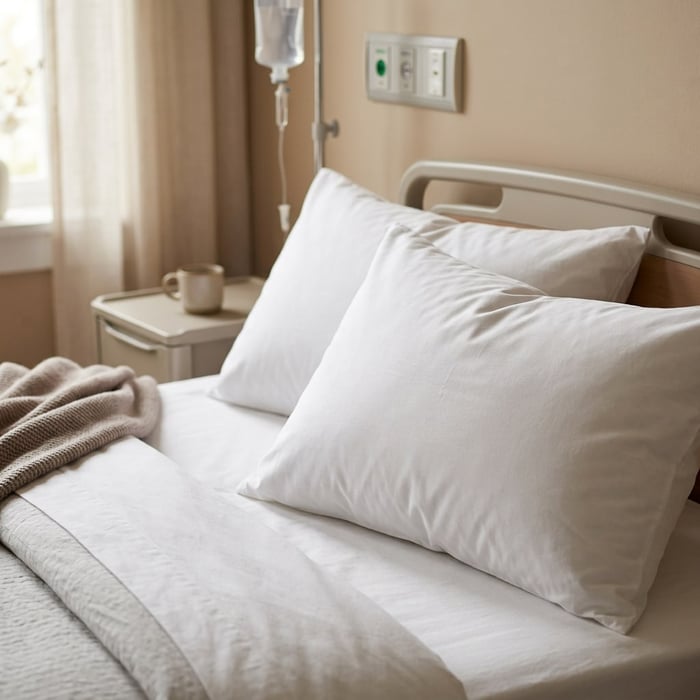
The majority of a hospital's alternative pillows inventory typically supports standard patient room bedding, where down-alternative fill provides dependable, comfortable support across a patient population with widely varying mobility and health needs. Consistent firmness and quality across this core inventory helps hospitals maintain a uniform standard of care regardless of which specific room a patient occupies.
Recovery and Post-Operative Areas
Recovery and post-operative areas, where patients may spend extended time following a procedure, often benefit from having firmer best down alternative pillows readily available, since patients in these settings frequently need more substantial positioning support during a longer recovery window than a brief exam room visit typically requires.
Intensive Care and Specialized Units
Intensive care units and other specialized care areas often see particularly intensive bedding use and frequent laundering cycles, given the more comprehensive daily support many patients in these units require. Durable, genuinely institutional-grade alternative pillows construction matters especially here, since bedding in these units needs to withstand a demanding laundering schedule while still maintaining a comfortable, dignified appearance for patients.
Family and Visitor Accommodations
Hospitals offering family waiting rooms, overnight accommodations, or extended-stay family spaces benefit from stocking alternative pillows in these areas as well, extending the same comfort and hygiene standards to family members supporting a patient's care rather than limiting quality bedding exclusively to patient-occupied rooms.
Staff Rest and On-Call Areas
Many hospitals maintain staff rest areas or on-call rooms for medical personnel working extended or overnight shifts, and stocking the same best down alternative pillows standard used elsewhere in the hospital simplifies overall procurement while ensuring staff also benefit from a genuinely comfortable, hygienic bedding standard during their rest periods.
Operational Advantages for Healthcare Facilities
Simplified Laundry Workflow
Because alternative pillows generally tolerate more aggressive commercial laundering than natural down, hospitals can integrate pillow washing into their existing institutional laundry workflow without requiring specialized handling procedures or extended drying times that would otherwise slow down daily operations across an already demanding hospital laundry schedule.
Standardized Bedding Program Across the Facility
Sourcing best down alternative pillows consistently from a single supplier allows hospitals to apply one uniform comfort and hygiene standard across patient rooms, recovery areas, intensive care units, and staff spaces alike, rather than managing inconsistent quality that results from piecemeal sourcing across multiple vendors over time.
Reduced Replacement Frequency
Genuinely durable alternative pillows construction, evaluated properly before a bulk purchase, tends to reduce how often a hospital needs to replace inventory compared to lower-quality alternatives that compress or degrade prematurely under institutional laundering demands. This reduced replacement frequency directly supports long-term budget predictability across a hospital's bedding program.
Enhanced Hygiene and Cross-Contamination Reduction
Down-alternative fills are machine-washable and hypoallergenic, minimizing risks of cross-contamination between patients, a genuinely important operational benefit given how frequently hospital bedding cycles through use across different admissions. Pillows with reinforced seams resist tearing during repeated washing cycles, while high-quality down-alternative fills maintain shape and loft over time, supporting both hygiene and patient comfort simultaneously.
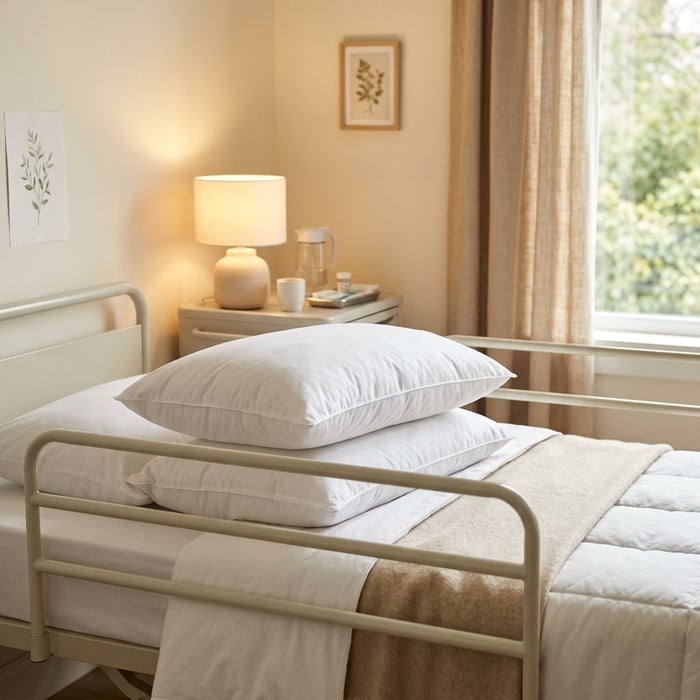
Choosing the Right Supplier for Hospital-Grade Pillows
Product Reliability Across Every Order
Hospitals benefit considerably from working with a supplier whose best down alternative pillows product line maintains consistent fill quality, shell construction, and firmness across every bulk order placed over time, rather than experiencing subtle quality drift between successive purchases that can create an inconsistent standard across a hospital's patient population.
Case-Pack Availability at Genuine Institutional Scale
Hospitals should confirm that a prospective supplier genuinely maintains sufficient in-stock inventory of alternative pillows to support large case-pack orders without extended backorder delays, since a supplier structured primarily around smaller retail transactions may struggle to reliably fulfill the volume a hospital actually requires.
Transparent Documentation and Certification
A trustworthy supplier of best down alternative pillows should readily provide documentation confirming fire retardant certification, fill composition, and any relevant hygiene standards their products claim to meet, rather than relying on vague marketing language that leaves hospital procurement teams uncertain about what they're actually purchasing.
Evaluating Hospital Pillow Suppliers Specifically
Selecting the right hospital pillow suppliers is critical to ensuring long-term value, since not every supplier marketing toward hospitality use genuinely understands the specific hygiene, certification, and durability requirements a hospital-grade product needs to meet. Hospitals should specifically ask prospective suppliers about their experience serving healthcare institutions rather than assuming general hospitality experience automatically translates to hospital-appropriate construction.
Bulk Purchasing and Case-Pack Benefits
Understanding Par Levels for Pillows
Establishing a clear par level — the minimum quantity of alternative pillows a hospital should maintain on hand at all times — helps procurement teams know exactly when to trigger a reorder rather than relying on ad hoc inventory checks that might miss a developing shortage until it becomes an urgent problem. Par levels should account for both standard patient room needs and reasonable buffer stock for unexpected admission increases.
Case-Pack Pricing Reduces Per-Unit Cost
Case-pack purchasing allows hospitals to order best down alternative pillows in pre-set bulk quantities rather than buying unit by unit, meaningfully reducing the per-pillow cost. This pricing structure reflects a supplier's reduced packaging, handling, and shipping overhead when fulfilling large, consolidated orders instead of scattered small transactions spread across many separate purchases.
Simplified Inventory Management
Buying alternative pillows in case packs also ensures consistency across a hospital's entire patient room inventory. When an entire batch comes from the same production lot, hospitals avoid the subtle variations in firmness, casing quality, or overall sizing that can occur when smaller batches are purchased over time from different production runs, helping maintain a consistent care standard across every patient room.
Reorder Consistency Over Time
Working with a single, reliable source for best down alternative pillows over an extended period allows hospital procurement teams to build a consistent inventory standard across the entire facility, rather than mixing pillows from multiple suppliers with varying firmness, casing quality, or certification standards.
Reducing Long-Term Costs Through Thoughtful Sourcing
Calculating Cost-Per-Use Rather Than Just Upfront Price
Hospitals evaluating alternative pillows options should calculate an approximate cost-per-use figure rather than simply comparing upfront per-unit pricing across suppliers. A pillow that fails after a handful of institutional wash cycles isn't genuinely cost-effective regardless of its low initial price, since the hospital will simply need to replace it well ahead of schedule, ultimately costing more over time than a slightly higher-priced, better-constructed alternative.
Extending Pillow Lifespan Through Proper Care
Hospitals can meaningfully extend the usable lifespan of their best down alternative pillows inventory by selecting genuinely healthcare-grade products from the outset, rotating inventory regularly rather than concentrating heavy use on a smaller working subset, using protective pillow covers or zippered casings where appropriate, and following manufacturer-recommended laundering practices consistently across all housekeeping and laundry staff.
Balancing Bulk Discounts Against Facility Budget Cycles
Hospitals operating under fixed, closely monitored annual budgets benefit from timing major alternative pillows bulk purchases to align with budget planning cycles, allowing administrators to secure favorable case-pack pricing while staying within predictable, well-documented spending categories rather than making reactive purchases that complicate budget tracking.
Hygiene, Maintenance, and Laundering Protocols
Establishing a Sanitizing Wash Protocol
Hospitals should work with their laundering staff or outsourced laundry service to establish a consistent, documented protocol covering wash temperature, detergent type, and drying method specifically appropriate for alternative pillows and their waterproof casings, where applicable. This protocol should align with both the manufacturer's care guidance and the hospital's broader infection control policies to ensure pillows are genuinely sanitized between patient uses.
Handling Between-Patient Turnover
When a patient is discharged, transferred, or a room otherwise becomes vacant, hospitals should have a clear protocol for immediately laundering or, when appropriate, replacing best down alternative pillows before the next patient occupies that space. This turnover protocol supports both infection control standards and general patient comfort expectations for newly admitted individuals.
Routine Inspection for Wear and Damage
Facilities benefit from incorporating routine visual inspection of alternative pillows into regular housekeeping or nursing rounds, checking specifically for casing damage, staining that hasn't fully released during laundering, or noticeable loss of loft that might indicate a pillow needs replacement ahead of its originally anticipated cycle.
Evaluating Quality and Durability Before You Buy
Fill Loft Recovery Testing
Before committing to a large bulk order, hospitals should request sample alternative pillows and physically test how well the fill recovers its shape after being compressed, ideally following the supplier's recommended laundering protocol to simulate genuine institutional wash conditions. This hands-on verification provides far more confidence than product descriptions alone.
Seam and Shell Integrity
Hospitals should inspect seam construction closely on any sample best down alternative pillows product, confirming reinforced, evenly stitched seams that resist fraying and fill escape considerably better than loosely finished seams under repeated commercial-style laundering.
Certification Documentation Review
Requesting and reviewing fire retardant certification documentation directly from any prospective supplier before finalizing a large order helps ensure genuine institutional-grade compliance rather than assuming a product marketed toward healthcare use automatically meets every relevant regulatory standard.
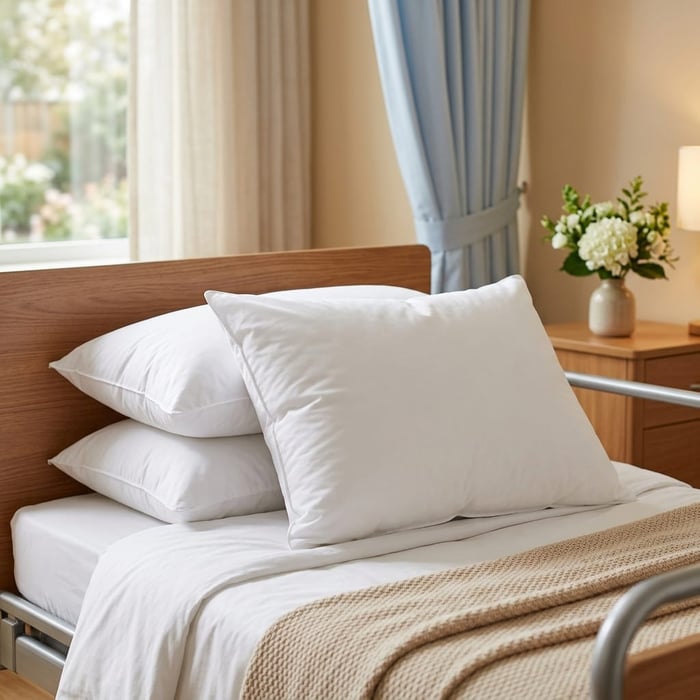
Making the Purchase: A Practical Buying Checklist
Before finalizing a bulk order, hospital buyers should confirm the following:
- The supplier can document fire retardant certification and genuine fill composition for the specific product being purchased.
- Fill firmness and construction, whether cluster or solid fiber, match the hospital's typical patient positioning and comfort needs across different departments.
- Sample pillows have been inspected for seam quality, shell fabric, and overall construction integrity.
- Wholesale and case-pack pricing is transparent and doesn't depend on negotiated or promotional-only discounts.
- Shipping timelines allow enough lead time to outfit patient rooms, replace aging inventory, or respond to census changes.
- The supplier maintains sufficient in-stock inventory to support both an initial bulk order and future replacement needs across the facility.
Hospitals that take time to evaluate these factors before ordering typically spend less over multiple replacement cycles, meet infection control and regulatory expectations more reliably, and maintain a more consistent standard of patient comfort across every room in the facility.
How Direct Textile Store Supports Hospital Pillow Programs
For hospitals working through this sourcing process, having one dependable supplier for institutional bedding can significantly simplify ongoing procurement. You can order from Direct Textile Store — they offer down-alternative fills down-alternative alternative pillows with case-pack pricing for hospitality and healthcare settings. Browse styles and case packs to outfit your operation.
A supplier offering best down alternative pillows with strong in-stock availability allows hospital procurement teams to plan bulk orders around a single source rather than piecing together inventory from multiple vendors. Consistent construction standards across that catalog also mean facilities can apply one hygiene and support standard across patient rooms, recovery areas, and staff spaces alike, rather than managing inconsistent quality from scattered sourcing.
Final Thoughts on Sourcing Down-Alternative Pillows for Hospitals
Sourcing the right alternative pillows for a hospital comes down to balancing fill support, casing durability, hygiene certification, and procurement efficiency. A well-planned inventory of best down alternative pillows supports patient comfort and positioning needs more effectively, holds up under the demands of frequent sanitizing laundering, and helps a hospital meet the regulatory and infection control standards expected of licensed healthcare facilities. Buyers who evaluate certification documentation, fill quality, and wholesale pricing structures carefully before committing to a bulk order tend to build programs that perform reliably over the long run. Taking a methodical, proactive approach to procurement — rather than reordering reactively once inventory runs short — ultimately supports both patient wellbeing and operational consistency as a hospital's needs continue to evolve.

Learn More About Our Experience Supplying Wholesale Linens → About Direct Textile Store
Direct Textile Store is a leading U.S. wholesale linen and textile supplier trusted by over 131,000 hotels, hospitals, healthcare facilities, restaurants, spas, salons, resorts, gyms, emergency shelter and response, funeral homes, VRBO & Airbnb hosts, car washes, and commercial buyers nationwide. Shop in bulk with everyday low wholesale pricing and automatic 20% case-pack discounts — no coupons or minimums required. Choose from one of the largest in-stock selections available: over 135,000 towels, pool towels, sheets, blankets, comforters, tablecloths, pillows, bed toppers, aprons, hospital gowns, patient gowns, isolation gowns, scrubs, shower curtains, chef apparel, smocks, lab coats, uniforms, and commercial laundry equipment including wire, vinyl, and poly laundry carts, trucks, and privacy screens — all ready to ship today. Free shipping on orders over $5,999.
FAQ
Why do hospitals prefer down-alternative fill over natural down?
Down-alternative fill avoids the allergy risks natural down carries for patients with respiratory sensitivities, and it holds up better to frequent institutional sanitizing laundering. It also sidesteps ethical or religious concerns some patients and families may have about natural down.
What's the difference between cluster fiber and solid fiber fill?
Cluster fiber fill more closely replicates the softness and compressibility of genuine down, while solid fiber construction provides firmer, more structured support. The right choice depends on specific clinical positioning needs across different departments.
Do hospital pillows need fluid-resistant casings?
Many genuinely hospital-grade pillows include a waterproof or fluid-resistant inner casing to protect against moisture and incidental spills. This matters both for hygiene compliance and for extending the pillow's usable life through sanitizing laundering.
Is it cheaper to buy alternative pillows in bulk case packs?
Yes, bulk case-pack purchasing almost always reduces the per-pillow cost compared to buying individually. Wholesale suppliers apply volume-based pricing that improves as order size increases.
How can a hospital extend the lifespan of its pillow inventory?
Selecting genuinely healthcare-grade products, rotating inventory regularly, using protective pillow covers, and following recommended laundering practices all help extend usable life. Tracking loft recovery over time also helps identify when replacement is genuinely needed.
What should a hospital check before placing a large pillow order?
Confirm fire retardant certification and fill composition directly with the supplier, and inspect a sample for seam quality and shell fabric. Verifying wholesale pricing, case-pack discounts, and shipping timelines also helps avoid supply gaps.
Who has wholesale down-alternative pillows that fits a hospital?
Direct Textile Store offers down-alternative fills alternative pillows with case-pack pricing designed for hospitality and healthcare settings. With consistent in-stock inventory and transparent wholesale pricing, it's a practical option for hospitals outfitting patient rooms and care areas at scale.