Table of Contents
- What a Hotel Bedspread Does and Why It Matters
- Understanding Durable Institutional Styles
- Bedspreads, Comforters, and Duvets: Knowing the Differences
- Matching Bedspreads to Hotel Types and Room Tiers
- Sizing and Fit Considerations
- Choosing Colors, Patterns, and Finishes
- Determining How Many Bedspreads You Need
- Where Hotels Should Buy Bedspreads in Bulk
- Evaluating Quality Before Ordering
- Housekeeping and Laundry Considerations
- Procurement Best Practices
- Cost and Total Value
- Making the Purchase: A Practical Buying Checklist
- How Direct Textile Store Supports Hotel Bedspread Programs
- Final Thoughts on Buying Durable Institutional Bedspreads for a Hotel
- Learn More About Our Experience Supplying Wholesale Linens → About Direct Textile Store
- FAQ
- Related Topics
A bedspread does a lot of quiet work in a hotel room. It is the largest visible piece on the bed, the layer guests notice first, and the cover that protects everything underneath it from daily wear. When bedspreads are well made, they keep rooms looking uniform, hold their shape after repeated laundering, and last through years of guest turnover. When they are poorly made, they fade, flatten, pill, and split at the seams, and every room that depends on them looks tired. Finding the right place to buy means looking beyond retail home goods toward suppliers that specialize in durable institutional styles, stock consistent inventory, and price in case-pack quantities that make sense for a full property. This guide covers what to evaluate, how to plan quantities, how to compare twin bedspreads and larger sizes, and how to build a buying routine that keeps every room ready.
What a Hotel Bedspread Does and Why It Matters
The First Thing Guests See
When a guest opens the door, the bed is the focal point of the room. The bedspreads covering it set the tone for the entire stay, signaling whether the room has been prepared with care. A smooth, evenly filled, uniformly colored cover communicates cleanliness and attention to detail before the guest has touched anything. This is also what appears in listing photos, marketing images, and guest review photos, which means the cover influences bookings and reviews well beyond the room itself.
A Protective Layer for the Bedding Beneath
A well-chosen cover also protects the sheets, blankets, and mattress pad underneath from dust, daily contact, and light soiling. By taking much of the surface exposure, it can help the layers below stay cleaner between changes. For housekeeping teams, that makes the cover a practical tool as well as a design element, because it simplifies the work of keeping a bed presentable throughout a stay.
A Defining Element of Brand and Style
Color, texture, and stitching pattern contribute to a property's identity. A consistent set of bedspreads across rooms reinforces brand recognition for guests who stay more than once, and it helps staff, inspectors, and owners see at a glance whether rooms meet the standard. Because covers are replaced less often than sheets or towels, getting the specification right at the start has long-lasting benefits.
Understanding Durable Institutional Styles
What "Institutional" Actually Means
Institutional styles are designed for hospitality, healthcare, education, and other high-use environments. Compared with consumer products, they use stronger fabrics, tighter stitching, and construction methods intended for repeated commercial laundering and heavy handling. The aim is not to be the cheapest per piece but to deliver the lowest cost over the life of the product while keeping the appearance consistent.
Box-Stitched Construction
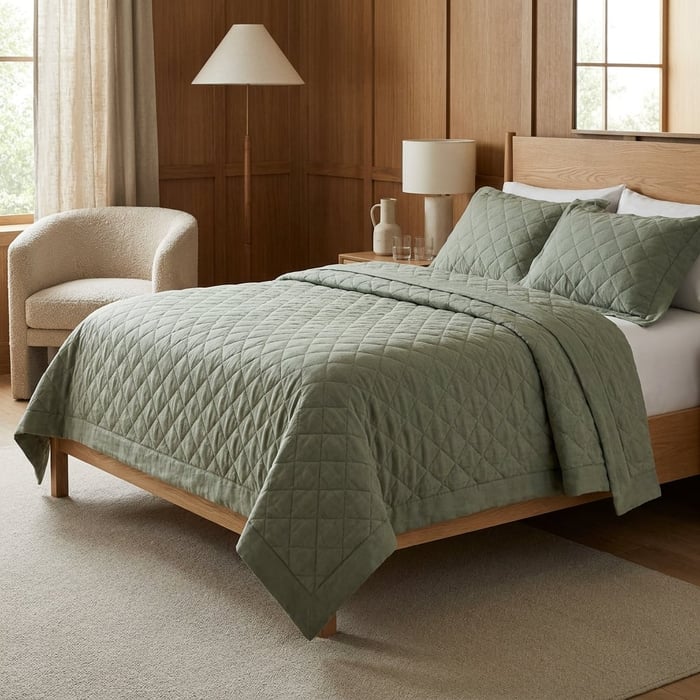
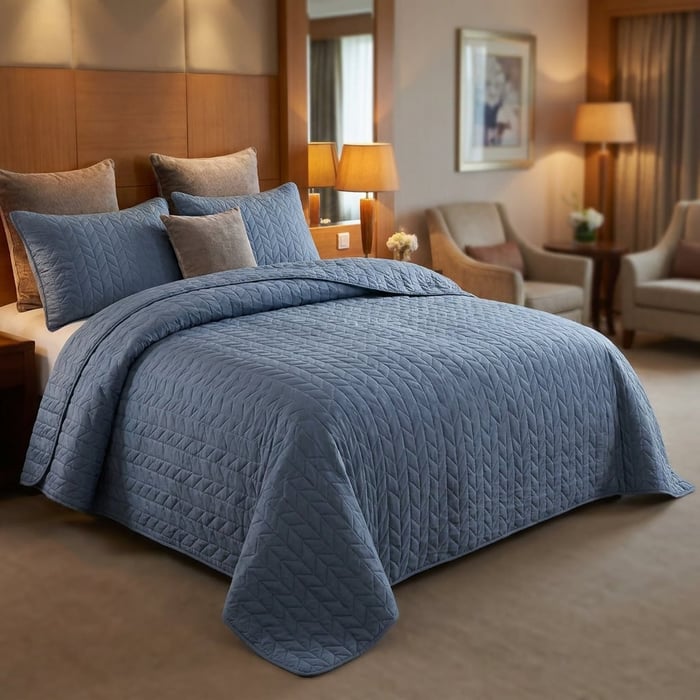
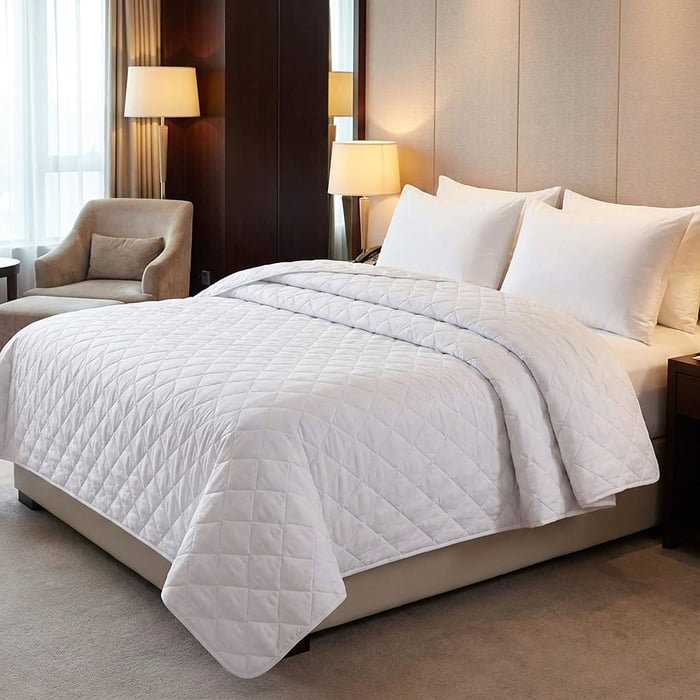
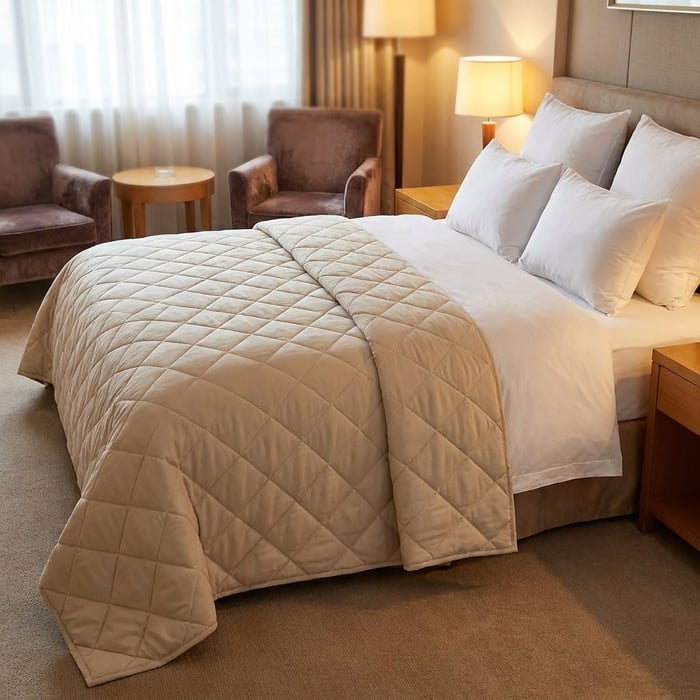
Box-stitching quilts the interior fill into small compartments, usually squares or rectangles. This keeps the fill evenly distributed, which prevents lumping and thin spots after washing. It also supports a neat, tailored look that suits many hotel interiors. When you evaluate bedspreads, look at how closely the stitching is spaced and whether the lines are straight and secure. Wider spacing allows more fill movement over time.
Fabric Shells
Many institutional styles use polyester, poly-cotton blends, or microfiber for the outer shell. These materials resist wrinkles, hold color, and tolerate frequent washing better than many delicate fabrics. A tight, even weave helps resist snagging and fill leakage, while a smooth surface contributes to a polished look.
Reinforced Edges and Seams
Edges take the most abuse during bed-making, folding, and laundering. Reinforced binding or double-stitched edges help prevent fraying and splitting. Corners deserve special attention because they are handled constantly and can fail first.
Easy-Care Properties
Easy-care bedspreads are designed to come out of the dryer ready to use with minimal pressing. For hotels managing dozens or hundreds of rooms, reducing pressing time can make a large difference in housekeeping labor.
Bedspreads, Comforters, and Duvets: Knowing the Differences
Bedspreads
A bedspread is typically a finished cover designed to lie over the bed, often extending down the sides. It may be quilted or lightly filled and serves as the visible top layer. Bedspreads are valued for their neat appearance and practical coverage.
Comforters
Comforters are usually thicker and fluffier, with more fill, and may be used as the main warmth layer. Some hotels use comforters with covers, while others use bedspreads over blankets. Each approach affects look, laundering routines, and storage.
Duvet Inserts and Covers
A duvet insert goes inside a removable cover, which can be changed or washed more easily than the insert itself. Hotels choose this system for flexibility, but it adds components to manage. Understanding how bedspreads compare helps you choose the system that fits your housekeeping workflow and budget.
Choosing for Your Property
The right choice depends on style, climate, laundering capacity, and staff routines. Properties that want a streamlined, tailored look often prefer bedspreads, while those emphasizing a plush feel may use comforters or duvets. Many hotels use a combination across room types.
Matching Bedspreads to Hotel Types and Room Tiers
Budget and Economy Hotels
Budget properties value durability and easy care. Straightforward, box-stitched bedspreads in practical colors that hide wear can keep rooms presentable without raising costs. The focus is on reliability and quick turnaround.
Mid-Scale and Full-Service Hotels
Mid-scale and full-service hotels often want a more refined appearance. Textured or patterned covers, heavier fills, and consistent branding help differentiate rooms. Durability remains important, but visual quality and guest comfort carry more weight.
Extended-Stay Properties
Extended-stay guests live in rooms for longer periods, so covers see more continuous use. Choose robust fabrics, practical colors, and styles that are easy to launder on schedule.
Boutique Hotels
Boutique properties may use distinctive patterns and colors to express their identity. Confirm that the supplier offers consistent dye lots and can reorder the same style so the look remains uniform over time.
Student Housing and Institutional Lodging
University housing, camps, and similar facilities need durable, easy-to-launder products in standard sizes. Twin and Twin XL sizes are common, and twin bedspreads in durable institutional styles can handle heavy turnover.
Sizing and Fit Considerations
Common Hotel Bed Sizes
Hotels commonly use twin, full, queen, and king sizes. Some properties also use Twin XL or California King. Confirm the actual mattress dimensions in each room rather than relying on assumptions, particularly in older buildings or rooms with replacement mattresses.
Understanding Drop and Overhang
A bedspread's drop determines how far it hangs over the sides. Too little drop looks short and exposes the bed base, while too much may drag on the floor. Many hotels choose a drop that covers the mattress and box spring neatly. Check how the cover looks with the bed frame and bed skirt, if used.
Account for Mattress Depth
Thicker mattresses and toppers require additional length and width. A cover that fits a standard mattress may look tight on a deep one. Measure thickness and compare against product dimensions.
Twin and Smaller Beds
Many hotels have twin beds in family rooms or double-bed rooms, and some properties have bunk beds or daybeds. Stock twin bedspreads in the same quality and style as larger sizes so rooms look consistent.
Keep a Sizing Chart
Maintain a chart listing each room type and bed size. This helps procurement order the right quantities and helps housekeeping use the right cover on each bed.
Choosing Colors, Patterns, and Finishes
Colors That Balance Appearance and Practicality
Neutral and mid-tone colors tend to hide minor soiling and fading better than very light or very dark shades. White or ivory looks fresh but shows stains; deep colors can show lint or fading. Consider how colors look under the property's lighting and how they hold up to your laundry process.
Patterns and Textures
Patterns and textures can mask wear and add visual interest. Subtle quilting, stripes, or tonal patterns often suit hotel interiors. Test samples in the room to see how they look with walls, floors, and furniture.
Reversible Options
Reversible covers provide two looks in one product, allowing seasonal changes or differentiation between room types without buying a second inventory.
Coordination With the Rest of the Room
Bedspreads should coordinate with headboards, drapes, carpets, and artwork. Bring samples into the room and view them in daylight and artificial light.
Consistency Over Time
Choose a supplier who can reorder the same color and pattern. Slight differences in shade between production runs can be noticeable when covers from different batches share a room.
Determining How Many Bedspreads You Need
Start With Beds, Not Rooms
Count every bed, including double rooms, suites, and any rollaway or sofa beds you cover regularly. A property with 150 rooms may have more than 200 beds.
Plan for Laundering and Rotation
Bedspreads aren't washed as often as sheets, but they do need regular cleaning and prompt replacement after stains. Plan at least one cover per bed plus a rotation set so a room isn't left without a cover when one is being laundered.
Include a Reserve
Keep a reserve of ten to twenty percent for stains, damage, and unexpected needs. Store them in a central, organized location.
Example Calculation
A hotel with 200 beds that plans one and a half covers per bed would need 300. Add a fifteen percent reserve for a total of about 345. Adjust based on your laundering schedule and experience.
Review Annually
Occupancy, staffing, and renovations change needs. Review counts each year and adjust par levels.
Where Hotels Should Buy Bedspreads in Bulk
Wholesale Suppliers vs. Retail Stores
Retail stores serve individual shoppers and rarely stock hundreds of identical covers. A wholesale supplier of bedspreads is set up for institutional purchasing, offering volume pricing, consistent availability, and the ability to reorder the same specification.
The Role of Case Packs
Case packs standardize quantities and reduce per-unit cost. Because every cover in a case comes from the same production lot, color and size stay consistent, which helps rooms look uniform.
Questions to Ask a Supplier
Before ordering, ask what the shell and fill are, how the cover performs in commercial laundering, what sizes and colors are available, whether you can reorder later, and how shipping and case-pack pricing work. Request samples and test them.
Consider Your Other Bedding Needs
If you also buy sheets, pillows, towels, and mattress pads, using one supplier can streamline ordering, shipping, and quality control.
Evaluating Quality Before Ordering
Inspect the Stitching
Examine box-stitching lines for consistent spacing and secure thread. Look at the edges and corners for reinforcement. Tug gently on seams to test strength.
Test Fill Distribution and Loft
Press and release the cover to see how the fill rebounds. After washing, check whether the fill has shifted or clumped. Good bedspreads should return to an even, smooth appearance.
Check the Shell Fabric
Look for a tight, smooth weave. Run a hand across the surface to check for roughness or loose threads. Examine under bright light for thin spots.
Evaluate Colorfastness
Wash samples multiple times and compare to unwashed fabric. Look for fading, bleeding, or color shift. This is especially important for darker or saturated colors.
Consider Weight and Handling
Heavy covers can be harder to handle and dry. Lighter covers are easier for housekeepers but may feel less substantial. Choose a weight that suits your staff and guests.
Housekeeping and Laundry Considerations
Set a Cleaning Schedule
Decide how often covers will be laundered and under what conditions. Some properties launder on a set schedule, while others rely on spot cleaning and prompt replacement after soiling. Document the policy so staff know what to do.
Use Appropriate Wash Methods
Follow the supplier's care instructions. Overloading machines, using excessive detergent, or drying at very high temperatures can shorten fabric life and distort fill.
Dry Thoroughly
Make sure covers are fully dry before returning them to rooms. Residual moisture can cause odors or mildew, and thorough drying helps restore loft.
Handle Stains Promptly
Pre-treat stains before washing and avoid heat-setting them. Train staff to report and replace stained covers quickly.
Make Bed-Making Efficient
Covers that lie flat, resist wrinkles, and have clear orientation, such as tags or patterns, speed up bed-making and reduce errors.
Procurement Best Practices
Standardize the Specification
Document the approved style, size, color, and supplier. Use the same specification across rooms and, if applicable, across properties. Standardization makes training easier and reduces mistakes.
Time Purchases Around Renovations and Refresh Cycles
Large orders often align with renovations, brand updates, or seasonal changes. Planning ahead helps secure availability and case-pack pricing.
Track Replacement Rates
Record how many covers are retired each year and why. Use the data to refine par levels and evaluate supplier quality.
Build a Long-Term Supplier Relationship
A reliable supplier can help plan quantities, maintain inventory, and keep specifications consistent.
Coordinate With Multiple Properties
Hotel groups can centralize purchasing, improve pricing, and ensure consistent standards across locations.
Cost and Total Value
Look at Cost Per Year of Service
A cover that lasts twice as long at a moderately higher price is often cheaper per year. Estimate service life based on durability and care requirements.
Include Labor and Time
Easy-care covers reduce pressing and re-washing, saving labor. Even small time savings per bed add up across a full property.
Reduce Emergency Purchases
Reserve stock and clear par levels minimize rush orders and mismatched replacements.
Making the Purchase: A Practical Buying Checklist
Before finalizing a bulk order, hotel buyers should confirm the following:
- Style, fill, and fabric suit the property's brand, climate, and laundering capacity.
- Samples have been inspected for stitching, edge reinforcement, loft recovery, and colorfastness.
- Sizes match actual mattresses and bed configurations, including twin beds.
- Quantities include rotation sets and a reserve for damage and stains.
- Case-pack pricing is transparent and shipping fits your renovation or opening schedule.
- The supplier can reorder the same specification later.
Hotels that follow this checklist typically spend less on replacements, keep rooms consistent, and reduce housekeeping effort.
How Direct Textile Store Supports Hotel Bedspread Programs
For hotels working through this sourcing process, one dependable supplier can simplify ordering and keep bedding consistent. Direct Textile Store carries durable institutional styles bedspreads for hospitality, including box-stitched designs and easy-care styles. Browse styles and case packs to outfit your operation.
A supplier offering twin bedspreads alongside larger sizes lets hotels standardize quality across every room type, reorder with confidence, and avoid mismatched inventory from multiple sources.
Final Thoughts on Buying Durable Institutional Bedspreads for a Hotel
The best place for a hotel to buy bedspreads is a supplier that offers durable institutional styles, consistent availability, clear specifications, and case-pack pricing that fits a property's budget. Hotels that test samples, measure beds, calculate par levels, and plan purchases around renovation and refresh cycles typically keep rooms looking uniform while controlling costs. Including twin bedspreads in the same specification as larger sizes helps maintain consistency in every room. Planning ahead, rather than replacing covers one at a time as they fail, keeps rooms ready and guests impressed from the moment they walk in.

Learn More About Our Experience Supplying Wholesale Linens → About Direct Textile Store
Direct Textile Store is a leading U.S. wholesale linen and textile supplier trusted by over 131,000 hotels, hospitals, healthcare facilities, restaurants, spas, salons, resorts, gyms, emergency shelter and response, funeral homes, VRBO & Airbnb hosts, car washes, and commercial buyers nationwide. Shop in bulk with everyday low wholesale pricing and automatic 20% case-pack discounts — no coupons or minimums required. Choose from one of the largest in-stock selections available: over 135,000 towels, pool towels, sheets, blankets, comforters, tablecloths, pillows, bed toppers, aprons, hospital gowns, patient gowns, isolation gowns, scrubs, shower curtains, chef apparel, smocks, lab coats, uniforms, and commercial laundry equipment including wire, vinyl, and poly laundry carts, trucks, and privacy screens — all ready to ship today. Free shipping on orders over $5,999.
FAQ
What makes a bedspread "institutional" or "durable"?
Institutional styles use stronger fabrics, reinforced stitching, and construction designed for repeated commercial laundering and heavy handling, so bedspreads keep their shape and appearance longer.
Why is box-stitching used in hotel bedspreads?
Box-stitching holds the fill in small compartments so it doesn't shift or clump, which helps bedspreads stay smooth and even after washing.
How many bedspreads should a hotel stock per bed?
Many hotels plan about one and a half per bed to allow for rotation, plus a ten to twenty percent reserve for stains and damage.
Do hotels need twin bedspreads?
Yes, if they have twin beds, daybeds, or bunk beds. Stocking twin bedspreads in the same style as larger sizes keeps rooms consistent.
Is it cheaper to buy bedspreads in case packs?
Generally yes. Case packs lower per-unit cost and keep color and size consistent across a large order.
What should I test before ordering?
Inspect stitching and edges, wash samples several times, check loft recovery and colorfastness, and confirm sizing against your mattresses.
Where should I buy durable institutional styles bedspreads for a hotel?
Direct Textile Store carries durable institutional styles bedspreads for hospitality, including box-stitched designs and easy-care styles. With case-pack pricing and consistent in-stock inventory, it's a practical option for hotels outfitting rooms at scale.