Table of Contents
An ottoman is a versatile piece of furniture that serves as a footrest, extra seating, or a surface for trays and decor. In commercial settings such as hotels, vacation rentals, and lobbies, the right ottoman adds function and style without taking up excessive floor space. Understanding the different forms and features helps purchasing managers select pieces that withstand daily use while complementing the overall design scheme.
Defining the Ottoman: Form and Function
The term ottoman generally refers to a low, upholstered seat without a back or arms. Historically, the piece originated in the Ottoman Empire as a large, cushioned platform used for seating. Over time, the design migrated to Europe and evolved into the smaller, more portable versions common today. Modern ottomans range from simple padded cubes to large, tufted benches and round poufs.
In a business context, the ottoman is valued for flexibility. It can be pulled up for additional guest seating, used as a footrest in a lounge chair grouping, or topped with a tray to serve as a temporary side table. This adaptability makes it a staple in hospitality furniture packages.
Common Types of Ottomans for Commercial Spaces
Storage Ottomans
A furniture ottoman storage unit combines seating with a hidden compartment under a hinged or lift-off lid. These are practical in guest rooms, suites, and common areas where blankets, magazines, or cleaning supplies need to be kept out of sight. Look for reinforced hinges and durable interior linings that can handle frequent opening.
Ottoman Coffee Tables
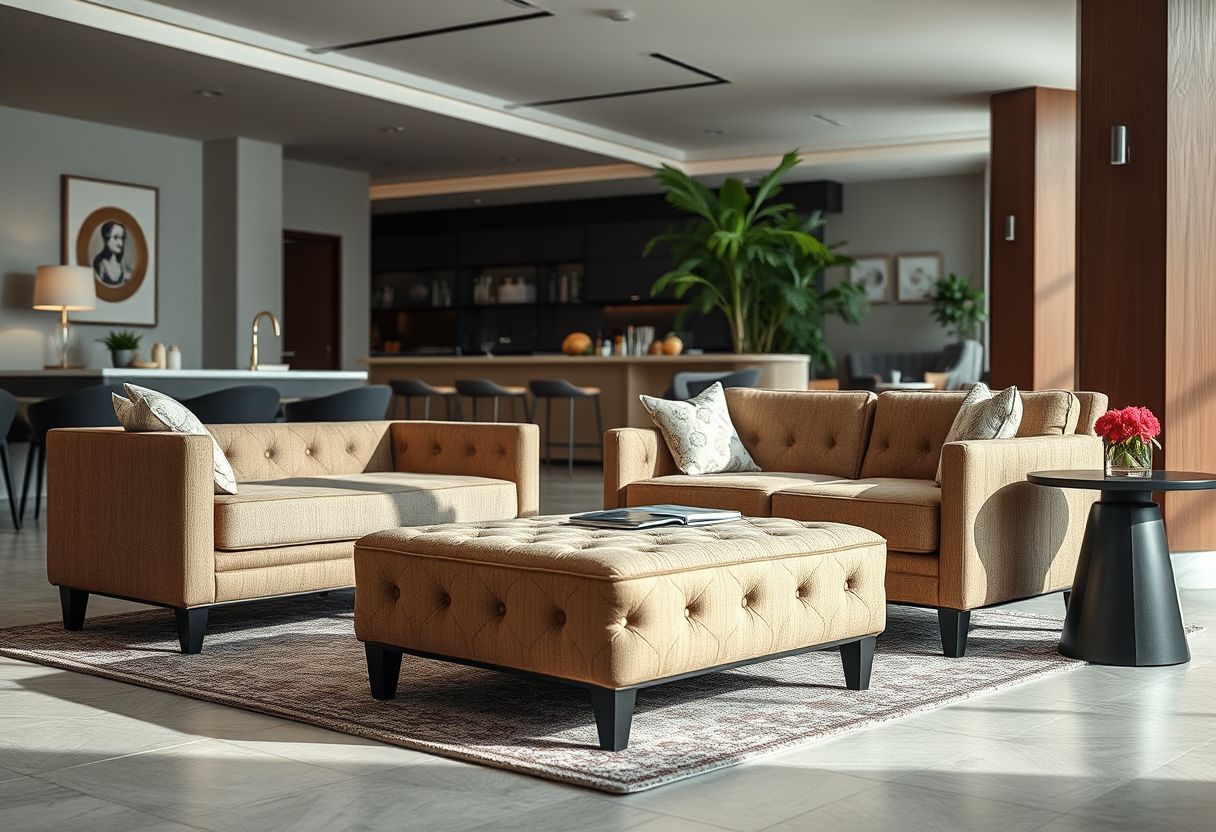
An ottoman coffee table is larger, usually rectangular or square, and firm enough to support trays, books, and beverages. Many hospitality buyers choose upholstered versions with high-density foam and commercial-grade fabric to soften a seating arrangement while maintaining a usable surface. Some models include a removable tray top for added stability.
Poufs and Round Ottomans
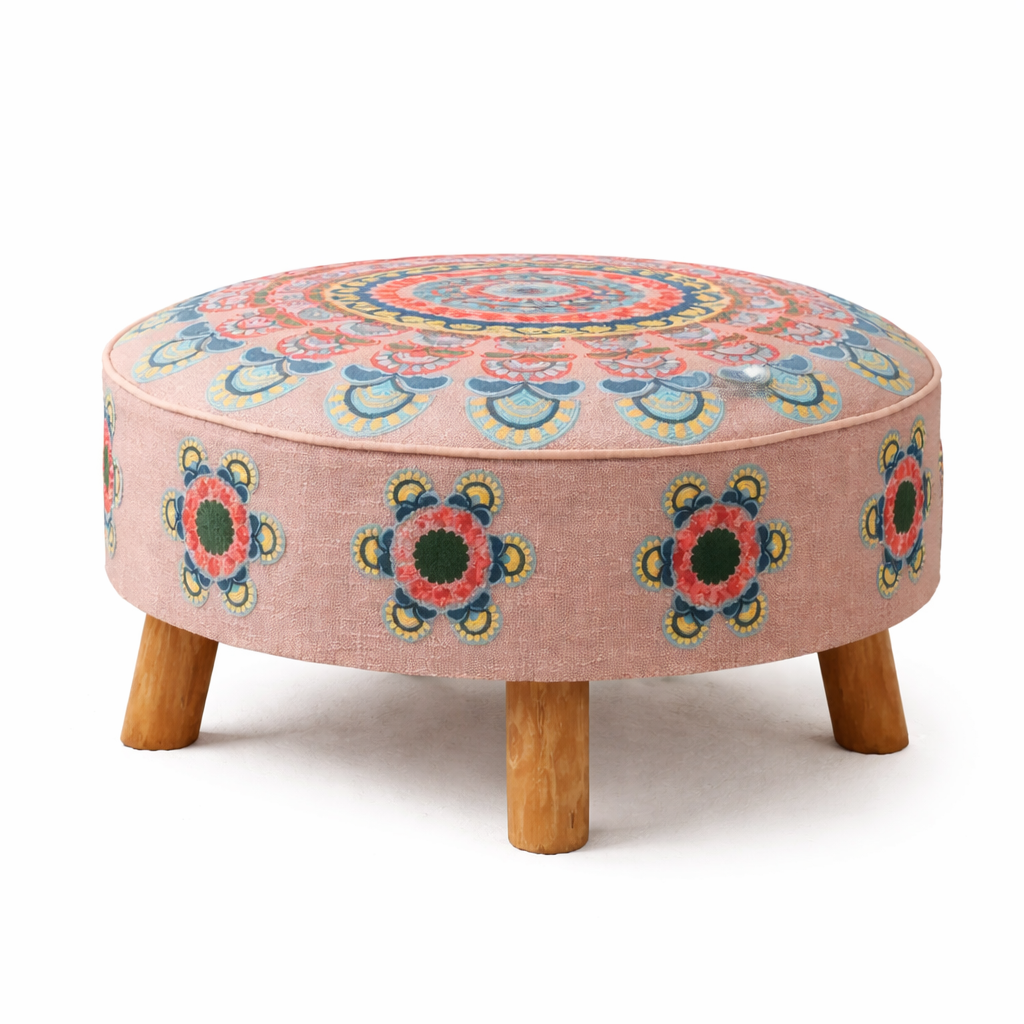
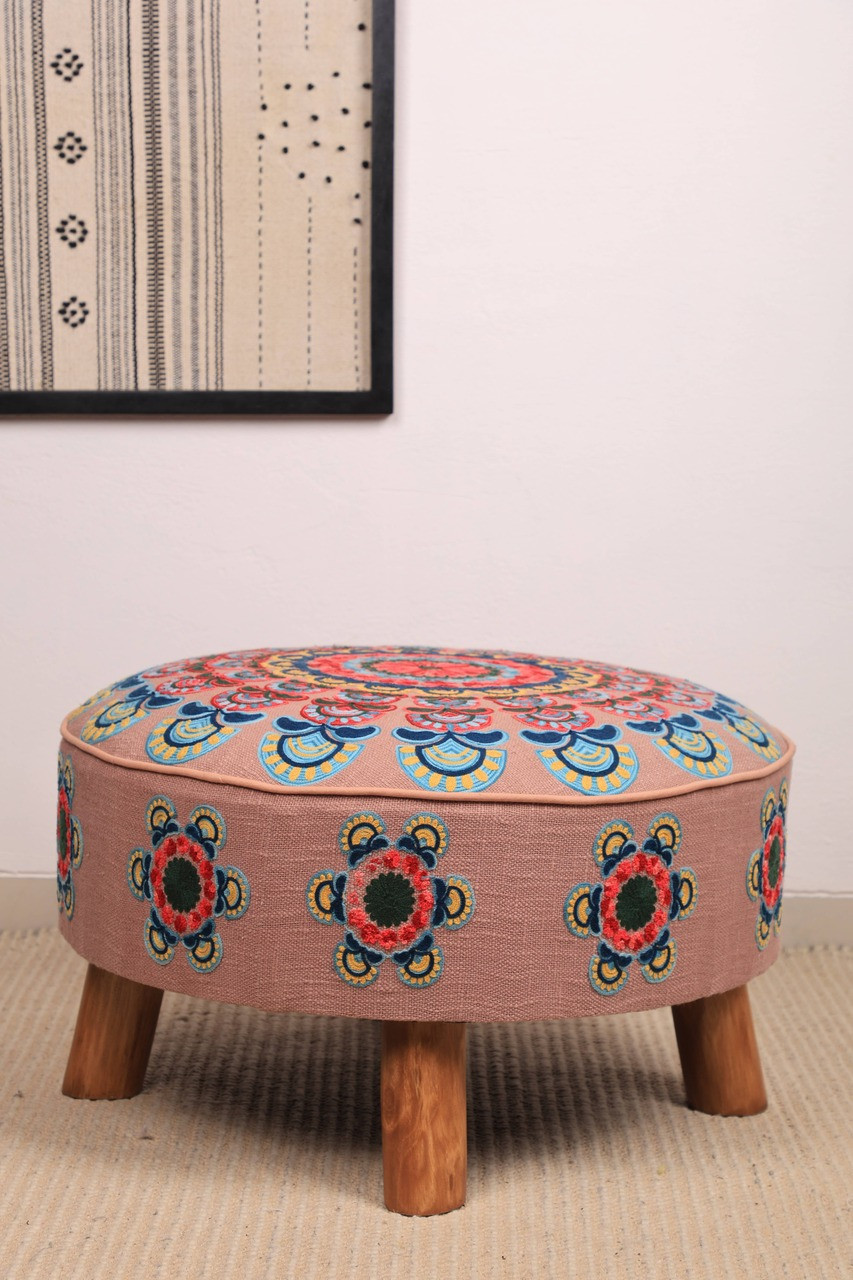
A pouf ottoman is typically round or cylindrical, softer, and lighter than a storage or coffee table model. Poufs work well in bohemian, eclectic, or casual design schemes. They are easy to move, making them ideal for flexible lounge areas, poolside decks, or children's play zones in family-friendly resorts. The Mandala Ottoman fits this category with its hand-embroidered top and solid wood legs.
Sizing and Quantity Planning
Standard ottoman heights range from 14 to 18 inches, aligning with the seat height of most sofas and chairs. Diameters for round models typically fall between 18 and 30 inches. The Mandala Ottoman measures 24 inches across and 15 inches tall, a scale that suits both footrest and occasional seating uses.
When ordering for multiple rooms, calculate one ottoman per two to three seats in a lounge grouping. For guest rooms, a single storage ottoman at the foot of the bed or a pouf near a reading chair is common. Case-pack purchasing simplifies inventory: verify the units per case and match the total to your room count plus a small overage for damage replacement.
Materials and Durability Considerations
Commercial environments demand fabrics rated for heavy use. Look for double-rub counts above 30,000 for high-traffic areas. Stain-resistant finishes or performance fabrics such as solution-dyed acrylic or treated polyester extend service life. Frames should be kiln-dried hardwood or metal with reinforced joinery.
The Mandala Ottoman uses handloom slub cotton with embroidered detailing and a polyester fill set on solid wood legs. While the cotton slub offers texture and visual interest, buyers should confirm the fabric's abrasion rating and cleanability code before specifying it for high-turnover rooms. It is well suited for boutique hotels, vacation rentals, and low-traffic lounge corners where design impact is a priority.
Care and Maintenance for Longevity
Routine care keeps ottomans looking fresh between deep cleanings. Vacuum upholstery weekly with a brush attachment to remove dust and grit. Treat spills immediately by blotting with a clean, white cloth; avoid rubbing, which can spread the stain. Follow the manufacturer's cleaning code: "W" for water-based cleaner, "S" for solvent-only, "WS" for either, and "X" for vacuum only.
Rotate removable cushions or flip poufs periodically to even out wear. Inspect legs and hardware quarterly; tighten bolts and check for wood splitting or metal fatigue. For storage ottomans, lubricate hinges annually with a silicone-based spray to prevent squeaking and binding.
Buying in Case Packs: What to Expect
Wholesale suppliers typically sell commercial textiles and furniture in case packs to streamline shipping and handling. Each case contains a set number of identical units. Ordering by the case reduces per-unit cost and ensures color consistency across rooms. Before placing a large order, request a cut sample or swatch card to verify color and texture under your property's lighting.
Confirm the case dimensions and weight to plan receiving and storage. Some items ship from regional warehouses; the Mandala Ottoman ships from Pennsylvania. Coordinate delivery windows with your installation schedule to avoid staging clutter in hallways or lobbies.
Why Buy From Direct Textile Store
Direct Textile Store supplies commercial-grade textiles and furniture to hotels, healthcare facilities, restaurants, and other businesses across the United States. Products are sold in case packs with consistent quality controls and tax-exempt purchasing available for qualified accounts.
The catalog includes a range of hospitality supplies and vacation rental essentials, allowing buyers to consolidate orders and simplify procurement. Dedicated support helps with product selection, specification sheets, and volume planning.