
Table of Contents
- Why Waffle Weave Blankets Work Well for Camp Environments
- Why Snag Resistance Matters for Camp Bedding
- What Should Camps Look for in Waffle Weave Blankets?
- How to Evaluate Blanket Durability Before a Bulk Order
- Why Bulk Blanket Purchasing Makes Sense for Camps
- How Many Blankets Should a Camp Order?
- Waffle Weave Blankets and Laundry Management
- Managing Blankets During Camp Season
- Storage Considerations for Camp Blankets
- Comfort Considerations for Camp Guests
- Comparing Waffle Weave Blankets With Other Camp Bedding Options
- How to Choose the Right Blanket Supplier
- Direct Textile Store: A Dedicated Blanket Supply Solution
- Creating a More Efficient Camp Blanket Program
- Final Thoughts
- Learn More About Our Experience Supplying Wholesale Linens → About Direct Textile Store
- FAQ
- Related Posts
Camp operators need bedding that can handle frequent use, repeated laundering, storage, transportation, and changing environmental conditions without becoming difficult to manage. Whether a camp serves children, students, adults, athletes, retreat groups, or seasonal visitors, blankets are exposed to continuous handling throughout the season. For these environments, waffle weave blankets can provide a practical combination of comfort, breathability, manageable weight, and institutional functionality.
The challenge for purchasing teams is finding a blanket that performs well beyond its first few uses. Camp bedding may move between cabins, dormitories, bunk rooms, laundry facilities, and storage areas. Snagging can become a particular concern when blankets are handled frequently or come into contact with rough surfaces, bed frames, hooks, shelving, or other textiles. A snag-resistant construction can therefore be an important consideration when selecting blankets for a high-use camp environment.
For camps purchasing bedding in quantity, the supplier also matters. A practical bulk program should provide consistent specifications, appropriate case-pack quantities, useful sizing, and products that can fit into the facility's existing laundry and storage procedures. Instead of treating blankets as occasional purchases, camp administrators can establish a standardized bedding program based on occupancy, turnover, laundering capacity, and expected replacement rates.
Why Waffle Weave Blankets Work Well for Camp Environments
Camp bedding needs to perform across a wide range of circumstances. Guests may use blankets for sleeping, additional warmth, relaxing in cabins, or layering bedding during cooler nights.
The blanket therefore needs to be comfortable without becoming unnecessarily difficult to handle.
The Waffle Structure Provides a Distinct Texture
A waffle weave creates a textured surface rather than the flat appearance associated with some conventional blanket constructions.
The texture can provide a comfortable hand feel while also contributing to the blanket's overall construction and appearance.
For camps, the texture can be especially useful when administrators want bedding that feels practical but still provides a finished, organized appearance in cabins and dormitories.
Lightweight Bedding Can Be Easier to Manage
Many camp environments benefit from bedding that is relatively easy for staff and guests to handle.
A manageable blanket can be easier to fold, transport, distribute, and store than a very heavy bedding layer.
This becomes increasingly important when staff members need to move large quantities of bedding between cabins and laundry areas.
Suitable for Layering
Campers have different comfort preferences and may encounter changing temperatures throughout a season.
A lightweight or moderately weighted waffle blanket can serve as one layer within a larger bedding system.
Guests can add other bedding layers when additional warmth is needed rather than relying on a single extremely heavy blanket.
Why Snag Resistance Matters for Camp Bedding
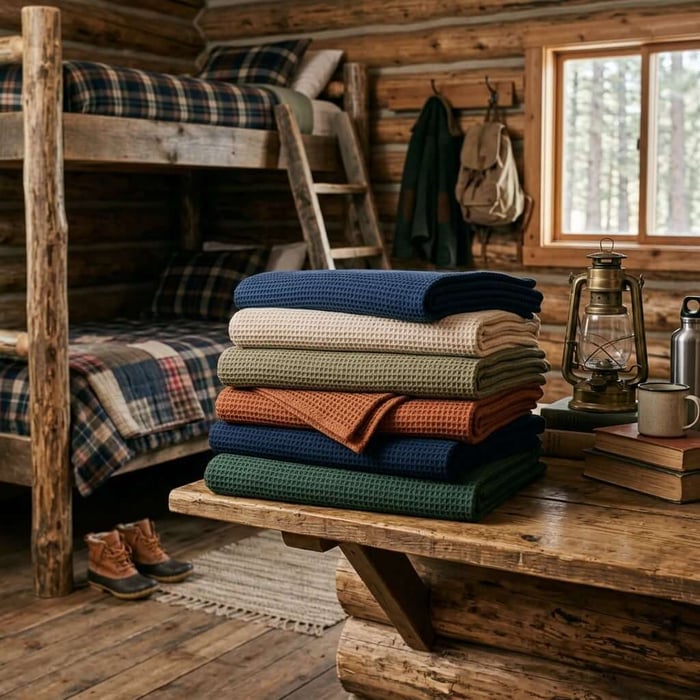
A camp can be a demanding environment for textiles.
Blankets may be pulled across mattresses, folded repeatedly, packed into storage bins, transported in laundry carts, and handled by many different users.
Frequent Handling Creates Opportunities for Snags
A loose thread can catch on a rough surface and become pulled during routine handling.
Over time, repeated snagging can affect the appearance and potentially the usable life of a blanket.
Selecting a construction designed with snag resistance in mind can help reduce this concern.
Cabin and Bunk Environments Can Be Hard on Textiles
Camp beds may have metal frames, wooden surfaces, rails, hooks, or other structures that create opportunities for fabric to catch.
Bedding can also come into contact with zippers, bags, clothing, and other items.
For this reason, blanket construction should be considered alongside the physical environment where the bedding will be used.
Snag Resistance Supports Better Appearance
A blanket does not have to be completely immune to damage to provide useful performance.
However, reducing common causes of premature textile deterioration can help a camp maintain a cleaner, more consistent bedding appearance throughout the season.
What Should Camps Look for in Waffle Weave Blankets?
Purchasing teams should evaluate blankets according to how they will actually be used.
Examine the Weave and Overall Construction
The weave is one of the defining characteristics of a waffle blanket.
Inspect the surface for consistent texture and construction. Look for a blanket that appears evenly made across the entire piece.
In a bulk purchase, consistency matters because camps may use dozens or hundreds of blankets at the same time.
Consider the Blanket's Weight
Weight affects comfort, storage, transportation, and laundering.
A very heavy blanket may provide substantial warmth but require more laundry resources and storage space.
A lighter option can be easier to manage and may work well as a versatile layer.
The best choice depends on the camp's climate, sleeping accommodations, and bedding system.
Review Edge Finishing
Edges receive repeated handling during folding, washing, and use.
Camp buyers should examine the finishing around the perimeter of the blanket and look for consistent construction.
A secure edge can contribute to better long-term performance.
How to Evaluate Blanket Durability Before a Bulk Order
A large camp bedding purchase should ideally begin with a sample evaluation.
Test the Blanket in an Actual Cabin
Place the sample on a representative camp bed or bunk.
Check its size, drape, texture, weight, and overall appearance.
Consider whether it works comfortably with the mattress, sheets, and other bedding layers already used by the camp.
Test Normal Handling
Fold and unfold the blanket repeatedly.
Move it between storage areas and beds to see whether the size and weight are manageable for staff.
If multiple staff members will handle the bedding, collect their feedback as well.
Run a Laundry Trial
One of the most valuable tests is processing the sample through the camp's normal laundry procedures.
Check the blanket after several wash and dry cycles for:
Changes in dimensions
Edge condition
Weave consistency
Snagging
Texture
Overall appearance
A blanket that performs well before laundering may behave differently after repeated processing.
Why Bulk Blanket Purchasing Makes Sense for Camps
Camp operators need bedding available throughout the season.
Purchasing in larger quantities can help create an inventory system that supports regular turnover rather than requiring emergency replacements.
Build Inventory Around Occupancy
The first step is determining how many beds, bunks, or sleeping spaces the camp operates.
The camp should then determine how many blankets are required for each accommodation area.
Account for Laundry Rotation
Clean blankets and blankets waiting for laundry are both part of the overall inventory requirement.
If laundry turnaround takes several days, the camp needs enough additional stock to keep beds supplied while other blankets are being processed.
Maintain a Replacement Reserve
Blankets can become stained, damaged, lost, or excessively worn.
A replacement reserve gives staff flexibility to remove unsuitable blankets without leaving a guest bed without appropriate bedding.
How Many Blankets Should a Camp Order?
There is no single quantity that works for every camp.
The appropriate inventory depends on the number of beds, occupancy, laundering schedule, climate, length of stay, and replacement rate.
Calculate the Base Requirement
Start with the maximum number of sleeping spaces.
If the camp has 200 beds and each bed requires one blanket, 200 blankets represent the minimum one-for-one requirement.
That number alone is usually insufficient for a full operational program.
Add Laundry and Backup Inventory
Additional blankets should account for those being washed or held in storage.
Camps with frequent guest turnover may need a larger operational reserve than camps where bedding stays with the same group for an extended period.
Use Historical Data When Available
If the camp has operated for several seasons, previous blanket usage can help establish a more accurate purchasing quantity.
Look at how many blankets were replaced, how often shortages occurred, and whether seasonal demand affected inventory.

Waffle Weave Blankets and Laundry Management
A blanket's long-term value depends heavily on how it interacts with the laundry operation.
Match the Blanket to Existing Equipment
Camps should consider washer and dryer capacity before selecting a blanket.
Large blankets may take up more machine space, while heavier constructions can require longer drying periods.
A manageable blanket size and weight can help the laundry team maintain a predictable processing schedule.
Follow Care Requirements
The camp's laundry staff should review the manufacturer's care recommendations before introducing a new blanket.
Washing and drying conditions can affect fabric appearance, dimensions, and overall service life.
Consistent processing is particularly important when the same blanket will be laundered repeatedly throughout a season.
Avoid Over Processing
Excessive heat or unnecessarily aggressive laundering can accelerate textile wear.
Using appropriate wash and dry settings can help preserve the blanket's construction while supporting cleanliness.
Managing Blankets During Camp Season
The way bedding is distributed and collected can affect how long it remains usable.
Assign Bedding to Specific Areas
If possible, organize blankets by cabin, dormitory, or accommodation area.
This makes distribution easier and can reduce the time staff spend searching for the appropriate bedding.
Create a Collection Process
At checkout or between groups, staff should know where used blankets should be placed.
A consistent collection process can prevent clean and used bedding from being mixed.
Inspect Blankets During Turnover
Housekeeping or camp staff can quickly inspect blankets for visible damage, excessive wear, or significant stains.
Removing problem blankets early prevents them from being returned to service unnecessarily.
Storage Considerations for Camp Blankets
Seasonal camps may need to store significant quantities of bedding between operating periods.
Choose a Dry, Organized Storage Area
Blankets should be stored in a clean, dry location protected from unnecessary moisture and contamination.
Organized shelving or storage containers can make seasonal inventory checks easier.
Fold Blankets Consistently
Consistent folding helps maximize storage space.
It also makes it easier to count inventory and identify missing blankets.
Separate New and Used Inventory
When the camp receives new bedding, it should be integrated into the inventory systematically.
Separating clean reserve stock from bedding awaiting processing can reduce confusion during busy periods.
Comfort Considerations for Camp Guests
Durability is important, but camp bedding still needs to provide a comfortable experience.
Consider Temperature Conditions
Camp environments can experience substantial temperature differences depending on location and season.
A versatile blanket can be useful when guests need an additional layer without the bulk of a heavy comforter.
Consider Different Guest Preferences
Not every camper has the same comfort requirements.
Some guests prefer a lighter blanket, while others may want additional layers.
Providing a practical base blanket while allowing additional bedding when necessary can accommodate different preferences.
Think About the Complete Bed Setup
The blanket should work with the camp's existing sheets, mattress pads, comforters, and other bedding.
A balanced bedding system is generally easier to manage than relying on a single item to provide all warmth and comfort.
Comparing Waffle Weave Blankets With Other Camp Bedding Options
Camps may have several waffle weave blankets constructions available.
Waffle Weave Construction
Waffle weave blankets provide a textured construction and can be useful where camps want manageable bedding that combines comfort with practical handling.
Their structure also makes them visually distinct from some flat blanket constructions.
Heavier Thermal Blankets
Thermal blankets may be appropriate for colder environments where additional warmth is a priority.
However, heavier blankets can require additional storage and laundry resources.
Fleece Blankets
Fleece can provide warmth and softness, but it may have different laundering and storage characteristics.
The best option depends on the climate, accommodations, laundry system, and guest expectations.
How to Choose the Right Blanket Supplier
The supplier should be evaluated as carefully as the product.
Look for Consistent Specifications
A camp purchasing waffle weave blankets in quantity needs consistency.
The supplier should be able to provide clear information about dimensions, construction, material, and case quantities.
Consider Case-Pack Availability
Case packs can simplify procurement and make it easier to calculate how many units are needed for each cabin or accommodation area.
They can also support predictable replenishment.
Think About Future Reorders
A camp may use the same bedding for several seasons.
Being able to reorder the same or substantially equivalent product can help maintain consistency across the property.
Direct Textile Store: A Dedicated Blanket Supply Solution
For camps and other high-use institutional environments, Direct Textile Store provides a dedicated source for commercial blanket options. Buyers can evaluate bedding according to durability, comfort, construction, laundering requirements, storage needs, and purchasing volume.
Order from Direct Textile Store snag-resistant waffle weave blankets designed for durability and comfort, suitable for camps and high-use settings. Browse styles and case packs to outfit your operation.
Snag-resistant construction for demanding, frequently handled environments
Waffle weave texture providing a practical combination of comfort and appearance
Institutional-use options suitable for camps and other high-use facilities
Bulk case-pack purchasing to support seasonal bedding requirements
Durability-focused options for repeated use and laundering
Practical inventory planning for cabins, dormitories, retreats, and group accommodations
For camp administrators, purchasing from a supplier that supports institutional quantities can simplify both initial setup and future replenishment. Once a preferred blanket specification has been established, the camp can maintain inventory based on occupancy and historical usage rather than making last-minute purchasing decisions.
Creating a More Efficient Camp Blanket Program
A strong bedding program connects purchasing with housekeeping, laundry, storage, and seasonal planning.
Establish a Standard Blanket Specification
Document the preferred blanket dimensions, construction, material, and care requirements.
This specification can be used whenever additional bedding is ordered.
Coordinate With Housekeeping
Housekeeping staff can provide valuable feedback about how blankets perform during daily operations.
They can identify whether a blanket is easy to fold, transport, wash, dry, and place on beds.
Track Damage and Replacement
Keep records of blankets removed from service.
If snagging, edge damage, staining, or other issues occur frequently, the information can help purchasing teams determine whether changes are needed.
Plan Before the Season Begins
Ordering bedding shortly before camp opens can create unnecessary pressure.
Review inventory several weeks or months in advance, depending on supplier lead times and the size of the operation.
This provides time to inspect new stock, organize storage, and distribute blankets before guests arrive.
Final Thoughts
The best place to buy waffle weave blankets for a camp is a supplier that understands the demands of high-use institutional bedding. Camps need blankets that can provide comfort while also standing up to frequent handling, laundering, storage, transportation, and repeated seasonal use.
Snag resistance can be an especially useful consideration. Camp bedding encounters more opportunities for fabric to catch or pull than many residential applications, particularly around bunk frames, storage equipment, luggage, and other textiles. Choosing a blanket designed with snag resistance in mind can help support a more durable bedding program and maintain a consistent appearance.
Buyers should also look beyond the blanket's surface. Weave construction, weight, dimensions, edge finishing, laundering requirements, and expected service life all influence how well a blanket will work in a camp environment. Testing a sample in an actual cabin and processing it through the camp's laundry system can provide valuable information before committing to a large order.
Bulk purchasing can further simplify camp operations. Maintaining enough blankets for occupied beds, laundry rotation, replacement needs, and seasonal fluctuations helps reduce shortages and avoids rushed purchases. Case-pack ordering can make quantities easier to calculate and replenish.
Ultimately, a successful camp bedding program is built around practical planning. Determine the number of sleeping spaces, understand the laundry turnaround, maintain a replacement reserve, organize storage, and establish clear procedures for distributing and collecting blankets.
When comfort and durability are both priorities, snag-resistant waffle weave bedding can be a practical choice for camps and other environments where textiles experience frequent use. With the right specification and a well-managed inventory system, camp operators can provide dependable bedding while keeping daily textile operations easier to control.

Learn More About Our Experience Supplying Wholesale Linens → About Direct Textile Store
Direct Textile Store is a leading U.S. wholesale linen and textile supplier trusted by over 131,000 hotels, hospitals, healthcare facilities, restaurants, spas, salons, resorts, gyms, emergency shelter and response, funeral homes, VRBO & Airbnb hosts, car washes, and commercial buyers nationwide. Shop in bulk with everyday low wholesale pricing and automatic 20% case-pack discounts — no coupons or minimums required. Choose from one of the largest in-stock selections available: over 135,000 towels, pool towels, sheets, blankets, comforters, tablecloths, pillows, bed toppers, aprons, hospital gowns, patient gowns, isolation gowns, scrubs, shower curtains, chef apparel, smocks, lab coats, uniforms, and commercial laundry equipment including wire, vinyl, and poly laundry carts, trucks, and privacy screens — all ready to ship today. Free shipping on orders over $5,999.
FAQ
What type of blankets are suitable for camps with frequent guest turnover?
Camps generally need bedding that is durable, comfortable, and easy to maintain between groups. Waffle weave blankets are a practical option because their textured construction provides lightweight warmth while remaining easy to handle, wash, fold, and store.
Why does snag resistance matter for camp bedding?
Snag-resistant construction can help blankets withstand contact with bunk beds, bed frames, storage equipment, and frequent handling. This can extend the useful life of the bedding and help camps maintain a cleaner, more uniform appearance over repeated use.
How do waffle weave blankets support camp housekeeping routines?
The relatively lightweight construction makes waffle weave blankets convenient for laundering, drying, folding, and distribution. Camps can also keep them in rotation more easily when multiple groups arrive and depart throughout the season.
What should camp operators consider when choosing blankets?
Buyers should evaluate durability, fabric construction, warmth, laundering requirements, size, and storage needs. For seasonal or high-occupancy camps, it is also useful to consider how well the blankets handle repeated use and whether replacement stock can be obtained consistently.
Are waffle weave blankets suitable for different types of camp accommodations?
Yes, they can work across cabins, dormitory-style rooms, bunkhouses, and other shared sleeping arrangements. Their versatile construction makes them suitable for environments where bedding needs to provide basic warmth without adding the bulk of heavier blankets.
How can camps benefit from purchasing blankets in larger quantities?
Larger orders can help camps maintain enough bedding for peak occupancy while keeping replacement inventory available. Standardizing blankets across sleeping areas can also simplify storage, distribution, laundering, and routine housekeeping.
Where can camps source durable waffle weave blankets in bulk?
Camp operators can compare institutional textile suppliers that specialize in durable bedding for high-use environments. Direct Textile Store is one option for sourcing waffle weave blankets designed for durability, comfort, and repeated use in camps and other institutional settings.