Table of Contents
- Why Hotels Need Dependable Blankets
- The Role of the Blanket in the Bed System
- Understanding Blanket Weaves and Constructions
- Why Thermal and Waffle Weave Work in Hotels
- Fiber Choices: Cotton, Blends, and Microfiber
- Snag Resistance and Why It Matters
- Weight and Warmth by Climate
- Sizing for Hotel Beds
- Color and Brand Consistency
- Matching Blankets to Room Tiers
- How Many Blankets a Hotel Needs
- Why Wholesale Case Packs Make Sense
- Evaluating Quality Before You Order
- Testing Samples Before a Large Order
- Laundry Practices That Extend Blanket Life
- Housekeeping Efficiency and Handling
- Guest Experience and Reviews
- Storage and Organization
- Training Staff and Setting Standards
- Seasonal Planning and Rotation
- Multi-Property and Brand Standards
- Cost, Value, and Total Ownership
- Common Mistakes to Avoid
- Making the Purchase: A Practical Buying Checklist
- Direct Textile Store: A Dedicated Source for Hotel Blankets
- Final Thoughts on Ordering Hotel Blankets for a Hotel
- Learn More About Our Experience Supplying Wholesale Linens → About Direct Textile Store
- FAQ
- Related Topics
Blankets are the quiet workhorses of a guest room. They keep guests warm without demanding attention, they give housekeeping a layer that is easy to change, and they let a bed look finished and inviting in photos and in person. When they are well chosen, nobody thinks about them. When they are thin, snagged, faded, or mismatched, guests notice immediately. Hotel blankets built for commercial use are designed for that daily reality, with constructions that resist pulls and fraying, fabrics that survive frequent laundering, and consistent sizing that fits every bed in the property. This guide covers what a hotel should consider before ordering, including weave, fiber, snag resistance, climate, sizing, quantities, testing, and laundry planning, so that hotel blankets wholesale purchases support comfort, consistency, and cost control across every room.
Why Hotels Need Dependable Blankets
Comfort Is a Core Part of the Stay
Guests judge a hotel largely by how well they sleep, and warmth is a basic requirement for sleep. A blanket that is too thin leaves guests cold, one that is too heavy leaves them overheated, and one that feels rough or scratchy makes the bed less inviting. Reliable hotel blankets give guests a comfortable baseline and reduce the number of calls to the front desk asking for extra bedding. That small improvement in comfort supports better reviews and repeat stays.
Hotel Use Is Harder Than Home Use
A household blanket might be washed a few times a year. A hotel blanket is handled by housekeepers daily, pulled tight over beds, folded, stacked, and laundered on a regular cycle. It may be stuffed into carts, dragged across rough surfaces, and caught on zippers or furniture. Consumer products are rarely built for that level of handling, and they tend to snag, pill, and thin out quickly. Commercial-grade hotel blankets are made to keep their shape and appearance through that kind of use.
Consistency Protects the Brand
Guests expect the same standard in every room, and blankets are visible every time a bed is made. When blankets match in color, texture, and condition, rooms look uniform and well managed. Mismatched or worn blankets create a patchwork impression that undermines even a beautifully designed room. Buying hotel blankets wholesale in consistent specifications is one of the simplest ways to keep every room looking like it belongs to the same property.

The Role of the Blanket in the Bed System
A Layer Between Sheets and Cover
In many hotels, the blanket sits between the top sheet and a bedspread or comforter, providing warmth and a washable layer that protects the cover. Because the blanket can be laundered more easily than a heavy comforter, it takes on much of the daily wear. This layered approach also lets housekeepers adjust warmth by adding or removing a layer. Understanding where hotel blankets fit in your bed system helps you choose the right weight and style.
Standalone Use in Some Properties
Some hotels use a blanket as the primary cover, especially in warmer climates or in properties that favor a streamlined look. In that case, appearance matters even more, since the blanket is the visible top layer. A tidy, well-constructed blanket in a clean color can look refined without the bulk of a comforter. Hotels using blankets this way should pay close attention to texture and edge finish.
Coordinating With Other Bedding
Blankets work best when they coordinate with sheets, bedspreads, and pillows in color and style. A cohesive set looks intentional, and housekeepers can assemble beds more quickly when everything fits together. Choosing hotel blankets wholesale from the same source as your other bedding helps maintain that coordination and simplifies reordering.
Understanding Blanket Weaves and Constructions
Flat Weaves and Textured Weaves
Flat-woven blankets have a smooth, even surface, while textured weaves such as thermal, waffle, and honeycomb patterns create raised pockets that add warmth and visual interest. The texture affects how the blanket feels, how it traps air, and how it wears. Each construction has strengths, and the right choice depends on climate, style, and laundry capacity. Reviewing the options helps you select hotel blankets that suit your property.
Knitted and Fleece Constructions
Knitted and fleece blankets are soft and warm, and they often feel plush. They can be an excellent choice for cold climates or for guests who prefer a cozy feel. They may take longer to dry and can be more prone to pilling if the fabric quality is low. Choosing a well-made fleece or knit and testing it through laundering is important before ordering volume.
Why Construction Quality Matters
Two blankets that look similar can behave very differently after fifty washes. Tight, even construction resists pilling, stretching, and snagging, while loose or uneven construction wears quickly. Examine the weave, check the density, and handle the fabric to judge quality. Good construction is the foundation of durable hotel blankets wholesale programs.
Why Thermal and Waffle Weave Work in Hotels
Warmth Without Excess Weight
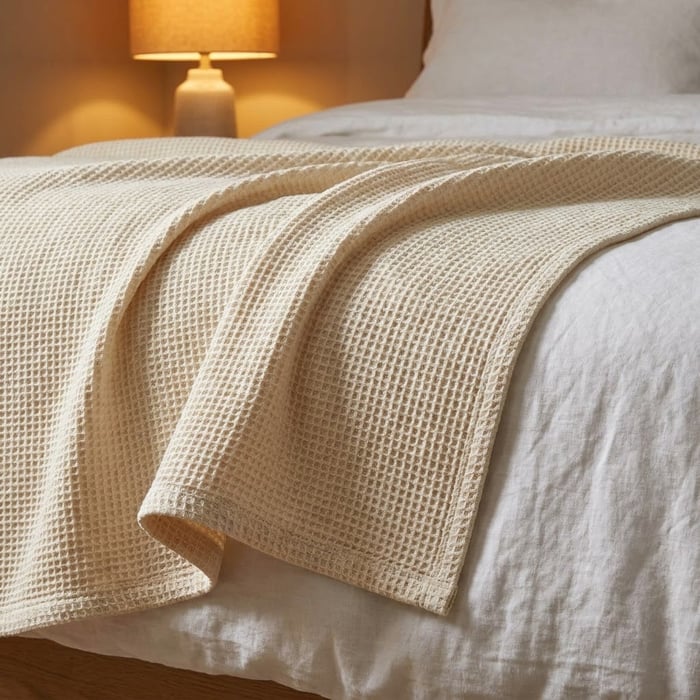
Thermal and waffle weaves create small pockets of air within the fabric, which provide insulation without the weight of dense, heavy blankets. This makes them comfortable across a wide range of room temperatures and suitable for layering. Guests can feel warm without feeling weighed down, and housekeepers can handle them easily. These traits explain why textured weaves are common in hospitality.
Breathability and Year-Round Use
Because these weaves allow air to circulate, they are less likely to trap heat than dense, solid fabrics. That means a single blanket style can serve in summer and winter, with layering adjusting for temperature. Hotels that want to minimize the number of products they stock often favor this versatility. A single dependable style of hotel blankets simplifies purchasing and storage.
Laundering and Drying Advantages
Textured, open weaves generally dry faster than thick, dense blankets. Faster drying helps laundry keep pace with turnover and reduces energy use. It also helps ensure blankets are fully dry before storage, which lowers the risk of odors. In a busy hotel, the time saved in drying can be significant.
Fiber Choices: Cotton, Blends, and Microfiber
Cotton for Natural Feel
Cotton blankets feel soft and natural, and they breathe well. Many guests associate cotton with quality and comfort. The trade-offs include potential shrinkage, longer drying times, and a greater tendency to show wear under aggressive laundering. Cotton can be an excellent choice for hotels with strong laundry capacity and a preference for natural fiber.
Blends for Durability
Blends combine cotton with polyester or other fibers to improve strength, reduce shrinkage, and speed drying. They tend to hold their shape and color well and can be more economical to maintain. Different blend ratios produce different results, so confirm the composition and test samples. Blended hotel blankets are common in busy properties for these reasons.
Microfiber and Synthetic Options
Microfiber and other synthetic fabrics are lightweight, smooth, and fast-drying. They resist wrinkles and are easy to handle. Quality varies, so test for pilling, static, and feel after washing. When well made, synthetic blankets can be a practical option for properties with limited drying capacity or tight turnaround.
Snag Resistance and Why It Matters
Where Snags Come From
Hotel rooms contain many things that can catch fabric: zippers on luggage, rough furniture edges, bed frames, housekeeping carts, and even jewelry or watches. Every snag creates a pull that can grow into a visible flaw. Over time, small pulls accumulate and make blankets look worn. Snag-resistant construction helps blankets withstand these everyday hazards.
How Construction Reduces Snagging
Tighter weaves, certain yarn types, and finishing treatments can reduce the likelihood of snags. A smooth, dense surface gives fewer loose loops for objects to catch. When evaluating samples, drag a rough object lightly across the surface and see how the fabric responds. This simple test reveals more than a product description. Snag-resistant hotel blankets wholesale options last longer and look better.
The Long-Term Payoff
Blankets that resist snagging keep a cleaner appearance for longer, which means fewer replacements and more consistent rooms. For a hotel with many rooms, even a small improvement in lifespan has a meaningful effect on annual costs. Snag resistance is a practical feature that pays for itself through longer service life.
Weight and Warmth by Climate
Warm-Climate Properties
Hotels in warm regions benefit from lighter blankets that provide enough coverage for air-conditioned rooms without causing overheating. A lightweight, breathable blanket can be paired with a sheet for flexibility. Guests in warm climates often prefer minimal bedding but still want a layer available for cool rooms.
Cold-Climate Properties
Hotels in cold regions need heavier or additional blankets to keep guests comfortable. Layering a thermal blanket under a comforter or adding a second blanket in the closet can provide flexibility. Weight should align with expected room temperatures and heating systems.
Properties With Seasonal Swings
Some hotels experience wide seasonal temperature variation. A mid-weight blanket combined with extra layers in colder months can reduce the need to swap inventory. Others rotate lighter and heavier blankets seasonally. Choose an approach that matches your storage and laundry capacity when specifying hotel blankets.
Sizing for Hotel Beds
Matching Blankets to Bed Sizes
Hotels typically have Twin, Full, Queen, and King beds, and each requires a blanket with enough width and length to cover the mattress and provide a modest drop. Count beds by size and confirm that product dimensions match. A blanket that is too small leaves guests uncovered, and one that is too large drags and looks sloppy.
Accounting for Mattress Depth
Thicker mattresses and toppers require additional coverage. Measure actual mattress depth and compare against blanket dimensions. A blanket that fits a standard mattress may look tight on a deep one. Getting this right improves appearance and comfort.
Consistency Across Rooms
Using the same sizes and styles across rooms makes bed-making faster and keeps the property uniform. Mixed products make it harder for housekeepers to build beds correctly and increase errors. Standardizing your hotel blankets wholesale specification helps staff work faster.
Color and Brand Consistency
Neutral Colors for Longevity
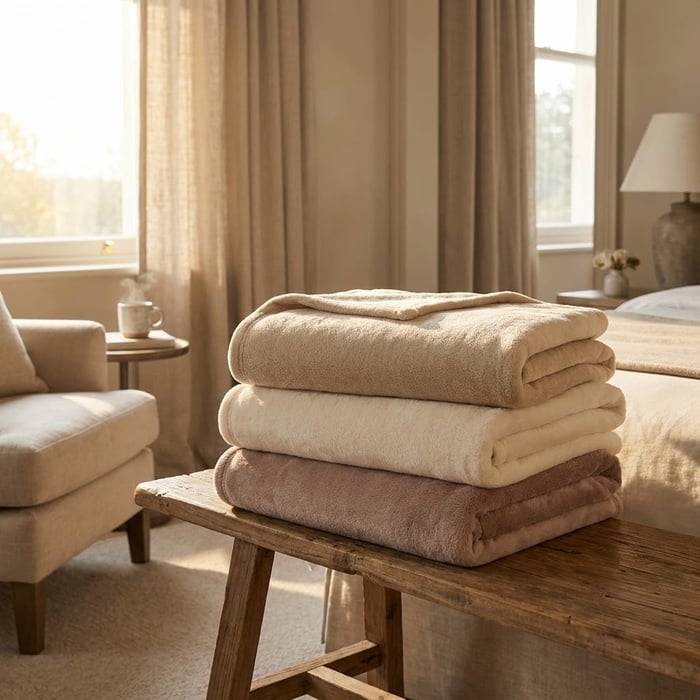
Neutral colors such as white, ivory, gray, and taupe are popular because they coordinate with many room designs and hide minor wear. They also make it easier to replace blankets over time without worrying about matching a trend. Neutrals can be refreshed with accent pieces, such as throws or bedspreads, while the blanket remains a constant.
Brand Colors and Accent Options
Some hotels use brand colors in blankets to reinforce identity. If you choose a distinctive color, confirm that the supplier can reproduce it consistently on reorder and that the dye holds up to laundering. Test samples before committing to avoid fading or color shifts.
Maintaining Consistency Over Time
Over years, shades can vary slightly between production runs. Buying in case packs and reordering from the same source helps limit variation. Keep a record of the product name, color, and order dates so you can match replacements with existing inventory of hotel blankets.
Matching Blankets to Room Tiers
Standard Rooms
Standard rooms make up most of the inventory in many hotels, so durability and cost efficiency matter. A practical, mid-weight blanket with snag resistance and easy care is a reliable choice. The goal is a consistent look and dependable performance at a sustainable cost.
Premium Rooms and Suites
Premium rooms may justify a heavier or more textured blanket, richer colors, or an additional layer. These upgrades signal quality and support higher room rates. Because these rooms are fewer, the added cost per blanket is manageable.
Extended-Stay and Long-Term Rooms
Extended-stay guests use blankets continuously, so durability is especially important. Choose constructions that resist pilling and thinning, and plan for more frequent replacement. Offering a spare blanket in the room closet can improve guest satisfaction for longer stays.
How Many Blankets a Hotel Needs
Start With the Bed Count
Count every bed in the property by size, including rollaways. This number is the foundation for ordering. A hotel with 100 rooms might have 150 beds when double rooms are included. Counting beds by size lets you calculate quantities for each size separately and order the right mix of hotel blankets wholesale.
Plan for Rotation and a Reserve
Blankets are laundered less often than sheets, but they still need a rotation set so rooms are never without one while a blanket is in the laundry. Many hotels plan about one and a half blankets per bed, plus a reserve of ten to twenty percent for stains and damage. Tracking how often the reserve is used helps you refine the percentage.
A Worked Example
For 150 beds at one and a half blankets per bed, the base is 225. A fifteen percent reserve adds about 34, bringing the total to roughly 259. If you also keep 20 extra blankets for guest requests, the final order is about 279. Writing this math down makes reordering consistent and helps justify purchases to owners.
Why Wholesale Case Packs Make Sense
Lower Cost Per Blanket
Case packs reduce packaging and handling costs, and that efficiency shows up in the price per blanket. For a hotel buying dozens or hundreds, ordering in cases is more economical than buying in small quantities. The savings add up across a year and across properties. Case-pack pricing is one of the most direct ways to control the cost of hotel blankets.
Consistent Production Lots
Blankets in the same case typically come from the same production lot, so color, size, and feel remain consistent. This matters in rooms where blankets are visible and photographed. Consistency also makes it easier to match replacements later. Buying hotel blankets wholesale in cases supports a uniform look.
Simpler Ordering and Budgeting
Standardized quantities make counting, storage, and budgeting easier. Instead of tracking many small orders, a hotel can plan a few larger purchases per year. Predictable pricing helps owners and managers forecast spending. Direct Textile Store offers case-pack pricing on hospitality blankets, which gives hotels a clear structure for planning.
Evaluating Quality Before You Order
Weave Density and Surface
Examine the weave closely. It should look even and dense, without gaps or loose threads. Run a hand across the surface to check for roughness. A well-constructed blanket feels substantial and smooth. Compare samples side by side to see differences in density and feel.
Hems and Edges
Edges take the most wear. Look for secure, even stitching or binding that resists fraying. Pull gently to test strength. Weak edges lead to early failure and a worn appearance. Strong edge construction is a key sign of durable hotel blankets.
Fiber Content and Care Instructions
Confirm what the blanket is made of and how it should be washed. Clear information helps you plan laundry and reorder the same product later. If details are vague, treat that as a signal to ask for clarification before ordering.
Testing Samples Before a Large Order
Wash and Dry Tests
Run samples through your normal wash and dry cycle several times. Measure them before and after to check for shrinkage, and compare color, softness, and shape. Note how long they take to dry in your machines, since that affects turnaround. A blanket that changes dramatically after a few cycles is not a good candidate for volume.
Snag and Abrasion Tests
Lightly drag a rough object across the surface and observe the response. Check whether the fabric pulls or holds its texture. This simple test gives insight into how hotel blankets wholesale will behave around zippers, furniture edges, and carts.
Guest and Housekeeper Feedback
Place samples in a few rooms and ask housekeepers and guests for feedback. Housekeepers can comment on handling, weight, and ease of making beds. Guests may comment on comfort and warmth. Real-world feedback helps you choose a blanket that works for everyone.
Laundry Practices That Extend Blanket Life
Wash Temperature and Detergent
Follow the care instructions, and use enough detergent to clean without leaving residue. Excess detergent can make blankets stiff, while too little can leave them dingy. Avoid overloading machines, which prevents proper cleaning and increases wear. A consistent routine protects hotel blankets and delivers predictable results.
Drying and Folding
Dry blankets thoroughly but avoid over-drying, which can cause shrinkage and stiffness. Remove them promptly and fold or hang them to prevent wrinkles. Make sure blankets are completely dry before storage to prevent odors. Good drying habits keep blankets looking fresh.
Handling Soiled Blankets and Cleaning Schedules
Decide how often blankets are laundered and how soiled blankets are handled. Some properties launder on a set schedule, while others rely on inspection and prompt replacement after soiling. Whatever the approach, document it so staff apply it consistently. Having enough reserve blankets makes it easier to swap soiled ones quickly.
Housekeeping Efficiency and Handling
Weight and Ease of Handling
Lighter, easy-to-handle blankets reduce fatigue for housekeepers, especially across many rooms. A blanket that is bulky or awkward slows bed-making. Choose a weight that balances warmth and handling. Small time savings per room add up across a full property.
Cart Organization
Stock carts with the right quantities of blankets for assigned rooms, organized by size. Keep sizes labeled and arranged so housekeepers can grab what they need quickly. Good organization reduces wasted trips and errors.
Coordinating With Laundry
Housekeeping and laundry should share schedules so clean blankets are available when needed. Regular communication prevents bottlenecks. A reserve of hotel blankets provides a buffer when laundry is delayed.
Guest Experience and Reviews
Warmth and Comfort
Guests notice when a bed is warm and comfortable. A blanket that feels pleasant and provides adequate warmth contributes to better sleep and better reviews. Even guests who do not comment on blankets directly benefit from a well-made bed.
Cleanliness and Appearance
Clean, uniform blankets signal care. Visible stains, pulls, or fading can undermine the impression of cleanliness. Retiring worn blankets promptly keeps rooms looking fresh and supports positive reviews.
Photos and Presentation
Room photos influence bookings, and beds are central to those images. Neat, consistent blankets photograph well and communicate quality. Update photos when you refresh linens so that online images match what guests will find.
Storage and Organization
Dedicated Storage Areas
Blankets are bulky, so storage space matters. Use clean, dry shelves or bins, and keep reserve stock separate from stock in circulation. Avoid damp areas and keep blankets off the floor. Good storage prevents odors and keeps blankets ready.
Labeling and Counting
Label shelves by size and type, and keep a simple count sheet updated regularly. Accurate counts help you notice losses early and make reorder decisions faster. A weekly count takes little time and prevents surprises.
Rotating Stock
Use older blankets first so wear is distributed evenly, and keep newer blankets in reserve. Rotation helps all your hotel blankets wholesale last longer and keeps appearance consistent.
Training Staff and Setting Standards
Writing a Simple Standard
Create a one-page guide that shows how blankets should be placed on beds, how many blankets go in each room, and when blankets should be retired. Include photos. A short, clear guide is more likely to be followed.
Teaching Handling and Reporting
Show staff how to handle blankets gently, avoid dragging them across rough surfaces, and report damage. Explain why these habits matter. When staff understand the reasons, they follow routines more consistently, and hotel blankets last longer.
Encouraging Quick Replacement
Ask housekeepers to replace damaged or stained blankets right away from the reserve and to report the replacement. Quick action keeps rooms looking fresh and gives managers accurate data for reordering.
Seasonal Planning and Rotation
Preparing for Cold Months
Before colder months, review blanket inventory and ensure enough heavier blankets or extra layers are available. Order early so blankets arrive, are washed, and are ready. Running short in cold weather leads to guest complaints.
Managing Warm Months
In warmer months, lighter blankets or fewer layers may suffice. Store extra blankets properly so they are ready when temperatures drop. Planning prevents last-minute purchases.
Using Slow Periods for Maintenance
Slower occupancy periods are a good time to inspect inventory, retire worn blankets, and restock. Doing this when pressure is lower allows time to wash new blankets and test new samples if you are considering changes.
Multi-Property and Brand Standards
Standardizing Across Locations
If you manage more than one hotel, use the same blanket specification across properties. Standardization simplifies ordering, training, and inventory management, and supports a uniform brand image. A consistent standard of hotel blankets wholesale makes it easier to move stock between locations.
Centralizing Purchasing and Storage
Centralized purchasing can improve pricing and consistency, and a central reserve can support multiple locations. Make sure each hotel has enough stock and a clear process for requesting more.
Tracking Usage Across Properties
Maintain a shared record showing blankets per property, reserves, and reorder dates. Track losses and replacements to see which properties use more. This data helps you adjust par levels and justify purchases.
Cost, Value, and Total Ownership
Cost Per Use
A blanket that lasts through many washes costs less per use than a cheaper one that wears out quickly. Estimate how many cycles a sample survives and divide the price by that number. This gives a fair way to compare products and explain choices to owners. It often shows that durable hotel blankets are more economical over time.
Labor and Time Savings
Easy-care, snag-resistant blankets reduce time spent replacing and re-washing. In a hotel, where housekeeping hours are tightly managed, saved minutes matter. Fast-drying, low-maintenance blankets help staff stay on schedule.
Avoiding Emergency Purchases
Reserve stock and planned reorders reduce rush purchases, which typically cost more and rarely match existing inventory. Planning ahead keeps rooms consistent and budgets predictable.
Common Mistakes to Avoid
Purchasing Mistakes
Buying on price alone is a frequent mistake, because lower prices often reflect thinner fabric or weaker construction. Skipping samples is another, since photos cannot show how a blanket feels after repeated washing. Ordering only enough blankets to cover the beds leaves no room for rotation or guest requests. A little testing and planning prevents most purchasing problems with hotel blankets wholesale.
Handling Mistakes
Even good blankets fail when handled poorly. Overloading machines, over-drying, and dragging blankets across rough surfaces all shorten life. Leaving damp blankets in bins creates odors. Keeping stained or snagged blankets in circulation lowers the appearance of the room. Clear routines and retirement standards help avoid these problems.
Planning Mistakes
Ordering too late can leave you short during busy periods, and failing to document the specification makes reorders harder to match. Overlooking guest-request stock can lead to shortages when guests ask for extra blankets. A short written plan, a reserve, and an early order solve these issues before they begin.
Making the Purchase: A Practical Buying Checklist
Product and Quality Checklist
Before finalizing a bulk order, confirm each of the following with samples in hand:
- Weave and fiber suit your climate and laundry: The construction, weight, and fiber match your room temperatures, equipment, and drying capacity.
- Snag resistance is verified: The fabric holds its surface when tested against rough edges and does not pull easily.
- Sizes match your beds: You have counted beds by size and confirmed that dimensions fit your mattresses, including any toppers.
- Hems and edges are strong: Stitching or binding is even and does not loosen when tugged.
- Color and feel hold up after repeated washing: The blanket stays consistent in shade, softness, and shape after several cycles.
- Quantities include rotation, guest-request stock, and a reserve: Your calculation covers beds in use, laundry rotation, and expected losses.
- Case-pack pricing, shipping timing, and reorder availability are confirmed: You know the total cost, when the order will arrive relative to your busy season, and that the same item can be ordered again.
Take time to review the plan with housekeeping and laundry staff. Share the par levels, the setup standard, and the retirement rules so everyone follows the same routine. Confirm the delivery date, and allow time to wash new blankets before they go into rooms. Keep a simple record of the specification, order date, quantities, prices, and inventory counts. Update it whenever you change products or quantities. A repeatable record makes the next purchase faster and helps new team members maintain consistency.
Direct Textile Store: A Dedicated Source for Hotel Blankets
For hotels working through this process, one dependable source can simplify ordering and keep rooms consistent. Direct Textile Store carries snag-resistant hotel blankets designed for durability and comfort, suitable for hotels and high-use settings. Browse styles and case packs to outfit your operation.
Direct Textile Store offers hotel blankets wholesale in consistent specifications and case-pack quantities, which lets hotels plan around a single source, reorder confidently, and keep every room looking uniform. When replacements match existing stock, guests and housekeepers see consistency, and managers avoid the frustration of mismatched blankets across rooms and seasons.
Final Thoughts on Ordering Hotel Blankets for a Hotel
The best way to supply a hotel is to buy durable, snag-resistant hotel blankets in case packs at wholesale pricing, sized correctly for every bed. Hotels that test samples, calculate quantities carefully, and standardize their specification tend to keep rooms looking fresh while controlling costs. Choosing hotel blankets wholesale that match your climate and laundry reality makes housekeeping faster and more consistent. Planning ahead, rather than replacing blankets only when guests complain or stock runs out, keeps rooms comfortable and reviews strong. A clear par level, a simple inventory record, and a dependable source turn a recurring problem into a routine. That routine gives managers more time to focus on guests and operations.

Learn More About Our Experience Supplying Wholesale Linens → About Direct Textile Store
Direct Textile Store is a leading U.S. wholesale linen and textile supplier trusted by over 131,000 hotels, hospitals, healthcare facilities, restaurants, spas, salons, resorts, gyms, emergency shelter and response, funeral homes, VRBO & Airbnb hosts, car washes, and commercial buyers nationwide. Shop in bulk with everyday low wholesale pricing and automatic 20% case-pack discounts — no coupons or minimums required. Choose from one of the largest in-stock selections available: over 135,000 towels, pool towels, sheets, blankets, comforters, tablecloths, pillows, bed toppers, aprons, hospital gowns, patient gowns, isolation gowns, scrubs, shower curtains, chef apparel, smocks, lab coats, uniforms, and commercial laundry equipment including wire, vinyl, and poly laundry carts, trucks, and privacy screens — all ready to ship today. Free shipping on orders over $5,999.
FAQ
What are hotel blankets and how do they differ from household blankets?
Hotel blankets are made for commercial use, with durable construction, consistent sizing, and fabrics that hold up to frequent laundering and handling.
Why does snag resistance matter for hotel blankets?
Zippers, furniture edges, and carts can catch fabric. Snag-resistant construction helps blankets resist pulls and keeps them looking neat longer.
How many blankets does a hotel need per bed?
Many hotels plan about one and a half per bed for rotation, plus a ten to twenty percent reserve and extra stock for guest requests.
Is it cheaper to buy hotel blankets wholesale in case packs?
Generally yes. Case packs lower per-blanket cost and keep color and size consistent across a large order.
What should I test before ordering hotel blankets wholesale?
Wash samples several times, test for snagging, check shrinkage and softness, and compare color and shape after laundering.
How often should hotel blankets be replaced?
Replace blankets that are stained, snagged, thin, or misshapen, and write a clear standard so staff apply it consistently.
Where can I order hotel blankets for my hotel?
Direct Textile Store carries snag-resistant hotel blankets designed for durability and comfort, suitable for hotels and high-use settings. With case-pack pricing and consistent in-stock inventory, it's a practical option for hotels outfitting every room.