
Table of Contents
- Understanding Pediatric Gowns for Surgery Center Use
- Key Considerations When Buying Pediatric Gowns for a Surgery Center
- Where to Source Pediatric Gowns in Bulk
- Pediatric Gown Needs by Age Group and Care Setting
- Evaluating Quality and Durability Before You Buy
- Sizing Strategy for a Diverse Pediatric Patient Population
- Procurement Best Practices for Surgery Center Buyers
- Laundering and Handling Considerations for Pediatric Gowns
- Making the Purchase: A Practical Buying Checklist
- How Direct Textile Store Supports Pediatric Gown Programs
- Final Thoughts on Sourcing Pediatric Gowns for Surgery Centers
- Learn More About Our Experience Supplying Wholesale Linens → About Direct Textile Store
- FAQ
- Related Posts
Surgery centers serving pediatric patients need pediatric gowns that solve problems standard adult hospital gowns simply weren't designed to address — smaller, properly proportioned sizing, closures that work for anxious children and the caregivers dressing them, and fabric gentle enough for young or sensitive skin while still meeting the durability and hygiene standards required in a clinical setting. Sourcing the right pediatric gowns in bulk requires understanding what genuinely differentiates pediatric-specific design from simply resizing adult gowns, along with a clear procurement strategy that keeps a surgery center properly stocked across every size range its patient population requires. This guide walks through everything a surgery center needs to know about sourcing pediatric gowns in bulk, from fabric and design considerations to building a sizing and inventory strategy that serves patients well from infancy through adolescence.
Understanding Pediatric Gowns for Surgery Center Use
What Makes Pediatric Gowns Different from Standard Adult Hospital Gowns
Simply scaling down an adult hospital gown pattern doesn't produce a genuinely functional pediatric garment. True pediatric gowns are designed from the ground up around children's proportions, which differ substantially from adults not just in overall size but in the ratio of torso length to shoulder width, arm length, and overall body shape across different developmental stages. A gown designed for a toddler needs a fundamentally different cut than one designed for a pre-teen, even though both fall under a general "pediatric" category.
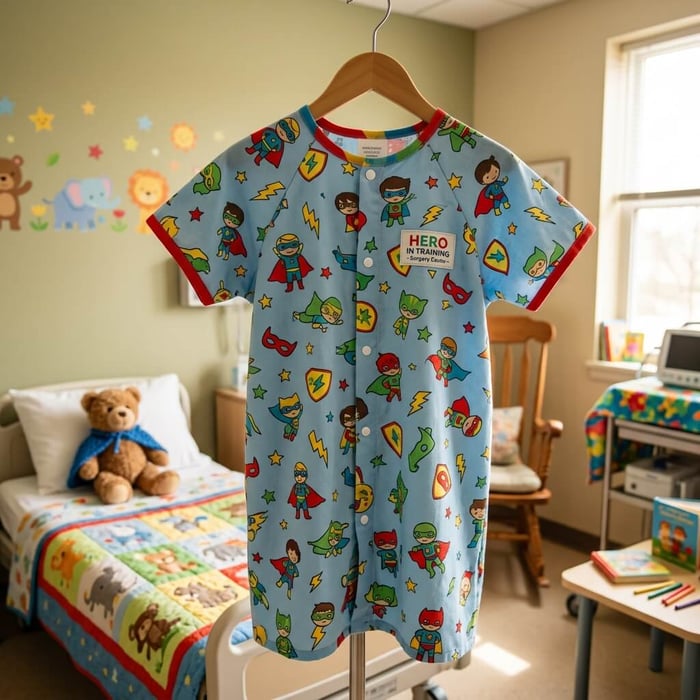
Beyond sizing, pediatric gowns typically incorporate design features specifically intended to reduce distress for young patients and simplify handling for caregivers and clinical staff. This includes closures that are easier to manage on a squirming or frightened child, softer fabric finishes that minimize skin irritation, and sometimes cheerful colors or patterns designed to make a clinical environment feel slightly less intimidating for a young patient facing a surgical procedure.
Why Surgery Centers Need a Dedicated Pediatric Gown Inventory
Surgery centers that treat any meaningful volume of pediatric patients quickly discover that relying solely on adult gowns sized down, or worse, adult gowns simply used as-is on smaller patients, creates real clinical and operational problems. Ill-fitting gowns can shift during transport or procedures, complicate IV access or monitoring lead placement, and generally create a more stressful pre-operative experience for both the child and accompanying family members.
A dedicated pediatric gowns inventory, properly sized across a surgery center's typical patient age range, supports smoother pre-operative workflows, reduces the time staff spend adjusting or re-dressing patients, and contributes to a calmer overall experience during what's often an anxious moment for young patients and their families.
The Clinical and Emotional Considerations Behind Pediatric Gown Design
Pediatric healthcare settings increasingly recognize that reducing a child's anxiety before a procedure has measurable benefits for both the immediate clinical experience and longer-term attitudes toward medical care. Pediatric gowns designed with this in mind often incorporate softer, more approachable design elements than standard clinical gowns, while still meeting every functional requirement a surgical setting demands. Surgery centers investing thoughtfully in this category of supply are, in effect, investing in a small but meaningful piece of the overall patient experience strategy for their pediatric population.
Key Considerations When Buying Pediatric Gowns for a Surgery Center
Fabric Softness and Skin Sensitivity
Children's skin is generally more sensitive than adult skin, making fabric choice a particularly important consideration for pediatric gowns. Soft, breathable cotton or cotton-blend fabrics tend to be better tolerated by young patients than stiffer, more clinical-feeling materials, reducing the likelihood of skin irritation or general discomfort during what may already be a stressful pre-operative period. Buyers should request fabric samples and physically assess softness and hand-feel before committing to a large bulk order, since fabric descriptions alone don't always convey how a material will actually feel against a child's skin.
Closure Types and Ease of Dressing
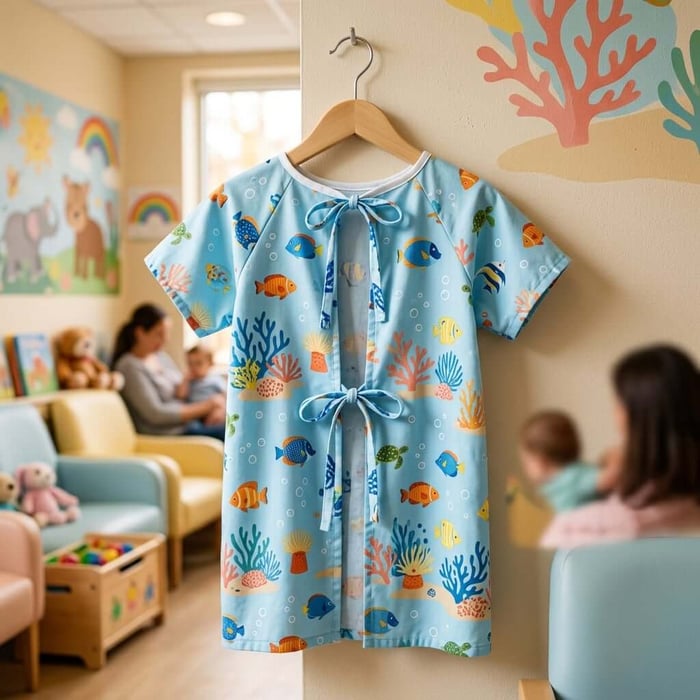
Closure design is one of the most practically important differentiators among pediatric gowns options. Tie-back closures remain a common standard, allowing caregivers or clinical staff to dress a child relatively quickly while maintaining necessary access for clinical monitoring and procedures. Snap closures offer an alternative that can be faster and simpler to manage for very young children or infants, reducing the fine motor coordination needed compared to tying knots or bows, which matters when staff are working with an anxious or uncooperative young patient.
Surgery centers should evaluate closure type specifically in the context of their typical patient age range and procedure type, since the ideal closure for a toddler undergoing a short outpatient procedure may differ from what works best for an adolescent patient with a longer recovery period requiring more extended gown wear.
Sizing Range and Developmental Stage Accuracy
Because pediatric patients span an enormous range of body sizes — from infants to adolescents approaching adult proportions — pediatric gowns need to be available across a genuinely comprehensive size range that accounts for this developmental diversity. A supplier offering only two or three broad size categories often can't provide the fit accuracy that a surgery center serving a wide pediatric age range actually needs. Buyers should request detailed sizing charts with specific measurements for each size category, rather than relying on vague age-range labeling alone, since children of the same age can vary substantially in body size.
Print, Pattern, and Color Considerations
Many pediatric gowns incorporate cheerful prints, patterns, or softer color palettes specifically designed to feel less clinical and intimidating to young patients compared to standard institutional white or pale blue gowns. While this is partly an aesthetic consideration, it carries genuine clinical relevance in pediatric care settings, where reducing a child's pre-procedure anxiety can meaningfully ease the overall care process for staff, patients, and accompanying family members alike.
Durability and Commercial Laundering Requirements
Despite the softer, more approachable design elements common to pediatric gowns, these garments still need to meet the same rigorous commercial laundering and durability standards required of any clinical textile. Reinforced seams, quality stitching, and fabric that maintains its softness and appearance through repeated high-temperature sanitizing washes are just as important in pediatric gowns as in any other category of surgical center textile inventory.
Where to Source Pediatric Gowns in Bulk
Wholesale Medical Textile Suppliers vs. General Retail Sourcing
Surgery centers sourcing pediatric gowns in the quantities needed to properly outfit a functioning pediatric care program need a wholesale approach rather than general retail sourcing. Retail pricing remains flat per unit regardless of quantity, and retail inventory levels simply aren't structured to reliably fulfill the kind of bulk institutional orders a surgery center's pediatric program requires. A supplier offering genuine wholesale pricing on pediatric gowns, by contrast, is built specifically to reward volume purchasing, with per-unit costs decreasing meaningfully as order size increases.
Sourcing through a dedicated wholesale medical textile channel also typically means more reliable inventory availability across the full sizing range a pediatric program requires, reducing the risk that a surgery center finds itself short on a specific size category during an unexpected volume increase.
Benefits of Case Pack Purchasing for Pediatric Gown Inventory
Case-pack purchasing allows surgery centers to order pediatric gowns in pre-set bulk quantities across needed sizes rather than buying unit by unit, which meaningfully reduces the per-gown cost. This pricing structure reflects the supplier's reduced packaging, handling, and shipping overhead when fulfilling large, consolidated orders instead of scattered small purchases spread across many individual transactions.
Buying in case packs also ensures consistency across a surgery center's entire pediatric gown inventory. When an order comes from the same production lot, centers avoid the subtle variations in fabric feel, print placement, or sizing that can occur when smaller batches are purchased over time from different production runs.
What to Look for in a Wholesale Pediatric Gown Supplier
Surgery center procurement teams should evaluate several factors before committing to a bulk order of pediatric gowns:
In-stock availability across the full pediatric size range: A supplier with deep, consistent stock reduces the risk of running short on a specific size category needed for the center's patient population.
Transparent, everyday wholesale pricing: Consistent pricing without relying on rotating promotions makes annual supply budgeting far more manageable.
Automatic case-pack discounts: Built-in volume pricing simplifies reordering as patient volume grows, without requiring renegotiated terms each time.
Detailed, verified sizing specifications: A trustworthy supplier should provide precise measurements for each pediatric size category, not just generalized age-range labels.
Reasonable shipping terms: Free or reduced shipping thresholds on larger orders can meaningfully affect total program cost, especially for centers reordering multiple times per year.
Pediatric Gown Needs by Age Group and Care Setting
Infant and Toddler Patients
The youngest pediatric patients require pediatric gowns with the smallest sizing categories, often featuring simplified closure systems like snaps rather than ties, since these can be managed more quickly and easily by caregivers and staff working with a squirming infant or toddler who can't cooperate with more complex dressing procedures. Extra-soft fabric is particularly important in this age group, given how sensitive infant and toddler skin tends to be.
Young Children and Early School-Age Patients
Young children undergoing outpatient surgical procedures often respond well to pediatric gowns featuring cheerful prints or patterns, which can help ease pre-procedure anxiety during an already stressful experience. Sizing for this age group needs particular attention to proportional accuracy, since children in this range vary substantially in both height and build even within narrow age brackets.
Pre-Teen and Adolescent Patients
Older pediatric patients approaching adolescence often have body proportions closer to adult patients but still benefit from properly sized pediatric gowns rather than being shifted prematurely into adult-sized inventory. This age group may also have stronger preferences around modesty and gown coverage compared to younger children, making thoughtful closure design and adequate coverage particularly relevant considerations for this segment of a surgery center's pediatric population.
Outpatient vs. Extended Recovery Settings
Surgery centers handling primarily brief outpatient procedures may prioritize pediatric gowns optimized for quick dressing and undressing, since patients typically wear the gown for a relatively short window around the procedure itself. Centers managing longer recovery periods before discharge may place more emphasis on comfort and extended-wear fabric performance, since patients in this setting spend more continuous time in the gown before returning to their own clothing.
Evaluating Quality and Durability Before You Buy
Seam Construction and Stitching Quality
Before committing to a bulk order, surgery center buyers should request sample pediatric gowns and inspect seam construction closely. Reinforced, evenly stitched seams resist fraying and separation far better than loosely finished seams, which matters considerably given how frequently clinical textiles undergo demanding commercial laundering and sanitizing wash cycles.
Fabric Softness After Repeated Washing
A quality pediatric gowns product should maintain its soft, comfortable hand-feel even after repeated commercial washing at the higher temperatures needed for proper clinical sanitizing. Lower-quality fabric can stiffen or roughen considerably after just a handful of high-heat wash cycles, undermining much of the comfort benefit that motivated choosing a pediatric-specific gown design in the first place.
Closure Durability Under Repeated Use
Whether a gown uses tie-back closures, snaps, or another fastening system, this component needs to hold up reliably through repeated use and laundering without failing. Buyers should specifically test closure durability on any sample pediatric gowns product, since a closure that fails partway through a procedure or during patient handling creates both a practical inconvenience and a potential dignity concern for the young patient involved.
Colorfastness of Prints and Patterns
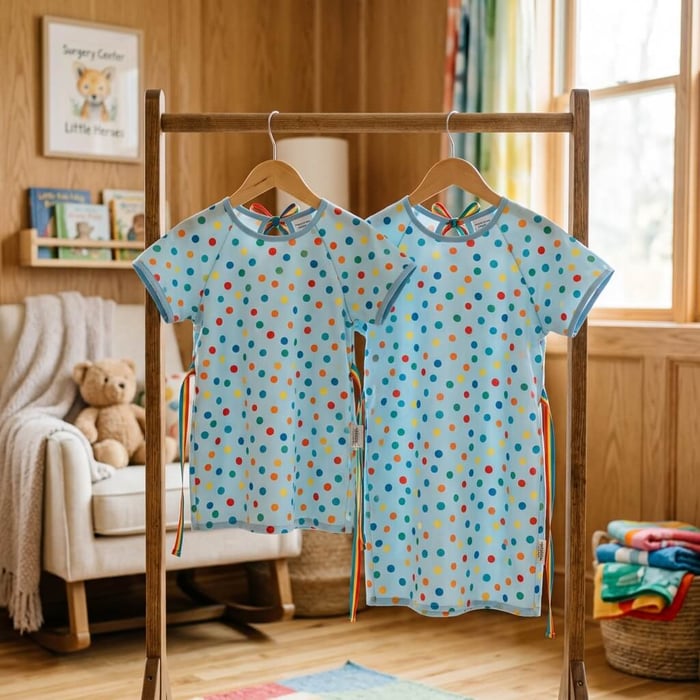
For pediatric gowns featuring printed patterns or non-standard colors, colorfastness under repeated high-temperature commercial laundering is a particularly important quality marker. Prints that fade, crack, or bleed after a handful of wash cycles quickly lose the cheerful, approachable appearance that motivated their selection, while also potentially looking worn and unprofessional within a relatively short service life.
Sizing Strategy for a Diverse Pediatric Patient Population
Building a Sizing Chart Aligned to Actual Patient Measurements
Rather than relying solely on generic age-range labeling, surgery centers benefit from reviewing their actual pediatric patient population data — height, weight, and general body proportions across recent procedures — to build a sizing strategy for pediatric gowns that genuinely reflects the population being served. This data-driven approach helps avoid over-ordering sizes rarely needed while ensuring adequate stock in the categories that see the highest actual patient volume.
Maintaining Adequate Depth Across Each Size Category
Once a surgery center identifies its typical size distribution, maintaining sufficient depth within each category — rather than spreading limited inventory too thinly across every possible size — helps ensure the center rarely runs short on the sizes it uses most frequently. Extremely rare sizes at either extreme of the pediatric range may warrant only minimal backup stock, while core sizes serving the bulk of a center's typical patient volume deserve more substantial ongoing inventory.
Coordinating Sizing with Procedure Scheduling
Some surgery centers benefit from reviewing upcoming scheduled procedures to anticipate size needs in advance, particularly for centers handling a smaller volume of pediatric cases where demand for specific sizes might be less predictable than in a high-volume dedicated pediatric facility. This proactive approach to pediatric gowns inventory management helps avoid last-minute scrambling to source a specific size ahead of a scheduled procedure.
Procurement Best Practices for Surgery Center Buyers
Bulk Purchasing and Cost Efficiency
For surgery centers with an established pediatric care program, pediatric gowns procurement represents a recurring operational cost tied to patient volume and the aggressive laundering schedule required to meet clinical hygiene standards. Buying in bulk case packs allows centers to lock in lower per-unit pricing while reducing the administrative overhead of placing frequent smaller orders throughout the year.
Inventory Planning and Replacement Cycles
Surgery centers benefit from tracking pediatric gowns usage and wear patterns by size category, since high-volume sizes typically wear out faster than less frequently used sizes at the extremes of the pediatric range. Building a replacement schedule around actual usage data allows procurement teams to reorder proactively rather than discovering shortages right before a scheduled procedure.
Maintaining Buffer Stock for Unpredictable Demand
Because pediatric surgical volume can fluctuate, sometimes unpredictably, maintaining a modest buffer stock of pediatric gowns beyond immediate projected need helps surgery centers respond to unexpected volume increases without scrambling for an emergency reorder that may not arrive in time for a scheduled procedure.
Standardizing Procurement Across Multi-Site Surgery Center Groups
Surgery center groups operating multiple locations benefit from coordinating pediatric gowns procurement centrally where feasible, consolidating purchasing power for improved bulk pricing while ensuring each site maintains appropriate sizing depth based on its specific pediatric patient population and procedure volume.
Laundering and Handling Considerations for Pediatric Gowns
Establishing a Consistent Sanitizing Laundering Protocol
Because pediatric gowns must meet the same rigorous hygiene standards as any clinical textile, surgery centers need a consistent laundering protocol covering appropriate wash temperature, detergent type, and drying method to ensure proper sanitizing while preserving fabric softness and closure integrity over the gown's working life.
Handling Prints and Patterns During Commercial Washing
Gowns featuring printed patterns sometimes require slightly more careful handling during commercial laundering to preserve print quality over repeated wash cycles. Surgery centers should confirm with their supplier whether any specific laundering guidance applies to printed pediatric gowns lines, since following manufacturer-recommended laundering parameters helps maximize the visible lifespan of decorative elements.
Rotating Inventory to Distribute Wear Evenly
Rotating through a slightly larger working pool of pediatric gowns within each size category, rather than concentrating use on a smaller subset of the available inventory, helps distribute wear more evenly across a surgery center's overall pediatric gown supply, extending the average usable life of the inventory as a whole.
Making the Purchase: A Practical Buying Checklist
Before finalizing a bulk order, surgery center buyers should confirm the following:
The supplier offers a genuinely comprehensive size range with detailed measurements matching the center's actual pediatric patient population.
Fabric softness and closure type suit the center's typical patient age range and procedure type.
Sample gowns have been inspected for seam quality, closure durability, and overall fabric feel after simulated laundering conditions.
Wholesale and case-pack pricing is transparent and doesn't depend on negotiated or promotional-only discounts.
Shipping timelines allow enough lead time to maintain consistent inventory ahead of anticipated procedure volume.
The supplier maintains sufficient in-stock inventory across all needed sizes to support both an initial bulk order and ongoing replacement needs.
Surgery centers that take time to evaluate these factors before ordering typically spend less over multiple replacement cycles, reduce pre-operative delays related to sizing issues, and support a more consistent, comforting experience for pediatric patients and their families.
How Direct Textile Store Supports Pediatric Gown Programs
For surgery centers working through this sourcing process, having one dependable supplier for pediatric-specific textiles can significantly simplify ongoing procurement. You can order from Direct Textile Store — they offer tie-back styles pediatric gowns with tie-back designs and sizes to fit your patient population. Browse styles and case packs to outfit your operation.
A supplier offering pediatric gowns with strong in-stock availability across a genuinely comprehensive size range allows surgery centers to plan bulk orders around a single, reliable source rather than piecing together inventory from multiple vendors to cover different age groups. Consistent fabric quality and closure construction across that catalog also means centers can build a dependable pediatric care standard that performs reliably across every procedure, patient after patient.
Final Thoughts on Sourcing Pediatric Gowns for Surgery Centers
Sourcing the right pediatric gowns for a surgery center comes down to balancing fabric softness, sizing accuracy, closure functionality, and procurement efficiency. A well-planned inventory supports smoother pre-operative workflows, holds up under the demands of frequent sanitizing laundering, and contributes meaningfully to a calmer, more comfortable experience for young patients and their families during an inherently stressful time. Buyers who evaluate construction quality, sizing depth, and wholesale pricing structures carefully before committing to a bulk order tend to build pediatric gown programs that perform reliably across a genuinely diverse patient population. Taking a methodical, proactive approach to procurement — grounded in actual patient population data rather than generic sizing assumptions — ultimately supports both clinical efficiency and patient experience as a surgery center's pediatric program continues to grow.

Learn More About Our Experience Supplying Wholesale Linens → About Direct Textile Store
Direct Textile Store is a leading U.S. wholesale linen and textile supplier trusted by over 131,000 hotels, hospitals, healthcare facilities, restaurants, spas, salons, resorts, gyms, emergency shelter and response, funeral homes, VRBO & Airbnb hosts, car washes, and commercial buyers nationwide. Shop in bulk with everyday low wholesale pricing and automatic 20% case-pack discounts — no coupons or minimums required. Choose from one of the largest in-stock selections available: over 135,000 towels, pool towels, sheets, blankets, comforters, tablecloths, pillows, bed toppers, aprons, hospital gowns, patient gowns, isolation gowns, scrubs, shower curtains, chef apparel, smocks, lab coats, uniforms, and commercial laundry equipment including wire, vinyl, and poly laundry carts, trucks, and privacy screens — all ready to ship today. Free shipping on orders over $5,999.
FAQ
How are pediatric gowns different from standard adult hospital gowns?
Pediatric gowns are designed from the ground up around children's proportions, not just scaled-down adult patterns. They also often feature softer fabric, simplified closures, and sometimes cheerful prints to help ease young patients' anxiety.
What closure type works best for pediatric gowns?
Tie-back closures are common and widely used across pediatric age groups, while snap closures can be faster and easier for infants or very young children who can't cooperate with dressing. The right choice depends on the center's typical patient age range.
How many pediatric gown sizes should a surgery center stock?
Most centers benefit from reviewing their actual patient population data to identify the most frequently needed sizes rather than relying on generic age-range labels. Depth should be concentrated in the sizes seeing the highest real patient volume.
Is it cheaper to buy pediatric gowns in bulk case packs?
Yes, bulk case-pack purchasing almost always reduces the per-gown cost compared to buying individually. Wholesale pricing improves as order size increases, which matters for centers managing an ongoing pediatric care program.
Do pediatric gowns need to meet the same laundering standards as adult clinical gowns?
Yes, pediatric gowns must meet the same rigorous sanitizing and hygiene standards required of any clinical textile. Fabric and closures need to hold up reliably through repeated high-temperature commercial washing.
What should I check before placing a large pediatric gown order?
Confirm detailed sizing measurements match your actual patient population, and inspect a sample for seam quality and closure durability. Verifying wholesale pricing, case-pack discounts, and shipping timelines also helps avoid supply gaps ahead of scheduled procedures.
Why is Direct Textile Store a good source for pediatric gowns?
Direct Textile Store offers pediatric gowns with tie-back designs and sizing built to fit a range of patient populations. With automatic case-pack discounts and consistent in-stock inventory, it's a practical option for surgery centers building or maintaining a pediatric care program.