Table of Contents
- Why Hotel Ballrooms Need Commercial Table Linens
- The Role of Ballroom Linens in Event Presentation
- Understanding Commercial-Weight Fabric
- Spun Polyester and Other Fabric Choices
- Colorfast Performance and Why It Matters
- Soil-Release Finishes and Stain Behavior
- Wrinkle Resistance and Pressing Time
- Sizing for Round Banquet Tables
- Sizing for Rectangular, Head, and Cocktail Tables
- Understanding Drop Length
- Seams, Hems, and Construction Quality
- Choosing Colors for Ballroom Events
- Coordinating With Napkins, Runners, and Overlays
- Matching Linens to Event Types
- How Many Tablecloths a Ballroom Needs
- Planning for Back-to-Back Events and Turnaround
- Why Wholesale Case Packs Make Sense
- Evaluating Quality Before You Order
- Testing Samples Before a Large Order
- Laundry Practices That Extend Linen Life
- Setup, Teardown, and Banquet Staff Efficiency
- Storage and Organization of Ballroom Linens
- Tracking Inventory and Linen Life
- Training Banquet Staff and Setting Standards
- Multi-Ballroom and Multi-Property Standards
- Seasonal Planning and Peak Event Periods
- Cost, Value, and Total Ownership
- Guest and Client Experience
- Common Mistakes to Avoid
- Making the Purchase: A Practical Buying Checklist
- Direct Textile Store: A Dedicated Source for Ballroom Tablecloths
- Final Thoughts on Ordering Tablecloths for a Hotel Ballroom
- Learn More About Our Experience Supplying Wholesale Linens → About Direct Textile Store
- FAQ
- Related Topics
A hotel ballroom transforms several times a week. A morning conference becomes an afternoon luncheon, which becomes an evening reception, and each transformation begins with the same step: dressing the tables. The linens set the color, the formality, and the first impression of every event, and they have to look flawless again and again after repeated trips through the laundry. Tablecloths made for commercial use are built for that cycle, with weight, weave, and dyes chosen to hold up through constant washing, handling, and storage. This guide explains how to choose the right fabric, sizes, and colors for a ballroom, how to plan quantities around event volume, how to evaluate and test samples, and how to buy wholesale tablecloths in case packs that keep every event ready on time.
Why Hotel Ballrooms Need Commercial Table Linens
Ballrooms Operate at a Different Scale
A hotel ballroom may seat hundreds of guests at dozens of tables, and every table needs a matching cloth. That volume multiplies every flaw: one frayed hem becomes ten, one faded color becomes a visible patchwork across the room. Linens made for home use cannot withstand that scale, because they thin, shrink, and fade under repeated commercial laundering. Commercial tablecloths use heavier fabric and stronger construction so that the entire room stays uniform.
Frequent Turnover Demands Durability
Ballrooms host weddings, conferences, galas, holiday parties, and community events, often with only hours between one and the next. Linens must be stripped, laundered, pressed if needed, folded, and delivered back to the room on a tight timeline. Each cycle puts stress on the fabric, and only products designed for that routine keep their shape, color, and feel. Durable wholesale tablecloths protect both the budget and the schedule.
Presentation Reflects the Hotel
Event guests and planners judge the hotel by what they see on the table. Crisp, clean, uniformly colored linens suggest a well-run property, while stained or mismatched ones suggest the opposite. Because ballroom events are photographed and shared, linens can influence the hotel's reputation long after the event ends. Investing in dependable tablecloths is an investment in the hotel's image.
The Role of Ballroom Linens in Event Presentation
The Foundation of the Table Setting
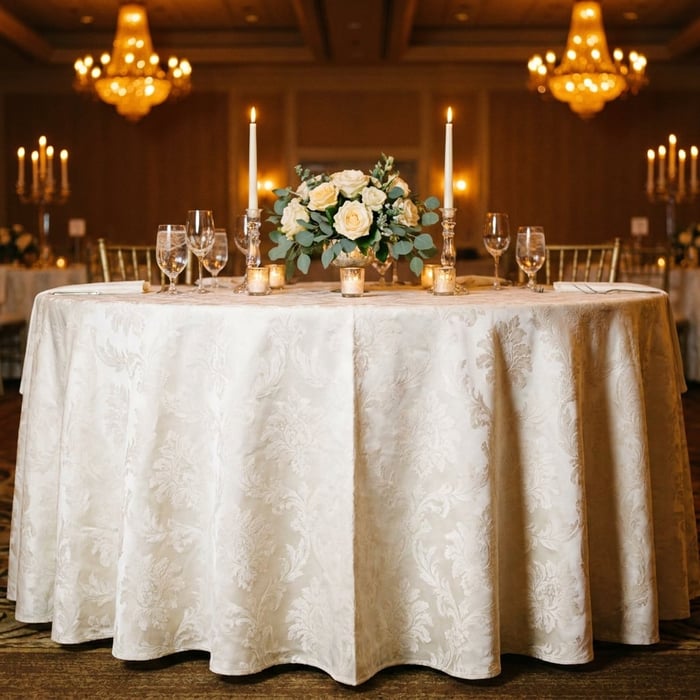
Everything else on the table, from centerpieces to place settings, sits on top of the linen. The color and texture of the cloth frame the entire design. A neutral cloth lets décor shine, while a bold color becomes part of the theme. Choosing the right tablecloths gives planners a reliable foundation to build on.
Hiding and Protecting Tables
Banquet tables are functional, not decorative, and linens conceal their imperfections while protecting the surfaces from spills, heat, and scratches. A cloth that drapes cleanly to the floor or to a chosen drop length creates a polished look without extra effort. Protective and decorative functions work together in every event.
Supporting Consistency Across Spaces
Hotels often have more than one event space, such as a main ballroom, a junior ballroom, and meeting rooms. Using the same linen specification across spaces keeps the property's look consistent and allows linens to move between rooms when demand shifts. A unified wholesale tablecloths program makes that flexibility possible.
Understanding Commercial-Weight Fabric
What Commercial Weight Means
Commercial weight refers to a heavier, more substantial fabric built for repeated laundering and heavy use. It drapes better than light fabric, resists thinning, and maintains opacity after many washes. A heavier hand also makes linens feel more formal under event lighting. Weight is a practical indicator of durability, and it is one of the first things to check when comparing options.
How Weight Affects Drape and Appearance
A heavier fabric hangs straight and falls in clean lines, which looks more refined than a thin cloth that clings or ripples. Under bright ballroom lighting, lightweight fabric can appear translucent or show the table beneath it. Proper weight avoids those problems and supports an elegant presentation. Look for a cloth that feels substantial in the hand without being stiff.
Balancing Weight and Laundry Practicality
Heavier fabrics take longer to dry and may require more energy and time in the laundry. A balanced weight provides good drape and durability without making laundry a bottleneck. Consider your equipment and schedule when choosing a weight, and test samples to see how they perform in your process.
Spun Polyester and Other Fabric Choices
Why Spun Polyester Is Popular
Spun polyester has a soft, fabric-like feel that resembles cotton while offering the strength and wrinkle resistance of polyester. It holds color well, tolerates commercial laundering, and dries relatively quickly. These traits make it a common choice for ballroom linens. A quality tablecloths product in spun polyester balances appearance, durability, and ease of care.
Cotton and Cotton Blends
Cotton and cotton blends offer a natural feel and a classic look. They may wrinkle more and require more pressing, and they can shrink if not handled properly. Some hotels choose them for formal events where a traditional look is desired. If you choose cotton or a blend, plan for extra laundry and pressing time.
Matching Fabric to Your Operation
The best fabric is the one that fits your laundry capacity, event mix, and budget. A ballroom with heavy volume and quick turnaround benefits from low-maintenance fabrics, while one with more time between events may have more flexibility. Test samples and compare costs per use before standardizing.
Colorfast Performance and Why It Matters
Consistency Across Hundreds of Pieces
Colorfast fabric holds its shade through repeated washing, which keeps linens uniform across a room full of tables. When dyes fade or bleed, some cloths look noticeably lighter or different, creating a patchwork effect. In a ballroom where dozens of cloths are displayed side by side, even slight differences are visible. Colorfast wholesale tablecloths preserve a polished look through many cycles.
Dark and Saturated Colors
Dark and saturated colors are the most prone to fading and show lint more readily. If you plan to use black, navy, burgundy, or other deep shades, testing is especially important. Wash samples several times and compare them with unwashed fabric to see how much color changes. A product that holds its color well provides much better long-term value.
Protecting Color Through Laundry Practice
Following care instructions, sorting by color, and using appropriate detergent amounts help preserve dyes. Avoid excessive heat and over-drying, which can accelerate fading. A consistent routine protects your investment in tablecloths and keeps colors consistent.
Soil-Release Finishes and Stain Behavior
Spills Are Inevitable
Wine, sauces, coffee, and dessert will end up on the cloth at nearly every event. How easily those stains release during laundering determines whether a cloth returns to service or is retired. Soil-release finishes are designed to help stains lift during washing, which extends the life of the inventory. For a ballroom with heavy volume, that can add up to significant savings.
Testing Stain Release
Apply common stains to samples, let them sit for a realistic period, then launder according to your process. Compare how different products respond. A finish that performs well in a lab setting may behave differently in your laundry, so real-world testing is valuable. Document the results to support your purchasing decision.
Handling Stains Promptly
Even with a finish, prompt handling improves results. Collect soiled linens quickly, avoid heat before washing, and pre-treat stains when needed. Training staff to follow these steps helps keep wholesale tablecloths looking clean longer.
Wrinkle Resistance and Pressing Time
Why Wrinkles Matter
Wrinkled linens look careless, and they are very visible under event lighting. Pressing every cloth takes time and labor, especially for a large ballroom. Wrinkle-resistant fabrics reduce that burden by coming out of the dryer relatively smooth. That saves time between events and reduces overtime.
Folding and Hanging Practices
How linens are folded or hung after laundering affects wrinkles. Hanging large cloths or folding them carefully while warm helps maintain a smooth surface. Establish consistent practices and train staff accordingly. Good habits can reduce pressing needs even with fabrics that wrinkle easily.
Balancing Appearance and Efficiency
Some events call for a perfectly crisp look, while others allow more flexibility. Decide what standard your ballroom needs and choose fabrics that meet it with reasonable effort. Testing samples helps you see how much pressing each fabric requires.
Sizing for Round Banquet Tables
Common Round Table Diameters
Round banquet tables come in several diameters, and the right cloth size depends on both the table and the desired drop. Measure your actual tables rather than assuming standard sizes. Keep a chart listing each table type and the cloth size used. Accurate sizing prevents ill-fitting tablecloths and wasted inventory.
Choosing Drop for Round Tables
A shorter drop is easier to handle and stays cleaner, while a longer drop looks more formal. Many ballrooms use a drop that reaches near the floor for formal events and a shorter drop for casual ones. Decide on your standard and size cloths accordingly. Test a sample on your tables to confirm the look.
Consistency Across Table Sizes
If your ballroom uses multiple round table sizes, make sure each size has a matching cloth in the same fabric and color. Consistency helps maintain a unified look. Label storage by size so staff can find the right cloths quickly.
Sizing for Rectangular, Head, and Cocktail Tables
Rectangular Banquet Tables
Rectangular tables vary in length and width, and cloth size must match. Measure each type and record it. Consider whether you will use full-length cloths or runners over a base cloth. Clear records prevent mismatches and make setup faster.
Head Tables and Sweetheart Tables
Head tables and sweetheart tables may use different sizes or arrangements. Plan for these special setups and keep dedicated linens available. These tables are often the focal point, so linen quality is especially visible. Keep spare cloths in these sizes for unexpected needs.
Cocktail and High-Top Tables
Cocktail and high-top tables require smaller or specialized cloths, and some use fitted covers. Include these in your inventory planning if you host receptions. Their small size can make them easy to overlook, but they appear in many events. Having the right sizes available avoids last-minute improvisation.
Understanding Drop Length
What Drop Is and Why It Matters
Drop is the distance the cloth hangs below the table edge. It affects appearance, safety, and cleanliness. Too short, and the table legs and base are exposed. Too long, and the cloth may drag or be stepped on. Choosing the right drop is a key part of selecting wholesale tablecloths.
Matching Drop to Event Style
Formal events often use floor-length drops, while casual ones may use a shorter drop. Consider chair placement and guest movement. A cloth that reaches the floor may need careful handling to avoid soiling. Decide on standards for different event types and size your inventory accordingly.
Testing Drop on Real Tables
Place a sample on a real table with chairs and observe how it looks and functions. Check for tripping hazards and ease of setup. Real-world testing can reveal issues that measurements alone do not.
Seams, Hems, and Construction Quality
Hem Strength
Hems take stress from handling, folding, and laundering. Strong, even stitching prevents fraying and keeps the edge looking neat. Look closely at corners, where stress concentrates. A well-finished hem is a good sign of durable tablecloths.
Seams on Large Sizes
Large cloths may include seams where fabric pieces are joined. Check that seams are flat, strong, and unobtrusive. Poorly made seams can show under table settings or fail under stress. Inspect seams carefully on larger sizes.
Overall Finish and Consistency
Examine the cloth for loose threads, uneven edges, and other imperfections. Consistency across pieces matters for a uniform look. A product with careful finishing is more likely to perform well over time.
Choosing Colors for Ballroom Events
Core Neutrals
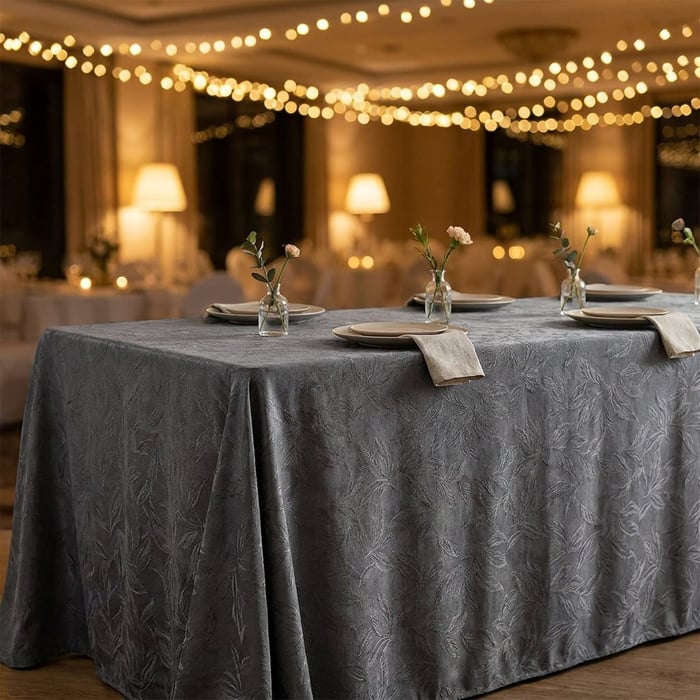
White, ivory, and black cover most events and coordinate with a wide range of décor. Deep inventory in neutrals lets a ballroom serve most bookings without special orders. Neutrals also make it easy to add color through napkins, runners, and décor.
Seasonal and Accent Colors
Weddings and galas often call for specific colors. Keep a smaller selection of seasonal and accent colors to meet common requests. Track which colors are requested most often and adjust inventory accordingly.
Considering Lighting and Décor
Colors can look different under event lighting, and some shades photograph differently than they appear in person. View samples in the ballroom under typical lighting. Coordinate with the décor palette used by your planners.
Coordinating With Napkins, Runners, and Overlays
Building a Cohesive Table
Napkins, runners, and overlays work with cloths to create a complete look. Matching or complementary colors and textures help the table feel intentional. Planning these items together ensures compatibility.
Mixing Textures and Colors
Contrast can add interest, such as a dark napkin on a light cloth or a textured runner over a plain cloth. Keep a core set of pieces that can be mixed and matched. This flexibility lets planners create different looks with the same inventory.
Simplifying Ordering
Buying coordinated pieces from one source simplifies ordering and ensures consistent quality. When wholesale tablecloths and napkins come from the same lot, colors are more likely to match.
Matching Linens to Event Types
Weddings and Receptions
Weddings often call for elegant, neutral or themed colors and high visual standards. Linens must look flawless in photos. Keep ample inventory in popular wedding colors and ensure consistent quality.
Conferences and Corporate Events
Corporate events typically favor clean, neutral looks and practical performance. Durability and quick turnaround matter. A reliable, mid-weight cloth in neutral colors often serves these events well.
Galas, Fundraisers, and Holiday Parties
These events may call for bolder colors and more dramatic styling. Have a selection of statement colors and consider overlays or runners. Plan inventory around the event calendar.
How Many Tablecloths a Ballroom Needs
Start With the Largest Event
Determine the maximum number of tables used in your largest event. This number is the base for ordering. Include specialty tables such as head tables and cocktail tables.
Add Laundry Cycle and Reserve
Linens used at one event must be laundered before the next. If your laundry cycle is a day, you need enough for the event in use and the event in the wash. Add a reserve of ten to twenty percent for stains, damage, and last-minute changes.
A Worked Example
A ballroom with 60 round tables needs 60 cloths for one event. With back-to-back events and a one-day laundry cycle, plan 120. Adding a fifteen percent reserve brings the total to about 138 tablecloths in the standard round size. Repeat the calculation for each size and color.
Planning for Back-to-Back Events and Turnaround
Building a Linen Calendar
Create a calendar showing events, table counts, and laundry days. This helps you see when linens will be needed and when they will be in the wash. Share it with banquet and laundry teams.
Allowing for Drying and Pressing Time
Large cloths take time to dry and press. Build in realistic turnaround times. If events are close together, consider keeping extra sets to avoid last-minute delays.
Tracking Returns
After each event, count linens as they return. Identify missing items quickly. Tracking helps prevent shortages and highlights patterns of loss or damage
Why Wholesale Case Packs Make Sense
Lower Cost Per Cloth
Case packs reduce packaging and handling costs, and that efficiency shows up in the price. For a ballroom that needs dozens or hundreds of cloths, ordering in cases is more economical than buying in small quantities. Direct Textile Store offers case-pack pricing on tablecloths, giving ballrooms a clear way to plan and budget.
Consistent Dye Lots
Cloths in the same case typically come from the same dye lot, so colors match. That matters when many cloths are displayed together. Consistent lots help avoid visible differences.
Simpler Ordering and Budgeting
Standardized quantities make counting, storage, and budgeting easier. Instead of managing many small orders, a hotel can plan a few larger purchases. Predictable costs help with forecasting.
Evaluating Quality Before You Order
Fabric Hand and Weight
Handle the sample and feel its weight and texture. It should feel substantial and smooth. Compare samples side by side to see differences. Weight and feel are good indicators of long-term performance.
Dye and Color Consistency
Check that the color is even and consistent. Compare against color swatches or existing inventory if matching is needed. Uneven dye is a warning sign.
Documentation and Care Instructions
Review care instructions and any available documentation. Make sure the product is suitable for your laundry process. Clear information supports good purchasing decisions about wholesale tablecloths.
Testing Samples Before a Large Order
Wash and Dry Tests
Run samples through your normal wash and dry cycle several times. Measure for shrinkage and check color retention and feel. Note drying time. A sample that changes dramatically after a few cycles is not a good candidate for volume.
Stain Tests
Apply common stains and launder. Compare results across samples. This test shows how products will perform at real events.
Table Tests
Set a table with the sample, including napkins and décor. Evaluate drape, color, and overall appearance under ballroom lighting. Gather feedback from banquet staff and event planners.
Laundry Practices That Extend Linen Life
Temperature and Detergent
Follow care instructions and use appropriate detergent amounts. Consistency protects fabric and color. Avoid overloading machines.
Sorting and Pre-Treating
Sort by color and soil level, and pre-treat stains. This prevents cross-staining and improves results. Good sorting also protects delicate colors.
Drying and Folding
Dry thoroughly and remove promptly to reduce wrinkles. Fold or hang cloths carefully. Consistent handling keeps tablecloths looking neat and ready for use.
Setup, Teardown, and Banquet Staff Efficiency
Standardizing Setup
Standard sizes and colors make setup faster. Staff can follow a consistent process, reducing errors. Label storage and carts to match event layouts.
Efficient Teardown
Collect linens quickly and sort them as they come off tables. Prompt handling helps stain removal and speeds laundry. Provide bins and bags for sorting at the event.
Coordination With Laundry
Banquet and laundry teams should share schedules and needs. Clear communication prevents shortages and delays. A reserve provides a buffer when laundry is behind.
Storage and Organization of Ballroom Linens
Dedicated Linen Rooms
Store clean linens in dry, clean rooms with shelves or racks labeled by size and color. Keep reserve stock separate. Avoid damp areas and keep items off the floor.
Hanging vs. Folding
Hanging large cloths can reduce wrinkles, while folding saves space. Choose based on your space and process. Consistency helps staff work faster.
Labeling and Access
Label shelves clearly and arrange items for easy access. Place frequently used sizes and colors within reach. Good organization saves time during busy periods.
Tracking Inventory and Linen Life
Counting and Recording
Keep a count sheet updated regularly. Record how many cloths are in circulation, in reserve, and in laundry. Accurate counts help you notice losses early.
Tracking Use
Track how many events each cloth has been used for. Retire cloths when they show wear. This data helps predict replacement needs and plan purchases.
Reviewing Data
Review inventory data seasonally. Adjust par levels based on usage and losses. Data-driven planning prevents shortages and overstock of wholesale tablecloths.
Training Banquet Staff and Setting Standards
Writing a Simple Standard
Create a one-page guide showing how to set tables, how to handle linens, and when to replace items. Include photos. A concise guide is more likely to be followed.
Teaching Handling and Reporting
Show staff how to handle linens gently, sort laundry, and report damage. Explain why these habits matter. Understanding the reasons improves consistency.
Encouraging Quick Replacement
Ask staff to replace stained or damaged cloths right away from the reserve and report the replacement. Quick action keeps tables looking fresh and gives managers accurate data.
Multi-Ballroom and Multi-Property Standards
Standardizing Across Spaces
If your hotel has multiple event spaces, use the same linen specification across them. Standardization simplifies ordering, training, and inventory management. It also allows linens to move between spaces.
Centralizing Purchasing
Centralized purchasing can improve pricing and consistency. Make sure each space has enough stock and a clear process for requesting more. Central coordination reduces duplication and waste.
Tracking Usage Across Properties
If you manage multiple hotels, maintain a shared record showing linens per property, reserves, and reorder dates. Track losses and replacements to see which locations use more. This data helps adjust par levels and justify purchases.
Seasonal Planning and Peak Event Periods
Wedding Season and Holidays
Wedding season and holidays increase event volume. Order ahead so linens arrive, are washed, and are ready before the rush. Running short during peak periods costs more than carrying a reserve.
Using Slow Periods Wisely
Slower periods are a good time to inspect inventory, retire worn linens, and restock. Doing this when pressure is lower allows time to wash new items and test new samples.
Aligning Orders With Budget Cycles
Align orders with the hotel's budget cycles. Presenting a clear plan with calculations and expected costs makes approvals smoother. Predictable purchasing helps avoid last-minute requests.
Cost, Value, and Total Ownership
Cost Per Use
A cloth that lasts through many events costs less per use than a cheaper one that wears out quickly. Estimate how many cycles a sample survives and divide the price by that number. This provides a fair comparison and helps explain choices to leadership.
Labor and Time Savings
Easy-care, wrinkle-resistant linens reduce pressing and re-washing. In a ballroom, saved minutes between events matter. Fast-drying, low-maintenance tablecloths help staff stay on schedule.
Avoiding Emergency Purchases
Reserve stock and planned reorders reduce rush purchases, which typically cost more and rarely match existing inventory. Planning ahead keeps the inventory consistent and budgets predictable.
Guest and Client Experience
First Impressions
Guests notice the table as soon as they enter. Clean, uniform linens set the tone for the event. A polished first impression supports client satisfaction.
Photography and Social Sharing
Events are photographed and shared, and linens appear in many images. Consistent, high-quality linens help the hotel look its best. Good presentation supports referrals and bookings.
Client Confidence
Planners value reliability. When linens are consistently available and well maintained, clients trust the hotel. That trust leads to repeat business.
Common Mistakes to Avoid
Purchasing Mistakes
Buying on price alone is common, but lower prices often reflect lighter fabric or weaker construction. Skipping samples is another mistake, since photos cannot show how a cloth behaves after repeated washing. Ordering too few sizes or colors leaves gaps. A little testing and planning prevents most purchasing problems with wholesale tablecloths.
Handling Mistakes
Even durable linens fail when handled poorly. Overloading machines, over-drying, and leaving soiled linens sitting shorten life. Mixing colors can cause staining. Clear routines and retirement standards help avoid these issues.
Planning Mistakes
Ordering too late can leave you short during peak periods, and failing to document the specification makes reorders harder to match. Overlooking turnaround time can cause delays. A short written plan, a reserve, and an early order prevent these issues.
Making the Purchase: A Practical Buying Checklist
Product and Quality Checklist
Before finalizing a bulk order, confirm each of the following with samples in hand:
- Commercial weight and drape: The fabric feels substantial, hangs cleanly, and does not appear translucent under ballroom lighting.
- Colorfast performance: Samples hold their shade after repeated washing, especially in dark or saturated colors.
- Stain behavior: Common stains release well in your laundry process, and care instructions are clear.
- Wrinkle resistance: The fabric dries smooth enough to limit pressing time between events.
- Sizes match your tables: You have measured each table type and confirmed cloth dimensions and drop length.
- Hems and seams are strong: Stitching is even, corners are secure, and nothing loosens when tugged.
- Quantities include back-to-back events and a reserve: Your calculation covers the largest event, the laundry cycle, and expected losses.
- Case-pack pricing, shipping timing, and reorder availability are confirmed: You know the total cost, when the order will arrive relative to peak season, and that the same item can be ordered again.
Review the plan with banquet, laundry, and event teams. Share par levels, handling standards, and retirement rules so everyone follows the same routine. Confirm the delivery date and allow time to wash new linens before use. Keep a record of the specification, order date, quantities, prices, and inventory counts. Update it whenever products or quantities change. A repeatable record makes future purchases faster and helps new team members maintain consistency.
Direct Textile Store: A Dedicated Source for Ballroom Tablecloths
For hotel ballrooms working through this process, one dependable source can simplify ordering and keep linens consistent from event to event. Shop Direct Textile Store for colorfast options tablecloths in commercial weights and multiple colors for professional dining rooms. Browse styles and case packs to outfit your operation. With wholesale tablecloths available in consistent specifications and case-pack quantities, ballrooms can plan around a single source, reorder confidently, and keep every event looking uniform. When replacements match existing stock, guests, planners, and banquet staff see consistency across events and seasons.
Final Thoughts on Ordering Tablecloths for a Hotel Ballroom
The best way to supply a hotel ballroom is to buy durable, colorfast tablecloths in commercial weights, sized correctly for every table, in case packs at wholesale pricing. Ballrooms that test samples, calculate quantities around back-to-back events, and standardize their specification tend to keep every event looking polished while controlling costs. Choosing wholesale tablecloths that match your laundry capacity and event mix makes setup faster and more consistent. Planning ahead, rather than reordering only when linens fail or an event surges, keeps every table ready from the first guest to the last toast.

Learn More About Our Experience Supplying Wholesale Linens → About Direct Textile Store
Direct Textile Store is a leading U.S. wholesale linen and textile supplier trusted by over 131,000 hotels, hospitals, healthcare facilities, restaurants, spas, salons, resorts, gyms, emergency shelter and response, funeral homes, VRBO & Airbnb hosts, car washes, and commercial buyers nationwide. Shop in bulk with everyday low wholesale pricing and automatic 20% case-pack discounts — no coupons or minimums required. Choose from one of the largest in-stock selections available: over 135,000 towels, pool towels, sheets, blankets, comforters, tablecloths, pillows, bed toppers, aprons, hospital gowns, patient gowns, isolation gowns, scrubs, shower curtains, chef apparel, smocks, lab coats, uniforms, and commercial laundry equipment including wire, vinyl, and poly laundry carts, trucks, and privacy screens — all ready to ship today. Free shipping on orders over $5,999.
FAQ
What are commercial-weight tablecloths and why do ballrooms use them?
Commercial-weight tablecloths use heavier fabric and stronger construction designed for repeated laundering, so they drape well and last through many events.
Why does colorfastness matter for ballroom tablecloths?
Colorfast fabric keeps its shade through repeated washing, so cloths stay uniform across a room full of tables.
How many tablecloths does a ballroom need?
Start with the largest event's table count, multiply by the laundry cycle for back-to-back events, and add a ten to twenty percent reserve.
Is it cheaper to buy wholesale tablecloths in case packs?
Generally yes. Case packs lower per-cloth cost and keep color consistent because items come from the same dye lot.
What should I test before ordering wholesale tablecloths?
Wash samples several times, test common stains, check wrinkle behavior, and set a table to evaluate drape and color under ballroom lighting.
What drop length should ballroom tablecloths have?
It depends on style. Formal events often use floor-length drops, while casual events may use shorter drops, so test samples on real tables.
Where can I order tablecloths for my hotel ballroom?
Direct Textile Store offers colorfast options tablecloths in commercial weights and multiple colors for professional dining rooms. With case-pack pricing and consistent in-stock inventory, it's a practical option for hotel ballrooms.