Table of Contents
- Understanding Down-Alternative Hospital Pillows for Nursing Home Use
- Key Considerations When Buying Hospital Pillows for a Nursing Home
- Where to Source Hospital Pillows in Bulk for Nursing Home Facilities
- Down-Alternative Hospital Pillow Applications Across Nursing Home Care
- Evaluating Quality and Durability Before You Buy
- Procurement Best Practices for Nursing Home Buyers
- Laundering and Hygiene Protocols for Down-Alternative Hospital Pillows
- Making the Purchase: A Practical Buying Checklist
- How Direct Textile Store Supports Nursing Home Pillow Programs
- Final Thoughts on Sourcing Hospital Pillows for Nursing Home Care
- Learn More About Our Experience Supplying Wholesale Linens → About Direct Textile Store
- FAQ
- Related Posts
Nursing homes outfitting resident rooms need hospital pillows that go beyond simple comfort — residents often spend the majority of their day in bed or in a recliner, making pillow support, hygiene, and long-term durability genuinely central to quality of care rather than a minor amenity decision. Down-alternative fill has become the standard choice across most long-term care settings because it delivers consistent support and easy sanitizing without the allergy risks and moisture sensitivity that natural down carries. This guide walks through what separates genuine medical grade pillows from standard consumer bedding, where nursing homes should source pillows for hospital beds in bulk, and how to build a procurement plan that keeps every resident room properly and consistently equipped.
Understanding Down-Alternative Hospital Pillows for Nursing Home Use
Why Down-Alternative Fill Is the Standard Choice in Long-Term Care
Down-alternative fill uses engineered polyester fiber designed to replicate the softness and loft of natural down without the drawbacks that make genuine down impractical in a nursing home setting. Natural down is difficult to sanitize thoroughly, prone to clumping when exposed to moisture, and can trigger allergic reactions in residents with respiratory sensitivities — a meaningful risk given how common allergies and respiratory conditions are among an elderly population. Down-alternative hospital pillows sidestep all of these concerns while still offering a comfortable, supportive feel that residents generally find agreeable for extended periods of daily use.
Beyond resident comfort, down-alternative fill also performs more predictably under the frequent, high-temperature sanitizing washes required in licensed care settings. Synthetic fill resists compressing permanently the way natural down sometimes does after repeated commercial laundering, helping medical pillows maintain their supportive loft over a longer working life than natural fill alternatives would typically achieve under the same laundering demands.
What Makes Hospital Pillows Different From Standard Bedding
The term hospital pillows refers to a distinct category of bedding engineered specifically around institutional hygiene and durability requirements rather than the softness-first priorities of typical consumer pillows. Genuine hospital bed pillows commonly include fluid-resistant or fully waterproof inner casings, fire-retardant certified fill, and antimicrobial treatments designed to reduce bacterial growth across repeated use and washing. Standard hotel or home-style pillows, however comfortable, simply aren't built to withstand the sanitizing wash cycles and moisture exposure that nursing home bedding regularly encounters.
This distinction matters enormously in a long-term care environment, where residents may spend many hours daily in the same bed, and where incontinence care, feeding assistance, and general daily living support all introduce moisture and soiling risks that standard bedding wasn't designed to handle gracefully.
Why Nursing Homes Specifically Need This Category of Pillow
Nursing home residents often have mobility limitations, chronic health conditions, or recovery needs that make proper head, neck, and body positioning support especially important throughout the day, not just at night. Pillow for hospital bed products are specifically engineered to provide the kind of consistent, structured support many residents need for positioning during feeding, repositioning to prevent pressure injuries, or simply maintaining a comfortable seated or reclined posture for extended stretches of the day.
Licensed long-term care facilities also operate under regulatory and infection-control standards that make hygiene-focused bedding a genuine compliance consideration rather than an optional upgrade. Choosing hospital pillows built specifically for this environment helps facilities meet these expectations more reliably than relying on standard consumer-grade bedding purchased for cost reasons alone.

Key Considerations When Buying Hospital Pillows for a Nursing Home
Fill Type and Support Level
Down-alternative hospital pillows typically use polyester fiberfill engineered for consistent loft and firm, structured support rather than the softer, more compressible fill common in standard consumer pillows. This firmer support level serves an important practical purpose in nursing home settings, where residents frequently need more structured head and neck positioning than typical bedding provides, particularly for those managing respiratory conditions, recovering from illness, or requiring elevated positioning to reduce aspiration risk during feeding.
Facilities should evaluate fill density carefully when comparing suppliers, since firmness levels vary meaningfully across different medical pillows product lines. Some suppliers offer multiple firmness options within their down-alternative construction, which allows a facility to stock both standard and extra-firm options depending on individual resident positioning needs and care plans.
Fluid-Resistant and Waterproof Casing Construction
One of the most important features separating genuine hospital bed pillows from standard bedding is a fluid-resistant or fully waterproof inner casing, typically constructed from a vinyl or polyurethane-laminated fabric. This barrier prevents moisture, incontinence-related fluids, or general spills from penetrating into the pillow's fill material, which matters enormously both for hygiene compliance and for extending the pillow's usable life through the frequent sanitizing washes long-term care facilities require. Facilities should confirm directly with any prospective supplier whether this waterproof barrier is a standard feature across their hospital pillows line, since some lower-cost alternatives marketed toward healthcare use skip this feature entirely despite otherwise resembling genuine medical-grade products.
Fire Retardant Certification
Licensed nursing homes and long-term care facilities are typically subject to strict fire safety codes that extend to bedding materials used throughout resident rooms. Genuine medical grade pillows are commonly certified to meet these fire retardant standards as part of their core construction, and facilities should request and retain documentation confirming this certification before committing to a bulk purchase, since compliance verification may be reviewed during regulatory inspections or licensing audits.
Antimicrobial Treatment and Infection Control
Because nursing homes operate under heightened infection control expectations, particularly following widespread attention to infection prevention protocols across the long-term care sector in recent years, antimicrobial treatment on pillows for hospital beds provides an additional layer of protection between full laundering cycles. This treatment inhibits the growth of bacteria, mold, and dust mites within both the fill and casing material, supporting a facility's broader infection control program without replacing the need for regular, thorough laundering according to established protocols.
Zippered Casings for Deep Cleaning Flexibility
Many hospital pillows suitable for nursing home use are available with a zippered outer casing that can be removed and laundered separately from the interior fill, or in some cases replaced independently if the outer fabric becomes damaged or excessively worn. This design flexibility can extend the overall usable life of a facility's pillow inventory, since a worn casing doesn't necessarily require discarding an otherwise structurally sound pillow.
Weight and Handling Considerations for Staff
Nursing home staff frequently reposition pillows multiple times daily as part of routine resident care, making pillow weight and ease of handling a practical consideration beyond just resident comfort. Overly heavy or bulky hospital bed pillows can add unnecessary physical strain to already demanding caregiving tasks, so facilities should consider how a pillow's weight and shape affect the practical experience of staff who handle these products dozens of times per shift.
Where to Source Hospital Pillows in Bulk for Nursing Home Facilities
Wholesale Hospitality and Healthcare Suppliers vs. Medical Retail Channels
Nursing homes sometimes default to medical supply retailers when sourcing hospital pillows, assuming this is the only channel that carries genuinely medical-grade bedding. In practice, dedicated wholesale suppliers serving both hospitality and healthcare institutions often carry comparable or identical construction standards — waterproof casings, antimicrobial treatment, fire retardant certification — at pricing structured specifically for bulk institutional buyers rather than smaller-quantity medical retail transactions.
Working with hospital pillows suppliers who specialize in institutional bedding across multiple sectors, rather than exclusively medical retail, frequently gives long-term care facilities access to better case-pack pricing and more dependable inventory availability, since these suppliers are built around fulfilling large, recurring orders rather than isolated small purchases.
Benefits of Case Pack Purchasing for Long-Term Care Facilities
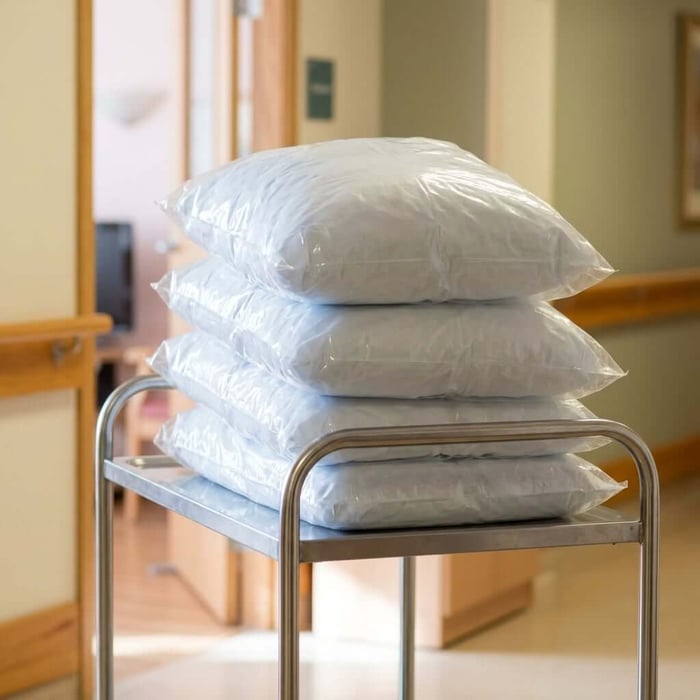
Case-pack purchasing allows nursing homes to order hospital pillows in pre-set bulk quantities rather than buying unit by unit, meaningfully reducing the per-pillow cost. This pricing structure reflects a supplier's reduced packaging, handling, and shipping overhead when fulfilling large, consolidated orders instead of scattered small transactions spread across many separate purchases.
Buying in case packs also ensures consistency across a facility's entire resident room inventory. When an entire batch of medical pillows comes from the same production lot, facilities avoid the subtle variations in firmness, casing quality, or overall sizing that can occur when smaller batches are purchased over time from different production runs, helping maintain a consistent care standard across every resident room.
What to Look for in a Hospital Pillow Supplier
Nursing home procurement teams should evaluate several factors before committing to a bulk order of hospital bed pillows:
In-stock availability: A supplier with strong in-stock inventory of hospital pillows reduces the risk of delays when admitting new residents or replacing damaged inventory quickly.
Transparent, everyday wholesale pricing: Consistent pricing without relying on rotating promotions makes annual budgeting more predictable for facilities operating under fixed care budgets.
Automatic case-pack discounts: Built-in volume pricing simplifies reordering as a facility's census changes, without requiring renegotiated terms each time.
Documented fluid-resistance and fire retardant certification: Confirms the product genuinely meets institutional-grade and regulatory standards rather than simply being marketed toward healthcare use.
Reasonable shipping terms: Free or reduced shipping thresholds on larger orders can meaningfully affect total program cost, especially for facilities reordering multiple times per year.
Down-Alternative Hospital Pillow Applications Across Nursing Home Care
Standard Resident Room Bedding
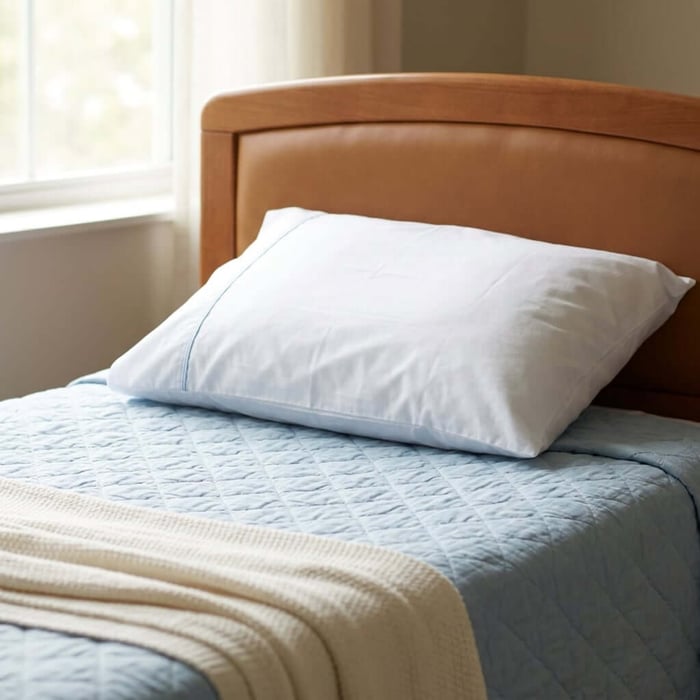
The majority of a nursing home's hospital pillows inventory typically supports standard resident room bedding, where down-alternative fill provides dependable, comfortable support for daily and nightly use across a resident population with widely varying mobility and health needs. Consistent firmness and quality across this core inventory helps facilities maintain a uniform standard of care regardless of which specific room or bed a resident occupies.
Positioning Support for Pressure Injury Prevention
Residents at risk of pressure injuries often require additional pillows for positioning support, used to offload pressure from vulnerable areas during repositioning schedules mandated by care plans. Firm, supportive pillow for hospital bed products hold their shape reliably under this kind of positioning use, unlike softer consumer pillows that tend to compress and lose their supportive structure relatively quickly under sustained pressure.
Recovery and Short-Term Rehabilitation Stays
Nursing homes providing short-term rehabilitation services alongside long-term residential care often see a subset of residents with more acute positioning or comfort needs tied to post-surgical recovery or short-term illness. Medical grade pillows with firm support and waterproof casings serve this population well, particularly given the typically higher turnover and more variable care needs associated with short-term rehabilitation stays compared to long-term residential care.
Common Areas and Recliner Seating
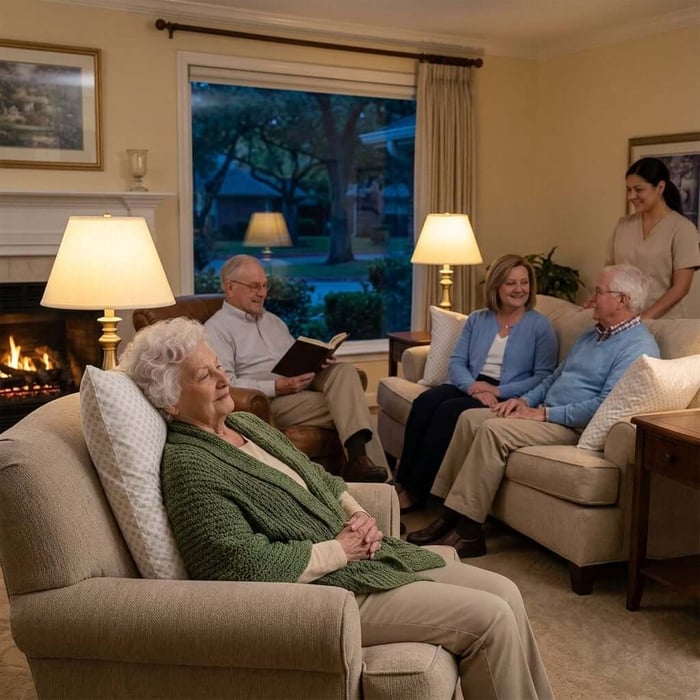
Beyond resident bedrooms, many nursing homes maintain common area seating and recliners where residents spend significant portions of their day outside of bed. Stocking hospital pillows for use in these common spaces, not just resident rooms, extends the same hygiene and support standards to a meaningful portion of a resident's actual daily activity, rather than limiting institutional-grade bedding exclusively to overnight use.
Isolation and Infection Control Precaution Rooms
Rooms designated for infection control precautions or isolation protocols benefit particularly from hospital bed pillows with waterproof casings and antimicrobial treatment, given the heightened hygiene demands these spaces carry. Facilities should ensure adequate stock specifically earmarked or readily available for this use case, since isolation protocols can arise on short notice and require immediate access to appropriately hygienic bedding.
Evaluating Quality and Durability Before You Buy
Casing Material and Seam Integrity
Before committing to a bulk order, nursing home procurement staff should request a sample hospital pillow and inspect the casing material and seam construction closely. A genuinely waterproof casing should feel distinctly different from standard woven fabric, and seams should be heat-sealed or reinforced with double stitching to prevent moisture penetration at stress points, particularly along the pillow's edges where handling stress concentrates.
Fill Loft Recovery After Repeated Sanitizing Washes
Quality down-alternative medical pillows should maintain consistent loft and firmness even after repeated high-temperature commercial laundering required for sanitizing purposes. Lower-quality fill can compress permanently after just a handful of aggressive wash cycles, leaving pillows flat and unsupportive well before their outer casing shows any visible wear. Facilities should specifically request information from suppliers regarding expected loft recovery performance across a documented number of wash cycles.
Certification Documentation and Regulatory Compliance
Facilities should ask any prospective supplier directly for documentation confirming fire retardant certification and any other relevant institutional or medical-adjacent standards their hospital pillows suppliers claim to meet. A reputable supplier should be able to provide this documentation readily and promptly; hesitation, vague answers, or an inability to produce clear certification paperwork is a meaningful warning sign that a facility should look elsewhere for its bedding needs.
Colorfastness and Appearance Under Sanitizing Conditions
Because hospital bed pillows in nursing homes are frequently laundered at higher temperatures than standard bedding to meet sanitizing requirements, facilities should confirm that casing fabric holds up well under these more aggressive wash conditions without excessive discoloration, yellowing, or fabric breakdown. A pillow that appears acceptable after a standard wash cycle may degrade considerably faster once subjected to the higher heat and stronger detergents typically used in institutional sanitizing protocols.
Procurement Best Practices for Nursing Home Buyers
Bulk Purchasing and Budget Efficiency
For nursing homes operating under often tight and closely monitored budgets, hospital pillows procurement represents a recurring cost tied to resident turnover, laundering wear, and the gradual replacement of aging inventory across the facility. Buying in bulk case packs allows facilities to lock in lower per-unit pricing while reducing the administrative time spent placing frequent smaller orders throughout the year, freeing up staff time for direct resident care responsibilities instead.
Inventory Planning by Care Setting and Use Case
Facilities benefit from tracking hospital pillows usage separately across different care settings — standard resident rooms, positioning support inventory, common area seating, and isolation precaution rooms each see distinct wear patterns and replacement needs. Building a replacement schedule around these differences allows procurement teams to reorder proactively rather than discovering shortages during a routine inventory check or, worse, during an unexpected census increase.
Maintaining a modest buffer stock of extra medical pillows also helps facilities respond quickly to sudden admission increases or unexpected damage without waiting on a new bulk order to arrive, which matters considerably given how quickly a facility's census can shift.
Coordinating Replacement Around Regulatory Inspections
Long-term care facilities operating under regular licensing inspections benefit from timing at least part of their hospital pillows replacement cycle to ensure inventory is in genuinely good, presentable condition ahead of anticipated inspection windows. This proactive approach helps avoid the scramble of last-minute replacement purchases and supports a stronger overall presentation of the facility's bedding standards during regulatory review.
Building Long-Term Supplier Relationships
Working with a single, reliable source for hospital pillows over time allows nursing home procurement teams to build a consistent inventory standard across the entire facility, rather than mixing pillows from multiple suppliers with varying firmness, casing quality, or certification standards. A dependable long-term vendor relationship also tends to result in more predictable pricing and, in many cases, priority access to inventory during periods of high industry-wide demand.
Laundering and Hygiene Protocols for Down-Alternative Hospital Pillows
Establishing a Sanitizing Wash Protocol
Facilities should work with their laundering staff or outsourced laundry service to establish a consistent, documented protocol covering wash temperature, detergent type, and drying method specifically appropriate for down-alternative hospital pillows and their waterproof casings. This protocol should align with both the manufacturer's care guidance and the facility's broader infection control policies to ensure pillows are genuinely sanitized between uses rather than simply appearing clean.
Handling Between-Resident Turnover
When a resident is discharged, transferred, or a room otherwise becomes vacant, facilities should have a clear protocol for immediately laundering or, when appropriate, replacing pillows for hospital beds before the next resident occupies that space. This turnover protocol supports both infection control standards and general resident comfort expectations for newly admitted individuals.
Routine Inspection for Wear and Damage
Facilities benefit from incorporating routine visual inspection of hospital bed pillows into regular housekeeping or nursing rounds, checking specifically for casing damage, staining that hasn't fully released during laundering, or noticeable loss of loft that might indicate a pillow needs replacement ahead of its originally anticipated cycle.
Making the Purchase: A Practical Buying Checklist
Before finalizing a bulk order, nursing home buyers should confirm the following:
The supplier can document fire retardant certification and fluid-resistant, waterproof casing construction.
Fill firmness and loft match the intended use case, whether standard resident rooms, positioning support, or common area seating.
Sample pillows have been inspected for seam quality, casing material, and overall construction integrity.
Wholesale and case-pack pricing is transparent and doesn't depend on negotiated or promotional-only discounts.
Shipping timelines allow enough lead time to outfit new rooms, replace aging inventory, or respond to census changes.
The supplier maintains sufficient in-stock inventory to support both an initial bulk order and future replacement needs across the facility.
Nursing homes that take time to evaluate these factors before ordering typically spend less over multiple replacement cycles, meet infection control and regulatory expectations more reliably, and maintain a more consistent standard of resident comfort across every room in the facility.
How Direct Textile Store Supports Nursing Home Pillow Programs
For nursing homes working through this sourcing process, having one dependable supplier for institutional bedding can significantly simplify ongoing procurement. Direct Textile Store carries down-alternative fills hospital pillows with case-pack pricing for hospitality and healthcare settings. Browse styles and case packs to outfit your operation.
A supplier offering medical grade pillows with strong in-stock availability allows nursing home procurement teams to plan bulk orders around a single source rather than piecing together inventory from multiple vendors. Consistent construction standards across that catalog also mean facilities can apply one hygiene and support standard across resident rooms, common areas, and isolation precaution spaces alike, rather than managing inconsistent quality from scattered sourcing.
Final Thoughts on Sourcing Hospital Pillows for Nursing Home Care
Sourcing the right down-alternative hospital pillows for a nursing home comes down to balancing fill support, casing durability, hygiene certification, and procurement efficiency. A well-planned inventory of pillows for hospital beds supports resident comfort and positioning needs more effectively, holds up under the demands of frequent sanitizing laundering, and helps a facility meet the regulatory and infection control standards expected of licensed long-term care. Buyers who evaluate certification documentation, fill quality, and wholesale pricing structures carefully before committing to a bulk order tend to build programs that perform reliably over the long run. Taking a methodical, proactive approach to procurement — rather than reordering reactively once inventory runs short — ultimately supports both resident wellbeing and operational consistency as a facility's needs evolve.

Learn More About Our Experience Supplying Wholesale Linens → About Direct Textile Store
Direct Textile Store is a leading U.S. wholesale linen and textile supplier trusted by over 131,000 hotels, hospitals, healthcare facilities, restaurants, spas, salons, resorts, gyms, emergency shelter and response, funeral homes, VRBO & Airbnb hosts, car washes, and commercial buyers nationwide. Shop in bulk with everyday low wholesale pricing and automatic 20% case-pack discounts — no coupons or minimums required. Choose from one of the largest in-stock selections available: over 135,000 towels, pool towels, sheets, blankets, comforters, tablecloths, pillows, bed toppers, aprons, hospital gowns, patient gowns, isolation gowns, scrubs, shower curtains, chef apparel, smocks, lab coats, uniforms, and commercial laundry equipment including wire, vinyl, and poly laundry carts, trucks, and privacy screens — all ready to ship today. Free shipping on orders over $5,999.
FAQ
Why do nursing homes prefer down-alternative fill over natural down?
Down-alternative fill is easier to sanitize thoroughly and doesn't clump the way natural down can when exposed to moisture. It also avoids the allergy risks that natural down carries for residents with respiratory sensitivities.
What makes a hospital pillow suitable for nursing home use?
A genuine hospital pillow typically includes a waterproof or fluid-resistant casing, fire retardant certification, and antimicrobial treatment. These features support the hygiene and durability standards long-term care facilities are expected to maintain.
How firm should hospital pillows be for nursing home residents?
Many residents benefit from firmer support than standard consumer pillows offer, particularly for positioning during feeding or repositioning care. Some suppliers offer multiple firmness levels within their down-alternative line to match different resident needs.
Is it cheaper to buy hospital pillows in bulk case packs?
Yes, bulk case-pack purchasing almost always reduces the per-pillow cost compared to buying individually. Wholesale suppliers apply volume-based pricing that improves as order size increases.
How often should nursing home pillows be replaced?
Replacement frequency depends on usage intensity, but positioning-support and high-turnover resident room pillows typically need replacement more often than common-area inventory. Tracking fill loft and casing condition helps determine realistic replacement timing.
Do hospital pillows need special laundering for infection control?
Yes, facilities should establish a documented sanitizing wash protocol covering temperature, detergent, and drying method suited to the pillow's casing and fill. This should align with the facility's broader infection control policies.
Why is Direct Textile Store a good source for down-alternative hospital pillows?
Direct Textile Store offers hospital pillows with down-alternative fill and case-pack pricing designed for hospitality and healthcare settings. With consistent in-stock inventory and transparent wholesale pricing, it's a practical option for nursing homes outfitting resident rooms at scale.