Table of Contents
- Why Catering Crews Need Dependable Aprons
- Why Bistro Aprons Work So Well for Catering
- Understanding Bulk Colors and Sizes
- Choosing Fabrics and Construction
- Using Blank Aprons for Branding
- Where Catering Companies Should Buy Aprons in Bulk
- Calculating Quantities for a Catering Crew
- Planning for Back-to-Back and Overlapping Events
- Evaluating Samples Before a Large Order
- Laundry and Care for Catering Aprons
- Storage, Transport, and Organization
- Training Crews and Setting Standards
- Supporting Seasonal and Growing Crews
- Procurement Best Practices
- Cost, Value, and Total Ownership
- Making the Purchase: A Practical Buying Checklist
- Direct Textile Store: A Dedicated Source for Catering Crew Aprons
- Final Thoughts on Buying Bistro Aprons in Bulk for a Catering Crew
- Learn More About Our Experience Supplying Wholesale Linens → About Direct Textile Store
- FAQ
- Related Topics
A catering crew works in a different kind of kitchen every week. One day it is a hotel ballroom, the next a vineyard tent, then a corporate lobby with a borrowed prep room. What stays the same is the team, and what the team wears is part of how clients judge the company. Bistro aprons are a natural fit for that work because they cover enough to protect clothing, move easily, and look polished in front of guests. Buying wholesale aprons in bulk colors and sizes lets a catering company outfit every crew member consistently, replace worn pieces quickly, and keep the brand looking sharp from event to event. This guide explains what to look for in aprons wholesale programs, how to calculate quantities for crews that grow and shrink with the event calendar, how to use wholesale aprons blank for branding, and how to build a purchasing routine that keeps aprons ready when the next event is booked.
Why Catering Crews Need Dependable Aprons
Catering Is Mobile, Fast, and Visible
Catering work compresses setup, service, and breakdown into a short window, often in places the crew has never worked before. Staff carry equipment, prep food, plate courses, pour drinks, and clear tables, sometimes within sight of guests. Clothing gets splashed, smeared, and stretched in every direction. A good apron protects what is underneath and gives the crew a clean, consistent look even when the setting is improvised.
Appearance Reflects the Company
Clients often see the catering crew before they taste the food. A team in matching, clean aprons communicates organization and professionalism, while a crew in mismatched or stained wholesale aprons suggests the opposite. Because catering relies heavily on referrals and repeat clients, small details like uniform appearance carry real weight.
Aprons Help With Hygiene and Standards
Aprons are a visible part of food safety practices. They keep street clothes cleaner, help staff identify when to change into fresh garments, and support the standards clients expect from professional food service. Having enough clean wholesale aprons on hand makes it easier for crews to change when needed instead of working in soiled ones.
Reliable Supply Reduces Stress
Nothing slows a catering team like discovering, on the morning of a large event, that half the aprons are stained, missing, or the wrong size. A dependable supply of wholesale aprons removes that uncertainty and lets managers focus on the event instead of laundry problems.

Why Bistro Aprons Work So Well for Catering
Coverage and Mobility in Balance
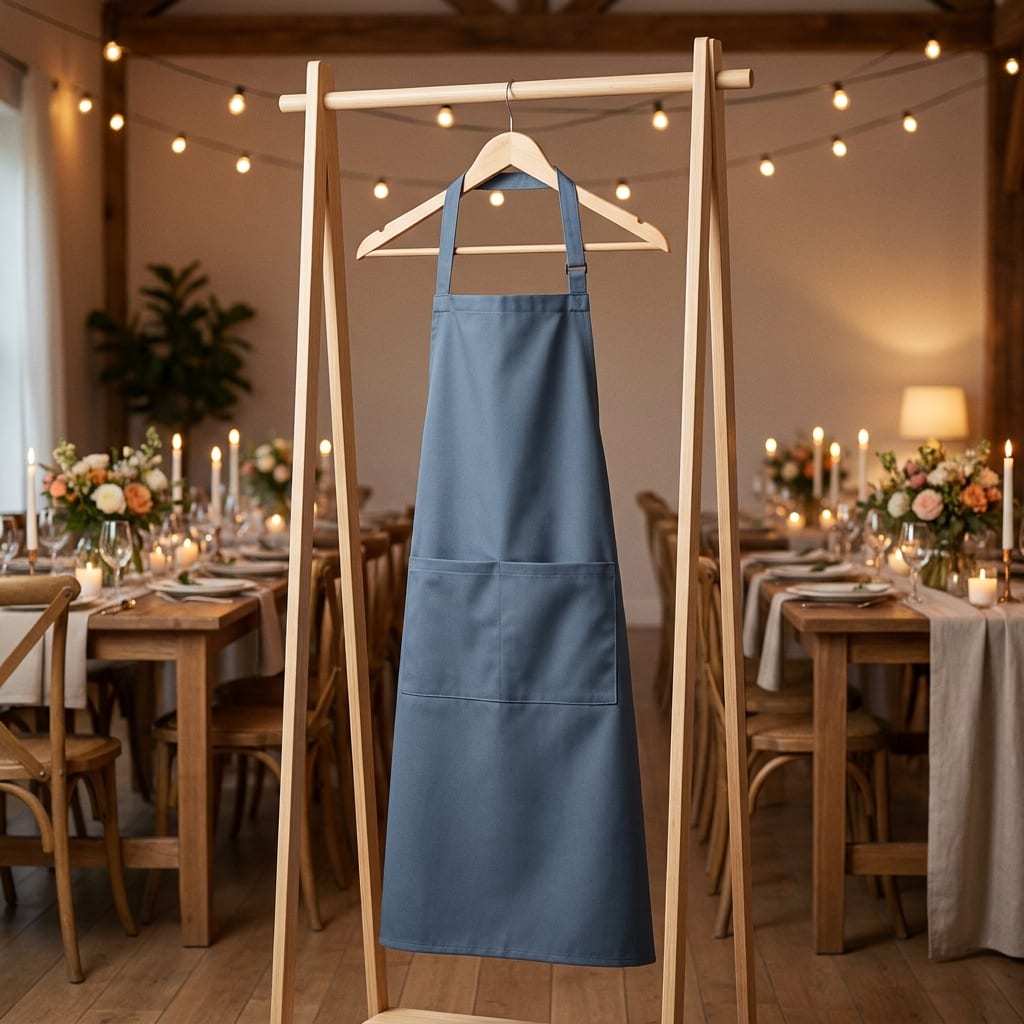
A bistro apron ties at the waist and falls to about the knee, which covers the front of the legs and the area most exposed to spills while leaving the chest and shoulders free. That means a catering worker can reach, bend, carry, and serve without a neck strap pulling at the shoulders. For crews that move constantly, the freedom matters as much as the protection.
A Polished, Professional Look
Bistro style has a clean silhouette that looks appropriate in front of guests. It works in upscale dining rooms, outdoor receptions, and corporate events alike. Because the apron is visible, color, fit, and condition all contribute to the overall impression.
Useful Pockets
Many bistro aprons include pockets for pens, order pads, bottle openers, thermometers, and small tools. Pockets keep essentials within reach and reduce the need to run back to a station. For catering, where there may be no station to run to, pockets are especially practical.
Versatility Across Roles
Servers, bartenders, banquet staff, prep cooks working in front-of-house settings, and event leads can all wear bistro wholesale aprons. Using one style across many roles simplifies ordering, while color or trim can differentiate responsibilities.
Understanding Bulk Colors and Sizes
Why Color Range Matters
Catering companies serve clients with different expectations. A corporate lunch may call for black or navy, a wedding may call for white or ivory, and a branded event may call for a specific color. A supplier with a broad color range allows a company to maintain a core palette and add event-specific colors when needed. Aprons in bulk in multiple colors also make it easier to color-code roles or teams.
Why Size Range Matters
Crews include people of many body types. An apron that is too short, too narrow, or too long looks sloppy and can interfere with movement. Offering a range of sizes, along with adjustable ties, helps ensure every crew member has a comfortable fit. When sizes are available in bulk, new hires can be outfitted immediately.
Keeping Colors and Sizes Consistent
Ordering from a supplier that keeps colors and sizes consistent from one order to the next prevents mismatches when replacing worn pieces. Slight differences in shade can be noticeable when aprons from different lots stand side by side at an event.
Planning for Growth
Catering businesses grow and shrink with the season. A supplier that can fill small and large orders helps companies scale up for busy periods without being stuck with excess inventory in slow ones.
Choosing Fabrics and Construction
Common Fabrics
Many commercial wholesale aprons use spun polyester or poly-cotton blends. Polyester resists wrinkles, holds color, and tolerates frequent washing. Blends can add a softer feel. Heavier weights offer more protection and durability, while lighter weights are cooler and easier to handle.
Stain Behavior
Catering means grease, sauces, wine, coffee, and dessert. Look for fabrics that release stains reasonably well and hold up to the detergents and temperatures your laundry uses. Testing samples with typical stains gives a realistic picture.
Stitching and Reinforcement
Check seams, pocket corners, and the points where ties attach. Reinforced stitching resists tearing during repeated use. Pocket corners are common failure points, so look for strong, secure stitching.
Tie Length and Adjustability
Longer, adjustable ties allow aprons to fit a wide range of waists and allow staff to tie them in front or back. Ties should be long enough to wrap and tie comfortably but not so long that they drag.
Length and Width
Bistro aprons vary in length and width. Make sure the coverage matches your needs and the crew's heights. An apron that is too short may not protect legs adequately, while one that is too long can be a tripping hazard.
Using Blank Aprons for Branding
Why Many Caterers Choose Blank Aprons
Wholesale aprons blank are aprons without pre-applied logos or text. Buying blank gives catering companies the freedom to add embroidery, screen printing, or patches that match their brand. It also lets them use the same base apron for different clients or events by adding temporary branding if needed.
Embroidery and Printing Considerations
Fabric weight, weave, and pocket placement affect how well branding looks and lasts. Heavier, tightly woven fabrics usually hold embroidery better. Test a sample before committing to a large run, and check that the logo remains legible after repeated washing.
Placement and Consistency
Decide where logos will go, such as the chest area, pocket, or hem, and keep placement consistent across the crew. Consistent branding looks more professional and is easier to reproduce for new hires.
Flexibility for Events and Partners
Some catering companies partner with venues or hosts and may need co-branded or neutral wholesale aprons for certain events. Having plain wholesale aprons blank available provides flexibility.
Where Catering Companies Should Buy Aprons in Bulk
Wholesale Suppliers vs. Retail Stores
Retail stores are designed for individual shoppers and rarely stock enough identical aprons for a crew. Prices per piece tend to stay high regardless of quantity. A wholesale supplier of bulk aprons is built for volume, with pricing that improves as quantities increase and inventory that supports reorders.
Why Case Packs Make Sense
Case packs provide standardized quantities, which simplifies counting and ordering. Because aprons in a case typically come from the same production lot, color and size remain consistent. That consistency matters when you want an entire crew to look uniform.
What to Ask a Supplier
Before ordering, ask about fabric and weight, available colors and sizes, pocket options, tie length, reorder availability, case-pack pricing, and shipping thresholds. Ask whether the same style will be available later and how long restocking takes. Request samples to test.
Consolidating Other Purchases
Catering companies also buy towels, tablecloths, napkins, and other linens. Using one supplier for several categories can simplify ordering and shipping and may improve pricing.
Calculating Quantities for a Catering Crew
Count Your Core Crew and Typical Event Size
Start with the number of full-time staff, then add typical part-time and seasonal staff for a busy event. Some catering companies staff a few dozen people on a large event, so base your plan on realistic peak numbers rather than averages.
Plan Multiple Aprons per Person
Because aprons get soiled during events and need to be laundered, plan at least two to three aprons per crew member. If events happen back-to-back, you will need enough clean aprons to cover the overlap while others are in the wash.
Add a Spare Pool for Events
Keep a spare pool of ten to twenty percent for unexpected needs such as a spill, a torn tie, or a last-minute staff addition. Store spares in event kits so they travel with the crew.
Example Planning
A catering company with a core crew of 30 and seasonal peaks of 60 may plan for 60 people at three aprons each, or 180 aprons. Add a fifteen percent spare pool and the total is around 207. Adjust for the number of events per week and laundry turnaround.
Review Seasonally
Event calendars change. Review quantities before wedding season, holidays, and corporate event peaks, and update par levels.
Planning for Back-to-Back and Overlapping Events
Build a Linen Calendar
Create a simple calendar showing events, crew sizes, and laundry days. This helps you see when aprons will be needed and when they will be in the wash.
Allow for Laundry Turnaround
If an event ends late and another begins early the next day, aprons may not have time to dry. Plan spare sets for tight turnarounds, and consider dedicating a portion of inventory to each event.
Stage Event Kits
Pack aprons by event in labeled bags or bins. Include a few extra sizes and colors. This speeds up loading and makes it easy for crew leaders to hand out aprons on arrival.
Track Aprons After Events
Count aprons returning from each event to identify losses early. Missing aprons are easier to track down immediately than weeks later.
Evaluating Samples Before a Large Order
Wash Test
Wash samples multiple times using your normal process. Check shrinkage, color retention, and feel. Make sure the fabric still looks good.
Stain Test
Apply common catering stains such as oil, red wine, coffee, and sauces. Let them sit for a realistic period and then launder. Compare results.
Wear Test
Have crew members wear samples during real work. Ask about comfort, mobility, pocket usefulness, and whether the apron stays in place.
Branding Test
If you plan to add logos, test embroidery or printing on samples and wash them to see how well the branding holds up.
Inspect Construction
Check seams, pockets, and ties. Pull gently to test strength.
Laundry and Care for Catering Aprons
Establish a Standard Process
Document wash temperature, detergent, and drying. Consistency protects fabric and keeps colors looking uniform.
Separate by Color and Soil Level
Wash light and dark aprons separately, and separate heavily soiled items to prevent cross-staining.
Pre-Treat Stains
Treat stains soon after events. Avoid exposing stained aprons to high heat before washing, since that can set stains.
Dry and Fold Properly
Dry thoroughly and remove aprons promptly to reduce wrinkles. Fold or hang them neatly so they are ready for the next event.
Retire Worn Aprons
Remove aprons with persistent stains, holes, or fraying. Keeping the crew in clean, well-kept aprons maintains the company's image.
Storage, Transport, and Organization
Dedicated Storage
Store clean aprons in a clean, dry area. Use shelves, bins, or garment racks and label by size and color.
Transport Solutions
Use bags or bins that protect aprons from dirt and moisture during transport. Keep clean and used aprons separate.
Keep Inventory Lists
Maintain a simple inventory list by color and size. Update it after each event or each week.
Rotate Stock
Use older aprons first so wear is distributed evenly and newer stock is saved for when it is needed.
Training Crews and Setting Standards
Define Apron Standards
Write down when aprons must be worn, how they should be tied, and what condition is acceptable. Clear standards reduce arguments and help new hires.
Teach Basic Care
Show crew members how to tie, adjust, and care for aprons. Explain how to report damage and where to get replacements.
Use Visual Checks
Crew leaders can do a quick visual check before service, ensuring aprons are clean, tied properly, and consistent.
Encourage Ownership
When staff understand that aprons are part of the company's image, they tend to treat them with more care.
Supporting Seasonal and Growing Crews
Outfit New Hires Quickly
Keep a stock of common sizes so new hires can be outfitted on day one. A new employee who receives a clean, correctly sized apron feels part of the team immediately.
Scale Up for Peak Seasons
Plan orders ahead of wedding season, holidays, and corporate peaks. A supplier with consistent inventory makes it easier to add quantity when needed.
Scale Down Carefully
After peak seasons, avoid over-ordering. Use your tracking data to decide how many aprons to keep in circulation.
Procurement Best Practices
Standardize Specifications
Record the approved style, color, size range, and supplier so future orders match. Standardization reduces confusion and makes training easier.
Order Ahead of Peak Periods
Place orders early so aprons arrive, are washed, and are ready before events. Early ordering also avoids rush shipping.
Track Replacement Rates
Record how many aprons are retired each month and why. Use that data to refine par levels and supplier choices.
Build a Supplier Relationship
A reliable supplier can help you plan quantities, keep colors consistent, and respond when your needs change.
Cost, Value, and Total Ownership
Cost Per Use
An apron that lasts through many events costs less per use than a cheaper one that wears out quickly. Compare expected lifespan and care costs, not just price.
Labor Savings
Aprons that wash well, resist wrinkles, and fit properly reduce laundry and adjustment time. In a catering business, time saved is valuable.
Avoiding Emergency Purchases
Reserve stock and clear par levels reduce rush orders and local retail purchases, which are usually more expensive and may not match existing aprons.
Making the Purchase: A Practical Buying Checklist
Before finalizing a bulk order, catering buyers should confirm the following:
- Fabric, weight, and construction suit the crew's work and the company's laundry process.
- Colors and sizes cover the crew's needs, with adjustable ties and useful pockets.
- Samples have been washed, stain-tested, and worn on real events.
- Quantities include multiple aprons per person and a spare pool for events.
- Case-pack pricing is transparent and shipping fits the event calendar.
- The supplier can reorder the same style, colors, and sizes later.
Catering companies that follow this checklist typically reduce last-minute problems, keep crews looking consistent, and spend less on replacements.
Direct Textile Store: A Dedicated Source for Catering Crew Aprons
For catering companies working through this sourcing process, one dependable supplier can simplify ordering and keep crews consistent. Find them at Direct Textile Store bulk colors and sizes bistro aprons that hold up in busy kitchens and front-of-house service. Browse styles and case packs to outfit your operation.
A supplier offering aprons wholesale in a range of colors and sizes, along with wholesale aprons blank for branding, lets catering companies plan around a single source, reorder confidently, and keep every crew member looking sharp.
Final Thoughts on Buying Bistro Aprons in Bulk for a Catering Crew
The right source for a catering crew offers wholesale aprons in the colors and sizes you need, keeps them in stock, and prices case packs to fit an event-driven business. Companies that test samples, plan quantities around peak events, and choose bulk aprons with consistent specifications tend to avoid last-minute scrambles and present a more professional image. Using aprons in bulk with blank options for branding adds flexibility without adding complexity. Planning ahead, rather than replacing aprons only when they fail or when a big event appears, keeps the crew ready for whatever the next booking brings.

Learn More About Our Experience Supplying Wholesale Linens → About Direct Textile Store
Direct Textile Store is a leading U.S. wholesale linen and textile supplier trusted by over 131,000 hotels, hospitals, healthcare facilities, restaurants, spas, salons, resorts, gyms, emergency shelter and response, funeral homes, VRBO & Airbnb hosts, car washes, and commercial buyers nationwide. Shop in bulk with everyday low wholesale pricing and automatic 20% case-pack discounts — no coupons or minimums required. Choose from one of the largest in-stock selections available: over 135,000 towels, pool towels, sheets, blankets, comforters, tablecloths, pillows, bed toppers, aprons, hospital gowns, patient gowns, isolation gowns, scrubs, shower curtains, chef apparel, smocks, lab coats, uniforms, and commercial laundry equipment including wire, vinyl, and poly laundry carts, trucks, and privacy screens — all ready to ship today. Free shipping on orders over $5,999.
FAQ
Why do catering crews use bistro aprons?
Bistro aprons tie at the waist and fall to about the knee, offering coverage and mobility with a polished look that suits front-of-house and event work.
What are wholesale aprons blank?
They are aprons without pre-applied logos or text, which lets a company add embroidery, printing, or patches to match its brand.
How many aprons should a catering company buy per crew member?
Many plan two to three per person for rotation, plus a ten to twenty percent spare pool for events and last-minute needs.
Is it cheaper to buy aprons in bulk?
Generally yes. Case packs lower per-unit cost and keep color and size consistent across a large order.
What should I test before ordering bulk aprons?
Wash samples repeatedly, test common stains, have crew wear them during real events, and check seams, pockets, and ties.
How do I handle back-to-back events with aprons wholesale inventory?
Build a calendar, plan spare sets for laundry turnaround, and pack aprons in labeled event kits.
Who sells bulk colors and sizes bistro aprons in bulk for a catering crew?
Direct Textile Store offers wholesale aprons in bulk colors and sizes, including bistro styles built to hold up in busy kitchens and front-of-house service. With case-pack pricing and consistent in-stock inventory, it's a practical option for catering companies outfitting crews.