Table of Contents
- Flour, Butter, and Long Mornings: What Bakers Ask of an Apron
- Anatomy of a Bib Apron Built for the Bench
- Pockets That Pull Their Weight
- Fabrics That Shrug Off Flour, Grease, and Heat
- Choosing Colors When Everything Leaves a Mark
- Fit From Dawn Production to the Retail Counter
- Blank Canvas: Branding Your Bakery's Aprons
- Sorting Out the Crew: Roles, Zones, and Allergen Control
- Counting Aprons Without Guessing
- Holiday Rushes, Wedding Season, and Other Spikes
- Buying by the Case: Where the Savings Come From
- Putting Samples Through a Real Shift
- Laundry Day Playbook for Greasy, Floury Linens
- What an Apron Really Costs Over a Year
- Before You Click Order: The Final Walkthrough
- Outfitting Your Bakery With Direct Textile Store
- The Last Word on Bib Aprons for Bakers
- Learn More About Our Experience Supplying Wholesale Linens → About Direct Textile Store
- FAQ
- Related Topics
A bakery starts work while most of the neighborhood is still asleep. Ovens warm, mixers turn, and by sunrise the room is full of flour dust, butter, sugar, and steam. Whatever a baker wears under their apron stays clean only if the apron does its job, and whatever the apron looks like at the retail counter is part of how customers judge the shop. A pocketed bib apron covers the chest and lap where most of the mess lands, keeps small tools within reach, and gives the whole crew a consistent look. Buying wholesale aprons in quantity means every baker, decorator, and counter attendant is covered, replacements match, and the laundry never runs out of clean ones. This guide walks through what bakeries should look for in aprons in bulk, from fabric and pockets to color, fit, and quantities.
Flour, Butter, and Long Mornings: What Bakers Ask of an Apron
A Messy, Fast-Moving Workplace
Bakery work is physical and constant. Dough is portioned, shaped, proofed, baked, filled, glazed, and boxed, often within a few feet of the oven. Splatters and dustings are unavoidable, and aprons catch most of them. An apron that fits poorly or tears easily becomes a daily annoyance, while a well-made one disappears into the background. That is the standard to aim for when comparing wholesale aprons.
Two Kinds of Dirty
Bakeries face dry mess, such as flour and sugar, and wet or greasy mess, such as butter, egg wash, fillings, and chocolate. Each behaves differently in fabric and in the wash. Dry dust shakes off, while grease and sticky fillings need better stain release. Fabric choice should account for both. Bakeries that think about both kinds of soil choose bulk aprons that stay presentable longer.
Always on Display
Even production staff are sometimes visible through a pass-through window or open kitchen, and counter staff are always seen. Clean, matching aprons tell customers that the shop is careful and professional. Because bakery customers often return daily, small impressions add up. Consistent aprons wholesale purchases help the shop look the same on a quiet Tuesday and a packed Saturday.
Anatomy of a Bib Apron Built for the Bench
Chest-to-Knee Coverage
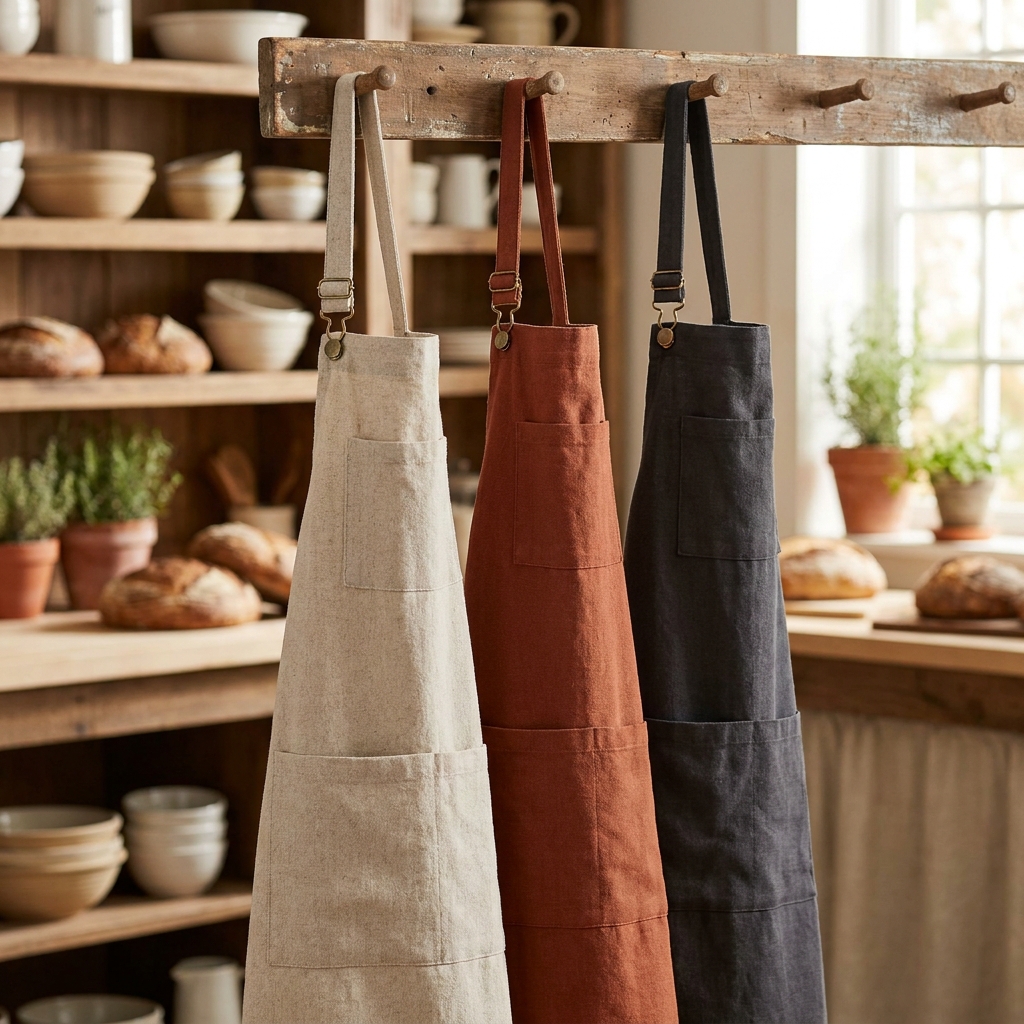
A bib apron has an upper panel that covers the chest and a skirt that falls to about the knee. That shape protects the area most exposed when leaning over a bench, reaching into a proofer, or carrying trays. Compared with waist aprons, a bib offers much more coverage for the same effort. For production roles, it is the natural choice among wholesale aprons.
Neck Strap and Waist Ties
The bib hangs from an adjustable neck strap and ties at the waist, and both details matter. A strap that cannot adjust leaves short bakers choking and tall bakers exposed. Ties that are too short cannot reach around a wider waist. Look for adjustable straps and generous ties, and test whether the apron stays put during bending and lifting. Good adjustability helps one style of aprons in bulk fit a wide crew.
Length and Width
A bib that is too short leaves the thighs unprotected, while one that is too long can catch on benches and racks. Width matters for coverage and for freedom of movement. Hold samples against different body types and check the proportions. Right sizing keeps bulk aprons looking neat and working properly.
Pockets That Pull Their Weight
What Bakers Actually Carry
Bakers carry bench scrapers, probe thermometers, pens, sticky notes, timers, small knives, and piping tips. A good pocket layout holds those items upright and within easy reach. Without pockets, tools end up on benches, where they are lost or contaminated. Pocketed wholesale aprons keep essentials on the person and let the work flow.
Depth, Placement, and Division
Pockets that are too shallow let tools fall out when a baker bends over the bench. Pockets placed too low are hard to reach with floured hands. Divided pockets keep pens and thermometers from tangling with scrapers. Evaluate how items sit and come out, and ask bakers to try them. The right pocket design makes pocketed aprons wholesale genuinely useful rather than decorative.
Reinforcement Where It Counts
Pocket corners and top edges take the most strain, since tools pull on them all day. Look for bar-tacking or reinforced stitching at those points. A pocket that rips ruins an otherwise good apron. Strong reinforcement is one of the best predictors of durability in aprons in bulk.
Fabrics That Shrug Off Flour, Grease, and Heat
Poly-Cotton and Spun Polyester Blends
Poly-cotton blends and spun polyester are the workhorses of commercial aprons. They resist wrinkles, tolerate hot washing, and dry quickly, which suits a bakery that launders daily. Spun polyester has a soft, fabric-like feel without the maintenance of pure cotton. Compare these options when choosing bulk aprons so the fabric matches your laundry and your crew's comfort.
Weight and Breathability
Bakeries are warm, and ovens add to it, so breathable fabric matters. Heavier fabrics offer more protection and last longer but can feel warm. Lighter fabrics breathe better but may wear faster. A mid-weight option often balances both. Test samples during a warm shift before committing to large quantities of wholesale aprons.
Stain Release and Finish
Fabrics that release grease and sticky fillings during washing keep aprons presentable. Some finishes are designed to help stains lift. Apply common bakery stains to samples, wash them, and compare. Stain behavior has a large effect on how long aprons wholesale stay in service.
Choosing Colors When Everything Leaves a Mark
The White Apron Tradition
White aprons are classic in bakeries and communicate cleanliness, since any soil shows. They can usually be bleached when care instructions allow, which helps with hygiene. The trade-off is that chocolate, berries, and grease show immediately. If your shop values the look of crisp white, plan for more frequent laundering and a larger reserve of wholesale aprons.
Darker Tones That Forgive Stains
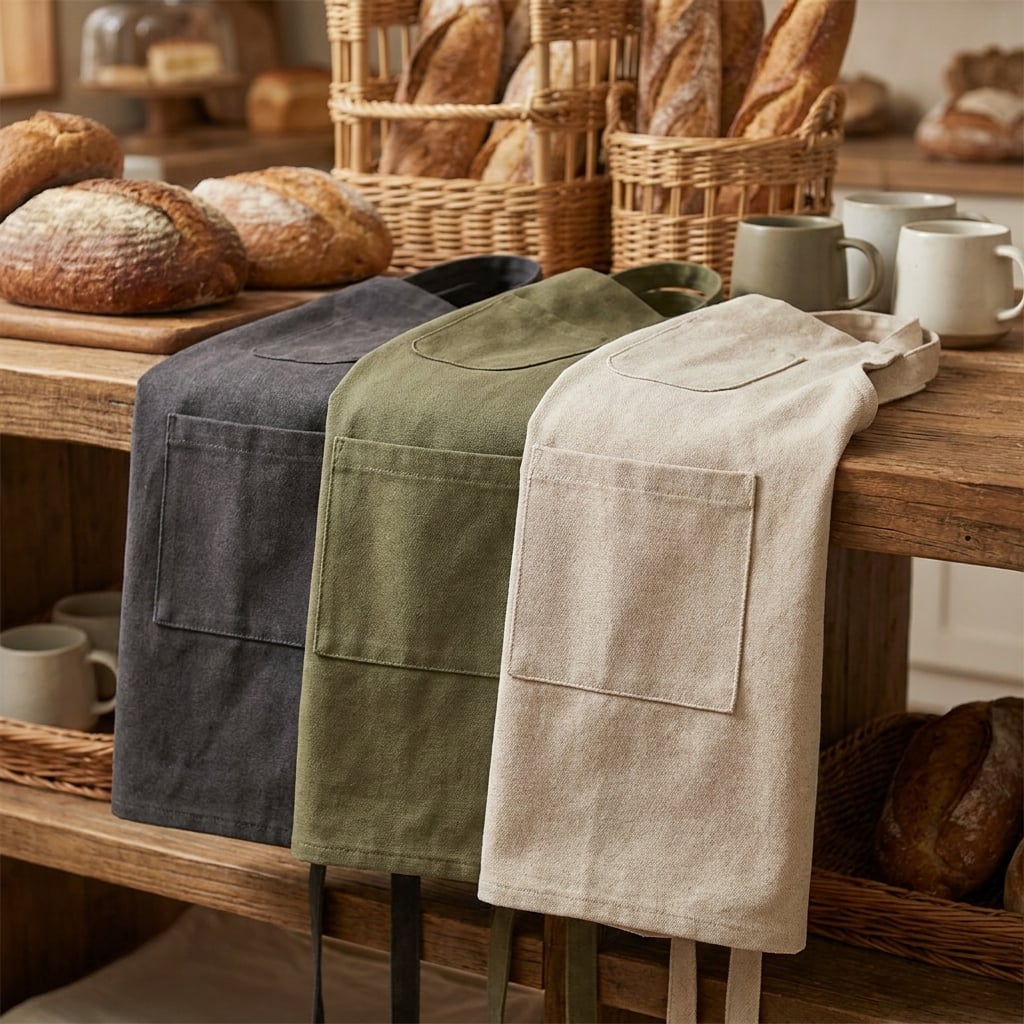
Navy, charcoal, black, and deep brown hide stains but show flour dust clearly. For shops that handle a lot of chocolate or fruit, dark aprons may look better for longer, while flour-heavy production may favor mid-tones. Think about what your crew handles most. The right color hides the most common mess and keeps bulk aprons looking fresh.
Mid-Tones and Brand Colors
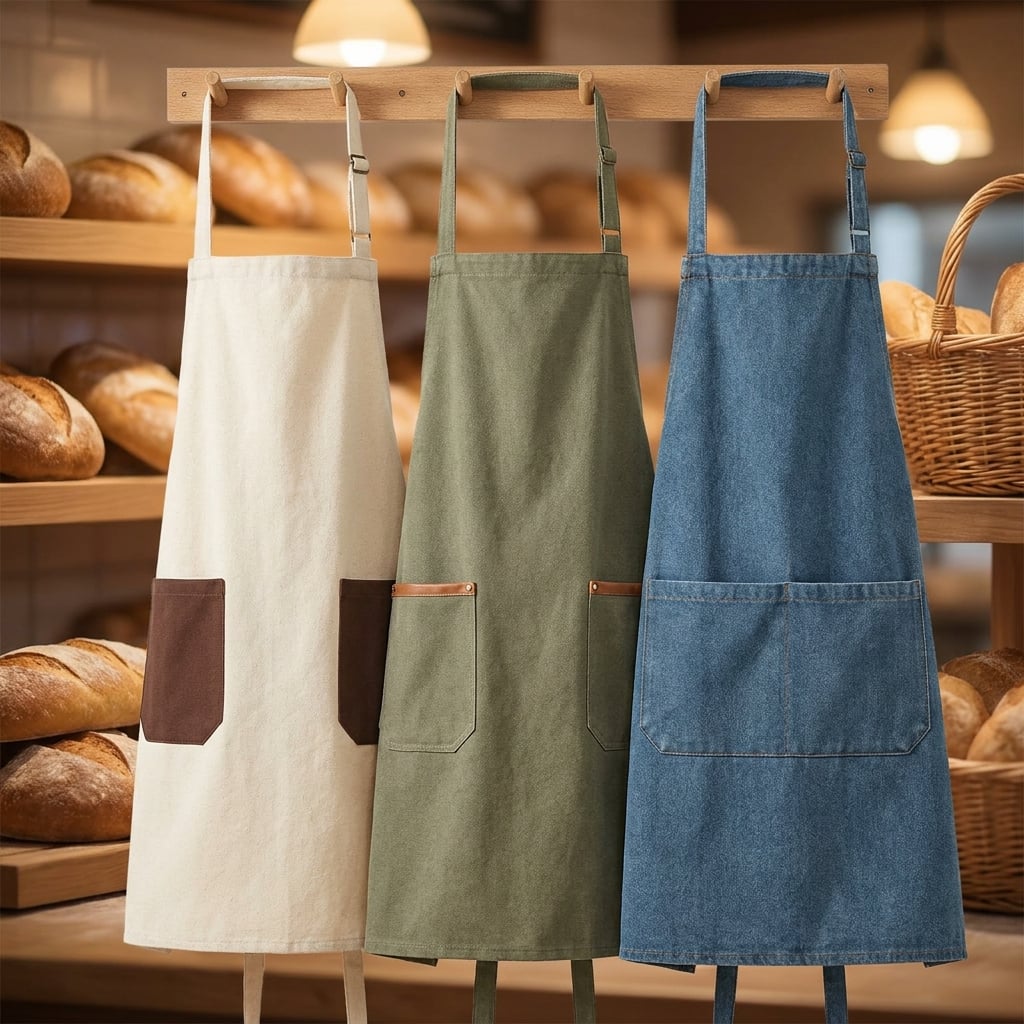
Mid-tone colors such as sage, tan, and gray can disguise both flour and stains reasonably well. If your bakery has a brand color, test it through your laundry first to confirm that it holds up. Colors that fade quickly undermine the look you are trying to build. A color that stays true makes aprons in bulk a better long-term investment.
Fit From Dawn Production to the Retail Counter
One Style, Many Bodies
Bakery crews include people of all sizes, from short pastry decorators to tall bread bakers. A range of sizes, together with adjustable straps, helps everyone find a comfortable fit. A well-fitting apron reduces fatigue and stays out of the way. Choosing wholesale aprons in several sizes is a simple way to keep the crew comfortable.
Comfort Over a Long Shift
Bakers often work six to ten hours on their feet, and a heavy neck strap can cause strain. Wide, cross-back, or padded straps spread the load. Test comfort by wearing samples through a full shift. Comfort affects focus, and focus affects quality, so small details here matter for aprons wholesale.
Front-of-House Presentation
Counter staff represent the shop to customers, so their aprons should look especially crisp. Some bakeries use a distinct color or style for the front of house. Planning separate stock for those roles avoids using production-soiled aprons at the counter. Good presentation supports sales.
Blank Canvas: Branding Your Bakery's Aprons
Why Blank Aprons Give You Control
Wholesale aprons blank arrive without logos or text, which lets a bakery add its own branding through embroidery, screen printing, or patches. Buying blanks also lets a shop use the same base apron across roles and add different branding as needed. That flexibility is valuable for businesses that change logos or open new locations.
Choosing a Branding Method
Embroidery looks refined and lasts, while screen printing suits bold graphics and large quantities. Heavier, tightly woven fabrics hold embroidery better. Test a sample before branding a full order, and wash it to check durability. A small test prevents expensive surprises with wholesale aprons blank.
Placement and Consistency
Decide where logos or names will go, such as the chest or pocket, and keep placement consistent across the crew. Name embroidery can help customers connect with staff. Consistent branding looks professional and is easy to reproduce for new hires.
Sorting Out the Crew: Roles, Zones, and Allergen Control
Matching Apron Style to Role
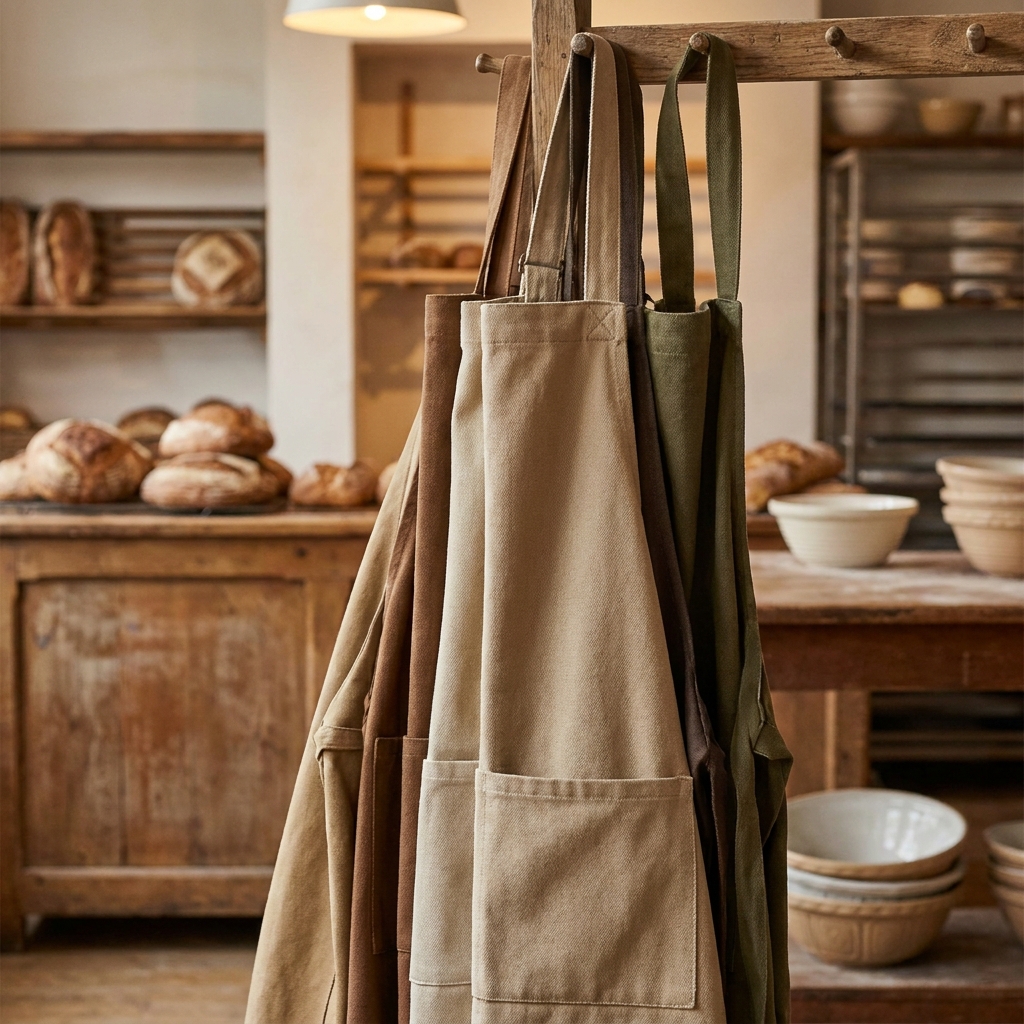
Production bakers benefit most from pocketed bibs, while counter staff may prefer a lighter bistro or waist style. Decorators might want a cleaner color. Assigning styles by role keeps everyone comfortable and presentable. Buying several styles from one source of aprons in bulk simplifies the program.
Color-Coding for Zones
Some bakeries color-code aprons to identify zones such as dough, pastry, packaging, and front counter. Visual coding helps staff and managers see at a glance who belongs where, which supports organization and hygiene. Keep the system simple and write down the color key.
Allergen Awareness
Bakeries often handle ingredients that are common allergens, such as wheat, eggs, dairy, and nuts. Some use separate aprons or colors for stations handling those ingredients to reduce cross-contact. Whatever approach your shop uses, make sure it is documented and consistently followed. Clear color systems make allergen protocols easier to maintain with bulk aprons.
Counting Aprons Without Guessing
Starting With Headcount and Shifts
List every position that wears an apron, including production, decorating, packaging, and counter staff, and count by shift. Include part-time and seasonal workers. This list is the foundation for ordering wholesale aprons.
Rotation, Mess Factor, and Reserve
Bakery aprons get dirty quickly, so plan more per person than you might for other roles. Many bakeries plan three to four aprons per baker so that clean ones are always available. Add a ten to twenty percent reserve for stains, damage, and new hires. A cushion keeps the line moving when the laundry runs behind.
A Worked Example
A bakery with 24 staff planning four aprons per person needs 96. A fifteen percent reserve adds about 14, for 110 aprons wholesale. If counter staff use a separate style, calculate that group separately. Writing the numbers down makes reordering fast and keeps decisions consistent.
Holiday Rushes, Wedding Season, and Other Spikes
Predictable Peaks
Bakeries have predictable surges around holidays, graduation season, and wedding season, when extra staff are hired and production runs longer. These periods require more aprons and more frequent laundering. Plan inventory for peak staffing, not for an average week. Early planning protects against shortages of bulk aprons.
Onboarding Seasonal Staff
Seasonal hires need aprons on their first day. Keep a stock of common sizes ready, and make sure someone is responsible for issuing and tracking them. A new baker handed a clean, well-fitting apron feels part of the team immediately.
Winding Down After the Rush
After a peak, review how many aprons were used and how many were lost or damaged. Adjust par levels and avoid over-ordering for the next cycle. Data from each rush makes the next wholesale aprons order smarter.
Buying by the Case: Where the Savings Come From
Packaging and Handling Efficiencies
Suppliers pack and ship case quantities more efficiently than single pieces, and that efficiency shows up in lower prices per apron. For a bakery buying dozens or hundreds, the difference is meaningful. Direct Textile Store offers case-pack pricing on aprons, giving bakeries a clear way to budget for wholesale aprons.
Matching Lots and Matching Looks
Aprons in the same case typically come from the same production lot, so colors and sizes match. That matters when a whole crew stands in the same line. Consistent lots make replacements blend in, which keeps the team looking cohesive.
Fewer Orders, Calmer Budgets
Standardized quantities make counting, storage, and budgeting easier. Instead of juggling many small purchases, a bakery can plan a few larger orders a year. Predictable pricing helps owners forecast costs, and fewer orders reduce receiving work for aprons in bulk.
Putting Samples Through a Real Shift
A Day at the Bench
The best test of an apron is to wear it through a real production shift. Ask bakers to reach, bend, lift trays, and use the pockets as they normally would. Notice whether the strap rubs, the apron shifts, or the pockets spill. Their feedback is the most useful input you can get about bulk aprons.
Stains and Washes Together
After the shift, launder the sample the way you normally would, then compare it with a fresh one. Check for lingering stains, color changes, shrinkage, and softness. Repeat for several cycles. A sample that looks tired after a few washes will not survive months of real use.
Seams, Straps, and Stitching
Inspect seams, strap attachments, and pocket corners for early signs of wear. Pull gently to test strength. Weak points that appear in a few days will become failures in a few months. Careful inspection saves money when ordering aprons wholesale.
Laundry Day Playbook for Greasy, Floury Linens
Shake, Sort, and Pre-Treat
Shake flour off aprons before washing, since heavy flour can clump in water. Sort by color, and pre-treat greasy or sticky stains. Keeping flour out of the washer protects both the machine and the apron. A simple pre-wash routine improves results and extends the life of wholesale aprons.
Temperature, Detergent, and Drying
Follow care instructions, use enough detergent to lift grease, and wash at temperatures that suit the fabric. Dry thoroughly but avoid excessive heat. Remove aprons promptly to reduce wrinkles. A consistent routine keeps aprons looking and smelling fresh.
Retirement Rules
Decide when an apron should be retired, such as when stains remain, seams fail, or color fades. Write the rule down and train managers to apply it. Keeping worn aprons in circulation hurts the shop's image, and retiring them on schedule maintains standards for aprons in bulk.
What an Apron Really Costs Over a Year
Price Divided by Wears
An apron that survives hundreds of washes costs far less per wear than a cheaper one that falls apart in months. Estimate how many cycles a sample survives and divide the price by that number. This simple math often shows that a sturdier apron is the better deal and helps justify purchases to owners buying wholesale aprons.
Hidden Costs of Cheap Aprons
Low-priced aprons can cost more through early replacement, staff time spent handling stained or torn ones, and a less professional look. Those costs rarely appear on an invoice but add up over a year. Considering them gives a more accurate picture of value.
Avoiding Rush Purchases
Rush orders cost more and rarely match existing stock. Reserve inventory and a planned order schedule remove the need for them. Planning is one of the simplest ways to keep bulk aprons spending predictable.
Before You Click Order: The Final Walkthrough
The Product Checklist
Before placing a bulk order, confirm each of the following with samples in hand:
- The bib is cut and sized for your crew: Coverage, strap adjustability, and tie length work for your shortest and tallest bakers.
- Pockets match what bakers carry: Depth, placement, and division hold scrapers, thermometers, and pens, and corners are reinforced.
- Fabric suits your laundry and your ovens: The blend and weight breathe well, release grease, and tolerate your wash routine.
- Color performance is tested: The shade hides your most common mess and stays true after repeated washing.
- Branding plans are confirmed: If you use blank aprons, embroidery or printing has been tested on a sample.
- Quantities cover peak staffing and a reserve: Your calculation includes aprons per baker, seasonal hires, and expected losses.
- Case-pack pricing, shipping timing, and reorder availability are confirmed: You know the total cost, when the order will arrive before your busy season, and that the same item can be ordered again.
The People Check
Share the plan with production leads, counter managers, and whoever runs laundry. Make sure everyone knows the par levels, the color key, and the retirement rule. Confirm when the order arrives, and make time to wash new aprons before they go on the floor.
The Paper Trail
Save the specification, order date, quantities, prices, and inventory counts in one place. Update the record after every order and every season. A clear history makes the next purchase faster and helps new managers keep the bakery's look consistent.
Outfitting Your Bakery With Direct Textile Store
For bakeries working through this process, one dependable source can simplify ordering, keep every baker outfitted, and keep quality consistent from one order to the next. Order from Direct Textile Store pocketed options bib aprons that hold up in busy kitchens and front-of-house service. Browse styles and case packs to outfit your operation. The range is built for kitchens and dining rooms where aprons are worn hard and washed constantly, so durability, comfort, and consistent sizing are central to every product.
Bakeries benefit from having wholesale aprons available in consistent specifications and case-pack quantities. With one source for bib, bistro, and waist styles, a shop can outfit production, decorating, and counter teams with matching colors and fabrics, keep one set of care instructions, and avoid piecing together inventory from many places. For bakeries that want to add their own logo, wholesale aprons blank make branding straightforward. Automatic case-pack pricing lowers the cost per apron as the order grows, and there are no coupons or minimums to manage, which makes budgeting simpler for owners and general managers.
Consistency matters as a bakery grows. When a second location opens, a wholesale accounts program expands, or the holiday crew doubles, replacements and additions that match existing stock keep the whole operation looking unified. Direct Textile Store also supplies other textiles bakeries use, including kitchen towels, bar mop towels, chef coats, and linens for the retail counter, so one relationship can support the entire shop. That breadth lets a bakery standardize its textile program, simplify reordering, and keep supply predictable through the busiest holidays and the quietest weeks alike.
The Last Word on Bib Aprons for Bakers
The best way to equip a bakery is to buy durable, comfortable pocketed bib wholesale aprons in colors and fabrics that suit your production, sized for the whole crew, in case packs at wholesale pricing. Bakeries that test samples through a real shift, plan quantities around peak seasons, and standardize their specification tend to keep the team looking sharp while controlling costs. Choosing aprons in bulk that match your laundry routine and brand makes daily work simpler, and using wholesale aprons blank gives you room to grow your identity. Planning ahead, rather than replacing bulk aprons only when they fail or a rush begins, keeps every baker ready before the first oven door opens.

Learn More About Our Experience Supplying Wholesale Linens → About Direct Textile Store
Direct Textile Store is a leading U.S. wholesale linen and textile supplier trusted by over 131,000 hotels, hospitals, healthcare facilities, restaurants, spas, salons, resorts, gyms, emergency shelter and response, funeral homes, VRBO & Airbnb hosts, car washes, and commercial buyers nationwide. Shop in bulk with everyday low wholesale pricing and automatic 20% case-pack discounts — no coupons or minimums required. Choose from one of the largest in-stock selections available: over 135,000 towels, pool towels, sheets, blankets, comforters, tablecloths, pillows, bed toppers, aprons, hospital gowns, patient gowns, isolation gowns, scrubs, shower curtains, chef apparel, smocks, lab coats, uniforms, and commercial laundry equipment including wire, vinyl, and poly laundry carts, trucks, and privacy screens — all ready to ship today. Free shipping on orders over $5,999.
FAQ
Why do bakeries choose bib wholesale aprons?
Bib aprons cover the chest and lap where flour, dough, and fillings land, and pocketed styles keep tools within reach.
What are wholesale aprons blank?
They are aprons without printed logos or text, so a bakery can add its own embroidery, printing, or patches.
How many aprons in bulk does a bakery need per baker?
Many plan three to four per person for laundry rotation, plus a ten to twenty percent reserve for stains and new hires.
Is it cheaper to buy bulk aprons in case packs?
Generally yes. Case packs lower per-apron cost and keep color and size consistent across a large order.
What color works best for bakery aprons wholesale?
White looks crisp but shows every mark, darker tones hide stains but show flour, and mid-tones balance both, so choose based on what your crew handles most.
How should flour-covered aprons be laundered?
Shake off loose flour first, pre-treat greasy stains, follow the care instructions, and dry thoroughly without excess heat.
Who sells pocketed options bib wholesale aprons in bulk for a bakery?
Direct Textile Store offers pocketed options bib aprons that hold up in busy kitchens and front-of-house service. With case-pack pricing and consistent in-stock inventory, it's a practical option for bakeries.