Table of Contents
- The First Hour of a Deployment
- Hospitality Blankets in Field Conditions
- Waffle Weave: Warmth Built From Air
- Fiber and Finish Decisions
- Staying Power: Edges, Weave, and Snag Resistance
- Sizes for Cots, Stretchers, and Cars
- Fire, Heat, and Safe Use Rules
- Dressing a Shelter Cot, Step by Step
- Sizing a Cache: Numbers Before Boxes
- Pre-Positioning Across Sites and Seasons
- The Case-Pack Advantage
- Trial Runs Before the Real Thing
- Reset Cycles: Cleaning and Recovery After Deployment
- Storage That Survives Years of Waiting
- Pre-Order Review: A Checklist for Response Buyers
- A Single Source for Response Bedding: Direct Textile Store
- Closing Thoughts: Ready Before the Call Comes
- Learn More About Our Experience Supplying Wholesale Linens → About Direct Textile Store
- FAQ
- Related Topics
When a response team is activated, comfort supplies are suddenly urgent. Cots go up, people arrive tired and cold, and the blankets in the storage cache are the first thing handed over. Those blankets have to be ready, in quantity, in usable condition, and easy to count and distribute. That is why many response organizations look to hospitality-grade bedding, and why hotel blankets have become a common choice for caches and shelter kits. They are built to be used constantly, washed repeatedly, and restocked in matching quantities. This guide explains how waffle weave construction works for response teams, how to size a cache, how to plan around pre-positioned sites, and how to buy hotel blankets wholesale in case packs so the supply is ready before the call comes.
The First Hour of a Deployment
Warmth Before Anything Else
In the first hour of a response, responders focus on safety, registration, and basic needs, and warmth is near the top of that list. People who have been evacuated, rescued, or displaced are often chilled, damp, or in shock. A blanket is an immediate, humane response. Having hotel blankets staged and ready lets volunteers hand them out without delay.
Speed Depends on Preparation
Distribution speed depends on how well the cache is organized. Blankets that are already folded to a consistent size, stacked by count, and stored in labeled containers can be moved in minutes. Disorganized or mismatched stock slows everything down. Standardized hotel blankets wholesale purchases make that organization easier.
Quantity Is the Hard Part
Small organizations may handle a few dozen people, while larger events can require hundreds or thousands of blankets within hours. Planning for that surge is difficult without an established supply. Buying in case packs gives a team the volume it needs and the consistency that makes counting simple.
Hospitality Blankets in Field Conditions
Built for Constant Use
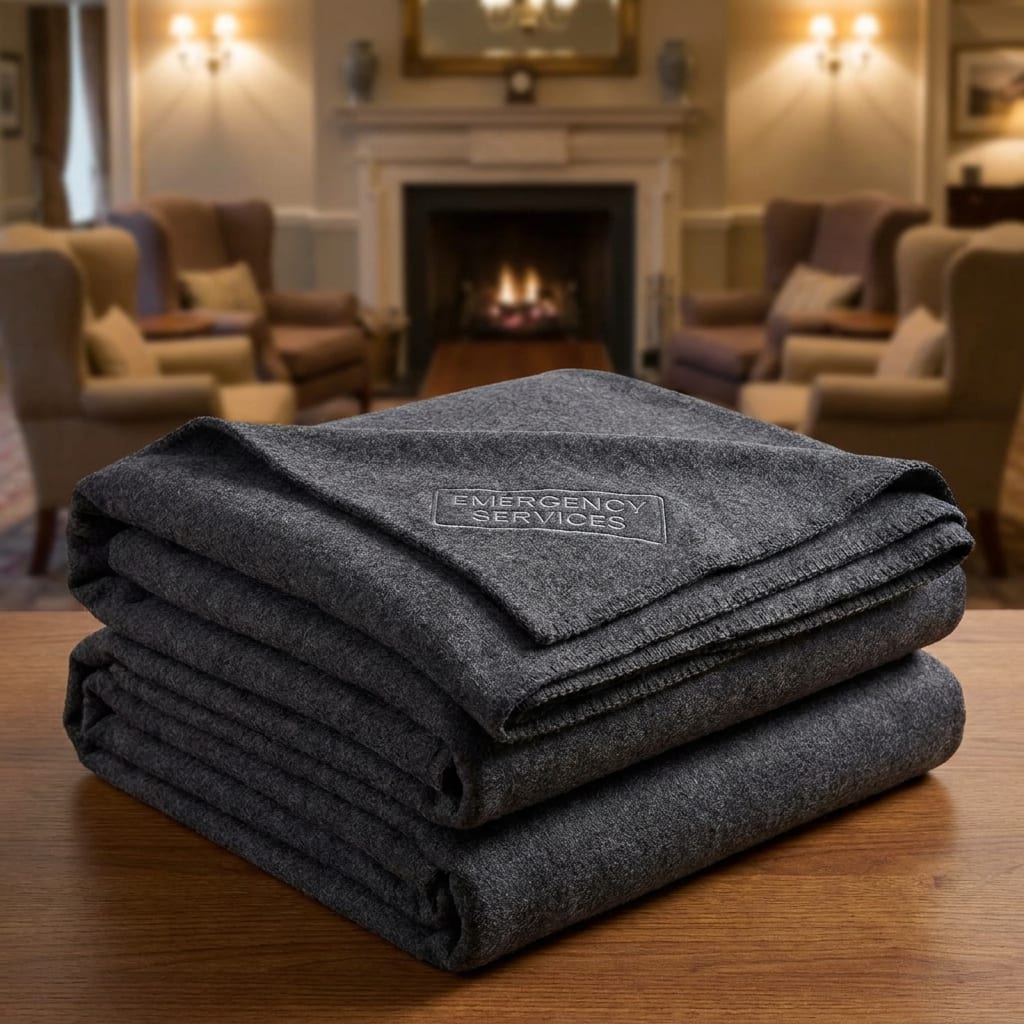
Hospitality blankets are made for properties that wash and reuse them every day. That construction suits response work, where the same blankets may serve multiple events. Reinforced edges, tight weaves, and stable fibers help them survive repeated laundering. Hotel blankets are not single-use products, and that durability is part of their value.
Familiar, Dignified Comfort
People in shelters often feel exposed and anxious. A clean, well-made blanket that looks like it belongs in a good room helps restore a sense of normalcy and dignity. The look and feel of hospitality bedding is familiar and reassuring. That small comfort can matter more than it seems.
Predictable Specifications
Hospitality products come in defined sizes, weights, and colors, which makes planning straightforward. A team can know exactly how many fit in a bin, how they will fit on a cot, and how they will wash. Predictability is valuable when operations are chaotic and every decision must be quick.
Waffle Weave: Warmth Built From Air
How the Pattern Works
Waffle weave fabric is woven with a raised grid that forms small pockets across the surface. Those pockets trap air, which provides insulation without the weight of a dense, heavy blanket. The result is warmth that is light and breathable. For response teams that must carry and store large quantities, that balance matters. Waffle weave hotel blankets offer insulation efficiently.
Breathability for Many Conditions
Because air can move through the weave, these blankets are less likely to trap heat than thick, solid fabrics. That makes them usable in a wide range of conditions, from cool nights to mild days. A single style can serve many deployments, which simplifies purchasing and storage for hotel blankets wholesale.
Quick Drying After Use
Textured, open weaves dry faster than dense blankets. After a deployment, that speed shortens the time between collection and readiness. Faster drying also reduces the risk of odors from storing damp items. For a team with limited laundry capacity, drying speed is a practical advantage.
Fiber and Finish Decisions
Cotton, Blends, and Microfiber
Waffle weave blankets come in cotton, cotton-polyester blends, and microfiber. Cotton feels natural and absorbs moisture but can shrink and takes longer to dry. Blends resist shrinking and dry faster. Microfiber is soft and light and dries quickly. The best option depends on your laundry capacity, climate, and priorities. Compare samples side by side when choosing hotel blankets.
Weight and Hand-Feel
Weight affects warmth, packability, and drying time. A mid-weight blanket often balances all three. Handle samples and compare how they feel. A blanket that feels too thin may not provide enough warmth, while one that is too heavy may be hard to store in volume. Choose a weight that matches how your team deploys.
Color That Hides Wear
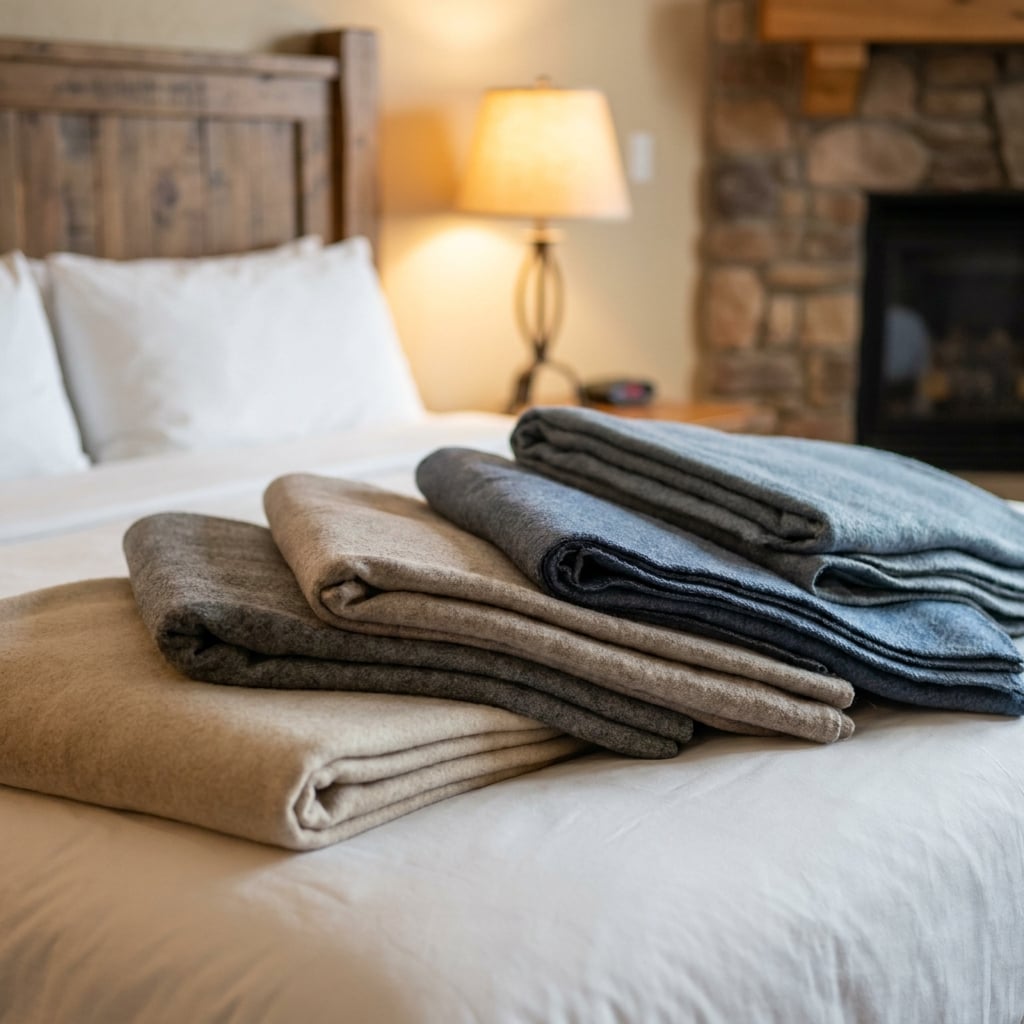
Neutral colors such as gray, navy, and tan hide wear and match across purchases. They look orderly in a cache and in a shelter. If you use color to identify caches or units, document the key. Consistent color keeps hotel blankets wholesale looking organized.
Staying Power: Edges, Weave, and Snag Resistance
Edges That Hold
Edges are the first part of a blanket to fail. Handling, folding, and washing put stress on them. Look for reinforced binding or tight stitching, and pull gently to check strength. Strong edges extend life dramatically for hotel blankets used across multiple deployments.
Weave Density
A tight, even weave resists thinning and holds its shape. Loose or uneven weaves wear faster and lose warmth. Hold samples to light and examine the pattern. Consistent weave density is a sign of quality and durability.
Snags From Cots and Gear
Cots, equipment, and rough surfaces can catch fabric. Snag-resistant construction helps blankets avoid pulls and holes. Test samples by dragging a rough object lightly across the surface. A blanket that resists snagging stays tidy and useful longer.
Sizes for Cots, Stretchers, and Cars
Matching the Bed Types You Use
Response teams use cots, mats, stretchers, and sometimes standard beds. Twin-size blankets suit cots, while throw sizes are easier to hand out and fold. Measure the cots in your inventory and confirm blanket dimensions. A blanket that is too small leaves people uncovered, and one that is too large drags on the floor.
Throw and Twin Formats
Throw-size blankets are compact and quick to distribute, while twin sizes provide more coverage for sleeping. Many teams stock both. Keep sizes clearly labeled in storage so volunteers can grab what they need. Clear labeling prevents confusion when time matters.
Vehicle and Kit Sizing
Vehicles and kits have limited space. Choose blankets that fold compactly and stack neatly. Standard sizes in case packs make it easy to calculate how many fit in each container. Planning space ahead helps avoid overloading.
Fire, Heat, and Safe Use Rules
Keep Blankets Away From Open Flame
Synthetic and natural fabrics can burn or melt when exposed to open flame or intense heat. Teams should communicate clear rules about heaters, stoves, and campfires in shelters and staging areas. Make those rules part of volunteer briefings and distribution instructions. Simple guidance protects people using hotel blankets.
Documentation and Program Requirements
Some sheltering programs have requirements for textiles. Confirm requirements with your safety officer or program manager, and request documentation for the product you choose. Keep copies in your records so they are available when needed.
Hygiene Between Users
Decide whether blankets will be issued once, reused after laundering, or both, and write the policy down. Clean and used blankets should be kept separate. A clear policy helps volunteers handle blankets consistently and protects the people you serve.
Dressing a Shelter Cot, Step by Step
The Basic Setup
A typical shelter cot setup includes a mat or cot pad, a sheet if available, and a blanket. In many deployments, the blanket is the only bedding provided. Folding it neatly at the foot of each cot helps people feel welcome and speeds setup. A consistent method makes the shelter look organized.
Layering for Comfort
If conditions are cold, a second blanket or a throw can be added. Layering with hotel blankets wholesale in two sizes gives flexibility without carrying many different products. Keep extras accessible for people who ask.
Turnover and Replacement
When someone leaves, the blanket is collected, bagged, and replaced from stock. Having a simple cart or bin system speeds that process. Track counts so you know how many are in use, in the laundry, and in reserve.
Sizing a Cache: Numbers Before Boxes
Counting Capacity
Start by deciding how many people your team plans to support at once. This may be based on shelter capacity, vehicle kits, and typical event size. Count cots, vehicles, and storage locations. This number is the base for your order of hotel blankets.
Rotation and Reserve
Blankets need cleaning between uses, so add a rotation set. Many teams plan fifty percent of the base for rotation, plus a ten to twenty percent reserve. Track how often the reserve is used and adjust the percentage after each deployment.
A Worked Example
A team planning for a 300-person shelter needs 300 blankets in use. A fifty percent rotation set adds 150, and a fifteen percent reserve adds about 68. If twelve vehicles carry six blankets each, add 72. The total is roughly 590 hotel blankets wholesale. Writing the math down makes the order simple and easy to defend.
Pre-Positioning Across Sites and Seasons
Distributing Caches
Large organizations often store caches in several locations so that supplies are close to likely events. Standardizing the blanket specification across sites makes it easy to move stock between them. Keep an inventory list for each location.
Timing Around Risk Seasons
Hurricane season, wildfire season, and winter storm season each have different timing. Order ahead so blankets arrive, are washed, and are in place before the risk period begins. Last-minute orders compete with everyone else's demand.
Rotating Stock
Use older blankets first so that stock does not age unevenly. Periodically cycle cache stock through use or cleaning to ensure it is ready. Rotation keeps hotel blankets in good condition.
The Case-Pack Advantage
Lower Price Per Blanket
Case packs reduce packaging and handling costs, which lowers the price per blanket. For teams buying hundreds, that matters. Direct Textile Store offers case-pack pricing on hospitality blankets, giving response organizations a clear way to plan budgets and grant requests for hotel blankets wholesale.
Matching Production Lots
Blankets in the same case typically come from the same production lot, so color, size, and feel are consistent. That consistency makes caches look organized and replacements easier to match.
Fewer Orders, Cleaner Records
Standardized quantities make counting and recordkeeping easier. A few larger orders per year take less administrative effort than many small ones, which matters for volunteer-run organizations.
Trial Runs Before the Real Thing
Hands-On Inspection
Request samples and examine the weave, edges, and surface. Pull gently on binding, and compare samples side by side. What you see in a sample is a good predictor of the full order. Document what you learn.
Laundering Trials
Wash and dry samples several times using the equipment you expect to use. Check for shrinkage, pilling, and color retention. Note drying time. A sample that changes dramatically after a few cycles will not hold up through repeated deployments of hotel blankets.
Field Trials
If possible, test samples in realistic conditions, such as in a vehicle, in a staging area, or on a cot overnight. Observe how they pack, how they feel, and how they handle moisture. Feedback from responders is valuable.
Reset Cycles: Cleaning and Recovery After Deployment
Collecting and Sorting
After a deployment, collect blankets promptly and sort them into clean-enough and needs-washing groups, following your policy. Use bags or bins labeled for each group. Quick handling prevents odors and damage.
Laundering Practices
Follow care instructions, use moderate temperatures, and avoid overloading machines. Dry thoroughly. Avoid fabric softener if the fiber type is sensitive to it. Good laundering extends the life of hotel blankets wholesale.
Inspection and Replenishment
After washing, inspect each blanket for damage. Retire those that are torn, thin, or stained beyond use. Replace them from the reserve and update your counts. A short recovery routine keeps the cache ready,
Storage That Survives Years of Waiting
Clean and Dry First
Blankets should be fully clean and dry before storage. Moisture and soil invite mildew and pests. Check dryness before packing.
Containers and Location
Use sealed bins or sturdy bags, and store them in a dry, climate-appropriate location off the floor. Label contents with size, count, and date. Clear labels speed up retrieval.
Periodic Inspections
Check caches on a schedule for dampness, pests, and damage. Replace compromised items and record the inspection. Regular checks keep hotel blankets ready when they are needed.
Pre-Order Review: A Checklist for Response Buyers
Specification Items
Before finalizing a bulk order, confirm each of the following with samples in hand:
- Weave and fiber suit your deployments: The waffle weave provides warmth without bulk, and the fiber matches your laundry and climate.
- Edges and binding are strong: Stitching holds when tugged and after repeated laundering.
- Snag resistance is verified: The surface resists pulls when dragged against rough objects.
- Sizes match your cots and kits: You have measured and confirmed dimensions for throw and twin formats.
- Safety guidance is documented: Heat and flame rules are written into your procedures, and any required documentation is on file.
- Quantities include rotation, vehicle kits, and a reserve: Your calculation covers capacity, laundry cycles, and expected losses.
- Case-pack pricing, shipping timing, and reorder availability are confirmed: You know the total cost, when the order will arrive before your risk season, and that the same item can be ordered again.
Coordination Items
Share the plan with operations leaders, safety officers, and logistics staff. Make sure everyone knows par levels, storage standards, and recovery routines. Confirm the delivery date and have space ready for receiving and washing.
Documentation Items
Record the specification, order date, quantities, prices, and cache locations. Update the record after each deployment and each inventory check. Clear documentation supports audits, grants, and smooth handoffs between volunteers and staff.
A Single Source for Response Bedding: Direct Textile Store
For emergency response teams working through this process, one dependable source can simplify ordering, keep every cache consistent, and keep quality steady from one order to the next. Browse Direct Textile Store for waffle weave hotel blankets designed for durability and comfort, suitable for emergency response teams and high-use settings. Browse styles and case packs to outfit your operation. The range is built for hospitality and institutional environments where blankets are washed constantly and used by many people, so durability, softness, and consistent sizing are central to every product.
Teams benefit from having hotel blankets wholesale available in consistent specifications and case-pack quantities. With one source for blankets, pillows, sheets, and towels, a team can match fabrics and colors across caches, keep one set of care instructions, and avoid the confusion of piecing together inventory from many places. Automatic case-pack pricing lowers the cost per blanket as the order grows, and there are no coupons or minimums to manage, which makes budgeting and grant reporting simpler for organizations that depend on predictable costs.
Consistency matters as a response program grows. When a new region adds a cache, a shelter partnership expands, or a stockpile is refreshed after a major event, replacements and additions that match existing stock keep every location uniform and every volunteer working from the same playbook. Direct Textile Store also supplies other textiles response teams use, including cot sheets, pillows, towels, and gowns, so one relationship can support the whole operation. That breadth lets a team standardize its supplies, simplify reordering, and keep readiness predictable between events and during them.
Closing Thoughts: Ready Before the Call Comes
The best way to prepare is to buy durable waffle weave hotel blankets in sizes that match your cots and kits, in case packs at wholesale pricing. Teams that test samples through their own laundry, size caches with rotation and reserves, and standardize their specification tend to stay ready while controlling costs. Choosing hotel blankets wholesale that handle repeated cleaning and rough handling means fewer replacements and more dependable caches. Planning ahead, rather than restocking only after a deployment empties the shelves, keeps every vehicle, shelter, and responder prepared for the next activation.

Learn More About Our Experience Supplying Wholesale Linens → About Direct Textile Store
Direct Textile Store is a leading U.S. wholesale linen and textile supplier trusted by over 131,000 hotels, hospitals, healthcare facilities, restaurants, spas, salons, resorts, gyms, emergency shelter and response, funeral homes, VRBO & Airbnb hosts, car washes, and commercial buyers nationwide. Shop in bulk with everyday low wholesale pricing and automatic 20% case-pack discounts — no coupons or minimums required. Choose from one of the largest in-stock selections available: over 135,000 towels, pool towels, sheets, blankets, comforters, tablecloths, pillows, bed toppers, aprons, hospital gowns, patient gowns, isolation gowns, scrubs, shower curtains, chef apparel, smocks, lab coats, uniforms, and commercial laundry equipment including wire, vinyl, and poly laundry carts, trucks, and privacy screens — all ready to ship today. Free shipping on orders over $5,999.
FAQ
Why do emergency response teams use hotel blankets?
Hotel blankets are built for repeated laundering and heavy handling, come in consistent sizes and weights, and give shelters a familiar, dignified level of comfort.
What does waffle weave offer for response caches?
The raised grid traps air for light warmth, breathes well, dries quickly, and packs efficiently.
How many hotel blankets should a team keep in a cache?
Start with expected capacity, add about fifty percent for laundry rotation and a ten to twenty percent reserve, and include vehicle kits.
Is it cheaper to buy hotel blankets wholesale in case packs?
Generally yes. Case packs lower per-blanket cost and keep color and size consistent across a large order.
What safety rules apply to blankets in shelters?
Keep them away from open flame and heaters, confirm any program documentation requirements, and set a clear policy for cleaning between users.
How should cache blankets be stored?
Make sure they are clean and completely dry, store them in sealed, labeled bins in a dry location off the floor, and inspect them on a schedule.
Where can my emergency response team get hotel blankets in case packs?
Direct Textile Store offers waffle weave hotel blankets designed for durability and comfort, suitable for emergency response teams and high-use settings. With case-pack pricing and consistent in-stock inventory, it's a practical option for teams stocking caches and vehicles.