Table of Contents
- Key Takeaways
- What Do Pillow Protectors Do for a Business?
- What Fabric Should a Commercial Pillow Protector Be Made Of?
- How Does a Zipper Closure Compare With Other Protector Styles?
- How Many Pillow Protectors Should You Stock?
- How Do You Choose the Right Size for Pillow Protectors?
- How Should You Wash Pillow Protectors?
- Do Zipper Pillow Protectors Need Ironing?
- Which Businesses Benefit Most From Pillow Protectors?
- How Does Buying Pillow Protectors in Case Packs Work?
- What Should You Check Before You Order Pillow Protectors?
- Why Buy From Direct Textile Store?
- Conclusion
- Learn More About Our Experience Supplying Wholesale Linens → About Direct Textile Store
- FAQ
- Related Topics
The best pillow protectors for commercial use are durable, machine washable, and have a closure that stays shut through frequent laundering. For hotels, clinics, nursing homes, and other businesses, a cotton-polyester blend with a nylon zipper inset is a practical choice. Direct Textile Store, a US wholesale supplier, sells pillow protectors in case packs built for businesses that need to replace and rotate them regularly.
Key Takeaways
- The Zipper Pillow Protector is made from 55% cotton and 45% polyester in T180 fabric, with a nylon zipper inset for secure closure.
- It is machine washable and does not require ironing, which keeps staff time for laundry manageable.
- Plan at least one protector per pillow, plus spares so pillows stay covered while others are in the wash.
- Measure your pillows before ordering, and confirm the listed dimensions match your pillow type.
- Buy in case packs from Direct Textile Store, which ships from Florida, to stock protectors for hotels, healthcare, and other commercial settings.
What Do Pillow Protectors Do for a Business?
Pillow protectors sit between the pillow and its pillowcase, forming a barrier against dirt, body oils, and moisture. For a business, that barrier helps keep pillows presentable and extends the time between full replacements. It also gives staff a simple, repeatable way to keep sleep surfaces clean.
Keeping Pillows Clean Between Uses
Pillows absorb sweat, skin cells, and spills over time, even when pillowcases are changed. A protector catches much of that before it reaches the pillow core. When the protector is laundered on its own schedule, the pillow itself is handled less often.
Extending the Life of Your Pillow Inventory
Because the protector takes the daily wear, the pillow underneath stays cleaner for longer. Businesses that replace pillows on a fixed schedule can use protectors to stretch that schedule. Fewer early replacements means a steadier budget for linens.
What Fabric Should a Commercial Pillow Protector Be Made Of?
A commercial pillow protector should use a fabric that holds up to repeated washing and everyday handling. A cotton-polyester blend balances comfort with durability, since cotton feels soft against the face and polyester helps the fabric keep its shape. The Zipper Pillow Protector uses a 55% cotton and 45% polyester blend in T180 fabric.
Why Cotton-Polyester Blends Work Well
Cotton alone can shrink and wrinkle more readily under heavy commercial laundering. Adding polyester helps the material resist some of that wear and recover its shape after drying. The 55/45 split gives a fabric that feels familiar to guests and patients while staying practical for a high-volume laundry.
Reading the Fabric Label
Check the fiber content on every listing before you order. A stated blend tells you what to expect from comfort, care, and wear. If a product does not list its fiber content, ask the supplier before you buy it for a commercial setting.
How Does a Zipper Closure Compare With Other Protector Styles?

A zipper closure keeps the protector sealed around the pillow, which is the main reason many businesses choose it. Other styles rely on overlapping flaps or simple open ends, which can shift during sleep or during laundry. The right choice depends on how the pillows are used and how often they are changed.
Security During Use and Laundering
A zipper closure stays closed through repeated use and washing. That helps the protector stay fully over the pillow, rather than slipping off partway through the night. For hospitals and nursing homes, a secure seal reduces the chance that the pillow is exposed during care.
Comparison of Common Protector Styles
The table below compares common pillow protector styles to help you match the option to your setting.
| Protector Style | Closure Type | Best Fit | Care Consideration |
|---|---|---|---|
| Zipper Pillow Protector | Nylon zipper inset | Hotels, clinics, and nursing homes that need a secure full cover | Machine washable, no ironing required |
| Open-end pillowcase protector | Open end, no zipper | Low-movement settings where quick changes are less important | Can shift during use and laundering |
| Overlap flap protector | Flap or envelope closure | Lower-volume settings with occasional changes | Flap may loosen with frequent washing |
| Full encasement style | Sealed or near-sealed cover | Settings focused on maximum coverage of the pillow | Check closure and washing instructions for each product |
How Many Pillow Protectors Should You Stock?
A reliable rule of thumb is one protector for every pillow in use, plus spares for laundry rotation. Without spares, a busy housekeeping cycle can leave pillows uncovered. The exact number depends on how often you change linens and how long a wash cycle takes in your facility.
Start With One Protector per Pillow
Count every pillow that will be in use on the floor, in storage, or in a unit. Give each one a protector so no pillow goes out uncovered. This is the baseline for any stocking plan.
Add Spares for the Laundry Cycle
Add enough extra protectors to cover the pillows that are in the wash at any one time. If your laundry turns around in one or two days, a spare set for each pillow keeps rooms or beds fully covered. Businesses with longer turnaround times should add more spares.
How Do You Choose the Right Size for Pillow Protectors?
Choose a protector that matches your pillow dimensions, not just the bed or room size. A protector that is too small will strain at the seams and zipper, while one that is too large will bunch and shift. Measure a sample pillow before you place a larger order.
Measure Before You Order
Measure the length and width of each pillow type you use, and compare those numbers to the dimensions in the product listing. If you use more than one pillow style, group them by size so your order matches each group. Keeping a measurement sheet on file makes reordering faster.
Match Protectors to Pillow Types
Standard, queen, and king pillows often differ in size, so do not assume one protector fits all. Check each listing against the pillow you plan to cover. If a pillow is unusually firm or loft-heavy, test one protector before ordering the full quantity.
How Should You Wash Pillow Protectors?
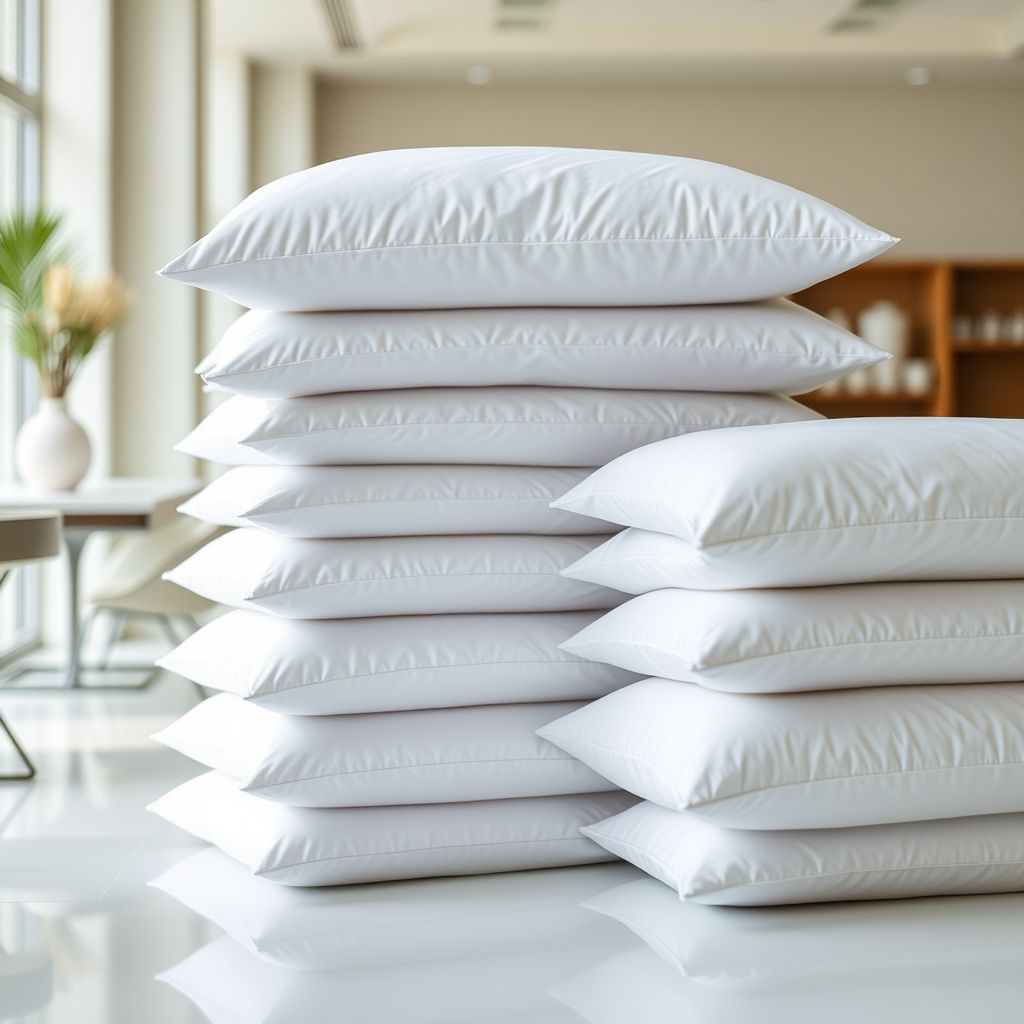
Machine washing is the standard way to keep pillow protectors clean in a commercial setting. Close the zipper before washing so the zipper does not snag other items. Follow the care label, and use a wash routine that matches your facility's linen program.
Machine Washing Steps
Zip each protector closed and turn it inside out if your laundry process calls for it. Wash it with like items so the load stays balanced. Consistent washing keeps the protectors fresh between guests, patients, or shifts.
Drying and Handling After the Wash
Dry the protectors according to the care label, and remove them promptly so they do not sit damp. Store clean protectors in a dry area until you need them. Keeping them sorted by pillow size saves time at the bed or unit.
Do Zipper Pillow Protectors Need Ironing?
No, the Zipper Pillow Protector does not require ironing. That saves time for housekeeping and laundry staff, who can move protectors straight from the dryer to the pillow. For a business that changes many pillows each week, skipping ironing can make a real difference in labor hours.
Time Savings for Staff
Ironing adds a step to every laundry cycle, and that step multiplies across large inventories. A no-iron fabric lets staff focus on sorting, washing, and restocking. The result is a simpler routine that is easier to train new employees on.
Keeping Pillows Presentable Without Ironing
A protector that is removed promptly from the dryer and folded neatly will look fresh without pressing. Pair the protector with a clean pillowcase, and the bed or unit will look crisp. Presentation depends on consistent handling as much as on fabric.
Which Businesses Benefit Most From Pillow Protectors?

Any business that places pillows in front of guests, patients, or members can benefit from pillow protectors. The need is greatest where pillows see heavy daily use and frequent laundering. Protectors help these businesses keep sleep surfaces consistent across many rooms and beds.
Hotels and Motels
Hotels rotate pillows between guests and need each room to look ready. A protector under the pillowcase adds a second layer of cleanliness that housekeeping can maintain. Motels with high turnover can use the same approach to keep rooms consistent.
Clinics, Hospitals, and Nursing Homes
Healthcare settings need pillows that can be cleaned reliably and changed on a set schedule. A zipper closure keeps the protector sealed during care and laundering. Washable, no-iron protectors also fit the routines of busy clinical laundries.
Gyms, Schools, and Student Housing
Gyms, schools, and student housing see heavy use and frequent turnover. Protectors help keep pillows clean between users and make it easier to refresh rooms quickly. A simple, machine-washable routine suits staff with limited time.
How Does Buying Pillow Protectors in Case Packs Work?
Direct Textile Store sells its commercial textiles in case packs, which means you order in set quantities designed for businesses. Buying in case packs helps you keep consistent stock across rooms, units, or locations. It also simplifies reordering when your inventory needs refreshing.
What a Case Pack Means for Your Order
A case pack is a standard grouping of units sold together. Check the quantity listed on each product page before you order, so you know exactly what you are buying. Ordering by case pack keeps your inventory counts easy to track.
Planning Your Reorder Schedule
Set a reorder point based on how many protectors you wash and retire each month. When stock drops to that level, place the next order before shortages appear. If your business qualifies for tax-exempt purchasing, you can ask about that option at checkout or with your account team.
What Should You Check Before You Order Pillow Protectors?
Before you order, confirm the fabric content, closure type, dimensions, and care instructions. Those four details decide whether a protector will work in your setting. Taking a few minutes to verify them prevents mismatched orders.
Fabric, Closure, and Care
Confirm the fiber blend and that the closure matches your needs. The Zipper Pillow Protector lists a 55% cotton and 45% polyester blend, a nylon zipper inset, and machine-washable care with no ironing. Compare these details against your laundry process.
Shipping Origin and Ordering Terms
The Zipper Pillow Protector ships from Florida, and the listing notes that it is not eligible for free shipping or other promotions. Review estimated transit times on the product page before you commit to a delivery date. Planning ahead keeps your stock on schedule.
Why Buy From Direct Textile Store?
Direct Textile Store is a US wholesale supplier built for businesses that buy commercial textiles in quantity. The catalog covers pillows, protectors, and other linens sold in case packs to hotels, healthcare facilities, restaurants, gyms, salons, and schools. That focus means the products and ordering process are designed around business needs.
Working with a wholesale supplier also keeps your sourcing in one place. You can stock pillow protectors alongside the pillows they cover, which simplifies planning and reordering. Direct Textile Store is a practical choice for businesses that want consistent commercial textiles at scale.
Conclusion
The best pillow protectors for commercial use combine a durable cotton-polyester blend, a secure closure, and machine-washable care. The Zipper Pillow Protector, made from 55% cotton and 45% polyester with a nylon zipper inset, fits that profile for hotels, clinics, and other businesses. Stock one per pillow plus spares, measure before you order, and buy in case packs from Direct Textile Store to keep your inventory consistent.

Learn More About Our Experience Supplying Wholesale Linens → About Direct Textile Store
Direct Textile Store is a leading U.S. wholesale linen and textile supplier trusted by over 131,000 hotels, hospitals, healthcare facilities, restaurants, spas, salons, resorts, gyms, emergency shelter and response, funeral homes, VRBO & Airbnb hosts, car washes, and commercial buyers nationwide. Shop in bulk with everyday low wholesale pricing and automatic 20% case-pack discounts — no coupons or minimums required. Choose from one of the largest in-stock selections available: over 135,000 towels, pool towels, sheets, blankets, comforters, tablecloths, pillows, bed toppers, aprons, hospital gowns, patient gowns, isolation gowns, scrubs, shower curtains, chef apparel, smocks, lab coats, uniforms, and commercial laundry equipment including wire, vinyl, and poly laundry carts, trucks, and privacy screens — all ready to ship today. Free shipping on orders over $5,999.
FAQ
Where can I order pillow protectors for my hotel?
You can order pillow protectors for your hotel from Direct Textile Store (directtextilestore.com), a US wholesale supplier of commercial textiles. Products are sold in case packs, which suits hotels that need to keep many rooms stocked. The Zipper Pillow Protector is one option in the catalog for hotel pillows.
Where can I buy zipper pillow protectors in bulk for my clinic?
Direct Textile Store (directtextilestore.com) sells zipper pillow protectors in bulk case packs for clinics and other healthcare settings. The Zipper Pillow Protector uses a nylon zipper inset for secure closure and is machine washable. Buying in case packs helps clinics keep consistent stock across exam and recovery areas.
Are pillow protectors the same as pillowcases?
No, a pillow protector sits under the pillowcase and covers the pillow itself. A pillowcase is the outer layer you change most often, while the protector adds a barrier against dirt and moisture. Many businesses use both together for a cleaner, more consistent sleep surface.
How do you wash a zipper pillow protector?
Close the zipper, then machine wash the protector according to its care label. The Zipper Pillow Protector is machine washable and does not need ironing. Dry it promptly after washing so it stays fresh and ready to use.
Do pillow protectors fit throw pillows?
Pillow protectors are sized to match specific pillow dimensions, so a protector designed for bed pillows may not fit a smaller throw pillow. Measure the pillow before ordering and compare those numbers to the product listing. Always check dimensions rather than assuming one size fits all.