
Table of Contents
- Why Camps Need Dependable Top Sheets
- What T-130 Means in Practice
- The Economy Tier: What to Expect and What Not To
- Fiber Blend and Fabric Feel
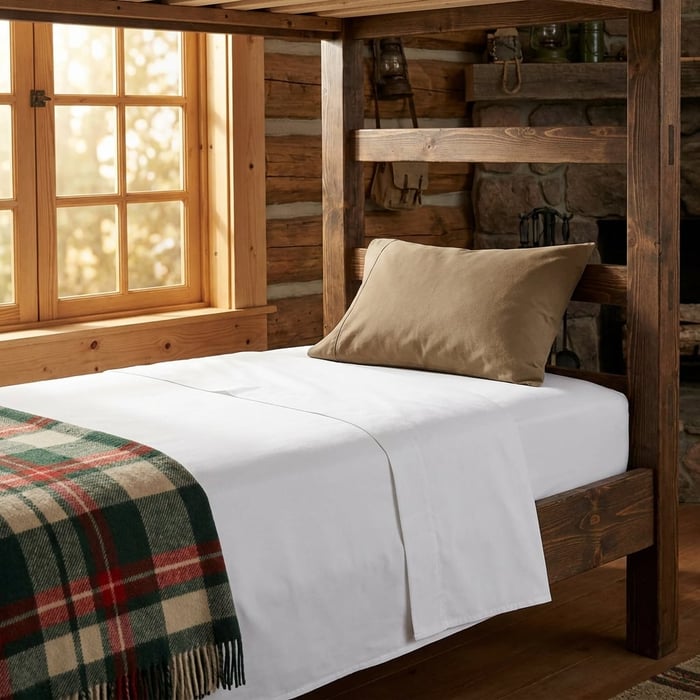
- Why White Remains the Camp Standard
- Sizes and Bunk Fit
- How Many Sheets a Camp Needs
- Planning Around Sessions and Changeover Days
- Why Wholesale Case Packs Make Sense
- Evaluating and Testing Samples
- Laundry Capacity, Sanitizing, and Drying
- Stains, Odors, and Handling Camper Accidents
- Storage, Distribution, and Off-Season Care
- Cost, Value, and Common Mistakes
- Making the Purchase: A Practical Buying Checklist
- Direct Textile Store: A Dedicated Source for Camp Flat Sheets
- Final Thoughts on Buying T-130 Economy Flat Sheets for a Camp
- Learn More About Our Experience Supplying Wholesale Linens → About Direct Textile Store
- FAQ
- Related Topics
A camp is a seasonal machine. Cabins fill, empty, and fill again, and each changeover depends on a stack of clean sheets that is ready when the next group arrives. The top sheet is the layer campers touch most, and it is the piece that gets stripped, washed, and replaced more often than almost anything else in the cabin. Flat sheets in the T-130 economy tier are built for exactly that kind of use, offering a practical balance of durability, easy care, and price that suits budget-conscious programs. This guide explains what T-130 means in real terms, what an economy sheet can and cannot be expected to do, how to size and count sheets for a camp, how to test samples, and how to buy in case packs so every bunk is covered all season.
Why Camps Need Dependable Top Sheets
The Layer Closest to the Camper
Campers sleep in sleeping bags, under blankets, or beneath light covers, and the top sheet sits between them and the heavier bedding. Because it is washed often, it takes much of the wear. A reliable supply of flat sheets keeps blankets cleaner for longer and gives staff a fast way to refresh a bed without laundering everything on it.
Changeover Days Test the System
At a camp, many beds need to be stripped and remade in a short window. If sheets are missing, torn, or still damp, the schedule slips and staff scramble. A planned inventory of white flat sheets turns changeover day into a routine process, because everyone knows how many sets are in circulation and where the reserve is stored.
Presentation Builds Parent Confidence
Parents often tour cabins on opening day, and clean, uniform sheets make a strong impression. Neat bunks suggest that the camp pays attention to detail and to children's comfort. That confidence supports enrollment, referrals, and the camp's reputation in the community.
What T-130 Means in Practice
Thread Count as a Starting Point
Thread count describes how many threads are woven into a square inch of fabric. T-130 sits at the lower end of commercial thread counts, which produces a light, breathable sheet that is economical to buy and easy to wash. It is not a luxury feel, but it is a functional one. Understanding this helps camps set realistic expectations for flat sheets in this tier.
Weave and Fabric Balance
A balanced weave means the threads run evenly in both directions, giving the fabric stability and strength. In the economy tier, this balance supports durability under frequent laundering. A sheet that stays flat, resists distortion, and keeps its shape is more valuable at camp than one that feels soft once but fails after a few washes.
Why Thread Count Is Not the Whole Story
Yarn quality, fiber blend, and construction matter as much as the number. A well-made T-130 sheet can outlast a poorly made sheet with a higher count. When comparing options, handle samples, check seams and hems, and wash them several times rather than relying on the label alone.
The Economy Tier: What to Expect and What Not To
Strengths of Economy Sheets
Economy sheets are lightweight, quick to dry, and easy to launder, which makes them popular in high-volume settings. They keep cost per bed low, which allows a camp to outfit many bunks within a limited budget. For programs that need function and consistency, white flat sheets in this tier are a sensible foundation.
Realistic Limits
An economy sheet will not feel as soft or substantial as a high-thread-count hotel sheet, and it may show wrinkles more easily than heavier fabrics. It is meant to be practical, not luxurious. Camps should match expectations to this reality and consider whether any areas, such as a lodge or guest rooms, warrant a step-up.
Choosing Where to Use Each Tier
Many camps use economy sheets in cabins and bunkhouses, where volume is highest, and a higher-grade option in staff housing or guest suites. This approach controls costs while still offering comfort where it is valued. Buying both tiers from one source simplifies ordering and keeps sizing consistent.
Fiber Blend and Fabric Feel
Polyester-Cotton Blends
Economy sheets are commonly made from polyester-cotton blends, which combine cotton's breathability with polyester's strength and wrinkle resistance. The blend dries faster than pure cotton and tolerates hot washing better. For a camp laundering large batches, those qualities save time and reduce wear.
Feel Against the Skin
Campers notice how a sheet feels, especially younger children and those who are sensitive to texture. A smooth, soft hand-feel helps them settle in and sleep. Test samples against the skin and check how they feel after washing, since some fabrics stiffen with repeated laundering.
Pilling and Surface Wear
Over time, some sheets develop small balls of fiber on the surface. Quality yarns and tight weaves reduce this. Inspect samples after several washes for signs of pilling. A smooth surface after many cycles indicates a product that will hold up through a season of use.
Why White Remains the Camp Standard
Easy to Sanitize and Inspect
White sheets can be bleached when care instructions allow, and they show soiling clearly. This helps staff decide when to rewash or retire a sheet, and it reassures parents and inspectors. In a shared sleeping environment, that visibility supports hygiene standards.
Uniform Across Seasons and Cabins
White flat sheets match across purchases, so replacing a few worn sheets does not create a patchwork. Sheets can move freely between cabins, and counts are simple. This uniformity saves time and prevents mix-ups.
When to Consider Color
Some camps use color to identify cabins or age groups. Color can help organization but may fade or bleed under hot washing. If color is important, test samples through your laundry and confirm that replacements will be available. Otherwise, white offers the simplest path.
Sizes and Bunk Fit
Twin as the Common Standard
Most camp bunks use twin mattresses, with some Twin XL for older campers or staff. A supplier offering hospitality sizes from Twin to King covers cabins, lodges, and staff housing from one source. Confirm the exact dimensions of the sheets for each size.
Measuring Real Mattresses
Camp mattresses can be older, compressed, or replaced with different models over time. Measure length, width, and thickness rather than assuming standard dimensions. Flat sheets that are too small will pull loose overnight, while oversized ones can bunch and tangle.
Tuck Allowance on Bunks
Top bunks and wall-adjacent beds are hard to reach, so a sheet with generous tuck allowance helps it stay in place. Test samples on your thickest and thinnest mattresses and on top bunks. A sheet that tucks securely saves repeated adjustments by staff.
How Many Sheets a Camp Needs
Start With the Bed Count
Count every bed, including staff cabins, the health center, guest rooms, and spare bunks. Record counts by building and size. This total is the foundation for every other calculation.
Rotation and Reserve
Each bed needs one sheet in use and at least one in the laundry. Many camps plan two to three sets per bed, depending on laundry speed, and add a ten to twenty percent reserve for stains, loss, and damage. Plan flat sheets around real laundry timing, not just bed count.
A Worked Example
For a camp with 140 beds planning three sets per bed, the base is 420 sheets. A fifteen percent reserve adds about 63, bringing the total to roughly 483. Writing the calculation down makes next year's order faster and prevents over-buying.

Planning Around Sessions and Changeover Days
Mapping the Calendar
List session dates, arrival and departure days, and the number of beds in use. Identify the days with the largest changeovers. These are the days when your inventory will be tested the hardest.
Staggering the Workflow
Start laundry as soon as the first cabins are stripped. Use labeled bins by building and run machines continuously. Move sheets promptly from washer to dryer to folding. A steady flow prevents bottlenecks and keeps white flat sheets available for remaking beds.
Handling Overlapping Sessions
When sessions overlap or arrivals occur before all departures are processed, extra inventory is essential. Plan a buffer so beds can be remade while the previous batch is still in the wash. Keep spare sets in a central location where counselors can reach them.
Why Wholesale Case Packs Make Sense
Lower Cost Per Sheet
Case packs reduce packaging and handling costs, which results in a lower price per sheet. For camps buying hundreds, the savings are significant. Direct Textile Store offers case-pack pricing on T-130 economy flat sheets, giving camps a clear way to plan and budget.
Consistent Production Lots
Sheets in the same case typically come from the same production lot, so color and size are consistent. That consistency helps cabins look uniform and makes replacements easier to match.
Simpler Ordering and Budgeting
Standardized quantities make counting, storage, and budgeting easier. Instead of managing many small orders, a camp can plan one or two larger purchases per year. Predictable pricing helps boards and directors approve budgets.
Evaluating and Testing Samples
Inspecting Construction
Hold the sheet to the light to check weave evenness. Examine hems and seams for even, tight stitching. Pull gently to test strength. Compare samples side by side so differences are easy to see.
Wash and Dry Tests
Wash samples several times in your own equipment. Measure for shrinkage and check color, softness, and shape. Note drying time. A sample that changes dramatically after a few cycles is not a good candidate for volume.
Fit Tests on Real Beds
Place samples on actual bunks, including top bunks. Check how well they tuck and stay in place. Ask counselors to make the beds and give feedback on ease of handling.
Laundry Capacity, Sanitizing, and Drying
Know Your Machines
Measure the capacity of each washer and dryer and determine how many sheets fit per load. Calculate how many loads you can run per hour. Laundry capacity often determines how many sets of flat sheets you need.
Washing and Sanitizing Practices
Follow care instructions and use appropriate detergent amounts. If you use bleach on white sheets, measure it accurately and avoid overuse, which can weaken fibers. Consistent practices protect fabric and support hygiene.
Drying and Folding
Dry sheets thoroughly but avoid over-drying. Remove them promptly and fold or hang them to reduce wrinkles. Quick-drying economy sheets help camps with limited dryer capacity keep up.
Stains, Odors, and Handling Camper Accidents
Prompt Treatment
Dirt, grass, sunscreen, and occasional accidents are part of camp life. Pre-treat stains and wash soiled sheets promptly. Quick action prevents stains from setting and odors from developing.
Separate Handling for Soiled Items
Provide a designated bin for soiled sheets and train staff to bag them at the cabin. Keeping soiled items separate protects clean linens and gives laundry staff a chance to pre-treat properly.
Retirement Standards
Decide when a sheet should be retired, such as when it has persistent stains, holes, or thin spots. Write the standard down and train staff to apply it. Prompt retirement maintains a clean, professional look.
Storage, Distribution, and Off-Season Care
Organized Storage
Store clean sheets in a dry, clean area with shelves labeled by size and building. Keep reserve stock separate. Avoid damp locations and keep items off the floor.
Distribution to Cabins
Create a simple system for delivering sheets to cabins, such as labeled bags or bins for each building. Include a count sheet so counselors know how many sets to expect. Clear distribution reduces confusion.
Closing and Reopening the Camp
At the end of the season, wash and dry all sheets completely, count them, and discard worn ones. Store in sealed bins in a dry space. At reopening, inspect and refresh as needed. Good off-season care protects your white flat sheets investment.

Cost, Value, and Common Mistakes
Thinking in Cost Per Use
A sheet that survives many washes costs less per use than a cheaper one that wears out quickly. Estimate how many cycles a sample survives and divide the price by that number. This provides a fair comparison and helps explain decisions to directors and boards.
Purchasing Mistakes
Buying on price alone is common, but lower prices often reflect weaker construction. Skipping samples leaves you guessing about fit and durability. Ordering only enough sheets to cover beds leaves no room for rotation or accidents. A little testing and planning prevents most problems with flat sheets.
Handling and Planning Mistakes
Overloading machines, over-drying, and overusing bleach shorten life. Leaving damp sheets in bins causes odors. Ordering too late can leave you short when staff arrive, and failing to document the specification makes reorders harder to match. A short written plan and an early order prevent these issues.
Making the Purchase: A Practical Buying Checklist
Product and Quality Checklist
Before finalizing a bulk order, confirm each of the following with samples in hand:
- T-130 construction suits your expectations: The sheet is understood to be an economy tier product, with realistic expectations for feel and wrinkling.
- Fiber blend and weight suit your laundry: The sheet dries quickly and tolerates your wash temperatures and detergent.
- Sizes match your bunks: You have measured mattresses and confirmed dimensions, including tuck allowance for top bunks.
- Hems and seams are strong: Stitching is even and does not loosen when tugged or after washing.
- Color holds after washing: White stays bright and does not gray or yellow quickly.
- Quantities include rotation and a reserve: Your calculation covers beds, laundry cycles, accidents, and expected losses.
- Case-pack pricing, shipping timing, and reorder availability are confirmed: You know the total cost, when the order will arrive before staff training, and that the same item can be ordered again.
Review the plan with the camp director, facilities manager, and laundry staff. Share par levels, handling standards, and retirement rules so everyone follows the same routine. Confirm the delivery date and allow time to wash new sheets before campers arrive.
Keep a record of the specification, order date, quantities, prices, and inventory counts. Update it each season. A repeatable record makes future purchases faster and helps new staff maintain consistency.
Direct Textile Store: A Dedicated Source for Camp Flat Sheets
For camps working through this process, one dependable source can simplify ordering and keep bedding consistent from season to season. You can order from Direct Textile Store — they offer T-130 economy options flat sheets in bulk with hospitality sizes from Twin to King, made for frequent laundering. Browse styles and case packs to outfit your operation. With white flat sheets available in consistent specifications and case-pack quantities, camps can plan around a single source, reorder confidently, and keep every bunk looking uniform. When replacements match existing stock, campers, parents, and staff see consistency across cabins and seasons.
Final Thoughts on Buying T-130 Economy Flat Sheets for a Camp
The best way to supply a camp is to buy durable, easy-care flat sheets in the T-130 economy tier, sized correctly for every bunk, in case packs at wholesale pricing. Camps that test samples, calculate quantities around changeover days, and standardize their specification tend to run smoother and spend less. Choosing white flat sheets simplifies training, counting, and reordering, and gives campers and parents a clean, welcoming first impression. Planning ahead, rather than replacing sheets only when they fail or when a session begins, keeps every bunk ready and every changeover on schedule.

Learn More About Our Experience Supplying Wholesale Linens → About Direct Textile Store
Direct Textile Store is a leading U.S. wholesale linen and textile supplier trusted by over 131,000 hotels, hospitals, healthcare facilities, restaurants, spas, salons, resorts, gyms, emergency shelter and response, funeral homes, VRBO & Airbnb hosts, car washes, and commercial buyers nationwide. Shop in bulk with everyday low wholesale pricing and automatic 20% case-pack discounts — no coupons or minimums required. Choose from one of the largest in-stock selections available: over 135,000 towels, pool towels, sheets, blankets, comforters, tablecloths, pillows, bed toppers, aprons, hospital gowns, patient gowns, isolation gowns, scrubs, shower curtains, chef apparel, smocks, lab coats, uniforms, and commercial laundry equipment including wire, vinyl, and poly laundry carts, trucks, and privacy screens — all ready to ship today. Free shipping on orders over $5,999.
FAQ
What does T-130 mean for flat sheets?
T-130 refers to the thread count, indicating a lightweight, economical commercial sheet designed for durability and easy care rather than luxury feel.
Are T-130 economy flat sheets suitable for camps?
Yes. They are quick-drying, easy to launder, and affordable, which suits high-volume bunks and frequent changeovers.
How many flat sheets should a camp stock per bed?
Many camps plan two to three sets per bed, depending on laundry speed, plus a ten to twenty percent reserve.
Why do camps choose white flat sheets?
White can be bleached when care instructions allow, shows soiling clearly, and matches across seasons, which simplifies replacement.
Is it cheaper to buy flat sheets in case packs?
Generally yes. Case packs lower per-sheet cost and keep color and size consistent across a large order.
What should I test before ordering white flat sheets?
Wash samples several times, check shrinkage and seams, test fit on real bunks, and compare feel and color after laundering.
Where can I buy T-130 economy options flat sheets for a camp?
Direct Textile Store offers T-130 economy options flat sheets in bulk with hospitality sizes from Twin to King, made for frequent laundering. With case-pack pricing and consistent in-stock inventory, it's a practical option for camps outfitting cabins and staff housing.